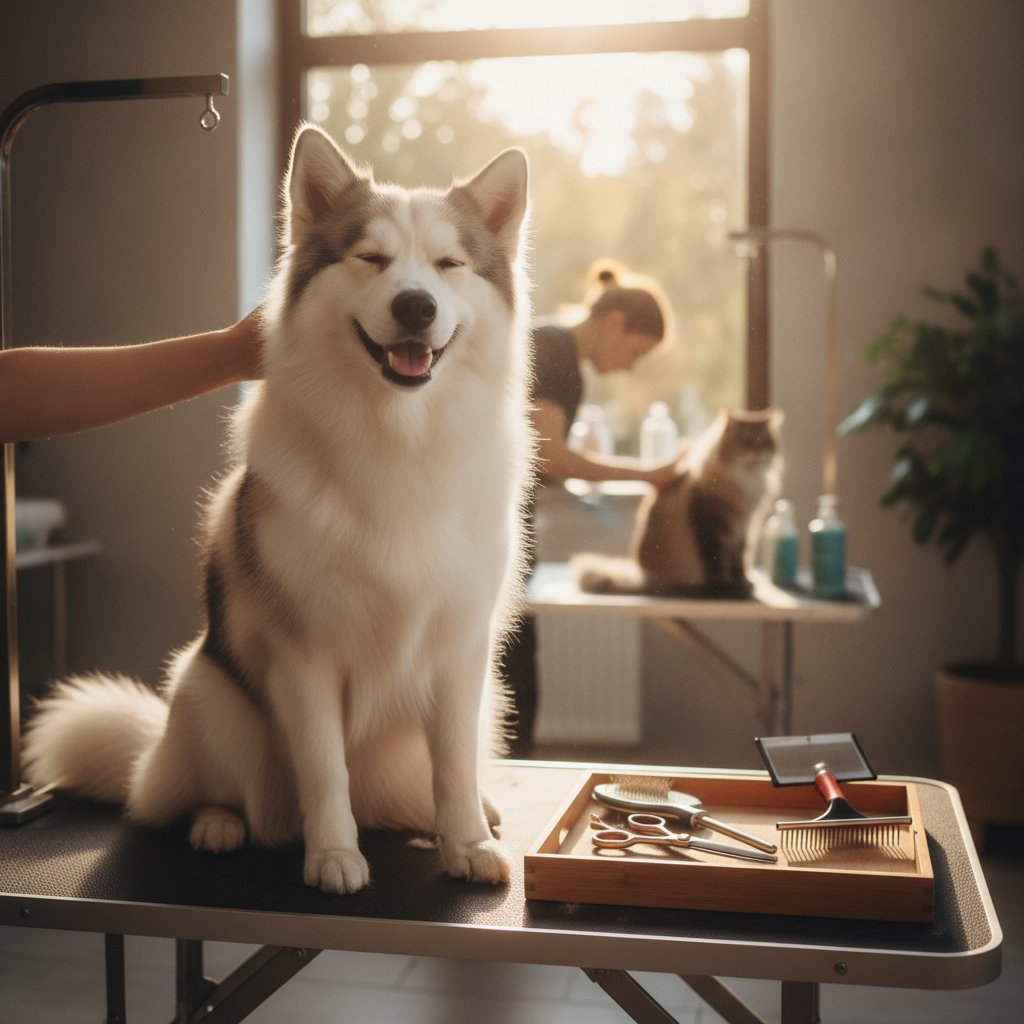
Dogs in the Southern Hemisphere undergo a major shedding surge during April and May as their coats shift for winter. This guide covers tool selection, bathing adjustments, and a breed specific grooming calendar.
Key Takeaways
- April and May mark the peak autumn shedding window for dogs in the Southern Hemisphere, as summer coats give way to denser winter undercoats.
- Choosing between an undercoat rake and a deshedding tool depends on coat type, density, and breed standard requirements.
- Bathing frequency should decrease slightly during autumn to preserve the natural oils that protect the incoming winter coat.
- A breed specific grooming calendar helps owners stay ahead of mats, tangles, and excessive loose fur.
- Any sudden bald patches, flaking, redness, or foul odour during the shedding transition warrants a veterinary consultation.
Why the Autumn Coat Transition Matters for Canine Health
In the Southern Hemisphere, the shortening daylight hours from late March through May trigger a hormonal shift that tells a dog's body to release the lighter summer coat and begin growing a thicker winter undercoat. This process, regulated primarily by melatonin and prolactin levels responding to photoperiod changes, results in what groomers and veterinary dermatologists commonly refer to as the "shedding surge."
When this loose fur is not removed through regular grooming, it can become trapped against the skin, forming dense mats that restrict airflow. Matted fur creates a warm, moist microenvironment ideal for bacterial and fungal growth, and it can mask developing skin conditions such as hot spots, flea allergy dermatitis, or early stage ringworm. Professional grooming bodies, including the International Professional Groomers (IPG) and the National Dog Groomers Association of America (NDGAA), emphasise that seasonal coat management is not merely cosmetic: it is a foundational element of skin health maintenance.
Dogs that spend most of their time indoors under artificial lighting may experience a more diffuse, year round shedding pattern rather than a dramatic seasonal blow. However, even these dogs typically show a noticeable increase in loose fur during April and May in countries such as Australia, New Zealand, South Africa, Argentina, and Chile.
Tools and Products Needed for Autumn Grooming
Undercoat Rake: When and Why to Use It
An undercoat rake features long, rounded teeth set in one or two rows, designed to reach past the topcoat (guard hairs) and gently pull out loose undercoat without cutting or damaging the outer layer. This tool is best suited for breeds with thick, plush double coats where the undercoat is noticeably softer and denser than the guard hairs.
Best for: Siberian Huskies, Alaskan Malamutes, Samoyeds, Bernese Mountain Dogs, Australian Shepherds, Rough Collies, Shetland Sheepdogs, German Shepherds, Golden Retrievers, and Newfoundlands.
Advantages: Preserves the natural texture and protective function of the topcoat. Allows groomers to work through dense undercoat in sections without pulling or scraping the skin. Reduces the risk of "clipper alopecia" sometimes seen when double coated breeds are shaved inappropriately.
Deshedding Tool: When and Why to Use It
Deshedding tools use a fine, comb like stainless steel edge that reaches into the coat to catch and remove loose undercoat and dead hair. These tools are efficient at removing large volumes of fur quickly, but they must be used with restraint. Over use or pressing too firmly can thin the topcoat, strip natural oils, and cause brush burn (a form of mechanical irritation to the skin).
Best for: Labrador Retrievers, Beagles, Pugs, Corgis, Rottweilers, and other breeds with moderately dense, shorter double coats that do not require as much topcoat preservation.
Caution: Deshedding tools are generally not recommended for single coated breeds (such as Poodles, Maltese, Bichon Frises, or Greyhounds), wire coated terriers, or dogs with skin conditions. Using them on a wet coat or on irritated skin can worsen damage.
Supporting Tools and Supplies
- Slicker brush: For daily surface brushing and light detangling, particularly around the ears, chest, and hindquarters.
- Wide tooth comb: A finishing tool to check for remaining tangles after raking or deshedding.
- Pin brush: Useful for longer, silkier coats (such as Setters or Spaniels) where a slicker may cause static or breakage.
- Grooming spray or light detangler: Helps reduce friction and static during brushing sessions.
- Rubber curry brush: Ideal for short, smooth coated breeds (Boxers, Dalmatians, Vizslas) during autumn to stimulate circulation and lift loose fur.
- High velocity dryer (optional): Professional groomers use these to blow out loose undercoat after bathing, significantly reducing shedding for days afterward.
Budgeting for quality grooming tools is a worthwhile investment. For a broader look at first year pet ownership costs, including grooming supplies, see our New Pet Budget 2026: First Year Cost Breakdown.
Step by Step Autumn Grooming Routine
Step 1: Pre Brush Assessment
Before picking up any tool, run both hands through the dog's coat from head to tail, feeling for mats, lumps, tender spots, or changes in skin texture. Part the fur in several places to check skin colour (healthy skin is typically pale pink to grey, depending on pigmentation). Note any redness, flaking, scabbing, or unusual odour. This tactile check takes only two to three minutes but can catch issues early.
Step 2: Line Brushing With a Slicker Brush
Working in small sections, use a slicker brush to gently brush through the topcoat layer by layer. Start at the hindquarters and legs, then move forward along the body, finishing with the chest, neck, and head. This technique, known as line brushing, ensures that every layer of coat is addressed rather than just skimming the surface.
For dogs that find grooming stressful, short sessions of five to ten minutes spread throughout the day are more effective and humane than one long session. Our guide on Low Stress Grooming for Anxious Dogs offers detailed strategies for building positive grooming associations.
Step 3: Undercoat Removal
Once the topcoat is free of tangles, switch to the undercoat rake or deshedding tool. Work in the direction of hair growth, using long, gentle strokes. Avoid staying in one area for too long: three to five passes over any single section is generally sufficient. Applying excessive pressure or repeatedly going over the same patch can irritate the skin and thin the coat unevenly.
Pay particular attention to high friction zones where mats form most readily: behind the ears, under the collar line, in the "armpits" (axillary region), along the inner thighs, and around the base of the tail.
Step 4: Comb Check
After raking, pass a wide tooth comb through the entire coat. If the comb glides through without catching, the loose undercoat has been adequately removed. If it snags, return to that area with the appropriate brush or rake.
Step 5: Optional Bath (See Frequency Guide Below)
If a bath is needed, use lukewarm water and a gentle, pH balanced canine shampoo. Rinse thoroughly: residual shampoo left in a dense coat can cause itching and flaking. Follow with a light conditioner formulated for dogs if the coat feels dry or brittle. Towel dry first, then use a dryer on a cool or warm (never hot) setting. Brushing during the drying phase helps remove additional loosened undercoat.
Step 6: Post Groom Skin Check
After grooming, re examine the skin for any irritation caused during the session. Slight pinkness from brushing should resolve within an hour. Persistent redness, welts, or broken skin indicates that too much pressure was applied or that the dog has an underlying sensitivity.
Bathing Frequency Adjustments for Autumn
During the autumn transition, professional grooming guidelines generally recommend reducing bathing frequency compared to summer. The reasoning is straightforward: the sebaceous glands are actively producing oils to condition the incoming winter coat, and over bathing strips these protective lipids.
| Coat Type | Summer Bathing | Autumn Bathing |
|---|---|---|
| Short, smooth (Boxer, Whippet) | Every 4 to 6 weeks | Every 6 to 8 weeks |
| Double coated, medium (Labrador, Corgi) | Every 4 to 6 weeks | Every 6 to 10 weeks |
| Double coated, long (Collie, Malamute) | Every 6 to 8 weeks | Every 8 to 12 weeks |
| Single coated, curly (Poodle, Bichon) | Every 3 to 4 weeks | Every 3 to 5 weeks |
| Wire coated (Schnauzer, Terrier) | Every 6 to 8 weeks | Every 8 to 10 weeks |
These ranges are general guidelines. Dogs with skin conditions, allergies, or those that swim or roll in mud regularly may need more frequent bathing regardless of season, ideally guided by veterinary advice.
Breed Specific Grooming Calendar: April and May
Heavy Double Coated Breeds (Husky, Malamute, Samoyed, Newfoundland)
- Brushing: Daily during the peak blow, dropping to every second day once the heaviest shedding subsides (typically after three to four weeks).
- Undercoat raking: Two to three sessions per week during peak shed.
- Bathing: One thorough "blow out" bath at the start of the shedding surge, followed by dry grooming only unless the dog becomes soiled.
- Professional groom: One session in mid April or early May for a full deshed and skin assessment is strongly recommended.
Medium Double Coated Breeds (Labrador, Golden Retriever, Australian Shepherd, Border Collie, German Shepherd)
- Brushing: Every second day during April, tapering to two to three times per week in May.
- Deshedding or raking: Once to twice per week.
- Bathing: Once in April, once in late May, unless otherwise necessary.
- Professional groom: Recommended for Golden Retrievers and Australian Shepherds to address feathering on the legs, chest, and ears.
Short Coated Breeds (Labrador, Beagle, Pug, Boxer, Dalmatian, Rottweiler)
- Brushing: Two to three times per week with a rubber curry brush or bristle brush.
- Deshedding: Once per week with a short coat deshedding tool.
- Bathing: Every six to eight weeks.
- Note: Short coated breeds often shed more than owners expect because the short hairs embed in furniture and clothing. A damp rubber glove wiped over the coat daily can help collect surface fur between brushing sessions.
Single Coated and Curly Coated Breeds (Poodle, Bichon Frise, Maltese, Shih Tzu)
- Brushing: Daily to every second day, as these coats mat quickly even though they shed minimally.
- Undercoat tools: Not applicable. Use a slicker brush and comb only.
- Bathing: Every three to five weeks, with thorough blow drying and brush out.
- Professional groom: Every four to six weeks year round. Autumn does not dramatically change the schedule for these breeds, but groomers may adjust blade lengths for a slightly longer clip heading into winter.
Wire Coated Breeds (Wire Fox Terrier, Schnauzer, Airedale, Border Terrier)
- Hand stripping or carding: Autumn is an ideal time for a hand stripping session to remove dead wire coat and encourage proper new growth. This technique preserves the harsh texture required by breed standards.
- Brushing: Two to three times per week with a slicker and stripping knife.
- Bathing: Every eight to ten weeks. Bathing too frequently softens the wire texture.
- Professional groom: Hand stripping is a specialised skill. Unless the owner is experienced, this is best left to a professional groomer trained in terrier coat maintenance.
Sighthounds and Smooth Coated Breeds (Greyhound, Whippet, Italian Greyhound)
- Brushing: Once to twice per week with a soft bristle brush or rubber mitt.
- Deshedding tools: Not recommended. These breeds have thin, fine coats with minimal undercoat. Aggressive deshedding can cause skin abrasion.
- Bathing: Every six to eight weeks, or as needed.
- Note: Greyhounds and Whippets have notably thin skin that is prone to nicks and abrasion. Gentle handling is essential. For more on caring for adopted sighthounds, see Adopting a Retired Greyhound: Behaviour and Care Guide.
Warning Signs to Watch for During Grooming
The autumn grooming routine provides a regular opportunity to detect health issues early. The following signs should prompt a veterinary consultation rather than continued home grooming:
- Patchy or asymmetric hair loss: Seasonal shedding is generally uniform across the body. Localised bald patches may indicate fungal infection, hormonal imbalance (such as hypothyroidism or Cushing's disease), or parasitic infestation.
- Excessive dandruff or flaking: Some increase in flaking is normal during coat transition, but heavy, persistent dandruff, especially if accompanied by itching, may indicate seborrhoea, allergies, or mite infestation (Cheyletiella, sometimes called "walking dandruff").
- Red, inflamed, or broken skin: Hot spots (acute moist dermatitis) can develop rapidly under matted autumn coats. These require veterinary treatment, not simply shaving or brushing out.
- Foul odour from coat or skin: A yeasty or sour smell can indicate bacterial or yeast overgrowth on the skin.
- Pain response during brushing: If a dog that normally tolerates grooming suddenly flinches, snaps, or tries to escape, there may be an underlying injury, abscess, or arthritic joint pain. Understanding canine stress signals is critical: our Canine Body Language Guide is helpful reading.
- Coat that does not regrow: If areas shaved or clipped in summer have not begun to regrow by mid autumn, consult a veterinarian. Failure to regrow can indicate hormonal disorders or post clipping alopecia.
Professional Groomer vs Home Grooming: Decision Guide
Home grooming is appropriate and encouraged for routine brushing, light deshedding, and coat maintenance between professional appointments. However, certain situations call for a trained groomer or, in some cases, a veterinary dermatologist.
When to Groom at Home
- Regular brushing and combing to manage loose fur.
- Light deshedding with appropriate tools on a healthy coat.
- Routine bathing of a cooperative dog with no skin issues.
- Nail trims, ear checks, and pad inspections (if the owner is confident and trained).
When to Book a Professional Groomer
- During the peak of a heavy double coat blow, for a full deshed and blow out session.
- For breeds requiring hand stripping, scissor work, or breed standard trims.
- When mats have formed close to the skin and cannot be safely brushed out at home.
- For elderly or arthritic dogs that need specialised handling and table support.
- When the dog shows significant fear, anxiety, or aggression during home grooming.
When to See a Veterinarian
- Any of the warning signs listed above.
- Suspected flea, tick, or mite infestation.
- Sudden, dramatic increase in shedding that seems disproportionate to the season.
- Persistent scratching, licking, or chewing at the skin despite regular grooming.
Monitoring general wellness alongside grooming is increasingly accessible with technology. Owners interested in tracking physiological indicators at home may find Pet Wearable Heart Monitors for Dogs and Cats: 2026 Guide useful supplementary reading.
Supporting Coat Health From the Inside Out
Grooming addresses the external aspects of coat transition, but nutrition plays an equally important role. A diet adequate in omega 3 and omega 6 fatty acids supports healthy sebum production, which helps condition both the outgoing summer coat and the incoming winter coat. Supplementation with fish oil or flaxseed oil is commonly recommended by veterinary nutritionists during seasonal transitions, though specific products and dosages should be discussed with a veterinarian.
Gut health also influences coat condition. Emerging research supports the role of the gut microbiome in skin and coat quality. For more on this topic, our Probiotics for Dogs and Cats: A Science Based Guide provides a thorough overview.
Setting Up a Grooming Station at Home
Owners who plan to manage most of the autumn shedding routine at home benefit from a dedicated grooming area. A non slip mat on a raised surface (or a purpose built grooming table for larger dogs) reduces strain on both the owner and the dog. Good lighting is essential for spotting skin changes. Keep all tools cleaned and stored together so that sessions run smoothly without interruptions to search for equipment.
For pet sitting professionals managing multiple dogs during this season, a well organised grooming setup is especially valuable. Our guide to Setting Up a Pet Sitting Business From Home in 2026 includes practical advice on equipping a home based service.
Final Thoughts
The April and May shedding surge in the Southern Hemisphere is a natural, healthy process, but it demands active management. Regular brushing with the right tool for the coat type, sensible bathing schedules, and vigilant skin monitoring during each grooming session form the foundation of effective autumn coat care. When in doubt about a tool, a technique, or a skin change, professional groomers and veterinarians are the appropriate resources. Proactive grooming during this transitional period sets the stage for a healthy, well insulated winter coat that protects the dog through the coldest months ahead.
Frequently Asked Questions
What is the difference between an undercoat rake and a deshedding tool? ↓
How often should I bathe my dog during the autumn shedding season? ↓
When should I take my dog to a professional groomer instead of grooming at home? ↓
Is it normal for my dog to shed more in April and May in the Southern Hemisphere? ↓
Can I use a deshedding tool on a Poodle or other single coated breed? ↓

Sophie Bianchi
Certified Master Pet Groomer
Certified master pet groomer — breed-standard techniques, skin health awareness, and at-home grooming guidance.
Content Disclosure
This article was created using state-of-the-art AI models with human editorial oversight. It is intended for informational and entertainment purposes only and does not constitute veterinary medical advice. Always consult a licensed veterinarian for your pet's specific health needs. Learn more about our process.