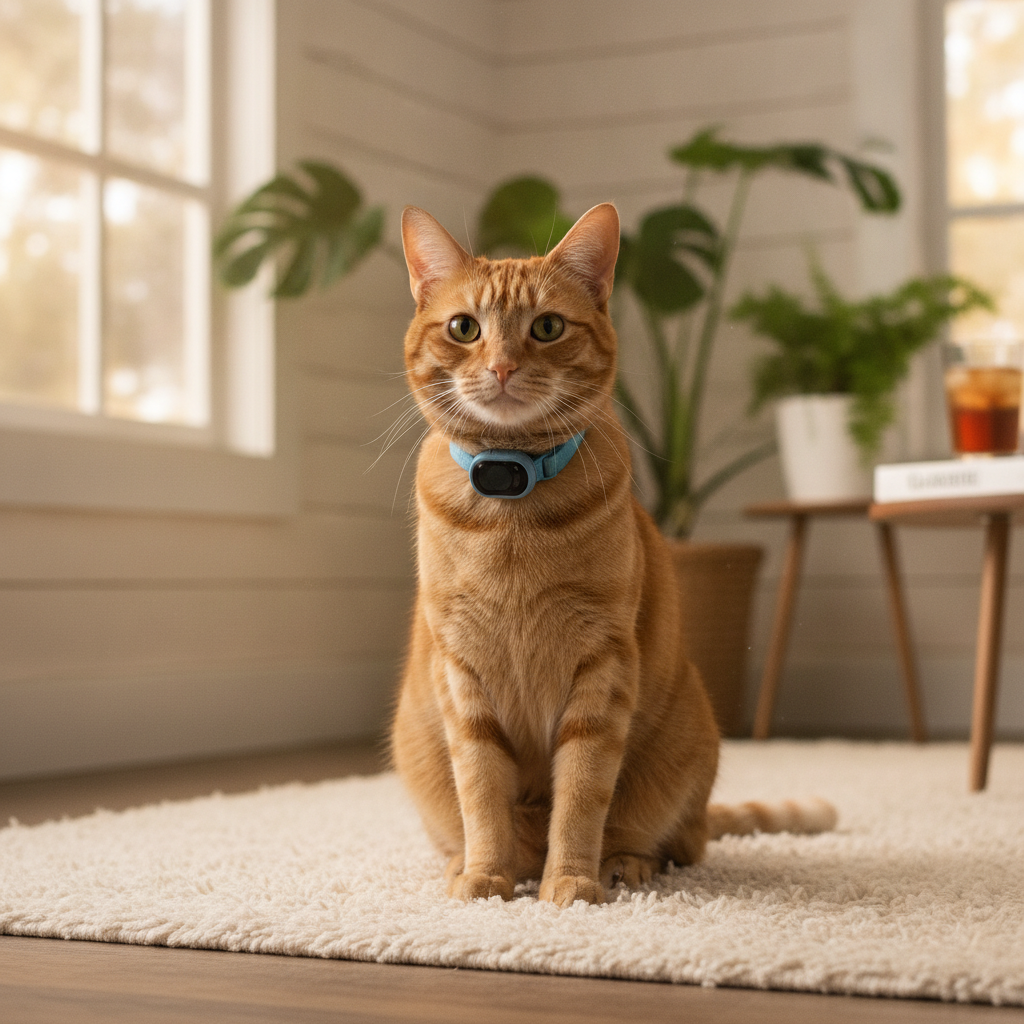
A side-by-side comparison of three leading GPS cat trackers for summer 2026. Covers weight, battery life, geofence accuracy, cellular coverage, and subscription costs to help owners choose the right device.
Key Takeaways
- Fi Mini is the lightest option at 16 g with the longest battery life (up to three weeks), but coverage is limited to the United States.
- Tractive CAT Mini offers the broadest international reach (175+ countries) and the lowest device cost, though battery life tops out around five days.
- Weenect Cat XS sits in the middle on weight and battery, with strong European coverage across 100+ countries and competitive long-term subscription pricing.
- Real-time tracking can dramatically shorten the time it takes to find a lost cat, but no tracker replaces microchipping and a properly fitted collar with ID tags.
Why GPS Tracking Matters for Outdoor Cats in Summer
Cats that roam outdoors face increased risks during summer months: longer daylight hours encourage wider territorial exploration, warm-weather construction can alter familiar routes, and seasonal wildlife activity raises the stakes for confrontations. A GPS tracker provides a live or near-live location feed that transforms a panicked search into a directed retrieval effort.
However, not every GPS tracker suits every cat or every region. Device weight affects feline comfort and willingness to wear the collar. Battery life determines how often owners need to recharge. Cellular network compatibility decides whether the tracker actually works where the cat roams. And subscription costs add up over months and years. The comparison below evaluates three of the most popular GPS cat trackers available in summer 2026: Fi Mini, Tractive CAT Mini, and Weenect Cat XS.
Side-by-Side Comparison Table
| Feature | Fi Mini | Tractive CAT Mini | Weenect Cat XS |
|---|---|---|---|
| Weight | ~16 g | ~25 g | ~27 g |
| Battery life (typical) | 10 to 21 days | 2 to 5 days | 3 to 10 days |
| Waterproof rating | IP68 | IPX7 | IP67 |
| Connectivity | LTE-M (Verizon) | LTE-M, 2G | LTE-M, NB-IoT, 2G |
| Country coverage | US only | 175+ countries | 100+ countries |
| Geofence (safe zones) | Yes (Wi-Fi + GPS) | Yes (GPS based) | Yes (Wi-Fi zones + GPS) |
| Real-time (LIVE) tracking | Yes | Yes (2 to 3 sec updates) | Yes (10 sec default) |
| Device price (approx.) | $29 to $50 USD | ~$50 USD | ~$50 to $60 USD |
| Cheapest subscription | ~$14/mo (2-yr prepaid) | ~$5/mo (5-yr Basic) | ~$3.75/mo (2-yr plan) |
| Activity tracking | Steps, sleep | Activity, wellness alerts | Basic activity |
| Attachment method | Clip-on (any collar) | Breakaway collar or clip | Included collar or clip |
Key Differences Explained
Weight and Wearability
Veterinary guidance generally suggests that wearable devices should not exceed roughly 3 to 5 percent of a cat's body weight. For a typical 4 kg (8.8 lb) cat, that ceiling sits around 120 to 200 g, so all three trackers fall well within safe limits. Still, lighter is better for feline comfort and acceptance. The Fi Mini at 16 g is nearly half the weight of the Weenect Cat XS (27 g), which may matter for smaller cats under 3 kg. Tractive splits the difference at about 25 g.
Battery Life
Battery performance varies dramatically depending on tracking frequency. In power-saving mode (location updates every few minutes while the cat stays within a safe zone), the Fi Mini can stretch to roughly three weeks. Weenect claims up to 10 days with Wi-Fi power-saving zones enabled. Tractive's CAT Mini typically lasts two to five days, which means more frequent charging.
Activating real-time or LIVE tracking mode drains all three devices much faster. Owners commonly report that Tractive's battery drops to under two days with frequent LIVE sessions. Weenect falls to about three days of continuous tracking. Fi holds up somewhat better thanks to LTE-M efficiency, but heavy use still reduces the advertised figures.
Geofence Accuracy
All three trackers support geofencing (sometimes called "safe zones" or "power-saving zones"), which sends an alert when the cat leaves a defined area. GPS-based geofences typically have accuracy within 5 to 15 metres under open sky, but accuracy degrades under tree cover, near tall buildings, or in dense urban environments. Fi and Weenect supplement GPS with Wi-Fi positioning for indoor and near-home accuracy, which can tighten the geofence to within a few metres when the home Wi-Fi signal is detectable.
No GPS geofence is precise enough to mark a single garden boundary. Professional consensus suggests setting the zone slightly larger than the desired boundary to reduce false alerts.
Cellular Coverage by Country
This is the single biggest differentiator for international cat owners. Fi Mini operates exclusively in the United States via Verizon's LTE-M network. Owners in Europe, the Middle East, Asia, or anywhere outside the US will find the device non-functional.
Tractive partners with over 500 carriers across 175+ countries, making it the strongest choice for international use. The Premium subscription tier unlocks worldwide roaming. For cat owners who travel with pets or live outside the US, this breadth of coverage is a decisive advantage. For owners planning cross-border travel with cats, it is worth reviewing the latest EU Animal Health Certificate requirements alongside your tracker setup.
Weenect covers 100+ countries with particular strength in European markets. Its multi-network approach (LTE-M, NB-IoT, and 2G fallback) provides good coverage across most of Europe, but owners in rural areas of non-European countries should verify local network availability before purchasing.
Subscription Costs
Every GPS cat tracker requires a cellular data subscription. There is no way around this recurring cost.
- Fi Mini: Minimum 6-month commitment. The 1-year prepaid plan works out to approximately $15.75 per month; the 2-year plan reduces this to roughly $14 per month. A one-time activation fee of $20 applies. Fi's subscription is the most expensive of the three.
- Tractive: Basic plans start at around $5 per month on long-term commitments (5-year), while the 1-year Basic plan runs approximately $9 per month. The Premium tier (which adds worldwide coverage, extended location history, and wellness data) costs about $10 per month on a 1-year plan. Tractive offers a 30-day money-back guarantee.
- Weenect: The most affordable long-term option, with 2-year plans starting around $3.75 per month. An annual plan runs approximately $8.33 per month. An optional Premium pack with added features costs an extra $2.99 per month.
When budgeting, factor in at least two to three years of subscription fees. A $50 device with a $5 monthly subscription costs $170 over two years, while a $30 device with a $14 monthly subscription reaches $366 in the same period.
Lifestyle Match Guide: Which Tracker Fits Your Situation?
US-Based Cat Owner Who Wants Maximum Battery Life
The Fi Mini is an excellent fit. Its light weight, long battery, and clip-on design make it convenient for cats that roam daily. The main trade-off is the higher subscription cost and US-only coverage.
International or European Cat Owner
Tractive CAT Mini offers the widest coverage, making it the default choice for owners in Europe, the Middle East, Australia, or any region outside the United States. Owners who regularly travel internationally with cats, for example during summer pet travel from the UAE, will benefit from its multi-country roaming.
European Cat Owner on a Budget
The Weenect Cat XS delivers competitive tracking features at the lowest long-term cost. Its European network strength and affordable subscriptions make it particularly appealing for cat owners across the EU.
Owner of a Very Small or Lightweight Cat
Prioritise the Fi Mini for its 16 g weight. For cats under 3 kg, every gram counts in terms of comfort and collar acceptance.
Owner Who Wants Detailed Health and Activity Data
Tractive leads in wellness features, including activity monitoring, wellness alerts, and (for the Premium tier) extended health tracking. Weenect and Fi offer basic activity data but lack the depth of Tractive's wellness dashboard.
Does Real-Time Tracking Actually Help Locate a Lost Cat?
Yes, with caveats. Real-time GPS tracking is arguably the most valuable feature when a cat fails to return home. Owners commonly report being able to locate their cat within minutes when real-time mode is activated, compared to hours or days of searching without it. The ability to watch movement patterns on a live map helps determine whether a cat is stuck, hiding, or moving through a specific area.
However, several real-world limitations apply:
- Signal gaps: GPS signals weaken indoors, under dense vegetation, and in structures like sheds or garages, which are precisely the places where cats tend to hide.
- Battery trade-off: Real-time mode accelerates battery drain significantly. If the battery dies while the cat is missing, the tracker becomes useless.
- Cellular dead zones: In rural or poorly covered areas, the tracker may not transmit its position even if it has a GPS fix.
- Latency: Depending on the tracker, updates may lag by several seconds to a minute, which can matter for a fast-moving cat crossing roads.
The professional recommendation is to use real-time tracking as one layer of a multi-strategy approach. A GPS tracker works best alongside a registered microchip, a collar with visible ID, and neighbourhood awareness (posting on local social media groups and alerting nearby veterinary clinics). For cats that explore technology-assisted environments, pairing a tracker with a smart cat flap that logs entry and exit times provides additional security.
Adoption and Sourcing Considerations
For newly adopted cats transitioning to outdoor access, a GPS tracker provides a critical safety net during the settling-in period. Shelter professionals typically recommend keeping a newly adopted cat indoors for at least three to four weeks before allowing supervised outdoor access. A GPS tracker worn during those first outdoor sessions provides reassurance and data about how far the cat ventures, helping owners adjust boundaries gradually.
Owners adopting cats from shelters can use early GPS data to assess behavioural tendencies in the new environment, such as whether the cat stays close to home or immediately pushes territorial limits. This insight helps determine whether full outdoor access, a catio, or supervised garden time is the safest long-term arrangement.
Decision Checklist: Which GPS Cat Tracker Is Right for You?
- Where do you live? US only: all three work. Outside the US: eliminate Fi Mini immediately.
- How often can you recharge? If every two to three days is impractical, lean toward Fi (longest battery) or Weenect (moderate battery). Tractive requires the most frequent charging.
- What is your annual budget for tracking? Under $60 per year: Weenect's 2-year plan is the only realistic option. $60 to $120 per year: Tractive Basic or Weenect annual. Over $150 per year: any of the three, including Fi.
- How small is your cat? Under 3 kg: strongly consider Fi Mini for minimal added weight. Over 3 kg: all three are appropriate.
- Do you need health and activity insights? Tractive's Premium plan offers the most comprehensive wellness monitoring suite.
- Will you travel internationally with your cat? Tractive's 175+ country coverage is unmatched. Weenect covers 100+ countries with strong European support.
- Is your area well covered by cellular networks? Check each manufacturer's coverage map before purchasing. Rural areas with weak 4G or no 2G fallback may render any GPS tracker unreliable.
Final Thoughts
There is no single "best" GPS cat tracker for every situation. Fi Mini wins on weight and battery, Tractive leads on international coverage and health features, and Weenect offers the best long-term value in Europe. All three provide genuine peace of mind for owners of outdoor cats, and any of them represents a meaningful upgrade over relying solely on microchips and hope.
Whatever device owners choose, it should complement, not replace, standard identification. A registered microchip, a collar with a visible tag, and awareness of local community pet networks remain essential parts of keeping an outdoor cat safe through summer and beyond.
Frequently Asked Questions
Do GPS cat trackers work without a subscription? ↓
How heavy is too heavy for a cat GPS tracker? ↓
Can I use a Fi Mini GPS tracker outside the United States? ↓
How accurate is GPS geofencing for cats? ↓
Does real-time tracking drain the battery faster? ↓

Priya Nair
Dog Breed Advisor & Adoption Counsellor
Dog breed advisor and adoption counsellor — honest breed comparisons and lifestyle matching for prospective owners.
Content Disclosure
This article was created using state-of-the-art AI models with human editorial oversight. It is intended for informational and entertainment purposes only and does not constitute veterinary medical advice. Always consult a licensed veterinarian for your pet's specific health needs. Learn more about our process.