UAE summers push pavement temperatures past 60°C, so the right breed choice matters more than any gadget or accessory. This guide walks Dubai, Abu Dhabi and Sharjah families through heat-tolerant breeds, MOCCAE requirements and locally adapted Baladi rescue options.
Key Takeaways for UAE Families
- Brachycephalic breeds are widely discouraged in the Emirates, where summer pavement temperatures regularly exceed 60°C.
- Combined dry desert heat and coastal humidity across Dubai, Abu Dhabi and Sharjah creates a cooling challenge distinct from purely arid or purely tropical climates.
- MOCCAE microchipping and annual rabies vaccination are legally required, and certain breeds are restricted under municipal regulations.
- Salukis and locally adopted Baladi mixed breeds are usually the best heat-adapted choices and align with UAE cultural heritage.
- Reliable year-round air conditioning, with a backup plan for power interruptions, should be confirmed before any dog joins the household.
Why Heat Tolerance Is the First Filter for Dubai, Abu Dhabi and Sharjah
Households adopting dogs in the UAE face one of the most demanding companion animal climates in the world. Daytime peaks routinely sit between 40 and 50°C from May through September, and coastal humidity in the Emirates can climb above 70 percent on August nights. Asphalt and tiled surfaces around Jumeirah, Yas Island and Al Majaz frequently measure 55 to 65°C in the afternoon, more than enough to burn paw pads within seconds.
International veterinary guidance, including positions from the World Small Animal Veterinary Association (WSAVA) and the British Veterinary Association (BVA), is reinforced locally by the Ministry of Climate Change and Environment (MOCCAE), the Abu Dhabi Agriculture and Food Safety Authority (ADAFSA) and Dubai Municipality Veterinary Services. These bodies consistently flag three structural breed factors that drive heat risk: muzzle length, coat type and body size. Smart cooling tools, such as those discussed in our guide to AI Climate Monitors: Protecting Pets From Heatstroke, can assist owners, but no thermostat can compensate for a breed that is structurally unable to dissipate heat. For urgent overheating episodes, every household phone should have
Dubai Municipality Veterinary Services
Contact Dubai Municipality Veterinary Services or your nearest 24-hour emergency vet clinic.
In Abu Dhabi, contact ADAFSA. Several private clinics across the UAE offer 24-hour emergency services.
The Three Structural Factors That Matter Most
1. Muzzle Length
Brachycephalic (short-nosed) breeds including French Bulldogs, English Bulldogs, Pugs, Boston Terriers, Shih Tzus, Pekingese, Boxers and Cavalier King Charles Spaniels carry compressed airways that make efficient panting almost impossible in 45°C heat. Veterinary consensus links these breeds to Brachycephalic Obstructive Airway Syndrome (BOAS), severe heat exhaustion and exercise intolerance. Even short transitions, such as moving from an air-conditioned villa to a parked car in Mirdif, can trigger respiratory distress on a Sharjah August afternoon.
Mesocephalic (medium-muzzled) breeds such as Labradors, and dolichocephalic (long-muzzled) breeds such as Salukis and Greyhounds, dissipate heat far more effectively. For Emirati and expatriate households, muzzle length is the single most decisive filter when shortlisting a breed.
2. Coat Type
The notion that short coats are automatically cooler is misleading. A double coat with a coarse outer layer and a dense insulating undercoat (Huskies, Malamutes, Bernese Mountain Dogs, Chow Chows) traps heat and is wholly unsuited to the Gulf. Light single coats and sparse coats, such as those carried by the Saluki and the indigenous Sloughi-type village dogs of the Arabian Peninsula, tolerate dry desert heat remarkably well.
Shaving a double coat is broadly discouraged by groomers and veterinary surgeons across the Emirates, because the undercoat helps regulate skin temperature and shields the skin from intense UV exposure. Coat colour also matters: dark dogs absorb radiant heat faster on tarmac walks at any time of day.
3. Body Size
Larger dogs cool more slowly because of a less favourable surface-area-to-volume ratio. Giant breeds such as Great Danes, Saint Bernards and Newfoundlands struggle through the eight-month UAE summer, particularly in apartment settings where indoor exercise space is limited. Small to medium adult dogs in the 10 to 25 kg range typically settle most comfortably into Dubai Marina, Reem Island or Al Nahda flats, provided the breed is not brachycephalic.
Heat Suitability Comparison Table
The table below summarises breeds commonly seen across UAE shelters and ethical breeders, scored qualitatively on heat suitability. Ratings draw on general breed standards from the American Kennel Club (AKC), The Kennel Club (UK) and Fédération Cynologique Internationale (FCI), combined with veterinary heat risk guidance.
| Breed | Muzzle | Coat | Adult Size | Heat Suitability | AC Indoor Living |
|---|---|---|---|---|---|
| Saluki | Long | Sparse, silky | Medium | Excellent (desert-adapted) | Very good |
| Baladi mixed breed | Medium to Long | Short, single | Small to Medium | Excellent (climate-adapted) | Very good |
| Greyhound (incl. rescue) | Long | Short, single | Medium to Large | Very good | Excellent |
| Whippet | Long | Short, single | Small to Medium | Very good | Excellent |
| Basenji | Medium | Short, single | Small | Very good (African origin) | Very good |
| Poodle (Standard or Miniature) | Long | Curly single | Small to Large | Good | Very good |
| Labrador Retriever | Medium | Dense double, water-resistant | Large | Moderate | Good (needs activity) |
| Dalmatian | Medium to Long | Short, single | Medium to Large | Good | Good (high energy) |
| French Bulldog | Short (brachycephalic) | Short | Small | Poor (avoid) | Risky even indoors |
| Pug | Short (brachycephalic) | Short, double | Small | Poor (avoid) | Risky even indoors |
| Husky or Malamute | Medium | Heavy double | Medium to Large | Poor (avoid) | Demanding, prone to overheating |
UAE Regulations Every Adopter Must Know
Before bringing a dog home, families should confirm the following legal essentials. MOCCAE requires every dog imported into or living in the UAE to be microchipped to ISO 11784/11785 standards. Annual rabies vaccination is mandatory and must be recorded in the dog's official documentation. Dubai Municipality and the equivalent authorities in Abu Dhabi and Sharjah operate dog licensing schemes, and several restricted breeds (including Pit Bull Terriers, Argentine Dogo, Fila Brasileiro, Japanese Tosa and certain Mastiff crosses) cannot legally be owned without specific approval or are prohibited outright. Always verify the current list with the relevant municipality before signing any adoption or sale paperwork.
Walking dogs in public requires a lead at all times, and many community parks across the Emirates prohibit dogs entirely, although purpose-built dog parks exist in areas such as Dubai Hills, Al Barsha Pond Park and Umm Al Emarat Park.
Differences in Temperament, Care, Health and Costs
Temperament
Sighthounds (Salukis, Greyhounds, Whippets) are typically calm indoors, low-bark, and well suited to apartment routines, though they need secure outdoor space for short sprints. Labradors and Poodles are more socially demanding and need enrichment to avoid frustration during long indoor summers. Locally adopted Baladi dogs span a wide temperament range, and reputable UAE shelters such as K9 Friends Dubai, Animal Welfare Abu Dhabi and the Sharjah Cat and Dog Shelter perform behaviour assessments that should guide matching.
Care and Grooming
Short single coats need minimal grooming but more sun protection on exposed skin and noses. Curly coats (Poodles and Poodle crosses) require regular professional grooming, available through licensed salons across the Emirates; the principles in our Choosing a Dog Groomer in Brazil: May and June Guide apply equally in the UAE. Double-coated breeds need consistent de-shedding rather than shaving.
Health Risks
Breed-specific concerns include hip and elbow dysplasia in Labradors and Golden Retrievers, gastric dilatation-volvulus in large deep-chested breeds, and BOAS across every brachycephalic breed. Heat-related skin and pad burns are common across the board on UAE surfaces. Tick-borne diseases including ehrlichiosis are reported regularly by veterinary clinics in the Emirates, so year-round parasite prevention is essential.
Costs
Budget categories for UAE households typically include: shelter adoption fees (often around 500 to 1,500 AED including initial veterinary work), annual vaccinations and microchip registration (roughly 400 to 900 AED), neutering (often 800 to 2,500 AED depending on size and clinic), monthly parasite prevention (around 80 to 200 AED), grooming, boarding during travel, and meaningfully higher electricity bills from continuous air conditioning. Pet insurance is increasingly available in the UAE and premiums vary widely by breed and age. Boarding cost planning matters most around regional holidays, as outlined in the Hajj and Eid Al Adha Pet Boarding Budget Guide 2026.
Why Brachycephalic Breeds Are Discouraged in the Emirates
Even with continuous air conditioning, brachycephalic dogs cannot reliably regulate body temperature during the inevitable transitions of UAE life: visits to the vet, balcony breaks, car journeys between Sharjah and Dubai, lift failures or summer power interruptions. The British Veterinary Association and the Federation of European Companion Animal Veterinary Associations (FECAVA) have publicly cautioned against acquiring brachycephalic breeds, citing welfare concerns linked to heat. Airlines departing Dubai International and Abu Dhabi International also restrict snub-nosed breeds from cargo travel during summer, which complicates relocation and family travel. Families anticipating future moves should review preparation steps similar to those in our Dog Cargo Flights India to Europe: May/June Prep Guide.
Breeds That Settle Best Into Air-Conditioned UAE Homes
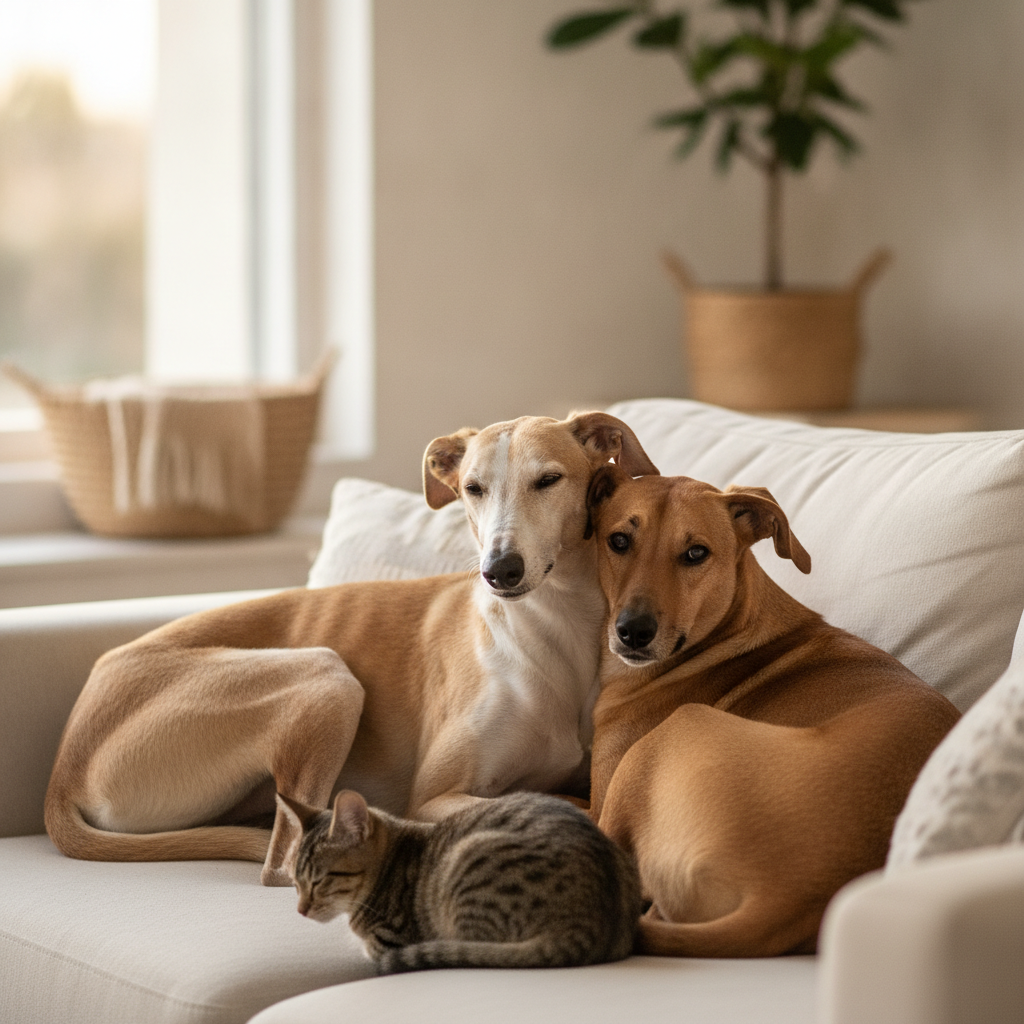
- Greyhounds and Whippets: Often described by trainers as forty-mile-per-hour couch potatoes. They sleep most of the day and need only short, secure sprints during cool hours.
- Salukis: A culturally significant Gulf sighthound, exceptionally well adapted to desert heat and recognised by the FCI.
- Poodles (Standard, Miniature, Toy): Intelligent, low-shedding and adaptable; they require consistent mental enrichment.
- Basenjis: Quiet (they yodel rather than bark), short-coated and athletic in cool hours.
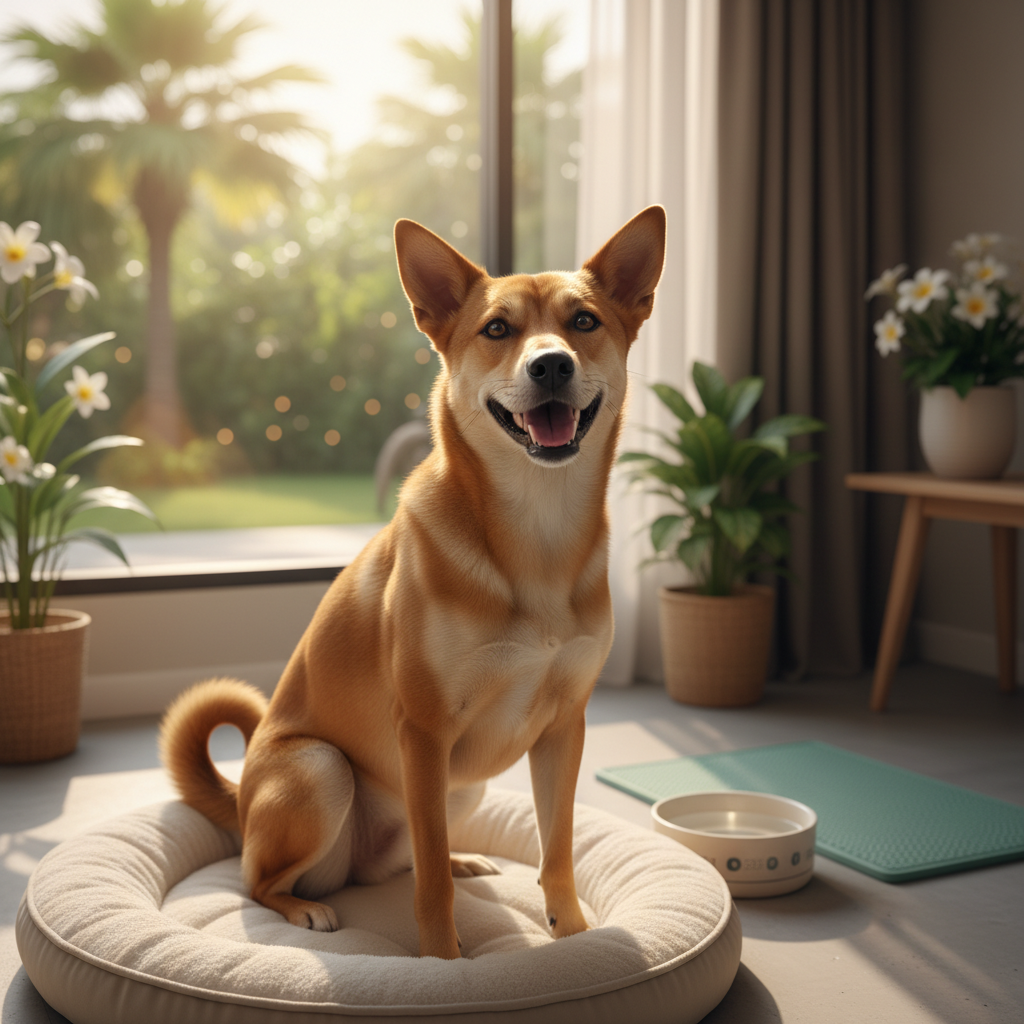
- Baladi mixed breeds: Often the best overall match; many are already accustomed to UAE temperatures and surfaces.
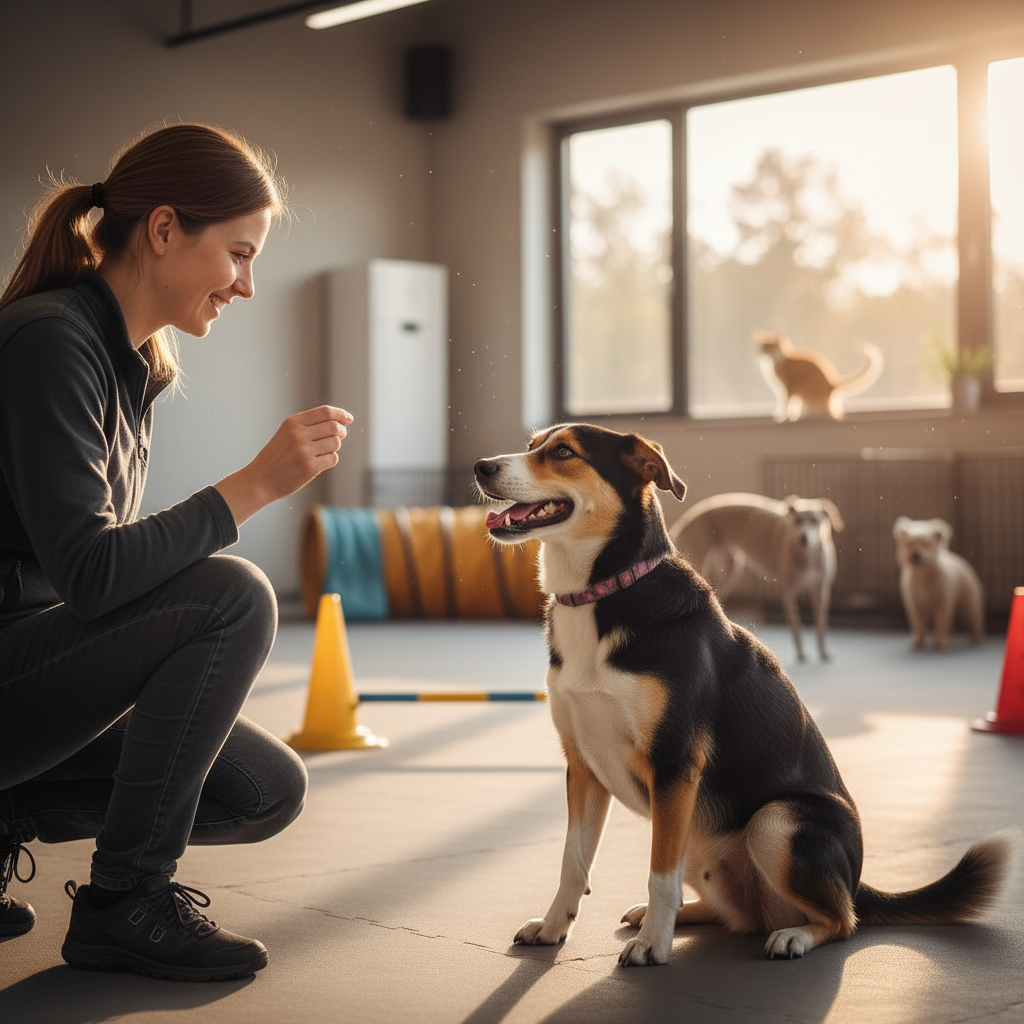
Settling any newly adopted dog into a structured routine, including managed socialisation, is critical. Families using daycare should consult Helping a Newly Adopted Dog Settle Into Group Daycare and the honest assessment in Does Your Dog Actually Enjoy Daycare?.
Lifestyle Match Guide for UAE Households
Apartment, Working Couple, No Garden
Best fits: Whippet, retired racing Greyhound, small to medium Baladi, Miniature Poodle. Plan for a reliable dog walker for pre-dawn and post-sunset walks during the summer months (typically before 6 am and after 9 pm).
Villa or Townhouse With Shaded Yard
Best fits: Saluki, Standard Poodle, Labrador (with strict heat management), Dalmatian. Tiled courtyards and artificial turf heat rapidly in the Emirates; always check the ground temperature with the back of the hand for seven seconds before walks. If it is too hot for a hand, it is too hot for paws.
Family With Young Children
Best fits: Labrador (mesocephalic, family-oriented), Standard Poodle, calm adult rescue mixed breeds vetted by the shelter behaviour team. Supervise interactions regardless of breed reputation.
Senior Owners or Quieter Households
Best fits: Retired Greyhound, adult Whippet, calm mature shelter dog. Senior dogs in hot climates also benefit from the sleep and routine support discussed in Summer Daylight, Senior Pets' Sleep and Sundowning.
Frequent Travellers
Brachycephalic breeds are not recommended; airline restrictions, boarding stress and heat sensitivity all compound. Plan boarding or in-home sitting well in advance using guidance from Hiring a Trustworthy In-Home Pet Sitter This Summer.
Adoption and Sourcing in the UAE
Rescue and Shelter Adoption
Registered UAE shelters and rescue charities, including K9 Friends Dubai, Animal Welfare Abu Dhabi and the Sharjah Cat and Dog Shelter, consistently see large populations of climate-adapted Baladi and crossbreed dogs. Most shelters apply behaviour assessments covering sociability, handling tolerance, resource guarding and reactivity. Adopters should ask:
- How was the dog assessed, and over what period of time?
- What is the dog's known history with heat, indoor living, children and other pets?
- What veterinary work has already been completed (vaccinations, microchip registration with MOCCAE, neutering, tick-borne disease screening)?
- What is the post-adoption support and return policy?
Ethical Breeders
If choosing a breeder, prioritise health-tested parents, climate-appropriate breeds, and breeders who refuse to sell brachycephalic dogs into the Gulf. Avoid online listings without facility visits and avoid breeders who skip adopter screening.
Avoid
- Pet shop puppies of unclear origin.
- Imported brachycephalic puppies marketed as rare colours.
- Any source unwilling to provide veterinary records or allow a kennel visit.
- Breeds appearing on UAE municipal restricted or banned lists.
Decision Checklist for UAE Families
- Our home has reliable, year-round air conditioning, and we have a backup plan for DEWA, ADDC or SEWA outages.
- We can commit to walks at cooler hours (typically before 6 am and after 9 pm during summer).
- We have budgeted in AED for veterinary care, parasite prevention, grooming, MOCCAE registration and possible pet insurance.
- We understand the breed's structural heat risk and have ruled out brachycephalic breeds for this climate.
- We have considered adopting a climate-adapted Baladi mixed breed.
- We have confirmed the breed is not restricted under Dubai Municipality, ADAFSA or Sharjah Municipality rules.
- We have a boarding or in-home sitter plan for travel periods.
- All household members agree on the choice and on responsibilities.
- We are prepared for a ten to fifteen year commitment.
Final Word
Honest breed advisory work in the UAE starts from a single premise: the desert is not going to change for the dog, so the dog must be chosen to fit the desert. Long-muzzled, single-coated, small to medium dogs, including the many resilient Baladi mixed breeds available in shelters across Dubai, Abu Dhabi and Sharjah, almost always represent the kindest, healthiest and most sustainable choice. Brachycephalic breeds, however charming on social media, are widely considered unsuitable for year-round Gulf heat. Families who plan thoroughly, comply with MOCCAE and municipal rules, and commit to heat-aware routines tend to enjoy long, healthy relationships with dogs who are genuinely thriving rather than merely surviving.
Frequently Asked Questions
Are brachycephalic breeds like French Bulldogs and Pugs banned in the UAE? ↓
Which dog breeds are restricted or banned in Dubai and the wider UAE? ↓
What time of day is safest to walk a dog during a UAE summer? ↓
Is microchipping mandatory for dogs living in the UAE? ↓
Where can families adopt a climate-adapted dog in the Emirates? ↓

Priya Nair
Dog Breed Advisor & Adoption Counsellor
Dog breed advisor and adoption counsellor — honest breed comparisons and lifestyle matching for prospective owners.
Content Disclosure
This article was created using state-of-the-art AI models with human editorial oversight. It is intended for informational and entertainment purposes only and does not constitute veterinary medical advice. Always consult a licensed veterinarian for your pet's specific health needs. Learn more about our process.