In this article
- Key Takeaways
- Why Bathing Matters for Canine Skin and Coat Health
- How AI Dog Washing Machines Work: Core Technology
- WoofWoof Lux and Notable Competitors
- Wash Cycle Customisation by Coat Type
- Safety Features for Anxious Dogs
- Water and Energy Usage Compared to Manual Bathing
- Does Automated Grooming Deliver Salon Quality Results?
- Warning Signs to Watch for During Any Bath
- Professional Groomer vs Machine: Decision Guide
- Frequency Guide by Coat Type
- Final Perspective
Key Takeaways
- AI dog washing machines use pressure, temperature, and proximity sensors to adapt each wash cycle to a dog's size and coat type.
- The WoofWoof Lux, unveiled at CES 2025 and demonstrated again at CES 2026, completes a full shampoo cycle in roughly 20 minutes followed by an adjustable warm air dry.
- Competitors such as the USMILE PET UP Machine and self service units from WEIMI and iClean offer variations including UV sterilisation and 24/7 unattended operation.
- Automated machines can reduce water consumption by up to 50 percent compared to manual tub bathing, according to industry estimates.
- These machines are best suited for routine maintenance baths; dogs with severe matting, skin conditions, or extreme anxiety still need a professional groomer or veterinary dermatologist.
Why Bathing Matters for Canine Skin and Coat Health
Regular bathing is not merely cosmetic. It removes allergens, environmental debris, excess sebum, and dead undercoat that can lead to hot spots, bacterial dermatitis, and fungal overgrowth. The National Dog Groomers Association of America (NDGAA) and the International Professional Groomers (IPG) both emphasise that bathing frequency should align with coat type, lifestyle, and any underlying dermatological conditions. Over bathing strips natural oils, while under bathing allows irritants to accumulate.
The challenge for owners has always been practical: large breed baths at home mean water everywhere, stressed dogs, and inconsistent rinsing. Professional grooming salons deliver thorough results but can be costly at frequent intervals. AI powered robotic dog washing machines aim to bridge that gap by automating water pressure, temperature, shampoo dispensing, and drying, all calibrated to the individual dog.
How AI Dog Washing Machines Work: Core Technology
Sensor Arrays and Real Time Adjustment
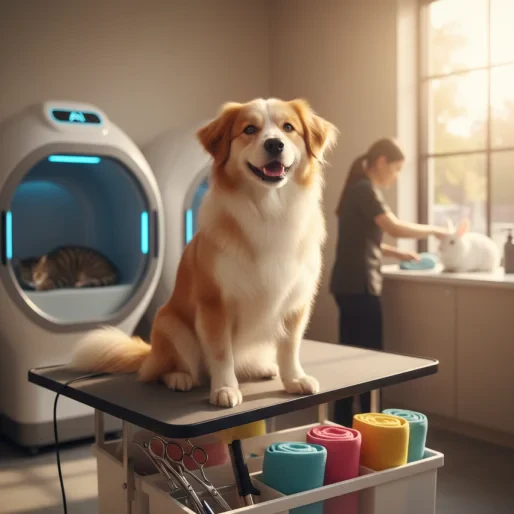
Modern robotic dog washers rely on arrays of sensors positioned on the sides, top, and floor of the washing chamber. The WoofWoof Lux, for example, uses pressure sensors, temperature monitors, and proximity detectors to assess the dog's size and position during the wash. This data feeds into an onboard processor that adjusts water jet angle, flow rate, and temperature in real time. The goal is to maintain even coverage while avoiding sensitive areas such as the eyes, ears, and nose.
Wash Cycle Sequence
A typical automated wash follows a structured sequence:
- Pre rinse: Lukewarm water saturates the coat to the skin. Sensors confirm full saturation before proceeding.
- Shampoo application: Pet safe shampoo is dispensed through integrated nozzles. The machine distributes product evenly using rotating or oscillating jets.
- Agitation and soak: Gentle pulsing water action works the shampoo through the coat, loosely mimicking the kneading motion a groomer uses by hand.
- Rinse cycle: Thorough rinsing removes all shampoo residue. This step is critical because residual product causes itching, flaking, and contact dermatitis. Sensors can detect changes in water clarity to confirm a complete rinse.
- Drying: Warm air at an adjustable temperature circulates through the chamber. Some units include a low velocity blower setting for dogs that are startled by high airflow.
- Self cleaning: After the dog exits, the machine runs a five to ten minute internal flush to clear hair, debris, and residual shampoo before the next use.
AI Learning and Personalisation
Manufacturers including WoofWoof Lux have announced plans for machine learning features that record a dog's responses across multiple sessions: preferred water temperature, optimal jet pressure, drying time, and stress indicators. Over time, the machine builds a profile for each dog, aiming to reduce anxiety and improve wash consistency.
WoofWoof Lux and Notable Competitors
WoofWoof Lux
Debuted at CES 2025, the WoofWoof Lux is marketed as the world's first AI powered dog washing machine. It features a transparent door for owner observation, built in soothing audio, adjustable washing and drying cycles by breed and coat type, and a self cleaning filtration system that manages loose hair and debris. The shampoo cycle takes approximately 20 minutes, with a subsequent self cleaning phase of five to ten minutes. The unit is designed for both home and commercial use and is available in configurations to suit different dog sizes.
USMILE PET UP Machine
Developed by Dalian Usmile Pet Technology, the UP Machine integrates washing, drying, and UV sterilisation into a single self service unit. It is designed for 24/7 unattended operation, positioning it primarily for commercial environments such as pet hotels, doggy daycares, and veterinary waiting areas. UV sterilisation between washes adds an extra layer of hygiene, which may appeal to facilities managing multiple dogs daily. For owners exploring quality daycare environments, Enrichment Dog Daycare: What to Look For and Ask covers what to evaluate in facility standards.
WEIMI and Other Self Service Units
WEIMI, known for AI vending technology, has expanded into self service dog washing kiosks deployed commercially. Companies such as iClean Dog Wash and Evolution Dog Wash offer semi automated self service stations where the owner guides the dog while the machine handles water delivery, shampoo dispensing, and drying. These represent a middle ground between fully automated AI units and traditional hand bathing.
Wash Cycle Customisation by Coat Type
Coat type is the most important variable in any bathing routine, and it is where AI calibration adds genuine value. Professional grooming standards from the IPG and British Dog Groomers Association categorise coats into several groups, each requiring different water pressure, shampoo formulation, and drying approaches.
Double Coated Breeds
Breeds such as the Siberian Husky, Golden Retriever, and German Shepherd carry a dense undercoat beneath longer guard hairs. Thorough saturation is essential but difficult to achieve with low pressure water. AI machines typically increase jet pressure for double coated profiles while extending the pre rinse and rinse phases. Drying time is also longer because trapped moisture in the undercoat creates a breeding ground for bacteria and yeast if not fully dried. Professional groomers often use high velocity dryers to blow out loose undercoat; some advanced machines include a similar forced air function.
Single Coated and Smooth Coated Breeds
Breeds like the Boxer, Dalmatian, and Whippet have a single layer coat with minimal undercoat. These dogs require lower water pressure and shorter cycles. Over processing a smooth coat with excessive shampoo or prolonged drying can strip oils and cause dryness. AI machines calibrated for single coats reduce product volume and shorten the agitation phase.
Wire and Broken Coated Breeds
Terrier breeds with wiry or broken coats, such as the Wire Fox Terrier or Border Terrier, present a unique consideration. Their coat texture can become soft and lose its characteristic harshness if bathed with inappropriate products. For these breeds, shampoo selection matters as much as cycle settings. AI machines that allow owners to load a specific shampoo cartridge rather than relying on a generic built in product offer greater flexibility for wire coated breeds.
Curly and Wool Coated Breeds
Poodles, Bichon Frises, and similar breeds have continuously growing, curly coats that are highly prone to matting when wet. AI wash machines can adjust water flow to minimise tangling, but professional grooming consensus is clear: a curly coat should be thoroughly brushed and de matted before any bath. No machine, however advanced, replaces the need for pre bath brushing on a wool coat. If mats are present near the ears, armpits, or behind the legs, attempting a machine wash risks tightening those mats against the skin, potentially causing pain and restricting blood flow.
Safety Features for Anxious Dogs
Anxiety during bathing is one of the most common concerns owners and groomers encounter. AI washing machines address this through several design strategies:
- Transparent enclosures: Glass or clear polymer doors allow the dog to maintain visual contact with the owner, reducing separation anxiety.
- Soothing audio: Built in calming music or white noise can help mask the sound of water jets and blower motors. The WoofWoof Lux includes this feature as standard.
- Gradual water introduction: Rather than starting at full pressure, some machines begin with a gentle mist and increase gradually, allowing the dog to acclimate.
- Emergency stop mechanisms: All reputable units include an immediate stop button accessible to the owner. Some also feature motion sensors that pause the cycle if the dog shows signs of extreme distress, such as persistent jumping or scratching at the door.
- Adjustable noise levels: Dryer noise is a major trigger for noise sensitive dogs. Variable speed blowers that start low and increase incrementally help reduce startle responses.
However, professional grooming guidelines caution that extremely anxious dogs, those with a history of panic during bathing, noise phobias, or prior traumatic grooming experiences, may not be suitable candidates for enclosed machine washing. These dogs typically benefit from the hands on reassurance of an experienced groomer who can read body language and adjust in real time. If a dog's anxiety extends to other activities, such as outdoor adventures, Introduce Your Dog to Paddleboarding and Kayaking provides desensitisation strategies that can also be adapted for bath training.
Water and Energy Usage Compared to Manual Bathing
One of the strongest selling points of AI dog washing machines is resource efficiency. Industry estimates suggest that automated machines can reduce water consumption by up to 50 percent compared to a traditional tub bath, where water often runs continuously. The efficiency comes from several factors:
- Targeted delivery: Sensor guided jets direct water precisely where it is needed rather than flooding the entire tub.
- Recirculation systems: Some commercial units filter and recirculate rinse water during the early rinse phase, reducing total consumption.
- Automatic shutoff: Water flow stops during the shampoo soak and agitation phases, whereas manual bathing often leaves the tap running.
- Optimised drying: Integrated dryers reduce the need for towel drying (and the associated laundry water) and typically reach a usable dry state faster than air drying.
Energy consumption varies by model and cycle length. A 20 minute wash and dry cycle draws power for the water pump, heating element, control system, and blower motor. Exact figures depend on the unit's specifications, water inlet temperature, and ambient conditions. Manufacturers generally position energy costs as comparable to running a domestic washing machine cycle, though independent third party testing data is still limited for most models.
For owners already interested in reducing their household environmental footprint, Eco Friendly Cat Litter in 2026: 5 Types Compared covers sustainable choices in another area of pet care.
Does Automated Grooming Deliver Salon Quality Results?
This is the central question for many owners, and the honest answer is nuanced. AI dog washing machines excel at:
- Consistent, thorough rinsing: Residual shampoo is one of the most common mistakes in home bathing. Sensor monitored rinsing reduces this risk significantly.
- Even shampoo distribution: Automated dispensing eliminates the uneven application that often occurs with hand bathing, especially on large dogs.
- Standardised water temperature: Maintaining a safe, consistent temperature throughout the wash protects the skin from scalding or cold shock.
- Convenience and time savings: A 20 to 30 minute automated cycle with minimal owner involvement is substantially easier than a manual bath, particularly for large or uncooperative dogs.
However, there are clear limitations that prevent these machines from fully replacing a professional grooming session:
- No de matting or brushing: Machines wash and dry but do not brush, comb, or de mat. For breeds requiring regular brushing (virtually all medium to long coated breeds), pre bath preparation and post bath finishing remain manual tasks.
- No hand scissoring or breed specific styling: Breed standard trims, hand stripping for wire coats, pattern setting for Poodles, and similar skilled work is beyond the scope of any current automated system.
- Limited skin assessment: A skilled groomer checks for lumps, parasites, skin lesions, ear infections, and nail condition during every session. Machines cannot perform this health screening. Any unusual skin changes, persistent scratching, hair loss, or foul odour should prompt a visit to a veterinary dermatologist rather than another machine cycle.
- Ear and eye care: Professional groomers clean ears, check for wax buildup or infection, and ensure no water enters the ear canal. While AI machines attempt to avoid the head area, they cannot replicate targeted ear cleaning.
For owners concerned about tick and parasite detection that would normally happen during a hands on grooming session, Preventing Tick Diseases in Dogs: May to July Guide offers seasonal prevention strategies.
Warning Signs to Watch for During Any Bath
Whether using a machine or bathing by hand, owners should monitor for:
- Redness, swelling, or hives appearing during or after the wash (possible product reaction)
- Excessive scratching or biting at the skin post bath (residual shampoo or underlying allergy)
- Foul smell persisting after a thorough wash (potential yeast or bacterial infection requiring veterinary assessment)
- Patches of hair loss, scabs, or crusty skin (dermatological conditions that should not be masked by bathing)
- Signs of pain when water contacts a specific area (possible wound, abscess, or joint pain)
Any of these signs warrant pausing the grooming routine and consulting a veterinarian before the next bath.
Professional Groomer vs Machine: Decision Guide
The table below outlines when each option is most appropriate:
- Routine maintenance bath for a healthy dog with a short or medium coat: AI washing machine is a suitable option.
- Double coated breed needing undercoat blowout and de shedding: Professional groomer recommended, as manual brushing and high velocity drying are required.
- Dog with skin condition, parasites, or open wounds: Veterinary grooming or vet supervised bathing only.
- Breed standard trim, hand stripping, or show preparation: Professional groomer essential.
- Severely anxious or aggressive dog during bathing: Experienced groomer with behaviour management skills; machine washing is not recommended.
- Puppy's first baths (socialisation period): Hand bathing with positive reinforcement is preferred to build confidence before introducing any machine.
- Senior dog with mobility issues: Depends on the individual dog; low entry machines may be easier on joints than climbing into a high tub, but a groomer experienced with senior dogs may be safer overall.
Facilities such as doggy daycares are beginning to integrate these machines into their service offerings. Dog Daycare Staff Training Standards in 2026 explores how staff are trained to operate new pet care technology responsibly.
Frequency Guide by Coat Type
- Smooth and short coats (Boxer, Beagle): Every four to eight weeks, or as needed after muddy outings.
- Double coats (Husky, Retriever): Every six to ten weeks, with thorough drying and brushing.
- Wire coats (most Terriers): Every six to eight weeks, using coat appropriate shampoo.
- Curly and wool coats (Poodle, Bichon): Every three to four weeks, always with pre bath de matting.
- Long, silky coats (Yorkshire Terrier, Maltese): Every two to four weeks, with conditioner application and careful detangling.
These are general guidelines. Dogs with allergies, skin conditions, or high activity levels outdoors may need adjusted schedules as advised by a veterinarian or certified groomer.
Final Perspective
AI powered dog washing machines represent a genuine step forward in making routine bathing more accessible, consistent, and resource efficient. The technology is maturing rapidly, with sensor arrays, adaptive cycles, and personalisation features improving with each product generation. For healthy dogs with manageable coats, these machines can deliver a clean, comfortable bath that rivals the washing component of a professional groom.
However, they are not a replacement for the full scope of professional grooming. Skilled groomers provide health screening, coat styling, de matting, ear care, nail trimming, and behavioural reading that no machine currently replicates. The smartest approach is to view AI washing machines as a complement to, not a substitute for, periodic professional grooming sessions. For owners integrating new pet technology into their care routine, How AI Smart Feeders Prevent Overeating in Multi Pet Homes explores another area where automation supports, rather than replaces, thoughtful pet ownership.
Frequently Asked Questions
Content Disclosure
This article was created using state-of-the-art AI models with human editorial oversight. It is intended for informational and entertainment purposes only and does not constitute veterinary medical advice. Always consult a licensed veterinarian for your pet's specific health needs. Learn more about our process.