Spring moult puts rabbits at serious risk of GI stasis from ingested fur. This guide covers undercoat removal, breed specific brush selection, nail trimming, and when to call a professional.
Key Takeaways
- Spring moult is the heaviest shedding period for rabbits and significantly raises the risk of GI stasis from ingested fur.
- Short haired breeds and Angora or wool breeds require completely different brushes and grooming frequencies.
- Nail trimming every four to six weeks is essential, and the quick is easier to see in light coloured nails.
- Skin redness, bald patches, or flaky debris during grooming are signs that warrant veterinary referral, not further home grooming.
- Professional small animal groomers should handle severe matting, Angora wool clip downs, and any rabbit showing signs of distress.
Why Spring Moult Grooming Matters for Rabbit Health
Rabbits typically undergo two major moults per year, with the spring moult being the most dramatic. Unlike dogs and cats, rabbits are obligate groomers that swallow loose fur but cannot vomit. When large volumes of shed undercoat are ingested, the fur can mix with stomach contents and slow gut motility. This condition, known as gastrointestinal (GI) stasis, is one of the leading causes of emergency veterinary visits for rabbits and can become life threatening within 12 to 24 hours if untreated.
Active grooming during the spring moult serves a clear medical purpose: it removes loose fur before the rabbit ingests it. The Rabbit Welfare Association and Fund (RWAF) emphasises that regular brushing during heavy shedding periods is a core component of responsible rabbit ownership, not merely a cosmetic exercise.
Understanding Rabbit Coat Types
Short Haired (Normal Fur) Breeds
Breeds such as the Dutch, Mini Rex, Netherland Dwarf, and Polish have a relatively short, dense double coat consisting of a soft undercoat and slightly longer guard hairs. The spring moult in these breeds often presents as visible tufts of loose fur, sometimes called "blowing the coat," where patches lift away in clumps over a period of one to three weeks.
Long Haired and Wool (Angora) Breeds
English Angora, French Angora, Giant Angora, and Jersey Wooly rabbits produce a continuously growing wool coat that mats rapidly if not maintained. During spring moult, the undercoat loosens beneath dense wool fibres, creating a prime environment for severe matting close to the skin. Left unaddressed, mats near the ears, under the chin, on the belly, and around the tail can trap moisture and lead to urine scald or fly strike.
Rex and Velveteen Coats
Rex and Mini Rex rabbits have a unique plush coat where the guard hairs and undercoat are nearly the same length. These breeds tend to moult more subtly, but still shed enough to warrant regular grooming during spring.
Tools and Products Needed
For Short Haired Breeds
- Fine toothed comb: A standard metal flea comb works well for lifting loose undercoat without pulling live fur.
- Soft bristle brush: Useful for finishing passes to collect surface hair and distribute natural oils.
- Rubber grooming mitt: Particularly effective for Rex coats; the soft nubs attract loose hair without damaging the delicate plush texture.
For Angora and Wool Breeds
- Wide toothed metal comb: Essential for working through longer wool without snapping fibres.
- Slicker brush (small, soft pin): Choose a model with flexible pins designed for small animals. Stiff dog slicker brushes can scratch rabbit skin, which is significantly thinner than canine skin.
- Mat splitter or seam ripper: For carefully opening small mats before combing. Professional groomers often recommend working mats apart by hand first.
- Blunt tipped grooming scissors: Only for trimming isolated mats that cannot be combed out. Extreme caution is required, as rabbit skin tents easily and can be cut.
Nail Trimming Tools
- Small animal nail clippers: Guillotine style or scissor style clippers designed for small pets. Standard cat clippers also work well for medium sized rabbits.
- Styptic powder or cornstarch: To stop bleeding if the quick is accidentally nicked.
- Penlight or torch: For illuminating dark nails to locate the quick before cutting.
General Supplies
- Non slip mat or towel for the grooming surface
- Treats for positive reinforcement
- A second person to assist with handling if the rabbit is not accustomed to grooming
Step by Step Spring Moult Grooming Routine
Step 1: Prepare the Environment
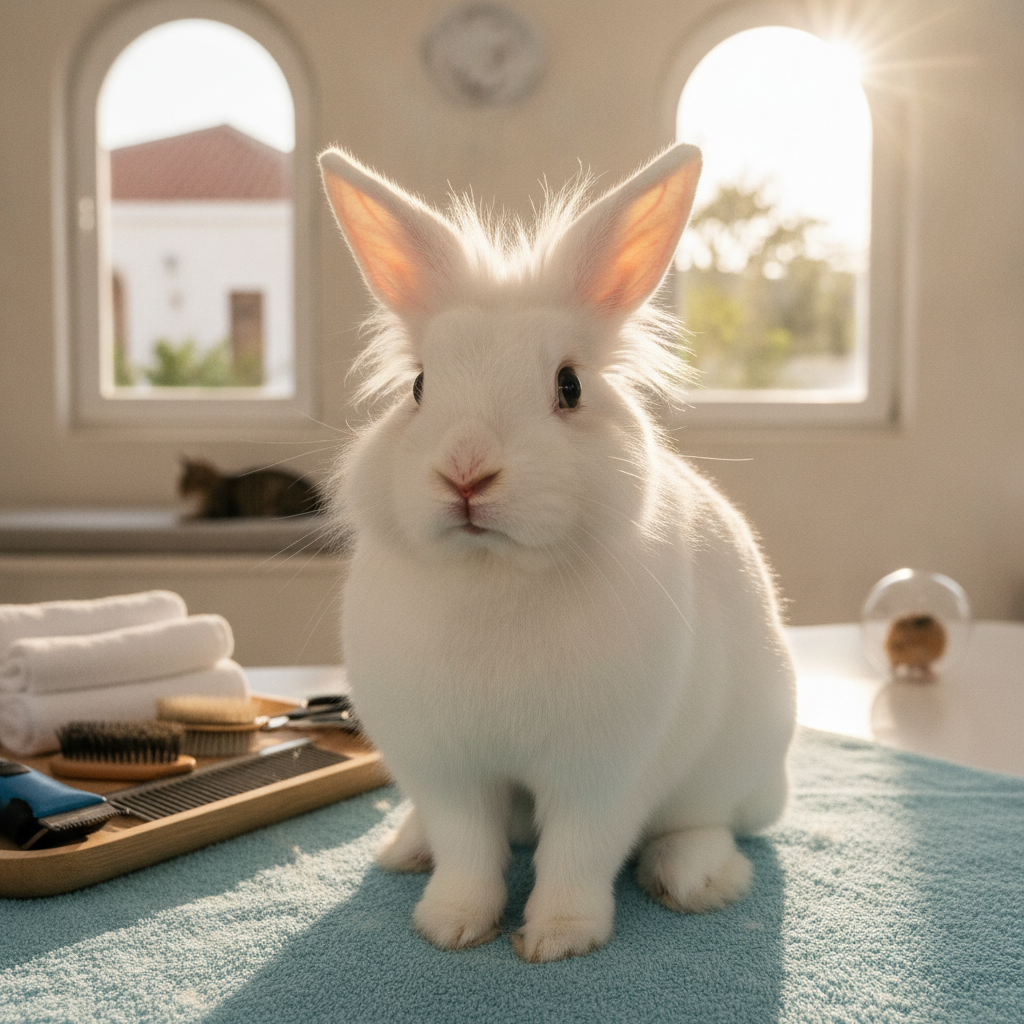
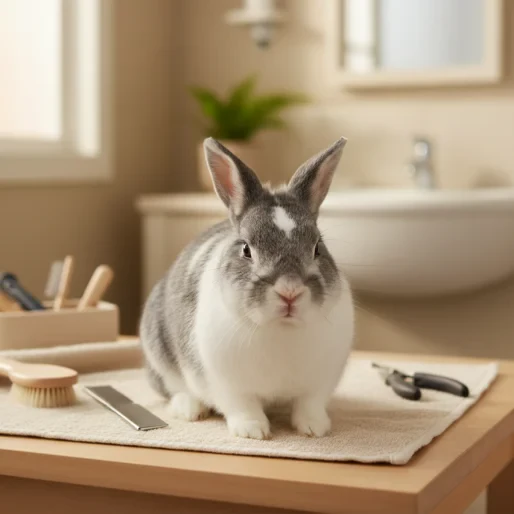
Place the rabbit on a non slip surface at a comfortable height. A towel on a table works well. Avoid grooming on slippery counters, as rabbits that scramble can injure their spine. Keep sessions short, typically 5 to 10 minutes, especially during the first few sessions of the season. Stress in rabbits can itself trigger gut slowdown, so calm handling is medically relevant.
Step 2: Full Body Check
Before picking up a brush, run both hands gently over the rabbit from head to tail. Check for lumps, scabs, flaky skin, bald patches, or signs of external parasites such as fur mites (Cheyletiella parasitovorax), which cause characteristic "walking dandruff." If any abnormality is detected, grooming should be paused and a rabbit savvy veterinarian consulted. The British Veterinary Association (BVA) advises against home treatment of skin conditions in rabbits without a proper diagnosis.
Step 3: Undercoat Removal (Short Haired Breeds)
Using a fine toothed comb, work in the direction of hair growth from the shoulders toward the rump. Lift loose tufts gently; during heavy moult, large clumps will release with minimal effort. Avoid pressing hard against the skin. Follow with a soft bristle brush or rubber mitt to collect remaining loose fibres. Pay attention to the rump and flanks, where shedding tends to concentrate.
Step 4: Undercoat Removal (Angora and Wool Breeds)
Part the wool into small sections using fingers. Work through each section with a wide toothed comb, starting at the tips and gradually moving closer to the skin to avoid pulling. For tangles, hold the base of the wool close to the skin with one hand while gently teasing the tangle apart with the other. If a mat is too tight to comb, use blunt tipped scissors to make a single cut along the length of the mat (parallel to the skin, never perpendicular), then comb the loosened fibres apart. Professional grooming standards from the National Dog Groomers Association of America (NDGAA), which also certifies small animal groomers, recommend never using clippers directly on a rabbit without proper restraint training, as the vibration can cause panic and spinal injury from sudden kicks.
Step 5: Sensitive Areas
The belly, dewlap (in females), inner thighs, and around the tail require particular care. Rabbit skin in these regions is extremely thin. Use fingers or a comb with rounded tips. For Angora breeds, the area around the vent must be kept clear of matted wool to prevent caecotroph accumulation, which can attract flies and cause flystrike, a potentially fatal condition.
Step 6: Collect and Dispose of Loose Fur
Gather all removed fur immediately. Rabbits housed indoors or in enclosed hutches may re-ingest loose fur floating in their environment, negating the benefit of grooming. Some owners find that a lint roller over the rabbit's coat after brushing captures remaining loose fibres effectively.
Nail Trimming Technique
Rabbit nails grow continuously and typically need trimming every four to six weeks. Overgrown nails can curl into the footpad, cause splay footing on hard surfaces, and increase the risk of nails catching and tearing.
How to Trim Safely
- Restrain gently: Wrap the rabbit in a towel ("bunny burrito" technique) to limit movement and cover the eyes, which has a calming effect on many rabbits. A second handler is recommended.
- Identify the quick: In light nails, the quick (blood supply) is visible as a pink line inside the nail. In dark nails, shine a penlight behind the nail to illuminate the quick. If it still cannot be seen, trim only the very tip, approximately 1 to 2 millimetres at a time.
- Cut at a slight angle: Position the clipper just below the quick and cut at a gentle angle, mirroring the natural nail shape. Avoid crushing the nail, which can happen with dull clippers.
- If bleeding occurs: Apply styptic powder or cornstarch with gentle pressure for 30 to 60 seconds. A minor nick to the quick, while painful, is not dangerous unless the rabbit has a bleeding disorder.
- All four feet plus dewclaws: Rabbits have five toenails on each front foot (including a dewclaw) and four on each hind foot. Do not skip the dewclaws.
If a rabbit becomes severely distressed, kicking violently, or screaming, stop immediately. Rabbit spines are fragile relative to their powerful hind legs, and forceful kicks during restraint can cause spinal fracture. Resume on another day or seek professional grooming assistance.
Grooming Frequency Guide by Breed Type
| Breed Type | Outside Moult Season | During Spring Moult |
|---|---|---|
| Short haired (Dutch, Mini Lop, Polish) | Once weekly | Daily or every other day |
| Rex and Mini Rex | Once weekly (rubber mitt only) | Every two to three days |
| Angora and Jersey Wooly | Every two to three days | Daily, sometimes twice daily for heavy moult |
| Lionhead (mane area) | Two to three times weekly | Daily |
Warning Signs to Watch for During Grooming
- Bald patches with red or flaky skin: May indicate mites, ringworm, or bacterial dermatitis. Do not continue grooming the affected area; seek veterinary evaluation.
- Pain response when touching specific areas: Flinching, teeth grinding (bruxism), or attempting to bite can indicate an abscess, injury, or arthritis in older rabbits.
- Wet or soiled fur around the vent: This can signal diarrhoea, uneaten caecotrophs (often linked to diet), or urinary problems. A vet check is warranted before grooming proceeds.
- Unusual lumps or swelling: Rabbits are prone to abscesses, and any new lump discovered during grooming should be examined professionally.
- Excessive scratching or head shaking: Ear mites (Psoroptes cuniculi) are common in rabbits and cause intense irritation. Crusty debris inside the ears is a hallmark sign.
GI Stasis Prevention: Beyond Grooming
While regular brushing is a critical preventive measure, it works best alongside dietary management. The RWAF and the House Rabbit Society both recommend that a rabbit's diet consist primarily of unlimited grass hay (such as Timothy hay), which provides the fibre needed to keep the gut moving. During heavy moult, some veterinarians suggest increasing hay availability and monitoring faecal pellet output. A decrease in pellet size or quantity, or a rabbit that stops eating, are early warning signs of GI stasis and constitute a veterinary emergency.
For further reading on recognising when a pet needs urgent attention while in someone else's care, see the Pet Sitter Emergency Guide on TrustMyPets.
Professional Groomer vs Home Grooming: Decision Guide
When Home Grooming Is Appropriate
- Short haired rabbits with no mats and no skin conditions
- Rabbits accustomed to handling and showing no signs of severe distress
- Routine nail trims on calm, well socialised rabbits
- Minor tangles in Lionhead manes that can be teased apart by hand
When to Seek a Professional Small Animal Groomer
- Severe matting in Angora or wool breeds: Mats close to the skin require careful clip work with professional grade clippers and proper restraint. Attempting this at home risks skin lacerations and rabbit panic injuries.
- Full body clip downs: Some Angora owners opt for a periodic short clip, particularly before summer. This should be performed by a groomer experienced with rabbits, as rabbit skin is extremely thin and tears easily.
- Rabbits that become dangerously stressed: Thumping, screaming, or violent kicking during grooming is a sign to stop. A professional groomer trained in small animal handling can often complete the task more quickly and safely.
- Suspected skin conditions: If grooming reveals parasites, lesions, or abnormal hair loss patterns, a veterinary dermatology consultation should precede any further grooming.
- Overgrown nails curling into the pad: Severely overgrown nails may need veterinary intervention, especially if the quick has extended with the nail length.
When selecting a professional groomer, look for certifications from recognised bodies such as the International Professional Groomers (IPG), the NDGAA, or equivalent national organisations. Ask specifically about experience with rabbits, as many grooming salons focus exclusively on dogs and cats. Some exotic animal veterinary clinics offer grooming services or can recommend qualified small animal groomers in the area.
Seasonal Considerations for Spring
Spring brings additional hazards beyond heavy shedding. Rabbits with outdoor access may encounter toxic garden products that can irritate the skin or coat. Increased temperatures and daylight can also trigger earlier and heavier moults than expected. Owners who also care for birds during this busy season may appreciate the handling confidence principles outlined in the Parrot Step Up and Recall: Clicker Training Guide, as positive reinforcement techniques translate well across species.
Summary: Building a Safe Spring Grooming Routine
A consistent, gentle grooming routine during spring moult is one of the most effective ways to protect a rabbit from GI stasis and skin complications. Match the tools and frequency to the breed's coat type, keep sessions short and calm, inspect the skin at every session, and know when to escalate to a professional groomer or veterinarian. With the right approach, spring moult becomes a manageable part of the seasonal care cycle rather than a health crisis.
Frequently Asked Questions
How often should a rabbit be groomed during spring moult? ↓
Can rabbit grooming actually prevent GI stasis? ↓
What type of brush is safe for an Angora rabbit? ↓
How do you know if a rabbit's nail quick has been cut? ↓
When should a rabbit see a professional groomer instead of being groomed at home? ↓

Sophie Bianchi
Certified Master Pet Groomer
Certified master pet groomer — breed-standard techniques, skin health awareness, and at-home grooming guidance.
Content Disclosure
This article was created using state-of-the-art AI models with human editorial oversight. It is intended for informational and entertainment purposes only and does not constitute veterinary medical advice. Always consult a licensed veterinarian for your pet's specific health needs. Learn more about our process.