A step by step safety checklist for building a predator proof, escape proof outdoor rabbit enclosure with proper shade, ventilation, and toxic plant exclusion. Covers seasonal maintenance, emergency kit essentials, and a printable summary for spring and summer.
Key Takeaways
- Predator proofing requires hardware cloth (not chicken wire), buried apron mesh, and secure multi-point latches on every access point.
- Shade and ventilation must be planned together: rabbits are highly susceptible to heat stress at temperatures above roughly 26 to 28 °C (around 80 °F).
- Dozens of common garden plants, including foxglove, lily of the valley, and buttercups, are toxic to rabbits. A plant audit before enclosure placement is essential.
- Escape prevention involves below ground barriers, secure panel joints, and regular structural inspections at least monthly.
- Keep the ASPCA Animal Poison Control number (888 426 4435) and your rabbit savvy veterinarian's details posted at the enclosure at all times.
Why Outdoor Time Matters, and Why It Carries Risk
Rabbits benefit enormously from outdoor access during spring and summer. Natural sunlight supports vitamin D synthesis, fresh forage encourages healthy gut motility, and the sensory enrichment of grass, breeze, and earth reduces stereotypic behaviours commonly observed in indoor only housing. However, the outdoors also introduces predators, temperature extremes, toxic plants, and escape opportunities. A well designed enclosure eliminates these risks while preserving every benefit.
This guide is organised as a scenario by scenario safety check, designed so that owners, pet sitters, and shelter volunteers can walk through each section, tick off requirements, and feel confident that nothing has been missed. Where relevant, links to related seasonal care guides are included: for example, parasite considerations overlap significantly with enclosure hygiene, and our Spring Parasite Prevention guide covers that topic in depth.
Section 1: Predator Proofing
1.1 Choosing the Right Mesh
The single most common hazard identified in outdoor rabbit setups is the use of standard chicken wire as the primary barrier. Chicken wire is designed to keep poultry contained, not to keep predators out. Foxes, raccoons, and even determined cats can tear or bend lightweight poultry netting. Professional guidelines consistently recommend 16 gauge (or heavier) galvanised welded wire mesh, often called hardware cloth, with openings no larger than 1.3 cm by 2.5 cm (roughly half an inch by one inch). This mesh size prevents predator paws and snouts from reaching through and also stops smaller predators like weasels, stoats, and snakes from entering.
1.2 Roof and Overhead Protection
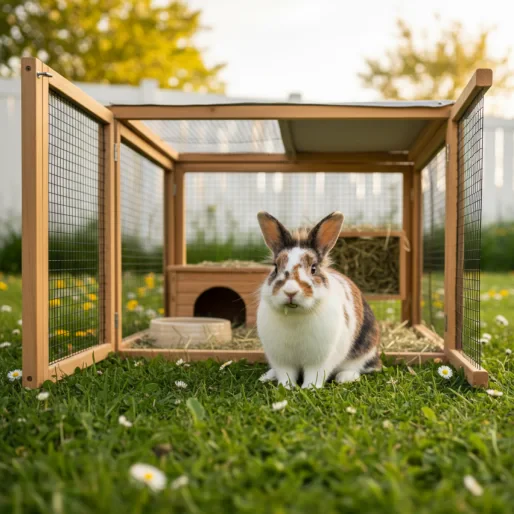
An open top enclosure is never safe for rabbits. Birds of prey (hawks, owls, and eagles depending on region) pose a serious aerial threat, and cats can easily jump or climb into uncovered runs. Every outdoor enclosure should have a solid or mesh covered roof. If the enclosure is large, a combination approach works well: a solid roofed shelter area at one end for shade and rain protection, with securely fixed mesh covering the remaining open run.
1.3 Ground Level and Below Ground Defence
Predators commonly dig under enclosure walls. To counter this, an outward facing wire apron should be buried at least 30 cm (12 inches) deep around the full perimeter, or alternatively, an L shaped apron extending 30 to 60 cm outward from the base can be laid horizontally just beneath the soil surface. Many builders also place paving slabs or hardware cloth across the entire enclosure floor beneath the substrate, which simultaneously prevents rabbits from digging out and predators from digging in.
1.4 Latches and Locks
Raccoons, in particular, are known to open simple bolt latches, hook and eye closures, and even some spring loaded catches. A two step latch system, such as a bolt paired with a carabiner or padlock, is strongly recommended on every door and access panel. Check latches during each daily inspection and replace any that show wear or looseness.
1.5 Night Time Protocol
Even the best outdoor enclosure benefits from a night time security routine. Most predator attacks on domestic rabbits occur between dusk and dawn. Many experienced rabbit owners bring their rabbits into a secure shed, garage (ensuring no vehicle fumes), or indoor space overnight. If the rabbits remain outside, motion activated lighting or alarm devices around the enclosure perimeter can serve as additional deterrents.
Section 2: Shade, Ventilation, and Heat Safety
2.1 Understanding Rabbit Heat Vulnerability
Rabbits are far more susceptible to heat stress than many owners realise. Veterinary sources consistently note that ambient temperatures above approximately 26 to 28 °C (about 80 °F) can become dangerous, particularly for long haired breeds, overweight individuals, and senior rabbits. Rabbits cannot pant efficiently and rely heavily on their ears for thermoregulation, making shade and airflow critical rather than optional. For a broader look at heat emergencies in companion animals, our Heat Stress in Indoor Cats article covers the general physiology of heat illness in small mammals.
2.2 Shade Requirements
A minimum of 60 to 70 percent of the enclosure's total area should be shaded during peak sun hours (typically 10:00 to 16:00 in summer). Shade can be provided through:
- Solid roofing panels over at least one large section of the run.
- Natural tree canopy, provided the tree species is verified non toxic (see Section 3).
- Shade cloth rated at 70 to 90 percent UV block, attached securely to the enclosure frame. This is widely available at garden supply retailers.
- Ceramic or stone tiles placed inside the enclosure for rabbits to lie on, which stay cool longer than wood or plastic surfaces.
2.3 Ventilation Design
Enclosed shelters within the run need adequate cross ventilation to prevent heat buildup. At least two mesh panels on opposite sides of any sheltered section create cross airflow. Avoid placing enclosed sleeping boxes in direct sun. Plastic hutches, unless very well ventilated, can become dangerously hot inside within minutes on warm days.
2.4 Emergency Cooling
Keep the following on hand during warm months:
- Frozen water bottles (wrapped in a thin cloth) that rabbits can lie beside.
- A ceramic tile kept in the refrigerator, rotated into the enclosure during hot spells.
- A misting system or damp towel draped over part of the enclosure roof (ensuring the enclosure does not become humid and stagnant).
- Fresh water in heavy, tip proof bowls checked at least twice daily. Rabbits drink significantly more in warm weather.
Section 3: Toxic Plant Exclusion
3.1 Why This Step Is Non Negotiable
Rabbits are natural foragers and will sample virtually any greenery within reach. Many common garden and wild plants are toxic to rabbits, and symptoms can range from mild gastrointestinal upset to fatal organ failure. The ASPCA Poison Control database lists hundreds of plants toxic to rabbits, and the Rabbit Welfare Association and Fund (RWAF) provides a widely referenced toxic plant list specific to domestic rabbits.
3.2 Common Toxic Plants to Remove or Exclude
The following plants are frequently encountered in gardens and are known to be toxic to rabbits. This list is not exhaustive:
- Foxglove (Digitalis purpurea): contains cardiac glycosides; potentially fatal.
- Lily of the Valley (Convallaria majalis): cardiac toxin; all parts dangerous.
- Buttercups (Ranunculus species): cause oral irritation and digestive upset.
- Ragwort (Jacobaea vulgaris): causes cumulative liver damage.
- Nightshade (Solanum species): contains solanine; affects nervous and digestive systems.
- Rhododendron and Azalea (Rhododendron species): contain grayanotoxins; potentially fatal.
- Yew (Taxus species): extremely toxic; very small amounts can be fatal.
- Privet (Ligustrum species): causes gastrointestinal distress.
- Ivy (Hedera helix): causes irritation and digestive symptoms.
- Rhubarb leaves (Rheum rhabarbarum): contain oxalic acid; toxic to rabbits.
3.3 Safe Plants for the Enclosure Area
Suitable plants that can safely grow near or within the enclosure include:
- Timothy grass and orchard grass (also excellent forage)
- Clover (in moderation)
- Dandelion (leaves and flowers, away from pesticide treated areas)
- Chamomile
- Lavender (rabbits may nibble but it is generally considered safe)
- Sunflower
- Marigold (Calendula species)
3.4 The Plant Audit Process
Before placing or assembling an outdoor enclosure, walk the intended area and identify every plant species within a two metre radius of the enclosure boundaries, including overhead branches and roots that may emerge through the substrate. Remove or securely fence off any toxic species. Repeat this audit at the start of each spring, as self seeding plants may appear from year to year. Photograph any unidentified species and consult a reliable plant identification resource or veterinary professional before allowing rabbit access.
Section 4: Escape Prevention
4.1 Known Escape Routes
Rabbits are surprisingly adept escape artists. Common escape routes include:
- Digging under walls: rabbits can dig rapidly and may excavate an escape tunnel within minutes in soft soil.
- Squeezing through gaps: a rabbit can fit through any opening its skull can pass through. For most medium sized breeds, this means gaps of roughly 7 to 8 cm (about 3 inches) or larger are a risk.
- Pushing past poorly secured panels: lightweight or unfastened run panels can shift, creating gaps at joints.
- Jumping: healthy adult rabbits can jump 60 to 90 cm (2 to 3 feet) vertically, and some individuals exceed this. Enclosure walls should be at least 90 to 120 cm (3 to 4 feet) high, or fully roofed.
4.2 Structural Integrity Checks
Inspect the enclosure thoroughly at least once a month, plus after any severe weather events. Check for:
- Rust, corrosion, or weakened mesh (especially at ground level where moisture contact is greatest).
- Loose screws, nails, or staples securing mesh to frames.
- Warped or rotted wood in frame sections.
- Gaps at panel joints, door frames, and where the structure meets the ground.
- Evidence of digging by the rabbits or by external animals near the perimeter.
4.3 Identification and Tracking
Despite the best precautions, escapes can still occur. All outdoor rabbits should be microchipped with current owner details registered. For additional security during outdoor time, GPS tracking devices designed for small pets can provide real time location data. Our GPS Pet Trackers in 2026 Compared guide reviews current options suitable for small animals.
Section 5: Seasonal Maintenance Tasks
Spring Startup (March to May)
- Complete the toxic plant audit around and within the enclosure area.
- Inspect all mesh, joints, latches, and wood for winter damage.
- Replace any rusted or weakened mesh panels.
- Clean and disinfect the hutch or shelter area using rabbit safe disinfectant.
- Refresh substrate (soil, grass, or safe bedding).
- Begin parasite prevention: check for fleas, ticks, and fly strike risk. See Spring Parasite Prevention for detailed guidance.
- Confirm veterinary contact details and emergency numbers are posted at the enclosure.
Summer Ongoing (June to August)
- Monitor shade coverage as sun angles change through the season.
- Check water supply at least twice daily; provide multiple water sources.
- Inspect for fly activity around the enclosure and the rabbits themselves (fly strike can develop within hours in warm weather).
- Mow or manage grass within the run to prevent overgrowth of potentially toxic weeds.
- Recheck latches and structural integrity monthly.
- Monitor weather forecasts and bring rabbits indoors if temperatures are forecast to exceed 30 °C (86 °F) or if severe storms are expected.
End of Summer (September)
- Conduct a full structural review before autumn weather sets in.
- Assess whether outdoor time should continue based on regional climate, or transition rabbits to indoor housing for the colder months.
- Deep clean the enclosure, remove soiled substrate, and treat wood with pet safe preservative if needed.
Section 6: Emergency Kit for the Outdoor Enclosure
Keep a dedicated emergency kit stored near (not inside) the outdoor enclosure at all times during the season. Contents should include:
- Veterinary contact card: your rabbit savvy vet's phone number, after hours emergency clinic details, and the ASPCA Animal Poison Control number (888 426 4435).
- Pet carrier: a secure, ventilated carrier for emergency transport.
- Basic first aid supplies: sterile gauze, saline solution for wound flushing, blunt tipped scissors, styptic powder, and tweezers for tick removal.
- Thermal management items: frozen water bottles, a ceramic cooling tile, and a lightweight blanket (for shock or sudden temperature drops).
- Spare water bottle and bowl: in case the primary water source is damaged or contaminated.
- Torch (flashlight): for evening or emergency inspections.
- Repair materials: cable ties, spare mesh offcuts, a multi tool, and spare latch hardware for temporary fixes.
- Record sheet: note any incidents, structural issues found during inspections, or unusual rabbit behaviour for veterinary reference.
For those who also employ pet sitters during holidays, ensure the sitter is briefed on the enclosure setup, emergency kit location, and veterinary contacts. Our guide on What Pet Sitting Insurance Should Cover outlines liability and care considerations relevant to this scenario.
Section 7: Printable Safety Checklist Summary
Print and laminate this checklist. Post it at the enclosure or in the nearest accessible indoor area.
- ☐ Mesh is 16 gauge welded wire, no larger than 1.3 cm x 2.5 cm openings.
- ☐ Roof is fully covered (solid or mesh).
- ☐ Buried wire apron or floor mesh installed at perimeter (minimum 30 cm depth or outward spread).
- ☐ All doors and panels secured with two step latches.
- ☐ Shade covers at least 60 to 70 percent of enclosure during peak sun.
- ☐ Cross ventilation present in any enclosed shelter section.
- ☐ Emergency cooling supplies (frozen bottles, ceramic tile) available.
- ☐ Water supply checked twice daily; multiple sources provided.
- ☐ Toxic plant audit completed within 2 metre radius of enclosure.
- ☐ All unidentified plants removed or fenced off until identified.
- ☐ Enclosure walls are at least 90 to 120 cm high or fully roofed.
- ☐ Monthly structural inspection completed and logged.
- ☐ Rabbits microchipped with current registration details.
- ☐ Emergency kit stocked, accessible, and checked monthly.
- ☐ Veterinary emergency numbers posted at enclosure.
- ☐ Night time protocol in place (indoor housing or enhanced security).
- ☐ Fly strike checks conducted daily in warm weather.
- ☐ Parasite prevention up to date per veterinary recommendation.
Final Notes
Setting up a safe outdoor enclosure is not a single task but an ongoing commitment. Conditions change through the season: the sun angle shifts, plants grow, wood weathers, and predator activity fluctuates. The owners who keep rabbits safest are those who treat enclosure safety as a recurring checklist rather than a one time project. By following the section by section audit above, revisiting it monthly, and keeping emergency resources on hand, outdoor time can be one of the most enriching parts of a domestic rabbit's life.
For related seasonal care guides for small pets, see our Spring Grooming for Pet Guinea Pigs article, which covers complementary warm weather preparation for another popular small companion animal.
Frequently Asked Questions
What type of wire mesh is safest for an outdoor rabbit enclosure? ↓
At what temperature do rabbits become at risk of heat stress outdoors? ↓
How deep should the buried wire barrier be to prevent digging predators and escaping rabbits? ↓
How often should the outdoor rabbit enclosure be inspected? ↓

Tom Ashford
Pet Safety & Home Consultant
Pet safety and home-proofing specialist — systematic hazard prevention and emergency preparedness for pet owners.
Content Disclosure
This article was created using state-of-the-art AI models with human editorial oversight. It is intended for informational and entertainment purposes only and does not constitute veterinary medical advice. Always consult a licensed veterinarian for your pet's specific health needs. Learn more about our process.