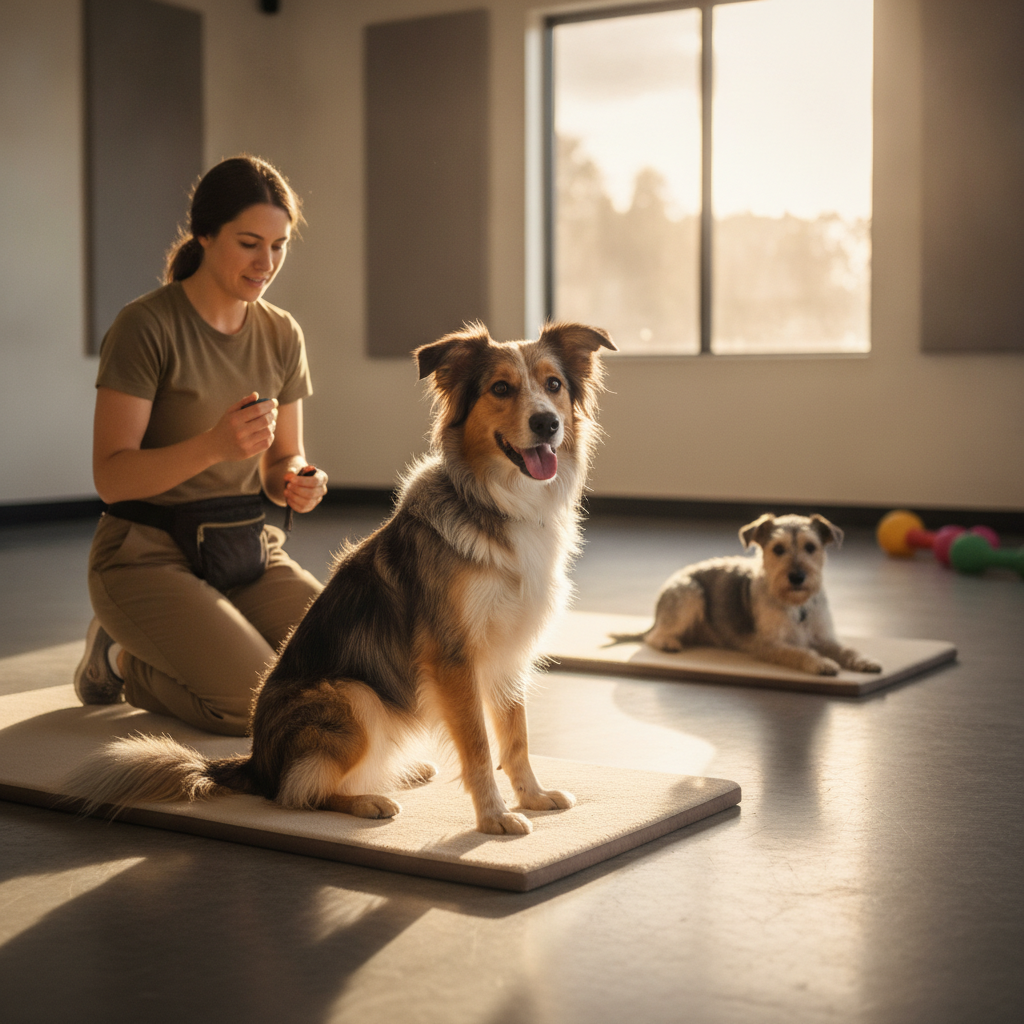
Spring brings squirrels, rabbits, and nesting birds that can trigger intense prey drive in dogs. This guide covers positive reinforcement techniques to build impulse control and prevent escalation.
Key Takeaways
- Prey drive is a natural, hardwired behaviour sequence: orient, eye, stalk, chase, grab, bite. Early intervention stops it from escalating through these stages.
- Positive reinforcement techniques such as "Look at That" (LAT) and pattern games build impulse control without suppressing instinct.
- Training should begin below threshold, meaning the dog can still think and respond to cues despite the presence of wildlife.
- Consistency, high value rewards, and realistic expectations are essential. Most dogs need weeks to months of practice.
- If a dog has already begun lunging, fixating, or redirecting aggression, consult a certified professional dog trainer or behaviour consultant.
Understanding Prey Drive: Why Dogs React to Spring Wildlife
As temperatures rise and wildlife becomes more active, many dog owners notice a dramatic uptick in reactive behaviour on walks. Squirrels darting across paths, rabbits freezing in yards, and ground-nesting birds flushing from grass all trigger what animal behaviourists refer to as prey drive, a genetically influenced motor pattern that exists on a spectrum across breeds and individuals.
The predatory motor sequence, as described in Raymond Coppinger's research on canine behaviour, follows a predictable chain: orient → eye → stalk → chase → grab/bite → dissect. Selective breeding has amplified certain links in this chain. Herding breeds, for example, tend to show exaggerated eye and stalk behaviours, while terriers may escalate quickly to chase and grab. Understanding where a particular dog's drive tends to peak is essential for designing an effective training plan.
It is important to recognise that prey drive is not aggression in the traditional sense. It is a self-reinforcing behaviour: the act of chasing is inherently rewarding because it triggers a dopamine release. This means that every successful chase, even one that does not result in catching the animal, strengthens the behaviour and makes future impulse control harder. This is precisely why early intervention matters so much.
Spring is a particularly high-risk season. Juvenile rabbits and fledgling birds are slower and more visible than adult wildlife, increasing the likelihood that a dog will have a successful chase experience. Ground-nesting species are especially vulnerable, and many regions have local wildlife protection ordinances that apply to off-leash dogs disturbing nesting birds.
If your dog is also showing increased vocalisation this season, the companion article Why Your Dog Barks More in Spring and How to Help covers overlapping triggers and solutions.
Training Prerequisites: Equipment, Environment, and Timing
Equipment
- A well-fitted front-clip harness or flat collar: Professional training standards, including those endorsed by the IAABC (International Association of Animal Behavior Consultants), discourage the use of choke chains, prong collars, or shock collars. These aversive tools can create negative associations with wildlife that may escalate into fear-based reactivity or redirected aggression.
- A 4.5 to 6 metre (15 to 20 foot) long line: This gives the dog room to make choices while maintaining safety. Never use a retractable leash for this work, as the inconsistent tension teaches the dog to pull.
- A treat pouch with high-value rewards: Think small pieces of cooked chicken, cheese, or freeze-dried liver. The reward must compete with the value of chasing a squirrel, which is a high bar.
- A clicker or verbal marker word: A consistent, precise marker bridges the gap between the desired behaviour and the delivery of the reward.
Environment
Begin training in a low distraction environment and gradually increase difficulty. A quiet park at a distance from known squirrel hotspots is preferable to starting right under a bird feeder. The concept of threshold distance is critical: training must happen at a distance where the dog can notice the wildlife but still respond to cues. If the dog is lunging, barking, or completely fixated, the distance needs to increase.
Timing
Short sessions of 5 to 10 minutes are more effective than long, exhausting outings. The dog's cognitive resources are limited, especially when working against strong biological impulses. Training on an empty stomach (or before a meal) can also increase food motivation.
Positive Reinforcement Step by Step: Building Impulse Control
Step 1: Foundation Skills Indoors
Before introducing wildlife triggers, the dog needs a solid foundation in three core behaviours:
- Reliable "watch me" or eye contact cue: Reward the dog for voluntarily looking at the handler. Start in a boring room with zero distractions. Mark and reward the moment the dog's eyes meet the handler's.
- "Leave it" with escalating difficulty: Begin with a treat on the floor under a hand, then progress to uncovered treats, then dropped treats, then moving objects. The LIMA (Least Intrusive, Minimally Aversive) principle applies: the dog is never physically corrected for failing, simply reset and try again.
- A strong recall cue: This is the emergency brake. Practise indoors, then in a fenced yard, then on a long line. The recall cue should predict the best possible outcome (a jackpot of treats, excited praise, a favourite toy).
Step 2: The "Look at That" (LAT) Game
Developed by trainer Leslie McDevitt as part of the Control Unleashed programme, the LAT game is one of the most effective tools for prey drive management. The protocol works as follows:
- Position the dog at a distance where wildlife is visible but the dog is not over threshold.
- The moment the dog notices the animal (orients toward it), mark with a click or "yes."
- Deliver a high-value treat.
- Repeat. Over time, the dog begins to look at the wildlife and then immediately look back at the handler, anticipating the reward.
This technique works through classical counter-conditioning: the presence of wildlife becomes a cue that predicts treats rather than a trigger for chase behaviour. It also gives the dog an acceptable outlet for the "orient" stage of the predatory sequence without allowing escalation to stalk or chase.
Step 3: Adding Duration and Reducing Distance
Once the dog is reliably offering the "look and dismiss" pattern at a comfortable distance, gradually decrease the distance to the wildlife trigger over multiple sessions. A common guideline is to reduce distance by roughly 10 to 20 percent per session, but only if the dog remains under threshold.
Simultaneously, begin asking for slightly longer periods of attention before marking. This builds the dog's ability to sustain focus in the presence of triggers.
Step 4: Introducing Movement
A stationary squirrel on a fence is a very different stimulus from a squirrel sprinting across the path. Movement is the most potent trigger in the predatory sequence. Practice the LAT game with naturally occurring movement by visiting areas where wildlife is active but at a safe distance. Mark and reward the dog for noticing movement without escalating.
Step 5: Real World Generalisation
Dogs do not generalise well. A dog that can calmly observe a rabbit in the park may lose composure entirely when a bird flushes from a hedge on a different route. Practise across multiple environments, with multiple species, and at different times of day. Consistent daily practice, even for just 5 minutes, produces better results than occasional long sessions.
Common Mistakes Owners Make
- Starting too close to the trigger: If the dog is already over threshold (lunging, whining, fixating with a hard stare, trembling), no learning can occur. The sympathetic nervous system has taken over, and the prefrontal cortex is essentially offline. Always increase distance first.
- Using low-value treats: Kibble rarely competes with the dopamine rush of chasing a squirrel. Professional trainers commonly recommend using "real food" rewards: small pieces of meat, cheese, or commercially available high-value training treats.
- Punishing the alert: Jerking the leash when the dog looks at a squirrel teaches the dog that the presence of squirrels predicts unpleasant experiences. This can paradoxically increase arousal and anxiety around wildlife rather than reducing it.
- Allowing rehearsal: Every off-leash chase that "ends fine" is a powerful reinforcement event. Until impulse control is reliable, dogs should remain on a long line in areas with active wildlife. This is not a limitation of the dog; it is responsible management.
- Expecting breed drive to disappear: A Greyhound's chase instinct will not be "trained out." The goal is management and redirection, not elimination. Setting realistic expectations prevents frustration for both handler and dog.
- Inconsistent practice: Behaviour modification is a cumulative process. Sporadic training sessions do not build the neural pathways needed for reliable impulse control.
Troubleshooting Slow Progress
The Dog Cannot Disengage at Any Distance
If a dog cannot look away from wildlife even at 50 metres or more, the arousal level may be too high for standard counter-conditioning. Consider the following adjustments:
- Use barrier work: Practise with a visual barrier (a parked car, a hedge) partially blocking the view. The dog gets glimpses rather than a sustained visual lock.
- Switch to pattern games: Trainer Leslie McDevitt's "1-2-3" pattern game and other predictable food-delivery patterns can reduce arousal by engaging the "seeking" system in a controlled way before the trigger appears.
- Check for underlying anxiety: Some dogs that appear prey-driven are actually experiencing fear-based reactivity. A certified behaviour consultant (IAABC certified or veterinary behaviourist) can help differentiate the two.
The Dog Regresses After a Chase Event
Regression after a successful chase is common and expected. One uncontrolled chase can undo weeks of careful work because of how powerfully self-reinforcing the behaviour is. The response should be to temporarily increase distance, return to an earlier step in the protocol, and tighten management (shorter long line, more controlled environments) until the foundation is re-established.
Multi-Dog Households
Dogs in groups can trigger each other's prey drive through social facilitation, sometimes called "mob mentality." Training should be conducted with each dog individually before attempting group walks in wildlife-rich areas. For guidance on managing multi-species households, see How to Introduce a New Dog to Your Cats Safely, which covers related impulse-control strategies.
Physical Exercise as a Complement
A dog that is physically under-stimulated is more likely to fixate on wildlife as an outlet for excess energy. Ensuring adequate physical exercise before training sessions can lower baseline arousal. However, exercise alone does not replace behaviour modification. Highly fit dogs can be equally or more reactive if their drive has been rehearsed. Spring paw care is also relevant for dogs increasing outdoor activity; see Spring Nail Trimming and Paw Pad Care for Dogs.
When to Bring in a Professional Trainer
While many cases of prey drive can be managed by dedicated owners using the techniques above, certain situations warrant professional guidance:
- The dog has injured or killed wildlife: Once a dog has completed the full predatory sequence through to grab or bite, the behaviour is deeply reinforced and requires an experienced behaviour professional.
- Redirected aggression: If the dog redirects frustration onto the handler, other dogs, or bystanders when prevented from chasing, this is a safety concern that requires immediate professional assessment.
- Co-occurring behavioural issues: Prey drive combined with separation anxiety, generalised anxiety, or leash reactivity creates a complex behavioural profile that benefits from a comprehensive behaviour modification plan.
- Predatory behaviour toward small pets in the home: Dogs that fixate on household cats, rabbits, or birds need carefully managed desensitisation protocols under professional supervision.
- The owner feels unsafe: A large, powerful dog lunging at the end of a leash is a genuine injury risk. There is no shame in seeking help.
When selecting a professional, look for credentials such as CPDT-KA (Certified Professional Dog Trainer, Knowledge Assessed), CAAB (Certified Applied Animal Behaviourist), or IAABC certified consultants. Verify that the trainer uses force-free, evidence-based methods. The IAABC and the Certification Council for Professional Dog Trainers (CCPDT) both maintain searchable directories.
For those considering professional pet care services during the training period, How to Become a Certified Professional Pet Sitter outlines the qualifications to look for in anyone handling a dog with known prey drive issues.
Protecting Wildlife While Training
Responsible prey drive management is not only about the dog's behaviour; it is also about minimising harm to wildlife during a vulnerable season. Practical steps include:
- Keep dogs on leash or long line in areas with known ground-nesting bird activity.
- Avoid walking through tall grass and meadow edges during nesting season (typically March through July in temperate regions).
- Respect local leash laws, which often exist specifically to protect wildlife in parks and nature reserves.
- If a dog does flush a bird from a nest, leave the area immediately and avoid returning for several days to reduce disturbance.
Putting It All Together: A Sample Weekly Plan
The following sample plan illustrates how to structure the first two weeks of training:
- Days 1 to 3: Foundation work indoors. Practise "watch me," "leave it," and recall with zero distractions. Three to four short sessions per day.
- Days 4 to 5: Move foundation exercises to a fenced garden or quiet outdoor area with no wildlife present.
- Days 6 to 7: Introduce the LAT game at maximum comfortable distance from a known wildlife area. Keep sessions to 5 minutes. End on a success.
- Days 8 to 10: Continue LAT at the same distance, building consistency. Begin adding mild movement triggers if available.
- Days 11 to 14: If the dog is reliably offering "look and dismiss," reduce distance by a small increment. If not, maintain current distance and continue building the reinforcement history.
Progress is rarely linear. Expect plateaus, minor regressions, and variable performance depending on the dog's arousal level, the type of wildlife, and environmental factors like wind carrying animal scent.
Final Thoughts
Training a dog to remain calm around spring wildlife is a process that requires patience, consistency, and a solid understanding of canine learning theory. The predatory motor sequence is deeply rooted in canine biology, and the goal is not to eliminate it but to give the dog the skills to make better choices when it activates. Through systematic desensitisation, counter-conditioning, and thoughtful management, most dogs can learn to coexist peacefully with the squirrels, rabbits, and birds that share their environment.
The investment in early, positive training pays dividends not just in safer walks, but in a stronger relationship between dog and handler built on trust and communication rather than conflict.
Frequently Asked Questions
What is the difference between prey drive and aggression in dogs? ↓
Can prey drive be trained out of a dog completely? ↓
How long does it take to train a dog to stay calm around wildlife? ↓
Is it safe to use an e-collar or shock collar to stop a dog from chasing wildlife? ↓
Should I avoid walking my dog in areas with wildlife during spring? ↓

Mark Sullivan
Certified Professional Dog Trainer
Certified professional dog trainer — positive-reinforcement methods for every breed and behavioural challenge.
Content Disclosure
This article was created using state-of-the-art AI models with human editorial oversight. It is intended for informational and entertainment purposes only and does not constitute veterinary medical advice. Always consult a licensed veterinarian for your pet's specific health needs. Learn more about our process.