Essential guidance for Australian owners welcoming a former racing greyhound, covering state muzzle laws, heat management, and protecting ex-racers from local environmental hazards.
Understanding the Australian Ex-Racer
Adopting a retired greyhound is a unique experience distinct from acquiring a standard shelter dog. In Australia, the racing industry is significant, meaning thousands of dogs retire annually seeking domestic homes. These dogs have typically lived highly regimented lives in kennels, often with little exposure to the inside of a suburban house. From puppyhood, their world has been defined by routine, the company of other dogs, and specific handling protocols.
When these dogs enter an Australian home, they experience 'culture shock.' Common household features such as polished timber floors, glass sliding doors leading to alfresco areas, and television screens are entirely alien. What an owner might perceive as stubbornness is frequently a freeze response triggered by sensory overload.
The 'Green Collar' and Muzzle Laws
One of the most critical distinctions for Australian owners is the legislative requirement regarding muzzles. In many states and territories, greyhounds are legally required to wear a muzzle in public areas unless they have undergone a specific behavioural assessment to obtain an exemption (often known as a 'Green Collar' or similar accreditation depending on the state). This is not an indication of aggression but a legislative safeguard due to their prey drive.
Management Strategy:
- Know Your State Laws: Check with your local council or state greyhound adoption program regarding muzzle requirements.
- Positive Association: Muzzles are familiar to ex-racers. Continue to use them as a safety tool, especially during the initial transition period.
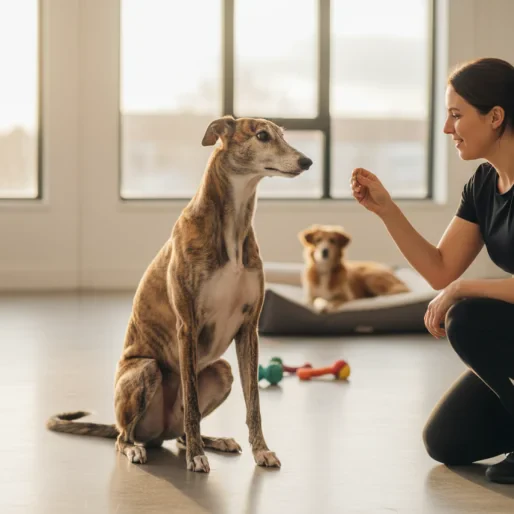
- Assessment Readiness: Work with a trainer to prepare your dog for their muzzle exemption assessment once they have settled in.
Managing Environmental Hazards in Australia
Heat and Sun Safety
Greyhounds have very little body fat and thin coats, making them uniquely susceptible to Australia's extreme climate. They overheat rapidly in summer and feel the cold intensely in winter.
- The 5-Second Rule: Before walking, place the back of your hand on the pavement. If you cannot hold it there for five seconds, it is too hot for your dog's paws. Walk early in the morning or late at night during summer months.
- Sunburn: Light-coloured greyhounds can suffer from sunburn. Apply pet-safe sunscreen to their nose and ear tips.
- Hydration: Ensure constant access to cool water, especially if the dog is left outside in a shaded area.
Tick Paralysis and Local Wildlife
The greyhound's sight-hound instinct is to chase movement. In Australia, this poses specific risks beyond traffic.
Paralysis Ticks: For those on the east coast, the paralysis tick (Ixodes holocyclus) is a deadly threat. Greyhounds exploring garden beds are at risk. Daily physical checks and veterinary-approved preventatives are mandatory.
Wildlife Interactions: A greyhound may instinctively chase native wildlife such as possums, scrub turkeys, or even kangaroos. Of greater concern is the risk of snake bites (such as from Brown or Tiger snakes) if the dog chases movement into long grass. Keep dogs on a lead in bushland areas.If you suspect a snake bite or tick paralysis, immediate veterinary attention is critical.
Call the Animal Emergency Service or find your nearest 24-hour emergency vet clinic.
AES operates in QLD, NSW, and VIC. For other states, search for your nearest after-hours veterinary hospital.
Behavioural Quirks in the Home
Slippery Floors and Glass
Australian homes frequently feature tiles or polished floorboards, which provide zero traction for a dog used to sand or concrete. A greyhound may panic, 'freeze,' or injure themselves by slipping.
Solution: Use non-slip runners or rugs to create safe pathways through the house. Additionally, glass sliding doors are invisible barriers to a greyhound. Apply masking tape or decals at the dog's eye level to prevent high-speed collisions.
Sleep Startle
Retired racers are accustomed to sleeping in individual kennels without being disturbed. If a new owner touches a sleeping greyhound, the dog may snap or growl reflexively. This is known as 'sleep startle' and is a defensive reflex, not dominance.
- Verbal waking: Always call the dog's name from a distance to wake them before approaching.
- Safe Zones: Provide a crate or dedicated bed where the dog knows they will not be touched.
- Furniture Rules: It is often safer to restrict access to sofas and beds until the dog's sleep behaviours are fully understood.
Isolation Distress
These dogs have rarely been alone. Separation anxiety is common when they are suddenly left solo in a suburban backyard or home. Signs include destructive digging, barking, or house soiling.
Desensitisation: Practice leaving the house for very short periods (starting with seconds), gradually increasing the duration. Many owners find that adopting a second greyhound provides the necessary companionship to alleviate this distress.
The Flight Risk
Greyhounds can reach speeds of over 60km/h in seconds. A gate left ajar or a collar slipping off can result in a lost dog very quickly. Standard collars are often unsafe due to the greyhound's neck shape (which is wider than their head). A martingale collar or a properly fitted harness is essential for walks. Ensure your fences are at least 1.8 metres high, as some athletic dogs can clear standard suburban fencing.
By understanding the unique background of the Australian ex-racer and preparing for local environmental risks, owners can ensure a safe and successful transition from the track to the lounge room.
Frequently Asked Questions
Do greyhounds need to be muzzled in Australia? ↓
Are greyhounds good with other pets? ↓
How much exercise does a retired greyhound need? ↓
Can greyhounds live outside in Australia? ↓

David Okafor
Certified Animal Behaviourist
Certified animal behaviourist — science-based strategies for fear, anxiety, reactivity, and behavioural challenges.
Content Disclosure
This article was created using state-of-the-art AI models with human editorial oversight. It is intended for informational and entertainment purposes only and does not constitute veterinary medical advice. Always consult a licensed veterinarian for your pet's specific health needs. Learn more about our process.