An Australian station guide to Fi, PetPace and Invoxia smart collars for Kelpies, Cattle Dogs and crosses in June Outback conditions. Includes coverage, charging and welfare check considerations grounded in Australian veterinary guidance.
Key Takeaways
- Smart collars are screening aids, not diagnostic tools. They flag trends in skin temperature, activity, and heart rate, but a registered Australian veterinarian or experienced handler must still confirm heatstroke, dehydration, or paralysis tick effects.
- Fi Series 3 leads on GPS battery life and ruggedness, suitable for dogs ranging across large paddocks in the Channel Country or Kimberley.
- PetPace offers the deepest vitals dashboard but depends heavily on Telstra mobile coverage or a homestead gateway.
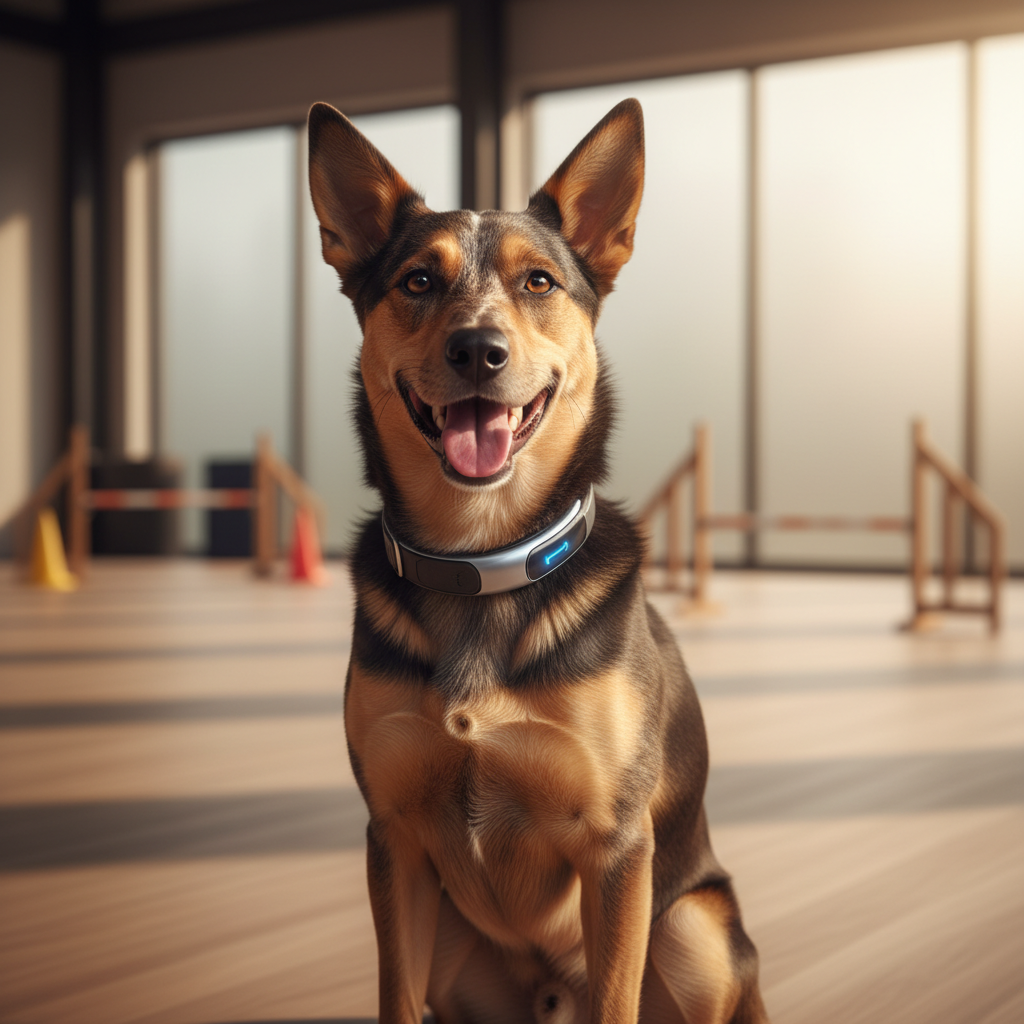
- Invoxia Smart Dog Collar combines tracking with heart and respiratory rate estimation in a compact form factor suited to medium working breeds.
- Solar charging accessories can extend runtime on remote stations, yet shade seeking dogs, red dust, and short June daylight reduce real world panel performance.
- Visual welfare checks remain non-negotiable, as reinforced by Australian Veterinary Association (AVA) and RSPCA Australia welfare principles.
Why June Conditions Across the Australian Outback Still Pose Heat Risk
June marks the start of the southern winter, and many station managers across Queensland, Western Australia, the Northern Territory, and South Australia assume heatstroke risk falls away with the cooler nights. Professional consensus published through the AVA and reflected in RSPCA Australia working dog guidance suggests otherwise. Midday temperatures across the Pilbara, Gascoyne, Barkly Tableland, and Channel Country can still climb into the high twenties or low thirties Celsius, even when dawn frost has formed on the homestead lawn. Working breeds such as Kelpies, Australian Cattle Dogs (Blue and Red Heelers), Koolies, and Border Collie crosses run hard at sustained heart rates, often pushing their thermoregulation envelope when ambient temperatures feel mild to a person in a hat.
Dehydration risk climbs further when stock work means dogs are away from troughs and bores for several hours, and June is also when paralysis ticks remain active along the eastern seaboard from far north Queensland down through coastal New South Wales. Smart collars have entered station life promising continuous monitoring, GPS location, and behaviour pattern analysis with alerts pushed to a handler's phone. The question for Australian working dog owners is whether any of these devices genuinely earn their place on a stock dog, and how they perform in the conditions unique to remote Australia.
What These Collars Actually Measure
Before comparing brands, it helps to clarify what AI smart collars can and cannot detect. Most consumer devices estimate:
- Skin or surface temperature, not true core body temperature, which still requires rectal measurement by a handler or vet
- Heart rate and heart rate variability, inferred from accelerometer and sometimes optical sensors
- Respiratory rate, derived from chest wall movement
- Activity intensity, rest, and scratch behaviour
- GPS location and geofencing alerts
The AI element typically refers to machine learning models that compare a dog's current readings against its personal baseline. When panting frequency, heart rate, or skin temperature drifts outside expected ranges for breed, age, and activity, the app generates an alert. AVA guidance and broader veterinary consensus emphasise that these alerts are early warning signals, not clinical confirmations.
Side by Side Comparison for Australian Stations
The summary below covers the three options most commonly discussed on Australian stations as of mid 2026. Specifications and Australian pricing change frequently, so handlers should confirm current details with the importer or distributor before purchase.
Feature Comparison
- Fi Series 3: GPS focused tracker with LTE-M connectivity, claimed multi week battery life on light use, activity tracking, escape alerts, and a rugged collar build. Limited direct vitals beyond movement and rest.
- PetPace 2.0: Health first collar measuring pulse, respiration, skin temperature trend, heart rate variability, and posture. Requires ongoing subscription and reliable Telstra coverage or homestead gateway.
- Invoxia Smart Dog Collar: Compact tracker combining GPS with heart and respiratory rate estimation, plus activity classification. Subscription required for cellular tracking.
At a Glance
- Primary strength: Fi for location and battery, PetPace for vitals depth, Invoxia for balanced size and vitals.
- Battery life: Fi typically strongest, PetPace and Invoxia shorter due to richer sensing.
- Connectivity in Australia: All three depend on cellular networks. Telstra remains the dominant carrier across remote regions, with Optus and Starlink mobile patching some gaps.
- Subscription: Required on all three for full features, typically billed in AUD per month or annually.
- Best fit: Fi for roaming and recovery, PetPace for medical monitoring, Invoxia for owners wanting both in one unit.
Key Differences for Working Dogs on Stations
Temperature Monitoring
PetPace markets the most direct skin temperature tracking among the three, with trend graphs that can flag sustained rises before a Kelpie hits the wall on a long muster. Fi Series 3 currently emphasises activity anomaly detection rather than direct temperature monitoring. Invoxia offers vitals estimation but with less emphasis on continuous temperature than PetPace. For stations across northern Australia where heat is the dominant risk even in June, the depth of temperature data matters.
Heart Rate and Recovery
Working dogs typically have lower resting heart rates than companion breeds, and recovery time after a hard muster is a useful indicator of fitness and heat tolerance. PetPace and Invoxia both attempt continuous heart rate estimation. Fi infers exertion from movement intensity rather than direct pulse measurement, which is less precise for detecting cardiovascular strain in a dog standing still under a coolibah but quietly distressed.
Build and Comfort
Kelpies, Heelers, and Koolies push through gidgee, mulga, lignum, and rocky ranges. Collar durability and waterproofing are non-negotiable. Fi has a strong reputation for ruggedness. PetPace and Invoxia housings are generally robust but were originally designed with companion dogs in mind, so handlers should inspect attachment points after the first few weeks of station work and re-check after every wet season crossing.
Cost Considerations in AUD
Hardware costs typically range from around $300 to $800 AUD per collar depending on the model and bundle, with subscription plans adding a monthly or annual fee in AUD. For a team of six working dogs, total cost of ownership becomes significant quickly. Owners commonly report trialling one collar on the lead dog before equipping the whole pack. GST applies, and importer warranty conditions vary, so it is worth confirming whether the unit is sold through an Australian distributor or as a parallel import.
Solar Charging Performance in Remote Australia
Mains power on remote stations is often limited to homestead generators, rooftop solar arrays, or hybrid battery systems. Several third party solar charging accessories exist for smart collars, but real world performance disappoints when:
- Dogs spend the day in shade under utes, on verandahs, or beneath water tanks
- Pindan or red dust coats the panel and reduces output
- Short June daylight at higher latitudes limits solar harvest, with sunset before 5 pm across much of southern Australia
- The collar USB port is not designed for sustained trickle charging
A practical compromise used by many station managers is to rotate collars: each dog wears one for several days, then swaps to a freshly charged unit while the first charges at the homestead via the 12 volt system. Pairing this with a portable solar bank on the ute tray provides a backup when teams are camped out at distant yards or bore runs.
Alert Delivery Over Patchy Networks
This is where many station trials fall apart. All three collars rely on cellular data to push alerts. In large parts of the Outback, coverage is effectively Telstra only on the 4G and 4GX network, with NBN Sky Muster or Starlink filling in around the homestead. Practical limitations include:
- LTE-M coverage required by some devices is narrower than standard 4G across remote Australia.
- Bluetooth fallback only works when the dog is within roughly 10 to 30 metres of the paired phone or base station.
- Delayed alerts may arrive minutes or hours after a critical event, defeating real time monitoring.
- Battery drain increases as the collar searches for signal in fringe coverage zones.
Professional consensus suggests treating collar alerts as a supplement to UHF radio check ins and direct observation, not a replacement. Some stations install a homestead gateway and rely on collars primarily for end of day data downloads rather than live alerts. For emergencies beyond the homestead, the Royal Flying Doctor Service and state based vet referral lines remain the primary fallback. Save your nearest 24 hour clinic contact in advance:
Animal Emergency Service (AES)
Call the Animal Emergency Service or find your nearest 24-hour emergency vet clinic.
AES operates in QLD, NSW, and VIC. For other states, search for your nearest after-hours veterinary hospital.
Do They Replace Visual Welfare Checks?
The short answer from AVA and RSPCA Australia welfare guidance is no. Smart collars cannot assess:
- Gum colour and capillary refill time
- Skin tent for dehydration assessment
- Coordination and mental state, including paralysis tick effects
- Snake bite sites from brown, mulga, or tiger snakes, or burrs and grass seeds in paws
- Subtle behavioural cues such as reluctance to drink at the trough
A collar may flag elevated heart rate, but only a handler can confirm whether that reflects heat distress, pain from a paw injury, an early paralysis tick ascending, or excitement at returning stock. The most common regret expressed by new adopters is over reliance on the app, leading them to skip hands on welfare checks at smoko and lunch.
Lifestyle Match Guide: Which Collar Fits Your Station?
Choose Fi Series 3 If
- Your top concern is recovering a dog that has gone walkabout chasing stragglers
- You want the longest battery life with minimal charging logistics
- You already have a separate plan for visual welfare and do not need detailed vitals
- Your station has reasonable Telstra LTE-M coverage
Choose PetPace If
- You have a senior working dog, a cardiac or respiratory case, or a high value stud Kelpie
- You want the deepest vitals dashboard and trend analysis
- You can support the AUD subscription cost and have reliable coverage or a gateway at the homestead
- You work closely with a regional veterinarian willing to review the trend data
Choose Invoxia If
- You want a single compact device that balances location with vitals estimation
- You prefer a smaller form factor for medium sized working breeds such as Kelpies and Koolies
- You are comfortable with subscription based tracking in AUD
Choose None of the Above If
- Your station has effectively no Telstra coverage and a gateway is not practical
- Your dogs work in dense scrub that consistently damages collars
- Your welfare programme already includes frequent rest, water, shade, and direct supervision
Adoption, Registration, and Sourcing in Australia
Australian working dogs are typically sourced through Working Kelpie Council members, Australian Cattle Dog Society breeders, working dog auctions such as Casterton and Dalby, or station to station transfers. A subset come through rescues that rehome dogs unable to cope with full station work. State based dog registration is mandatory across all Australian jurisdictions, with rules administered by local councils and varying definitions of working dog exemptions in some states. Microchipping is also required nationally before transfer or sale in most jurisdictions. Before adding any collar technology, prospective owners should:
- Confirm the dog's age, vaccination status (C5 is commonly recommended for working dogs), and known health history
- Ask the breeder or rescue about heat tolerance and tick country history
- Allow a settling in period of several weeks before introducing wearable tech
- Introduce the collar gradually, starting with short wear periods around the yards
Decision Checklist: Which Is Right for Me?
- Is your primary risk losing the dog or losing track of its health? Location risk favours Fi. Health risk favours PetPace.
- What is your cellular reality? Drop a pin at the furthest yard and check Telstra coverage maps honestly.
- How many dogs will be equipped? AUD subscription costs scale quickly across a team.
- Who will read the alerts? If no one is checking the app during musters, the value drops sharply.
- What is your charging routine? Plan for rotational charging from the 12 volt system, not solar dependence.
- Are you prepared to keep doing visual checks? If the answer is no, do not buy any of them.
Honest Trade Offs
No smart collar currently on the market replaces a trained eye on a working dog. Owners commonly report that the greatest benefit is not a dramatic life saving alert but the slow accumulation of trend data: noticing that a five year old Kelpie is taking longer to recover after mustering, or that an older Heeler now rests more during the heat of the day. Used this way, AI smart collars become a planning tool, supporting decisions about workload, retirement, and veterinary follow up.
Final Word
For Australian station managers weighing these options in June 2026, the practical answer is rarely a single brand. A common pattern is one health focused collar on the lead or most valuable dog, location focused trackers on the rest, and a robust manual welfare protocol underpinning everything. Treat the technology as a thoughtful addition to good husbandry, anchored in AVA welfare principles and your regional vet's advice, and the investment will earn its place in the ute.
Frequently Asked Questions
Are smart collars legal to use on working dogs in Australia? ↓
Do these collars work in remote parts of the Outback? ↓
Can a smart collar detect paralysis ticks or snake bites? ↓
How much should I budget for a smart collar in AUD? ↓
Which Australian bodies set welfare expectations for working dogs? ↓

Priya Nair
Dog Breed Advisor & Adoption Counsellor
Dog breed advisor and adoption counsellor — honest breed comparisons and lifestyle matching for prospective owners.
Content Disclosure
This article was created using state-of-the-art AI models with human editorial oversight. It is intended for informational and entertainment purposes only and does not constitute veterinary medical advice. Always consult a licensed veterinarian for your pet's specific health needs. Learn more about our process.