Australian summers push aquarium temperatures well beyond safe limits for most fish, corals, and shrimp. This guide compares clip-on fans, aquarium chillers, and DIY methods with Australian pricing, climate zones, and real heatwave planning in mind.
Key Takeaways for Australian Aquarists
- Australian summers regularly exceed 40 °C in many capital cities, making aquarium overheating one of the most common causes of preventable fish loss between November and March.
- Clip-on cooling fans suit small freshwater tanks (up to roughly 100 litres) in southern, lower-humidity regions such as Melbourne, Adelaide, and Hobart, but struggle in the tropical humidity of North Queensland, the Top End, and coastal NSW.
- Aquarium chillers are the standard recommendation for reef tanks, axolotl setups, and any aquarium in regions where indoor temperatures routinely climb above 30 °C for consecutive days.
- DIY methods (frozen bottles, room fans, partial water changes) are short-term emergency fixes only and should never be the sole plan for a full Australian summer heatwave.
- Power outages during heatwaves are a serious secondary risk. The Australian Energy Market Operator (AEMO) has flagged grid strain during extreme heat events, making battery-powered air pumps and backup plans essential.
Why Australian Summers Are Especially Dangerous for Aquariums
Water retains heat far longer than air. When ambient room temperature climbs above 26 °C for several consecutive days, most indoor aquariums will follow. In Australian cities like Sydney, Brisbane, Perth, and Adelaide, summer maximums of 35 to 45 °C are not unusual, and overnight minimums may not fall below 25 °C for days at a time. Homes without ducted air conditioning, or those where AC is switched off overnight, can see indoor temperatures stay above 30 °C for extended periods.
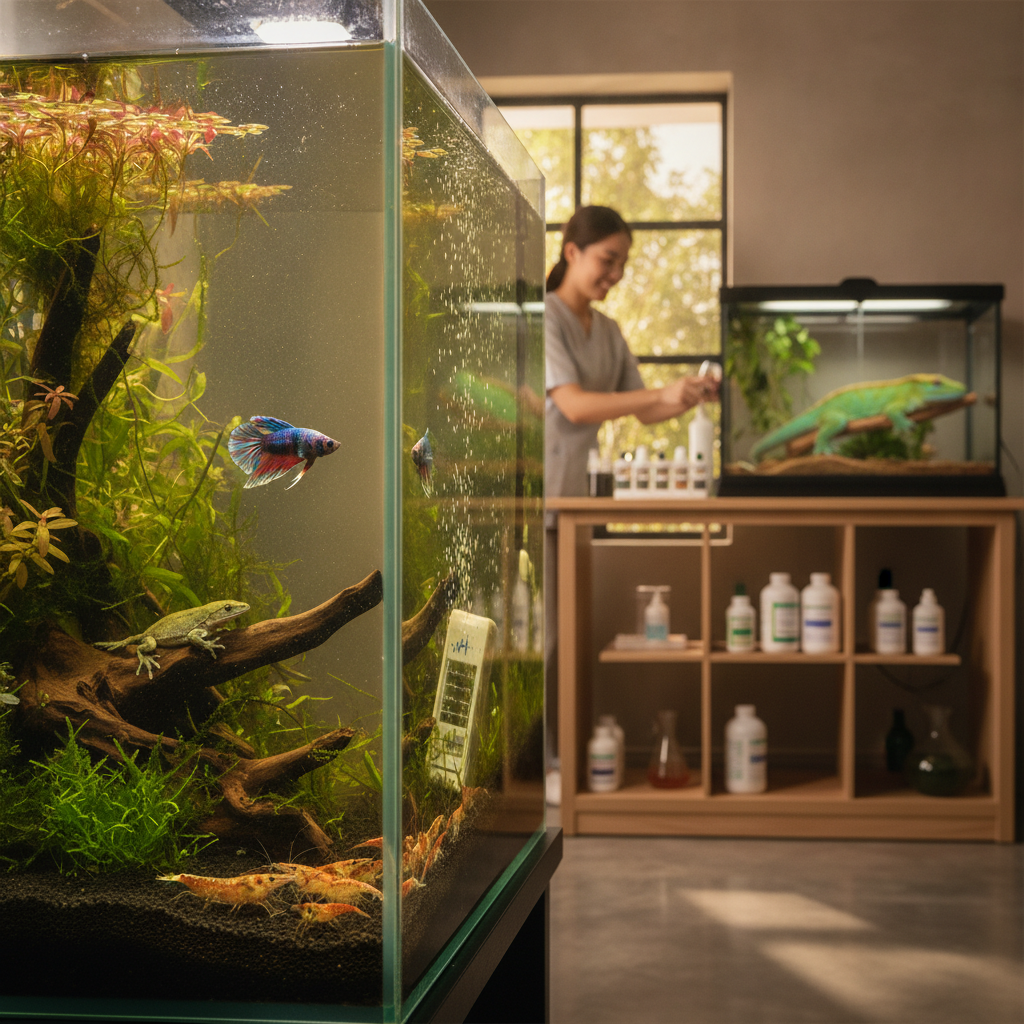
Elevated water temperatures reduce dissolved oxygen, accelerate harmful bacterial growth, and trigger physiological stress in fish. Species popular with Australian hobbyists, including crystal red shrimp, axolotls, Corydoras catfish, and many coldwater natives, can suffer organ damage or death within hours at temperatures above their tolerance ceiling.
Bushfire smoke events add a compounding risk. During severe smoke days, opening windows for ventilation is inadvisable, which removes one of the simplest ways to cool a room and, by extension, an aquarium. Planning cooling solutions before summer arrives is essential.
Side-by-Side Comparison Table
| Factor | Clip-On / Aquarium Fans | Aquarium Chillers | DIY and Household Methods |
|---|---|---|---|
| Best tank size | Nano to small (up to roughly 100 L) | Medium to large (75 L and above) | Any size as a temporary fix |
| Typical purchase cost (AUD) | Around $25 to $80 | Around $250 to $1,200+ depending on capacity | Near zero to minimal |
| Cooling capacity | Can lower water 2 to 4 °C below ambient | Can hold a precise set point regardless of ambient temperature | Unpredictable, typically 1 to 3 °C temporarily |
| Energy use | Very low (typically 2 to 10 watts per fan) | Moderate to high (50 to 500+ watts depending on unit size) | Negligible to low |
| Noise level | Low to moderate hum | Moderate; compressor models produce noticeable vibration | Variable |
| Humidity impact | Increases room humidity through evaporation | Minimal | Variable |
| Reliability in Australian heat | Good in dry climates (SA, VIC, inland); poor in humid QLD/NT summers | Excellent; thermostat controlled in all conditions | Poor for sustained use |
| Maintenance | Low; top up evaporated water regularly | Moderate; clean condenser, check refrigerant lines | High; requires constant manual attention |
Option 1: Aquarium Cooling Fans
How they work
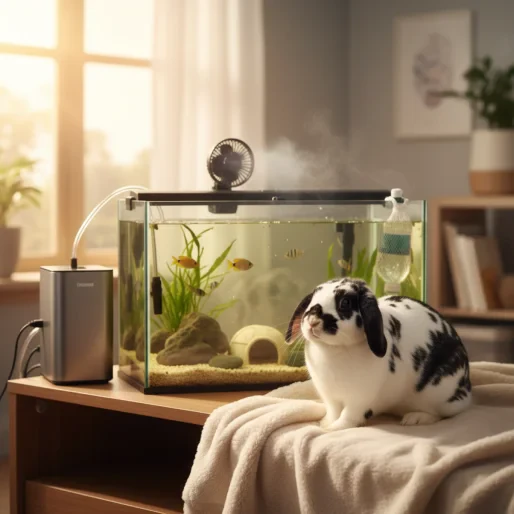
Aquarium cooling fans sit on the tank rim or clip to the back glass, blowing air across the water surface. This accelerates evaporation, and because evaporation is an endothermic process, it draws heat out of the water. Many models include a built-in thermostat that activates the fan only when a set temperature is exceeded.
Strengths
- Low cost: Entry-level single fan units start around $25 to $35 AUD, with dual or quad fan arrays costing up to roughly $80 AUD from Australian aquarium retailers.
- Easy installation: No plumbing or sump required. Most units clip on in seconds.
- Minimal electricity: A typical two-fan unit draws around 5 watts. At average Australian electricity rates (roughly $0.30 to $0.35 per kWh in most states as of 2025/2026), this adds cents per day.
- Quiet operation: Most aquarium-specific fans are significantly quieter than household desk fans.
Limitations in Australian conditions
- Humidity is the key problem: In Brisbane, Darwin, Cairns, and coastal Sydney during summer, relative humidity frequently exceeds 70 to 80 percent. At these humidity levels, evaporative cooling becomes substantially less effective. Hobbyists in these regions consistently report that fans alone are insufficient during peak summer.
- Limited cooling power in extreme heat: Fans typically achieve 2 to 4 °C of reduction below ambient at best. If the room reaches 38 °C on a western Sydney or Adelaide heatwave day, the tank may still sit at 34 °C or higher, well above the tolerance of most tropical fish.
- Increased evaporation: Owners should expect to top up with dechlorinated freshwater more frequently. In saltwater tanks, this is critical because evaporation raises salinity.
Best suited for
Nano tanks and freshwater aquariums up to about 100 litres in the cooler, drier parts of Australia: southern Victoria, Tasmania, highland regions, and parts of South Australia. Popular among planted tank hobbyists keeping neon tetras, bettas, and cherry shrimp that benefit from a few degrees of relief during milder heat spells.
Option 2: Aquarium Chillers
How they work
Aquarium chillers use a refrigeration compressor (similar to a small air conditioner) to actively remove heat from water pumped through the unit. An internal thermostat maintains the set temperature precisely, cycling the compressor on and off as needed. Inline chillers connect between the canister filter outlet and the return; drop-in or submersible coil models sit inside a sump.
Strengths
- Precise temperature control: Most units hold the set point within 0.5 °C, regardless of room conditions.
- Works in all Australian climate zones: Whether in humid Darwin or dry Adelaide, active refrigeration is unaffected by humidity. This is the single biggest advantage over fans for most Australian hobbyists.
- Essential for sensitive livestock: Reef aquariums, axolotl tanks (which require water below roughly 20 °C), and discus setups where even small temperature spikes can cause harm typically require a chiller across most of Australia.
- Scalable: Chillers are available for tanks from about 50 litres up to several thousand litres.
Limitations
- Higher purchase cost: Small units rated for 100 to 200 litres typically cost $250 to $500 AUD. Larger reef-grade chillers commonly range from $700 to $1,200+ AUD through Australian aquarium suppliers.
- Energy consumption: A 1/10 HP chiller commonly draws around 100 to 150 watts while running. In a prolonged Australian heatwave (where the compressor may cycle almost continuously), this can add $15 to $40+ per month to electricity bills depending on the unit and local tariff.
- Heat exhaust: Chillers expel warm air into the room, which can raise ambient temperature and create a feedback loop in small, poorly ventilated rooms. In Australian homes without whole-house ventilation, positioning the chiller near a window or in a well-ventilated cabinet is important.
- Noise and vibration: Compressor-based chillers are louder than fans, which may be a concern in bedrooms or apartments.
Best suited for
Medium to large tanks (75 litres and above), saltwater and reef setups, axolotl keepers, and any Australian aquarist in regions where summer indoor temperatures regularly exceed 28 to 30 °C. Given Australia's climate, chillers are more frequently considered a necessity here than in many Northern Hemisphere markets.
Option 3: DIY and Household Methods
Common approaches
- Frozen water bottles: Sealed bottles of ice floated in the tank or placed in the sump. They provide temporary cooling but melt within a few hours and can cause rapid temperature swings.
- Room air conditioning: Running household AC to cool the room indirectly cools the tank. This works well but is expensive, particularly at Australian electricity rates, and many renters lack adequate AC.
- Partial water changes with cooler water: Replacing 10 to 15 percent of tank water with slightly cooler (not cold) dechlorinated water can provide relief. Sudden large temperature drops should be avoided, as thermal shock is itself harmful.
- Removing the tank lid: An open top increases surface gas exchange and allows some evaporative cooling, but also increases the risk of fish jumping out.
- Household fans aimed at the water surface: A desk fan or clip fan can replicate the effect of an aquarium fan at lower cost, though without thermostat control.
Limitations in Australian heatwaves
Australian heatwaves frequently last five to ten or more consecutive days, with overnight temperatures staying above 25 °C. Manually rotating frozen bottles every few hours through a week-long event is impractical for most households. DIY methods should be viewed strictly as a bridge while proper equipment is sourced or during unexpected power outages, not as a seasonal strategy.
Australian Climate Zone Guide
Tropical north (Darwin, Cairns, Townsville)
High humidity year-round makes fans unreliable. Chillers are the standard recommendation for any temperature-sensitive species. Even hardy tropicals can suffer during the build-up season (October to December) when indoor temperatures regularly exceed 32 °C with humidity above 80 percent.
Subtropical east coast (Brisbane, Gold Coast, northern NSW)
Summer humidity is frequently high enough to reduce fan effectiveness. A chiller is recommended for reef tanks, axolotls, and shrimp. Fans may cope for hardier freshwater species during milder summers, but a backup plan is advisable.
Temperate south (Sydney, Melbourne, Adelaide, Hobart, Perth)
Fans are often adequate for small freshwater tanks in these regions, though heatwave events with multiple days above 40 °C are becoming more frequent. Perth and Adelaide in particular experience intense dry heat that can push indoor temperatures above 35 °C. A chiller remains the safest choice for sensitive species even in these zones.
Power Outage Preparedness
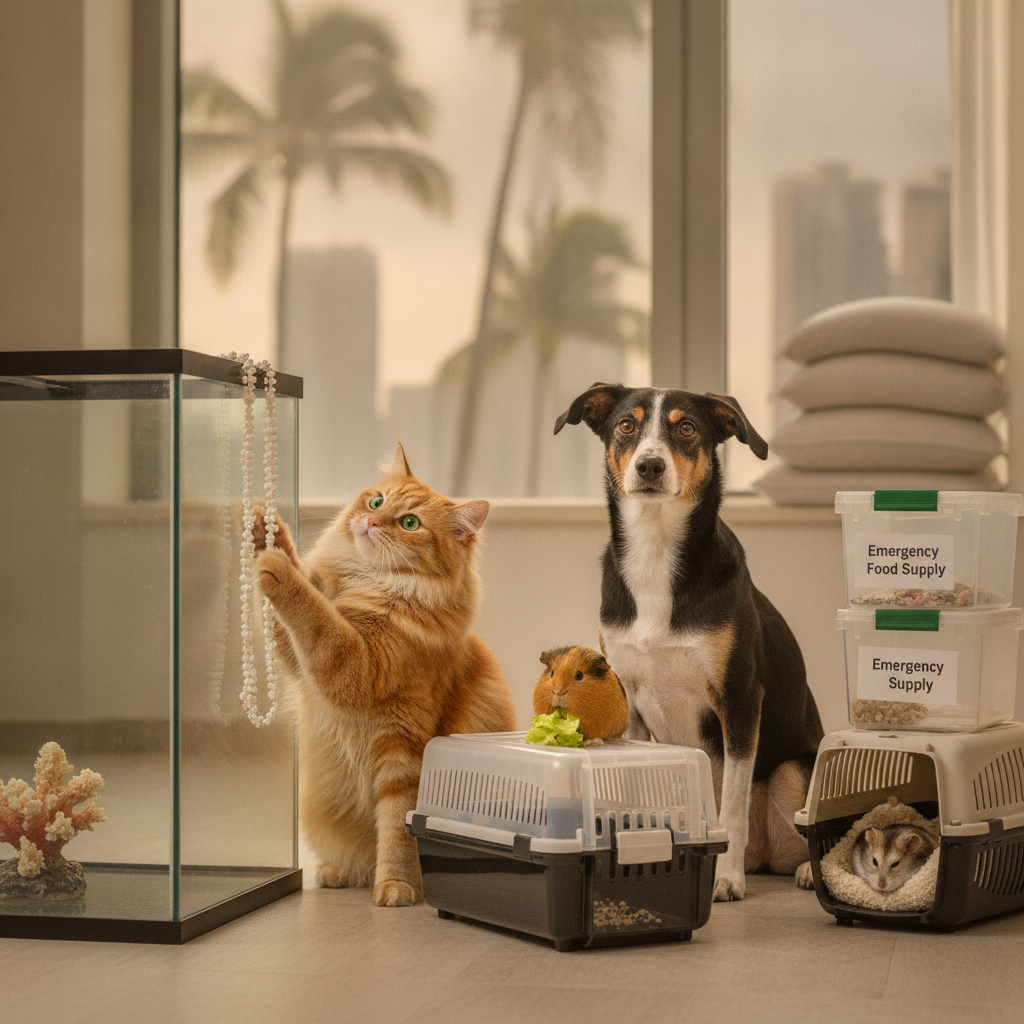
Australian summers bring heightened risk of power outages due to grid strain, storm damage, and bushfire-related supply interruptions. Aquarists should keep the following on hand:
- Battery-operated air pumps (available from most Australian aquarium and fishing retailers for $15 to $40 AUD)
- Frozen water bottles in the freezer, ready to deploy if cooling equipment loses power
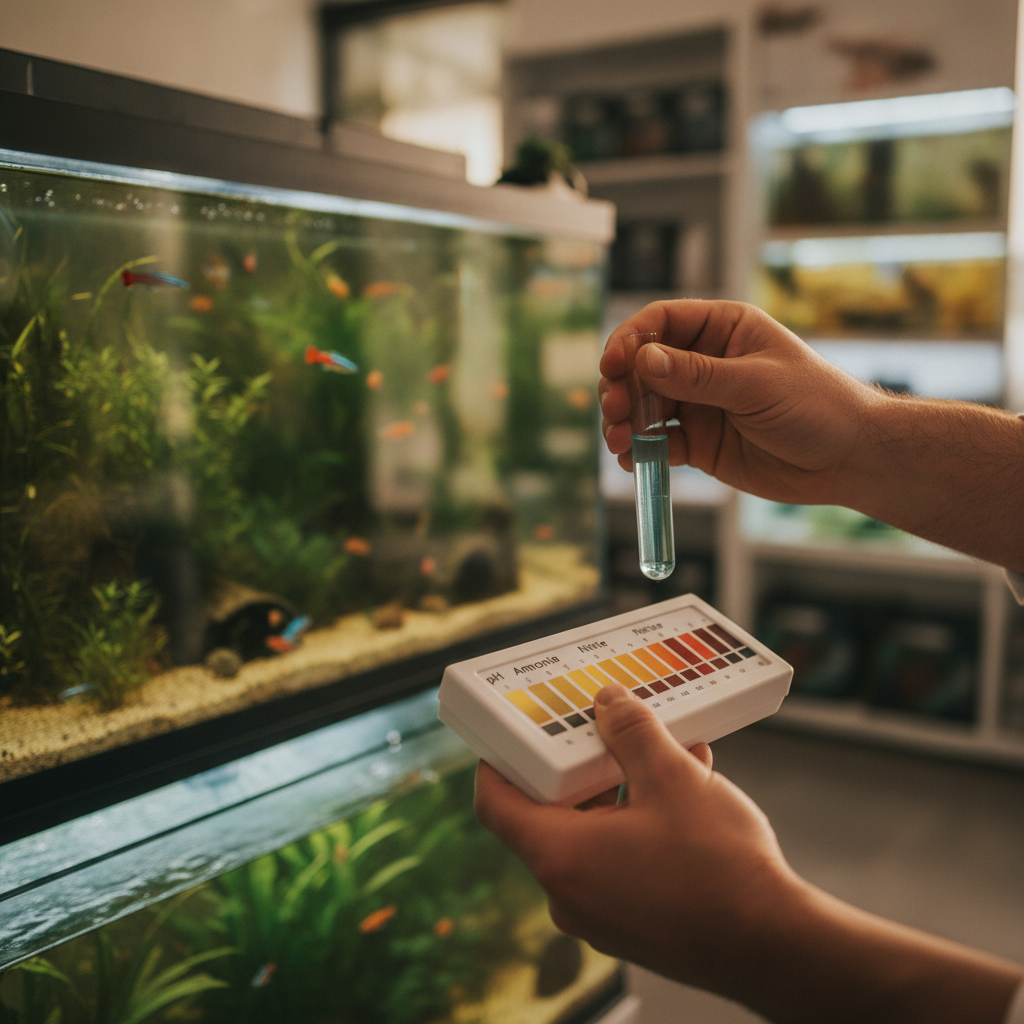
- A battery or USB-powered digital thermometer with high-temperature alerts
- An insulating wrap or towel for the tank to slow heat gain during daytime outages
Animal Emergency Service (AES)
Call the Animal Emergency Service or find your nearest 24-hour emergency vet clinic.
AES operates in QLD, NSW, and VIC. For other states, search for your nearest after-hours veterinary hospital.
Practical Tips for Australian Aquarists
- Monitor continuously: A digital thermometer with a high-temperature alarm is an inexpensive safeguard that every aquarium should have during the warmer months.
- Reduce heat inputs: Switch to LED lighting (which runs cooler than older fluorescent or metal halide fixtures), minimise direct sunlight on the tank (especially in north-facing rooms), and ensure powerheads or pumps are not adding unnecessary heat.
- Increase surface agitation: Higher oxygen exchange at the surface helps fish cope with warmer water. An airstone or adjusted filter outlet can assist.
- Avoid overfeeding: Warmer water holds less oxygen and breaks down waste faster. Reducing feeding slightly during heat spikes helps maintain water quality.
- Start early: Install and test cooling equipment in September or October, well before the first heatwave. Demand for chillers and fans spikes in December and January, and popular models frequently sell out at Australian retailers during peak summer.
Adoption and Responsible Sourcing
Before purchasing any aquatic animal, prospective owners should factor cooling costs into the total cost of care. Impulse purchases of temperature-sensitive species (such as axolotls, crystal red shrimp, or cold-water marine fish) without a cooling plan frequently lead to preventable losses. Reputable Australian aquatic retailers and aquarium societies typically ask about the buyer's setup, including temperature management, before rehoming sensitive species.
Australian biosecurity regulations also apply to aquatic species. The Department of Agriculture, Fisheries and Forestry maintains a list of permitted live aquatic imports, and some native species require permits to keep depending on state legislation. Always verify legal requirements before acquiring new species.
For those exploring other aspects of responsible pet ownership, the Spring Hazard Briefing for Pet Sitters in Australia covers seasonal risks across multiple pet types, and Why Senior Dogs and Cats Overheat Faster in Australia offers a useful parallel look at how warm weather affects companion animals more broadly.
Frequently Asked Questions
Are aquarium cooling fans effective in Brisbane or Darwin summers? ↓
How much does it cost to run an aquarium chiller in Australia? ↓
Do axolotls need a chiller in Australia? ↓
What should I do if the power goes out during an Australian heatwave? ↓
When should I install aquarium cooling equipment in Australia? ↓

Priya Nair
Dog Breed Advisor & Adoption Counsellor
Dog breed advisor and adoption counsellor — honest breed comparisons and lifestyle matching for prospective owners.
Content Disclosure
This article was created using state-of-the-art AI models with human editorial oversight. It is intended for informational and entertainment purposes only and does not constitute veterinary medical advice. Always consult a licensed veterinarian for your pet's specific health needs. Learn more about our process.