A practical two week carrier and car training plan tailored for Australian households facing summer heat, bushfire smoke, and long drives to the clinic. Includes AVA aligned guidance, RSPCA Australia heat safety rules, and troubleshooting for nervous moggies.
Key Takeaways
- Allow at least two weeks of systematic desensitisation and counter conditioning before any non urgent vet visit, especially during the Australian summer when ambient temperatures regularly exceed 35°C.
- Keep the carrier out year round as part of the lounge or laundry furniture, not as an object that only appears before stressful events.
- Pair every step with high value food and a synthetic feline facial pheromone analogue to support a calmer emotional state.
- Pre cool the car, book early morning or late evening appointments, and never leave a cat unattended in a parked vehicle, even with windows cracked.
- Track progress daily in a written log so subtle stress signals (lip licking, low tail, dilated pupils) are caught early.
- Engage a credentialed professional such as a Delta Institute trainer with feline experience, an IAABC Certified Cat Behavior Consultant, or a veterinary behaviourist registered with the Australian and New Zealand College of Veterinary Scientists (ANZCVS) if the cat shows panic, aggression, or shutdown.
Why Australian Cats Resist Carriers and Cars
Cats are obligate territorial animals whose sense of safety is built on predictable scent, sound, and visual landmarks. A carrier removes all of these in one motion: the cat is lifted, enclosed, transported through unfamiliar engine noise, then delivered into a clinic saturated with the odours of dogs, disinfectants, and other patients. The Australian Veterinary Association (AVA) and the International Society of Feline Medicine (ISFM) describe carrier aversion as a classically conditioned response that strengthens every time the carrier predicts an aversive outcome.
Australian conditions add a second stressor. From Perth to Brisbane, summer cabin temperatures can climb past 60°C within minutes of a car being parked in the sun. Across the tropical north, the wet season layers humidity on top of heat, and across the south east, bushfire smoke can compromise air quality from spring through to autumn. A cat that is already panting before the carrier door closes will be far more reactive than one travelling on a mild winter morning in Hobart.
Common Signs of Carrier and Travel Stress
- Crouched posture with tucked tail and flattened ears
- Excessive vocalisation, hissing, or sudden silence
- Dilated pupils and rapid blinking
- Drooling, panting, or vomiting
- Urination or defecation inside the carrier
- Refusal to eat treats they normally accept
Training Prerequisites: Equipment, Environment, Timing
A hard sided carrier with a removable top and a front door is the gold standard. Top opening access is widely recommended by Fear Free certified practitioners and by AVA aligned clinics because a fearful cat can be lifted out gently at the consult table without being tipped or dragged. Budget around $40 to $120 AUD at major Australian pet retailers for a well constructed model that suits an average adult moggy or popular local breeds such as the Burmese, Ragdoll, Australian Mist, or domestic shorthair.
What to Have Ready
- One hard sided carrier with secure latches and a non slip liner
- A soft fleece or worn t shirt carrying the owner's scent
- Synthetic feline facial pheromone spray or wipes (apply 15 to 20 minutes before use to allow the alcohol carrier to evaporate)
- Pea sized, high value treats: lickable purees, freeze dried kangaroo or chicken, or a small portion of the cat's regular wet food
- A clicker or a consistent verbal marker word
- A printed or digital training log
- A light cotton towel for partial covering during transport (avoid heavy fabrics in summer)
Timing and Environment
Schedule sessions when the cat is naturally calm and slightly hungry, typically before a regular meal. Keep early sessions short (two to five minutes) and in a quiet room with no other pets present. In northern Queensland, the Top End, and inland regions, train during the coolest part of the day, usually before 8am or after 7pm, so the cat is not already physiologically aroused by heat. Operant learning research consistently shows that short, frequent sessions outperform long ones for reducing fear.
The Two Week Positive Reinforcement Plan
The plan below applies LIMA principles (Least Intrusive, Minimally Aversive) endorsed by the International Association of Animal Behavior Consultants (IAABC) and reflected in RSPCA Australia low stress handling guidance. Move forward only when the cat is relaxed at the current stage; if stress signals appear, drop back one step.
Days 1 and 2: Carrier as Furniture
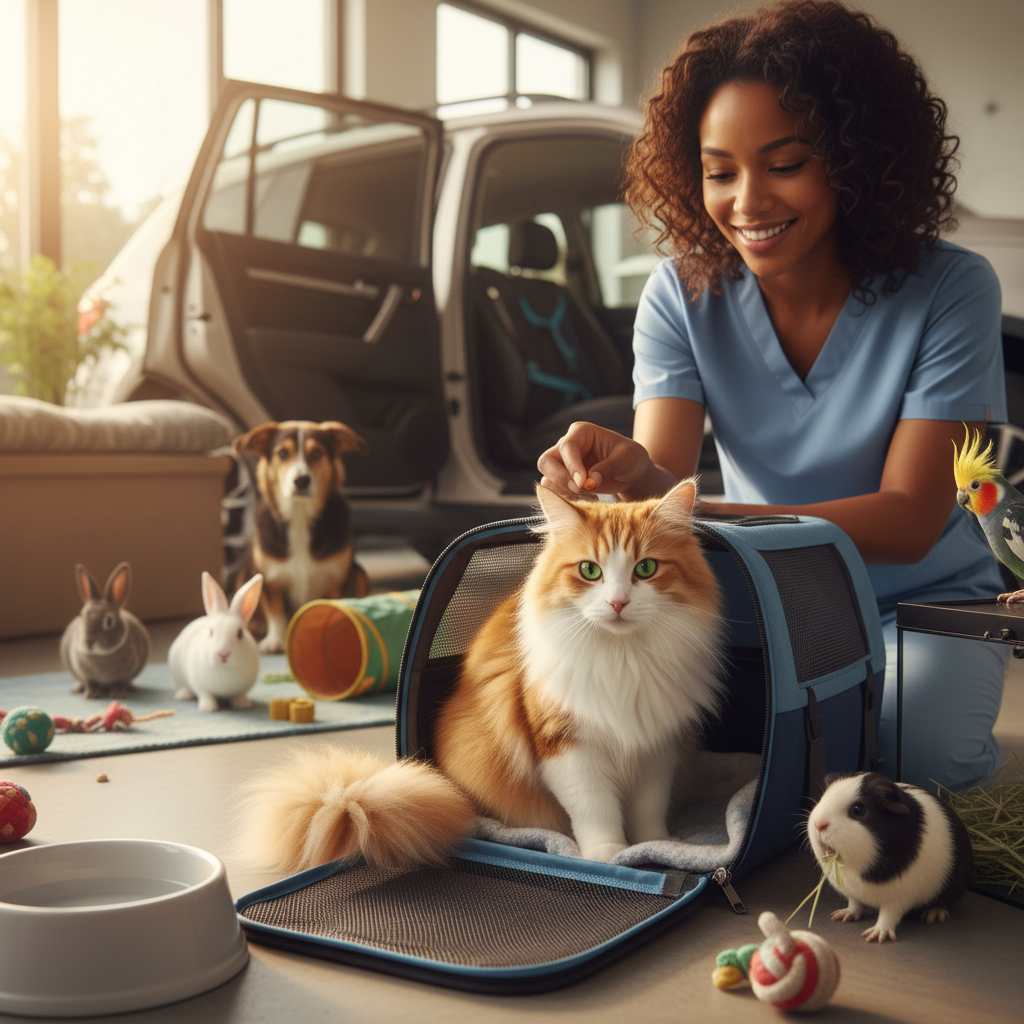
Place the carrier in a frequently used room with the door removed or tied open. Drape a familiar blanket over the back third to create a covered den. Scatter three or four treats around and inside the entrance every few hours. Do not call the cat or reward entry; allow voluntary exploration.
Days 3 and 4: Feeding Near and Inside
Move the cat's regular meals progressively closer to, and then just inside, the carrier opening. By the end of day 4, the food bowl can sit at the back of the carrier. Apply pheromone spray to the bedding once daily.
Days 5 and 6: Reattaching the Door
Reattach the door but leave it open and secured so it cannot swing. Continue feeding inside. Add brief reps where a treat is tossed in, the cat enters, and a marker is delivered as it eats. Practice 5 to 8 reps twice daily.
Days 7 and 8: Closing the Door
While the cat eats inside, close the door for one to two seconds, then open it before the cat finishes. Gradually extend to 10, then 30 seconds across the two days. Deliver a steady stream of lickable treats through the door if needed.
Days 9 and 10: Lifting and Carrying
With the door closed, lift the carrier two to five centimetres off the ground for one second, then set it down and open the door. Build to a slow walk across the room, then through the home. Keep the carrier level; swinging motion is a frequent trigger for nausea.
Days 11 and 12: Car Without Driving
Carry the cat to a pre cooled vehicle. In Australian summer this means running the air conditioning for 5 to 10 minutes before the cat enters, and confirming that seat belts, buckles, and vinyl surfaces are not hot to the touch. Secure the carrier with a seatbelt on the rear seat or in a footwell. Sit with the cat for two to five minutes, deliver treats, then return indoors. The engine is off for these sessions.
Days 13 and 14: Short Drives
Begin with a 1 to 2 km drive around the block. On day 14, extend to a 5 km trip that ends back at home, not at the clinic. The aim is to break the conditioned chain that says car equals vet. At least two or three neutral car trips before a real veterinary appointment is a sensible target.
Pheromone and Treat Pairing
Counter conditioning works by changing the cat's emotional response to a previously frightening stimulus. The carrier reliably predicts something the cat values.
Synthetic Feline Facial Pheromone
Analogues of the F3 facial pheromone are widely stocked at Australian veterinary clinics and reputable pet retailers, typically in the $25 to $45 AUD range for a spray. Apply to bedding and interior walls 15 to 20 minutes before each session. Avoid spraying directly onto the cat. Pheromones are an adjunct to behavioural work, not a replacement.
High Value Food Pairing
Use foods reserved exclusively for training. Lickable tube treats are particularly useful because they can be delivered through carrier mesh. Many Australian households find freeze dried kangaroo, chicken, or sardine flakes effective. If the cat refuses food at any stage, that is the single most reliable signal that the current step is too difficult.
Pre Visit Calming Protocols for Australian Summer Vet Trips
Travel logistics matter as much as training when the mercury climbs. RSPCA Australia and AVA heat safety guidance consistently warn that vehicle interiors can become lethal within minutes, even on a mild 25°C day, and that leaving a pet in a parked car is an offence under animal welfare legislation in every Australian state and territory.
- Book early morning or late evening appointments to reduce thermal load on both the cat and the vehicle.
- Pre cool the car for at least 10 minutes before loading the carrier; check the dash temperature gauge before departure.
- Withhold food for two to three hours before travel to reduce motion sickness risk, unless your veterinarian advises otherwise.
- Cover three sides of the carrier with a light, breathable cotton or bamboo towel to reduce visual stress while preserving airflow.
- Carry a chilled water bottle and a small bowl, particularly for longer trips in regional or rural Australia where distances to the nearest clinic can exceed 100 km.
- Plan around bushfire smoke days by checking the local air quality index; reschedule non urgent appointments when AQI is poor.
- Discuss situational anxiolytics with your veterinarian in advance for cats with severe travel fear. Only a registered Australian veterinarian can prescribe and dose these medications under the Poisons Standard.
For after hours emergencies such as suspected heatstroke, paralysis tick exposure, or snake bite while travelling, keep a contact for your nearest 24 hour clinic saved in your phone:
Animal Emergency Service (AES)
Call the Animal Emergency Service or find your nearest 24-hour emergency vet clinic.
AES operates in QLD, NSW, and VIC. For other states, search for your nearest after-hours veterinary hospital.
Australian Regulatory and Wildlife Considerations
Cat ownership in Australia is regulated at state and council level. Most jurisdictions, including Victoria, New South Wales, the ACT, and increasing parts of Queensland and Western Australia, require microchipping, council registration, and in many local government areas a containment or curfew order. Travelling between states with a cat usually does not require a permit, with the notable exception of biosecurity rules into Tasmania and the Northern Territory; check the relevant state primary industries department before any interstate move.
Even brief outings, such as walking the carrier from the front door to the car, can expose cats to local hazards. Paralysis ticks (Ixodes holocyclus) are active along the east coast from spring to autumn and can attach during the few seconds a cat brushes through garden foliage. Brown and tiger snakes are most active on warm days, and magpie swooping season (typically August to October) can startle both cat and handler. A quick check of the path between the door and the car before each trip is a sensible habit.
A Daily Training Log Template
A written log turns subjective impressions into a usable record. Track these fields each day:
- Date and time of session
- Ambient temperature indoors and (if applicable) in the vehicle, in °C
- Stage of the plan (e.g., Day 7, door closed 10 seconds)
- Cat's body language on entry, during, and on exit
- Treats accepted or refused
- Pheromone applied (yes or no, time of application)
- Duration of session in minutes and seconds
- Notes: vocalisation, elimination, drooling, hiding afterwards, smoke or storm conditions outside
- Next session adjustment: stay, advance, or drop back
Common Mistakes Australian Owners Make
- Only producing the carrier before vet visits. This rebuilds the negative association faster than training can dismantle it.
- Forcing or pushing the cat inside. Flooding usually deepens fear in cats and is inconsistent with LIMA standards.
- Using low value rewards. Dry kibble the cat sees daily rarely competes with fear; reserve special foods for training only.
- Skipping stages because progress looks fast. A relaxed posture on day 6 does not mean the cat will tolerate a closed door on day 7.
- Underestimating Aussie heat. A 30°C morning can become a 42°C afternoon; always plan return travel as well as the outbound trip.
- Confusing tolerance with comfort. A silent, frozen cat is often shut down, not calm.
Troubleshooting Slow Progress
If a cat plateaus, the most common cause is moving too quickly through a previous stage. Return to the last step at which the cat ate willingly and remained loose bodied, and rebuild from there over three to five sessions before advancing.
When the Cat Will Not Enter at All
Remove the carrier door entirely. Try a different carrier style, as some cats prefer soft sided fabric and others a top loading hard shell. Place the carrier on its side temporarily so the entrance is a flat platform rather than a tunnel.
When the Cat Tolerates the Carrier but Panics in the Car
Decouple the steps. Spend additional sessions with the engine running but the vehicle stationary, then with reversing out of the driveway only, then with a single block driven slowly. Persistent drooling or vomiting warrants veterinary review.
When Multi Cat Households Complicate Training
Train each cat separately in different rooms. Cats observing a stressed housemate can develop secondary fear through social learning. Use distinct carriers and bedding so scents do not cross over.
When to Bring in a Professional
Self directed training works for most cats with mild to moderate carrier aversion. Professional input is warranted when the cat shows panic responses, directs aggression at handlers when the carrier appears, plateaus after two weeks of consistent work, or has a known medical condition such as cardiac disease, feline lower urinary tract disease, or chronic kidney disease that may interact with stress.
In Australia, look for credentials such as IAABC Certified Cat Behavior Consultant (CCBC), Delta Institute qualified trainers with cat experience, Fear Free Certified Professionals, or a veterinary behaviourist who is a registered specialist with the Australian and New Zealand College of Veterinary Scientists (ANZCVS) in Veterinary Behaviour. Patience is the single most important variable. A cat that walks calmly into a carrier on its own is the foundation of safer, less traumatic veterinary care for the rest of the animal's life.
Frequently Asked Questions
How long should carrier training take for an Australian cat before a summer vet visit? ↓
Is it illegal to leave my cat in a parked car in Australia? ↓
What pheromone products are available in Australia and how much do they cost? ↓
Do I need a permit to travel interstate with my cat? ↓
When should I see a veterinary behaviourist instead of training at home? ↓

Mark Sullivan
Certified Professional Dog Trainer
Certified professional dog trainer — positive-reinforcement methods for every breed and behavioural challenge.
Content Disclosure
This article was created using state-of-the-art AI models with human editorial oversight. It is intended for informational and entertainment purposes only and does not constitute veterinary medical advice. Always consult a licensed veterinarian for your pet's specific health needs. Learn more about our process.