
In this article
Understanding the Shift: From Summer Heat to Autumn Cool
As the intense heat of the Australian summer finally breaks and the days grow shorter, Aussie pet owners often witness a sudden explosion of fur. We call this the 'Autumn Coat Blow.' While we often associate heavy shedding with spring, the transition into autumn is just as dramatic, especially for our double-coated breeds.
In Australia, the context is unique. Your pet isn't just shedding a light summer coat to grow a parka for a freezing winter (unless you live in the Snowy Mountains or Tasmania). They are transitioning their skin and coat biology to handle cooler, often damper conditions. The physiological trigger is the photoperiod, the reduction in daylight hours, which signals the hair follicles to enter the resting phase and shed.
For owners of breeds like Border Collies, Kelpies, Golden Retrievers, and German Shepherds, this means one thing: tumbleweeds of fur rolling down the hallway. But the risk here isn't just the mess; it is impaction and the concealment of parasites.
Aussie Autumn Risks
- The Trap: Dead undercoat gets trapped against the skin, holding moisture and heat.
- The Hazard: This creates a humid microclimate perfect for bacterial hotspots and fungal infections, especially given the humidity in states like Queensland and NSW.
- The Hidden Killer: A matted or impacted coat makes it nearly impossible to find Paralysis Ticks (*Ixodes holocyclus*).
- The Golden Rule: If you cannot see the skin when you part the hair, the coat is impacted.
The Paralysis Tick Factor
In many parts of the world, ticks are a nuisance. In eastern Australia, they are lethal. The Paralysis Tick is active well into autumn, especially if we have had late summer rains. A dense, impacted undercoat is the perfect hiding spot for a tick to attach unnoticed.
Every time you groom during the autumn shed, you are performing a life-saving health check. By removing the dead woolly undercoat, you remove the 'camouflage' that allows ticks to feed undetected. If you find a tick, or if your pet shows signs of wobbliness or a change in bark, seek immediate veterinary attention.
Animal Emergency Service (AES)
Call the Animal Emergency Service or find your nearest 24-hour emergency vet clinic.
AES operates in QLD, NSW, and VIC. For other states, search for your nearest after-hours veterinary hospital.
Phase 1: The Essential Toolkit
Forget the supermarket bristle brush. It might smooth the topcoat, but it glides right over the impacted fur underneath. To tackle an Aussie coat blow, you need the right artillery.
What You Need
- Undercoat Rake: This tool reaches past the guard hairs to grab the loose soft undercoat. It is essential for thick coats.
- Long-Pin Slicker Brush: Crucial for separating the hairs and 'line brushing.'
- Metal Greyhound Comb: The final judge. If this comb hits a snag, you aren't done.
- Detangling Spray: Look for Australian-made sprays with natural ingredients like tea tree or eucalyptus (diluted and pet-safe formulations only) to help slide out dead hair and repel pests.
Phase 2: The Step-by-Step De-Shedding Technique
Do not try to de-shed a Husky or a Samoyed in one sitting. Aim for 15-minute sessions daily over a week. This reduces stress for the animal and saves your wrist.
Step 1: The Finger Walk (Inspection)
Before lifting a brush, run your fingers deep into the coat. You are feeling for mats, but more importantly, you are feeling for Grass Seeds. Spear grass and foxtails are notorious in Australia. They dry out in autumn and become like needles, burrowing into the skin. They are easily missed in a thick, shedding coat until they cause a painful abscess.
Step 2: Line Brushing (The Professional Standard)
Random brushing is ineffective. You must use line brushing to be effective.
- Have your dog lie on their side.
- Lift a layer of fur upward with your hand so you can see a clear line of skin.
- Use your slicker brush to brush the hair below the line, pulling the hair down and away from the skin.
- Work methodically from the paws up the legs, then the flank, then the neck.
- Why this matters: This technique ensures you are removing the dead hair right from the follicle, ventilating the skin.
Step 3: The Rake Out
Once you have line-brushed a section, use the undercoat rake. Move with the grain of the hair. The volume of fluff that comes out can be shocking. This is the hair that would otherwise trap moisture and lead to the dreaded 'hot spot' (acute moist dermatitis), a common condition in our humid climate.
Step 4: Bathing and Drying (The Critical Warning)
A warm bath helps loosen the dead coat, but in autumn, you must be careful. Never leave a double-coated dog to air dry in cool or humid weather.
A damp undercoat is a breeding ground for bacteria. If you don't have a high-velocity pet dryer (blaster), consider booking a professional groom. They have the equipment to blast the water (and the remaining loose hair) out of the coat completely. If you bathe at home, towel dry thoroughly and keep the dog inside in a warm room until bone dry.
Species-Specific Advice
Cats
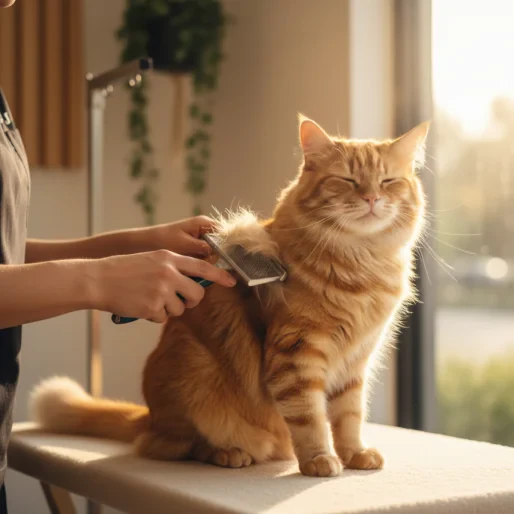
Our feline friends are fastidious, but they cannot handle the volume of hair shed during the autumn blow alone. Ingesting too much fur leads to trichobezoars (hairballs) or severe constipation. During autumn, brush your cat daily. If your cat is lethargic or retching without producing a hairball, this is a blockage risk.
Note for Wildlife Safety: Please dispose of the brushed fur in the bin, specifically if you use spot-on flea/tick treatments. While birds love to use soft fur for nests, the residual chemicals in treated pet fur can be toxic to native nestlings.
Rabbits and Guinea Pigs
Small mammals are extremely sensitive to the moult. Rabbits cannot vomit, so if they ingest fur while grooming, it can cause GI Stasis, a silent killer. You must gently pluck or 'strip' loose tufts of fur by hand daily. If your rabbit stops eating or their droppings become small and dry, see a vet immediately.
When to See a Vet
Shedding is normal; suffering is not. Contact your local vet if you notice:
- Bald Patches or Symmetry: Hair loss that is perfectly symmetrical on both sides can indicate hormonal issues like Cushing's disease or Hypothyroidism.
- Raw, Oozing Skin: This is a hot spot. It spreads rapidly and needs prescription medication.
- Persistent Scratching: Could be allergies (wandering Jew is rampant in autumn) or mites.
Looking Ahead: Winter Prep
Once the dead summer coat is gone, your pet's new coat can properly insulate them against the coming chill. For senior pets, particularly those with arthritis, this warmth is vital. Now is also the time to check their paws. As the ground cools, cracks can appear. A good paw balm can protect against the elements, whether that's wet grass in Melbourne or dry dust in the Outback.
Grooming is more than cosmetic; it's a pillar of preventative health. By mastering the autumn shed, you protect your mate from the unique hazards of the Australian bush and backyard.
Frequently Asked Questions
Content Disclosure
This article was created using state-of-the-art AI models with human editorial oversight. It is intended for informational and entertainment purposes only and does not constitute veterinary medical advice. Always consult a licensed veterinarian for your pet's specific health needs. Learn more about our process.