
In this article
- Key Takeaways
- Why Spring Grazing Matters in Australia
- Vaccination and Health Checks Before Outdoor Access
- Materials for an Australian Predator-Proof Run
- Choosing and Preparing the Grazing Site
- Temperature Management in Australian Spring
- Supervision Practices
- Paralysis Tick Prevention
- Post-Grazing Checks
- When to Contact a Vet Immediately
- Ongoing Maintenance
- Quick Reference Checklist
Key Takeaways
- Australian spring (September to November) offers excellent grazing conditions, but owners must account for snakes, foxes, birds of prey, and paralysis ticks.
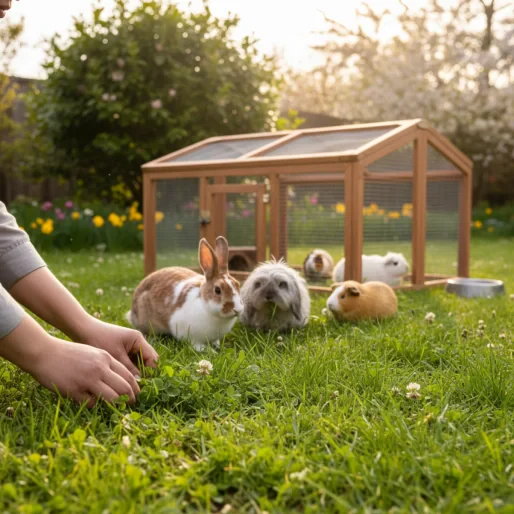
- A predator-proof run requires weld mesh (not chicken wire), a fully enclosed roof, buried or weighted edges, and bolt-snap locks.
- Safe grazing temperatures sit between roughly 10°C and 25°C. Australian spring days can spike well above 30°C with little warning, so an outdoor thermometer at pet height is essential.
- Common Australian garden plants including Paterson's curse, fireweed, and lantana are toxic and must be removed before grazing.
- Rabbits in Australia face significant disease risk from Rabbit Haemorrhagic Disease Virus (RHDV). Vaccination through an experienced vet is strongly recommended before any outdoor access.
Why Spring Grazing Matters in Australia
Australian spring, running from September through November, provides a window of moderate temperatures ideal for supervised outdoor grazing. Rabbits and guinea pigs benefit from direct sunlight for vitamin D synthesis, varied foraging, and exercise on natural ground. The RSPCA Australia knowledge base highlights that safe outdoor access contributes meaningfully to small herbivore welfare when managed correctly.
However, Australian conditions introduce hazards rarely encountered in the Northern Hemisphere. Eastern brown snakes and red-bellied black snakes become active in spring as they emerge from brumation. Paralysis ticks (Ixodes holocyclus) are prevalent along the eastern seaboard from September onward. Introduced foxes are widespread in urban and rural areas alike, and the intense Australian UV index demands robust shade provisions.
Vaccination and Health Checks Before Outdoor Access
Before the first grazing session of spring, veterinary guidelines recommend ensuring rabbits are up to date with vaccination against Rabbit Haemorrhagic Disease Virus (RHDV1 and RHDV2). Calicivirus is endemic in Australian wild rabbit populations, and the virus can be transmitted by insects, on clothing, or through contaminated grass. The Australian Veterinary Association (AVA) recommends discussing a vaccination schedule with your vet, as protocols may vary by state and product availability.
Guinea pigs do not require vaccinations in Australia, but a pre-spring health check is still worthwhile, particularly to assess dental health and check for early signs of respiratory infection.
It is also worth noting that rabbits are classified as prohibited pets in Queensland. Owners in all other states and territories should confirm their local council's registration or permit requirements, as these vary.
Animal Emergency Service (AES)
Call the Animal Emergency Service or find your nearest 24-hour emergency vet clinic.
AES operates in QLD, NSW, and VIC. For other states, search for your nearest after-hours veterinary hospital.
Materials for an Australian Predator-Proof Run
Mesh and Framing
- Weld mesh panels: Choose galvanised welded wire mesh with openings no larger than 13 mm x 25 mm for guinea pigs. Standard chicken wire is inadequate; foxes can tear through it, and snakes can push through the larger gauge.
- Timber or steel framing: Hardwood or powder-coated steel tubing. If using treated pine, ensure it is pet-safe (avoid older CCA-treated timber, which contains arsenic).
- Fully enclosed roof: Non-negotiable in Australia. Wedge-tailed eagles, goshawks, kookaburras, and currawongs can all target small animals. Neighbourhood cats are another significant aerial and ground-level threat.
- Bolt-snap locks or combination padlocks: Simple hook-and-eye latches can be manipulated by foxes and corvids such as Australian ravens.
- Ground protection: A mesh skirt extending 30 cm outward, pegged flat and weighted with pavers, helps prevent foxes digging under. This also deters snakes from entering at ground level, though fine mesh (no greater than 10 mm) at the base provides better snake exclusion.
Shade and UV Protection
Australia's UV index regularly reaches "extreme" levels even in early spring. Standard shade cloth rated at 70% or higher should cover at least half the run area, not just one third as recommended in milder climates. Position the run so that morning sun reaches the open section, with shade cloth protecting the afternoon side where heat builds. A solid section of roofing (such as corrugated polycarbonate) over the shelter end provides rain protection during spring storms.
Additional Supplies
- A heavy ceramic water bowl or clip-on bottle. In warm conditions, provide both: bottles can clog, and bowls can tip.
- A hay rack with fresh grass hay (such as oaten hay, commonly available from Australian produce stores).
- A hideaway shelter: a wooden arch, tunnel, or upturned box with an entrance hole.
- An outdoor thermometer with a max/min memory function, positioned at ground level.
- Tick removal tools, particularly for owners on the eastern seaboard.
Choosing and Preparing the Grazing Site
Place the run on flat, well-drained lawn. Avoid areas near compost bins, garden sheds with stored chemicals, or sections treated with herbicides or pesticides within the past six weeks. Many common lawn care products sold in Australia contain ingredients toxic to small animals.
Snake Awareness
Before each session, walk the grazing area carefully. Look for snake activity: shed skins, trails in mulch, or disturbance near rockeries, wood piles, and dense ground cover. Keep grass mowed short around and beyond the run perimeter (a 2 m to 3 m clear zone is advisable). Snakes are attracted to areas where rodents shelter, so remove potential rodent harbourage nearby. If venomous snakes are regularly sighted in your area, outdoor grazing carries an elevated risk that must be weighed carefully.
Toxic Plant Identification: Australian Specifics
In addition to widely recognised toxic plants such as foxglove, hemlock, and ragwort, Australian gardens commonly harbour the following species that are dangerous to rabbits and guinea pigs:
- Paterson's curse (Echium plantagineum): Purple-flowered weed widespread across southern Australia. Contains pyrrolizidine alkaloids causing liver damage.
- Fireweed (Senecio madagascariensis): Yellow daisy-like flowers, common along the NSW and Queensland coast. Also contains pyrrolizidine alkaloids.
- Lantana (Lantana camara): A declared weed in several states. All parts are toxic, particularly the green berries.
- Oleander (Nerium oleander): Widely planted as an ornamental. Contains cardiac glycosides; even a small amount can be fatal.
- Angel's trumpet (Brugmansia spp.): Large pendulous flowers, popular in Australian gardens. Contains tropane alkaloids.
- Wandering Jew (Tradescantia fluminensis): A common ground cover that can cause skin irritation and digestive upset.
Photograph any unidentified plant and cross-reference with the RSPCA's poisonous plant resources or the Australian National Botanic Gardens database before allowing grazing.
Temperature Management in Australian Spring
While the comfortable grazing range sits between 10°C and 20°C, Australian spring days can reach 30°C to 35°C, particularly in inland areas, South Australia, and Western Australia. Northern NSW and Queensland may experience high humidity alongside heat.
- Ideal range: 10°C to 20°C. Most September and early October mornings in southern Australia fall within this window.
- Acceptable with shade and water: Up to 25°C.
- Danger zone: Above 26°C. Rabbits are highly susceptible to heatstroke as they cannot sweat or pant effectively. Guinea pigs are similarly vulnerable.
- Too cold for guinea pigs: Below 10°C for extended sessions. Frosty mornings in Tasmania, the ACT, and highland areas of Victoria and NSW may fall below this in early spring.
Ground-level temperatures inside a run can be several degrees higher than ambient readings, especially on dark soil or near paving. Always measure at pet height.
Signs of Heat Stress
- Rapid, open-mouth breathing or panting.
- Lethargy, lying flat with limbs extended.
- Wet nose and chin from excessive drooling.
- Red or very pale ears in rabbits.
Move the animal to a cool indoor area immediately, offer water, and dampen ears gently with cool (not ice-cold) water. Contact your vet without delay.
Supervision Practices
Check Frequency
Visual checks every 15 minutes are the recommended baseline. Position the run within view of a window where possible. In areas with known snake activity, more frequent checks are advisable.
What to Monitor
- Behaviour: Animals should be alert and nibbling. A hunched, motionless animal requires immediate assessment. Guinea pigs may freeze when stressed rather than flee.
- Droppings: Normal droppings are round and dry (rabbits) or slightly oval (guinea pigs). Watery or absent droppings signal digestive trouble. In rabbits, no droppings over a couple of hours can indicate GI stasis, which is a veterinary emergency.
- Weather changes: Spring weather in Australia can shift rapidly. A cool morning can become dangerously hot by midday, particularly when hot northerly winds arrive ahead of a front.
- Predator presence: Watch for foxes (active even in suburban areas across Melbourne, Sydney, Canberra, and Adelaide), roaming cats, and raptors overhead.
- Water supply: Verify accessibility at every check.
Session Length
After the gradual introduction period (15 to 20 minutes on day one, increasing by 10 to 15 minutes daily over 7 to 10 days):
- Cool days (10°C to 16°C): Up to 2 to 3 hours for rabbits; 1 to 2 hours for guinea pigs.
- Warm days (17°C to 24°C): 1 to 2 hours with mandatory shade.
- Hot days (above 25°C): Early morning only, under an hour. Skip outdoor time if temperatures remain high.
Never leave rabbits or guinea pigs in a temporary run overnight. Australian nocturnal predators including foxes, owls, and feral cats are highly effective hunters.
Paralysis Tick Prevention
For owners along the eastern seaboard from far north Queensland to eastern Victoria, paralysis ticks pose a serious and potentially fatal risk to rabbits and guinea pigs. There are currently no tick preventatives registered for use in rabbits or guinea pigs in Australia. The primary defence is vigilant checking: run your fingers through the animal's entire coat after every outdoor session, paying close attention to the head, neck, ears, and front legs. If a tick is found, remove it promptly with a tick removal tool (do not squeeze the body) and seek veterinary advice immediately, as paralysis tick envenomation can progress rapidly.
Post-Grazing Checks
- Run fingers through the coat checking for ticks, grass seeds (particularly barley grass seeds, which are common across southern Australia and can penetrate skin, ears, and eyes), and fly eggs.
- Flystrike risk: Australian blowflies are active from early spring onward. Check the rear end thoroughly for small white or yellow egg clusters. Flystrike can develop within hours in warm weather and is life-threatening.
- Monitor appetite and droppings for several hours after returning indoors. A guinea pig or rabbit that stops eating or produces no droppings should be assessed by a vet promptly.
When to Contact a Vet Immediately
Seek veterinary attention without delay for any of the following:
- Open-mouth breathing, gasping, or blue-tinged gums.
- Loss of appetite lasting more than a few hours, especially in rabbits.
- Bloated or hard abdomen.
- Visible maggots or fly eggs on fur or skin.
- Sudden collapse, seizures, or inability to stand.
- Signs of possible plant poisoning: drooling, pawing at the mouth, diarrhoea, tremors.
- Suspected snake bite: sudden weakness, dilated pupils, rapid breathing.
- Tick paralysis signs: wobbly gait, difficulty swallowing, progressive weakness.
- Any bite or puncture wound, even if small.
Save your vet's emergency contact number and the details of the nearest after-hours emergency animal hospital in your phone before the first outdoor session of the season.
Animal Emergency Service (AES)
Call the Animal Emergency Service or find your nearest 24-hour emergency vet clinic.
AES operates in QLD, NSW, and VIC. For other states, search for your nearest after-hours veterinary hospital.
Ongoing Maintenance
- Before each session: Walk the area, check for new weeds, snake activity, wild animal droppings, and slug or snail bait.
- Weekly: Inspect mesh joins, locks, and frame connections. Australian UV and heat cycles degrade materials faster than in temperate climates.
- Monthly: Move the run to a fresh grass patch to reduce parasite load and allow turf recovery.
- Seasonally: As spring transitions to summer, reassess shade provisions, increase flystrike vigilance, and consider restricting grazing to early morning hours only. Review any updated state or territory regulations regarding outdoor enclosures.
Quick Reference Checklist
- RHDV vaccination current (rabbits).
- Run built with weld mesh, fully enclosed roof, and predator-proof locks.
- Fine mesh at ground level for snake exclusion.
- Ground edges anchored or skirted.
- Toxic weeds (including Australian species) removed.
- Shade cloth covering at least half the run.
- Hideaway shelter and fresh hay inside.
- Clean water accessible and tested.
- Thermometer at pet height.
- Grazing introduced gradually over 7 to 10 days.
- Checks every 15 minutes.
- Post-session tick and fly egg check completed.
- Vet emergency number saved in phone.
Frequently Asked Questions
Content Disclosure
This article was created using state-of-the-art AI models with human editorial oversight. It is intended for informational and entertainment purposes only and does not constitute veterinary medical advice. Always consult a licensed veterinarian for your pet's specific health needs. Learn more about our process.