A practical guide to building a safe summer evening conditioning circuit for healthy adult dogs in Canada. Tailored for humid Eastern heat, the milder Pacific coast, and our short but intense warm season.
Key Takeaways
- Canadian summers are short and often humid, so evening conditioning sessions in Ontario, Quebec, and the Maritimes should be timed around humidex readings, not just air temperature.
- Cavaletti poles and cone spacing must match your dog's withers height and stride length, not the breed label on a registration form.
- Wobble cushion work should progress in stages over several weeks, starting with two front paws on a lightly inflated disc.
- Session length for healthy adult dogs is typically 10 to 20 minutes, two to three times per week, with at least 48 hours between strength sessions.
- Tick and mosquito exposure rises sharply in Canadian summer evenings; check parasite prevention with your vet before setting up an outdoor routine.
- Stop immediately and contact a veterinarian, or call , if you notice sudden lameness, collapse, or distressed breathing.
ASPCA Animal Poison Control / Local Emergency Vet
Call the ASPCA Poison Control hotline (also serves Canada) or contact your nearest emergency veterinary hospital.
The ASPCA hotline charges a consultation fee. For non-poison emergencies, search for a 24-hour veterinary hospital in your city.
Why a Backyard Circuit Suits the Canadian Summer
Canadian dog owners face a compressed exercise season. Outside the Pacific coast, much of the country spends roughly five months of the year in conditions that make sustained outdoor work uncomfortable or unsafe, whether that means deep snow in January or 30 C plus humidex in July. Long July and August evenings, when the sun lingers well past 21:00 across most provinces, offer a genuine window for low impact fitness work that builds joints and core strength without overloading them.
A backyard conditioning circuit gives dogs a structured outlet, improves core stability, builds confidence in under exercised dogs, and helps prevent the weekend warrior injuries that veterinary clinics see surge after long weekends like Canada Day and the August civic holiday. Canadian Veterinary Medical Association (CVMA) guidance on responsible exercise consistently highlights the value of controlled, repetitive movement patterns for healthy joints and proprioceptive awareness, the body's sense of where its limbs are in space.
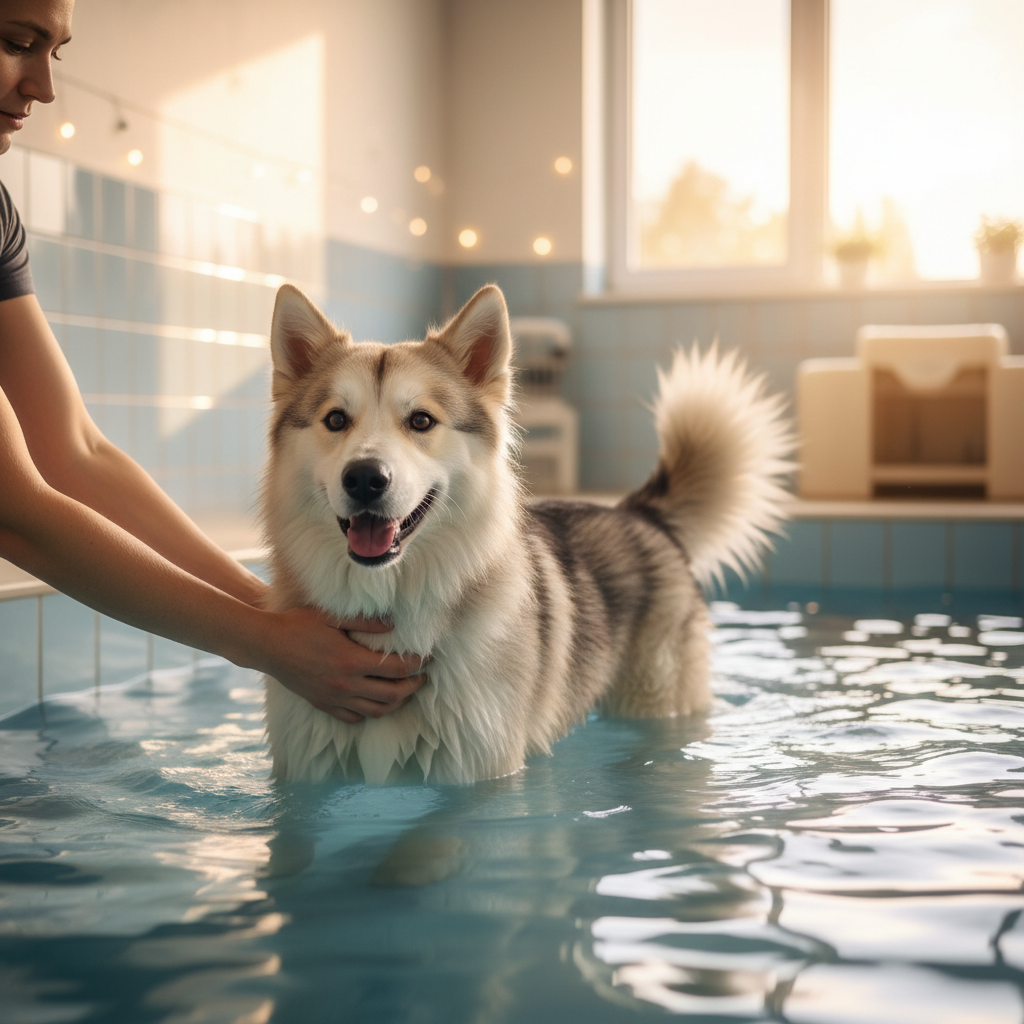
This guide is written for healthy adult dogs cleared for exercise by a licensed Canadian veterinarian. Puppies still growing, senior dogs with osteoarthritis, and any dog recovering from injury should follow a programme designed by a certified canine rehabilitation professional, several of whom practise across Canada through CVMA member clinics and university affiliated rehab services. For arthritic or overweight dogs, low impact water based work may be more appropriate; see the article on canine hydrotherapy for arthritic, overweight dogs.
Climate and Surface Considerations Across Canada
Conditions vary dramatically by region, and a one size fits all schedule will not work for a country this large.
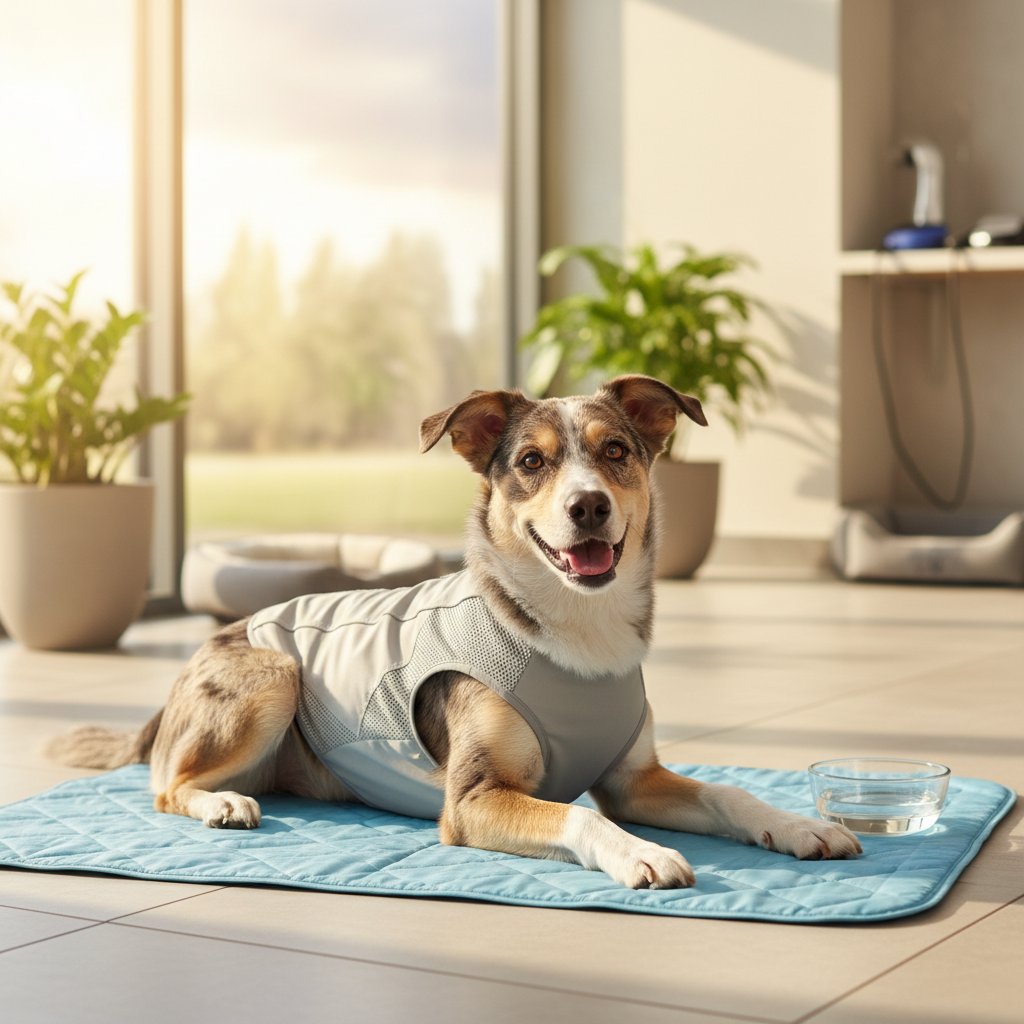
- Ontario, Quebec, and the Maritimes: Humidex is the real risk factor, not temperature alone. When the humidex reads above 30, even an evening session can stress a dog's cooling system. Check Environment and Climate Change Canada forecasts before heading out.
- Prairies (Alberta, Saskatchewan, Manitoba): Daytime highs can be intense but humidity is lower, and evenings cool quickly. Watch for grasshoppers and gopher holes in rural yards.
- British Columbia and the Pacific coast: Generally milder summers, but wildfire smoke can dramatically reduce outdoor air quality. If the Air Quality Health Index sits above 7, move conditioning indoors.
- Northern Canada and the Territories: Extremely long daylight hours allow flexible timing, but black flies and mosquitoes can make evening work miserable.
A simple ground check is reliable nationwide: place the back of your hand on the surface for seven seconds. If it feels uncomfortable, it is too hot for paw pads. Asphalt driveways and dark composite decking common in Canadian backyards retain heat long after sundown.
Equipment Checklist
- 4 to 6 cavaletti poles (lightweight PVC or schedule 40 plumbing pipe from a Canadian hardware retailer works well) with adjustable height supports. A complete DIY set generally costs between 40 and 90 CAD.
- 1 wobble cushion or balance disc rated for your dog's weight in kg, set on a non slip mat. Quality discs typically run 40 to 80 CAD.
- 6 to 8 cones, tall enough that your dog must move around them rather than over them.
- A non slip surface: short, dry grass; rubber matting; or artificial turf. Avoid wet cedar decking, painted concrete, and loose pea gravel.
- High value treats cut into pea sized pieces, plus fresh water in a shaded spot.
- A well fitted flat collar or Y shaped harness and a 1.5 to 2 m lead.
- A reliable parasite prevention plan, particularly for ticks, which are now established across southern Ontario, Quebec, Nova Scotia, New Brunswick, and parts of Manitoba.
Pet insurance, common in Canada given that provincial health plans do not cover veterinary care, is worth reviewing before starting any new physical programme. Confirm whether your policy covers physiotherapy or rehabilitation in case of injury.
Cavaletti Spacing by Size
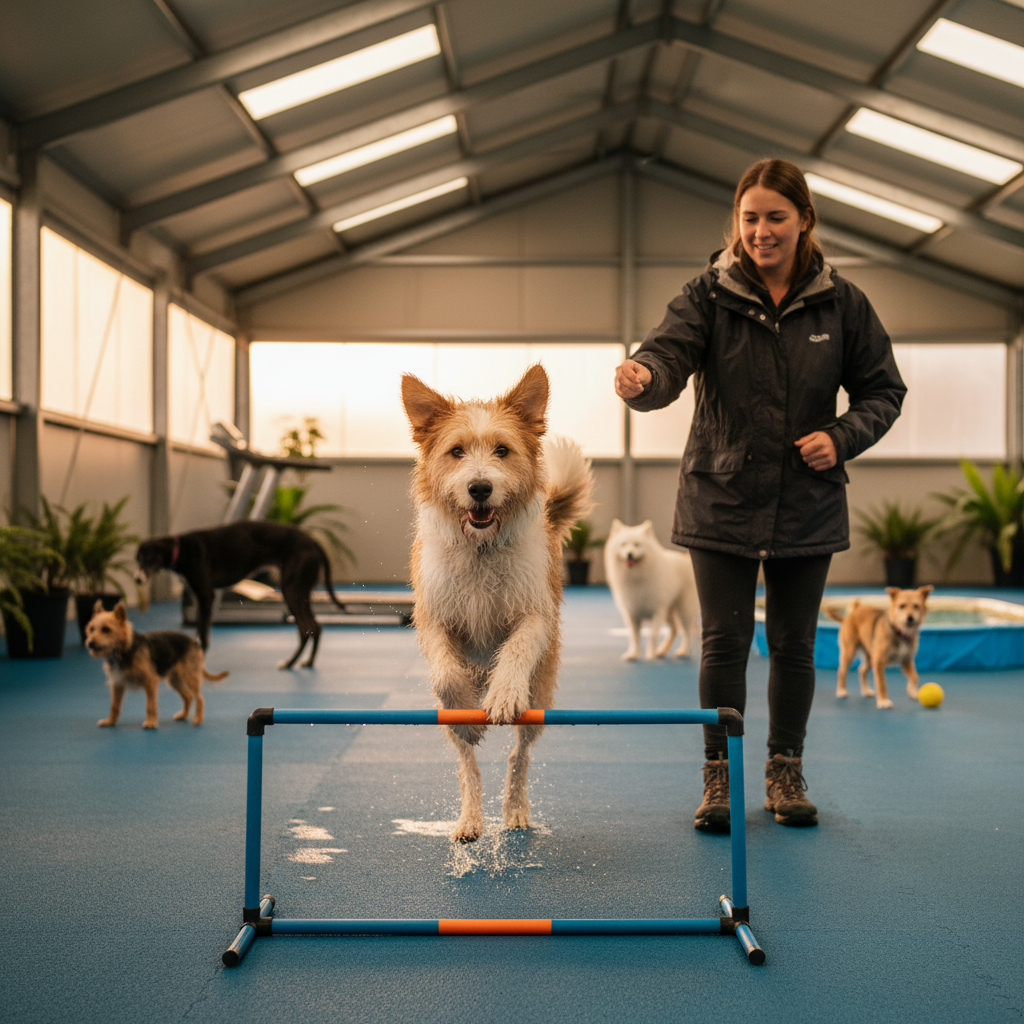
Cavaletti work, walking or trotting over a series of low poles, is one of the most evidence supported tools in canine conditioning. It encourages active joint flexion, even weight distribution, and engagement of the deep core muscles. The most common owner mistake is setting poles too close together, forcing the dog to hop rather than stride.
General Rules
- Pole height for foundation work: roughly the height of the carpus (wrist) for small and medium dogs, and the height of the hock for larger dogs.
- Pole spacing: approximately the same distance as the height of your dog at the withers for a walking pace, and slightly longer at a trot.
Starting Points for Common Canadian Breeds
- Toy and small breeds (Yorkshire Terrier, Havanese, Cavalier King Charles Spaniel): poles 5 to 10 cm high, spaced about 20 to 30 cm apart.
- Medium breeds (Border Collie, Nova Scotia Duck Tolling Retriever, Cocker Spaniel): poles 10 to 15 cm high, spaced 40 to 50 cm apart.
- Large breeds (Labrador Retriever, Golden Retriever, German Shepherd, Standard Poodle): poles 15 to 20 cm high, spaced 55 to 70 cm apart.
- Giant breeds (Newfoundland, Bernese Mountain Dog, Great Pyrenees): poles 20 to 25 cm high, spaced 75 to 90 cm apart.
Watch your dog's natural stride and adjust. The Labrador Retriever remains one of the most popular breeds in Canada and is famously food motivated; resist the temptation to lure too quickly, as speed undermines the conditioning effect.
Wobble Cushion Progressions
Balance discs challenge the small stabiliser muscles that hold joints aligned. Professional consensus in canine rehabilitation recommends introducing these tools in stages, each held until the dog is calm and confident.
Stage 1: Familiarisation (Week 1)
Place the cushion flat and only lightly inflated on a non slip mat. Lure the dog to step two front paws on, hold for three to five seconds, then step off. Repeat 5 to 8 times.
Stage 2: Rear Paw Awareness (Week 2)
Reverse the position to encourage two back paws on the cushion. Reward steady weight distribution rather than duration.
Stage 3: All Four Paws (Weeks 3 to 4)
Use a slightly larger disc or two cushions side by side. Lure into a square stand with all four paws on. Aim for 10 to 15 seconds of calm balance.
Stage 4: Dynamic Work (Weeks 5 to 6)
Introduce gentle weight shifts: a nose touch to the left, then the right. Never push, pull, or rock the cushion.
Cone Weave Drills
Cone weaves develop spinal flexibility, hindlimb awareness, and controlled turning. The focus is slow, deliberate movement, not the speed seen in competition weave poles.
Setting Up
- Arrange 6 cones in a straight line.
- Spacing: roughly 1.5 times your dog's body length apart for foundation work.
The Drill
Lead your dog at a walk in a serpentine pattern. Focus on smooth motion and equal bending in both directions. Most dogs are noticeably stiffer on one side; that side needs extra repetitions, not fewer. Begin with three passes each direction and build to a maximum of six.
Session Length and Recovery
Conditioning is not cardio. The aim is quality of movement.
- Total session length: 10 to 20 minutes, including warm up and cool down.
- Frequency: two to three sessions per week, with at least 48 hours between strength focused sessions.
- Warm up: 5 minutes of loose lead walking plus a few play bows or sit to stand transitions.
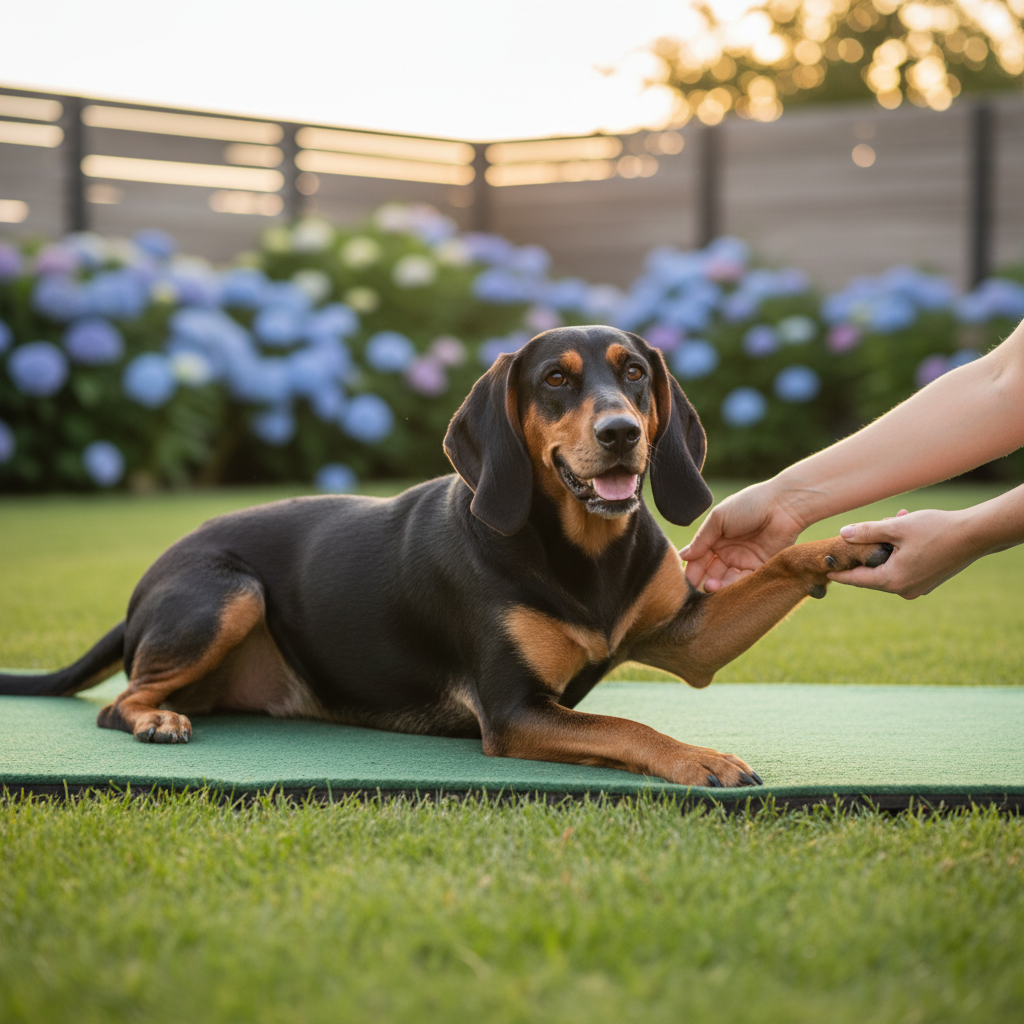
- Cool down: 5 minutes of slow walking and, if tolerated, gentle passive range of motion on each limb.
Recovery is when adaptation happens. Proprioceptive work is more tiring than it looks; a dog may appear energetic during the session and then sleep deeply for hours. Soreness lasting more than 24 hours, stiffness on rising, or any gait change warrants a rest day and a vet check.
Six Week Plan to Build Core Strength
Week 1: Foundation
- Session A: Cavaletti walk over 4 poles, 3 passes. Wobble cushion Stage 1.
- Session B: Cone weave at walk, 3 passes each direction.
Week 2: Adding Repetitions
- Session A: Cavaletti 5 poles, 4 passes. Wobble cushion Stage 2.
- Session B: Cone weave 4 passes each direction. Sit to stand x 5.
Week 3: Combining Stations
- Session A: Cavaletti 6 poles, 4 passes. Wobble cushion Stage 3.
- Session B: Cone weave 5 passes. Figure of eight around two widely spaced cones.
Week 4: Building Endurance
- Session A: Cavaletti at slow trot if balanced, 5 passes. Wobble cushion Stage 3 with nose touches.
- Session B: Cone weave 6 passes. Sit to stand x 8.
Week 5: Dynamic Balance
- Session A: Cavaletti combined with a wobble cushion stand at the end of the lane.
- Session B: Cone weave plus down to stand x 5.
Week 6: Integration
- Session A: Full circuit, two rounds with rest between.
- Session B: Reassess spacing, balance duration, and weave smoothness.
At the end of six weeks, take a full rest week or switch to gentle walking before progressing.
Provincial Regulations and Practical Notes
Dog licensing and bylaws in Canada are governed at the municipal and provincial level. A few practical points for backyard conditioning:
- Leash and fencing bylaws still apply in your own yard if it is unfenced. Most Canadian municipalities require dogs to be under direct control on private property.
- Breed specific legislation: Ontario's Dog Owners' Liability Act has historically restricted certain breeds; check current municipal rules before purchasing equipment that may suggest off lead use.
- Rabies vaccination is mandatory in most provinces. While conditioning is a backyard activity, neighbours and visiting dogs may come into contact during sessions, so keep vaccinations current.
- Wildlife encounters: Raccoons, skunks, and coyotes are active in many suburban Canadian backyards at dusk. Secure the area and supervise sessions, particularly in Vancouver, Toronto, Calgary, and the Greater Montreal area where urban coyote sightings are routinely reported.
For double coated breeds common in Canada, such as the Siberian Husky, Alaskan Malamute, Samoyed, and Newfoundland, never shave the coat to manage summer training. The double coat insulates against both cold and heat. Read more in the article on why you should never shave a double coated dog in summer.
When to Call Your Vet Immediately
- Sudden lameness or non weight bearing on a limb.
- Collapse, disorientation, or vomiting, which may signal heatstroke. Contact your veterinarian or call .
ASPCA Animal Poison Control / Local Emergency Vet
Call the ASPCA Poison Control hotline (also serves Canada) or contact your nearest emergency veterinary hospital.
The ASPCA hotline charges a consultation fee. For non-poison emergencies, search for a 24-hour veterinary hospital in your city.
- Rapid, distressed breathing that does not normalise with rest, shade, and water.
- Yelping on movement, a hunched posture, or reluctance to lie down.
- Joint swelling in the 24 to 48 hours after exercise.
If your dog has a known orthopaedic condition (hip or elbow dysplasia, cruciate disease, or spinal issues), do not begin a conditioning programme without veterinary input. Senior dogs may also need a tailored approach; see the guide on summer daylight, senior pets' sleep and sundowning.
Final Thoughts
A well designed backyard conditioning circuit is one of the most rewarding ways to spend the long, generous evenings of a Canadian summer. The goal is not to create a canine athlete in six weeks but to build steady, lifelong physical literacy: balanced movement, calm focus, and resilient joints that carry your dog through the next winter and into the next melt. Progress slowly, prioritise good form over repetitions, and treat every session as a chance to learn how your dog moves. Most owners notice a more confident gait, easier transitions on icy stairs come October, and a happier, more settled dog at home.
Frequently Asked Questions
Is it safe to do backyard conditioning in Canadian summer heat? ↓
Do I need permission from my vet before starting a conditioning circuit? ↓
How much does a basic backyard conditioning setup cost in Canada? ↓
Should I worry about ticks during evening sessions in my backyard? ↓
Can puppies follow the six week plan? ↓

Emma Lawson
Practical Pet Care Educator
Practical pet home care specialist — clear, step-by-step guidance grounded in veterinary nursing standards.
Content Disclosure
This article was created using state-of-the-art AI models with human editorial oversight. It is intended for informational and entertainment purposes only and does not constitute veterinary medical advice. Always consult a licensed veterinarian for your pet's specific health needs. Learn more about our process.