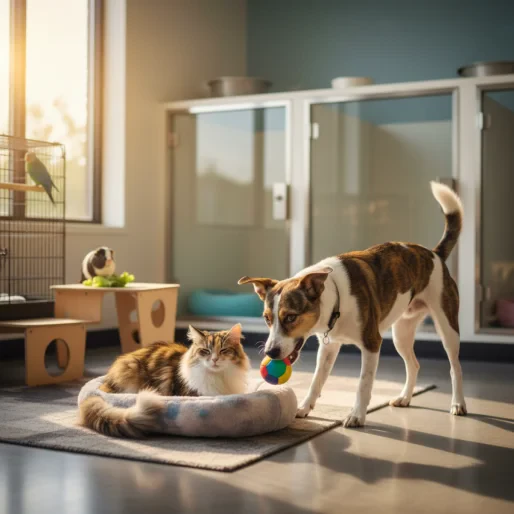
A province-aware guide to evaluating Canadian pet daycare facilities, from winter safety protocols to vaccination requirements set by provincial regulators. Learn exactly what to look for and what to avoid during your first walkthrough.
Key Takeaways
- Canadian pet daycares are regulated at the provincial level, so licensing requirements vary: always confirm your facility holds the permits required in your province or municipality.
- Staff-to-dog ratios, group separation protocols, and sanitation routines remain the three most critical quality indicators.
- Canada's climate extremes, from winter wind chills below minus 30°C to summer humidex readings above 40°C, demand season-specific safety protocols that not every daycare addresses.
- Green flags include transparent vaccination policies aligned with Canadian Veterinary Medical Association (CVMA) guidelines, written emergency protocols, and staff trained in canine body language.
- Trust your instincts: if something feels wrong during a visit, it probably is.
Why In-Person Visits Matter More Than Online Reviews
Polished Google reviews and well-designed websites can make any facility look professional. The first in-person visit remains the most reliable way to evaluate whether a pet daycare will keep a dog safe, stimulated, and stress-free. The CVMA and provincial veterinary associations consistently emphasize that direct observation of a working facility reveals information no marketing material can provide.
This guide is designed specifically for Canadian pet owners navigating a market where regulations, climate demands, and regional expectations differ significantly from one province to the next. Print it, save it on your phone, or review each section before your visit so you know exactly what to look for.
Understanding Canadian Daycare Regulations
Unlike some countries with centralized pet care licensing, Canada regulates animal care businesses at the provincial and municipal level. This means requirements vary considerably.
- In Ontario, for example, municipalities may require specific kennel licences under local bylaws, and the Provincial Animal Welfare Services (PAWS) Act governs standards of care.
- In British Columbia, the BC SPCA has authority under the Prevention of Cruelty to Animals Act, and municipal business licences typically apply.
- In Alberta, the Animal Protection Act sets baseline welfare standards, while municipal bylaws govern facility licensing.
- Quebec operates under the Animal Welfare and Safety Act (AWSA), which imposes specific permit requirements for businesses that keep animals.
Before visiting any facility, confirm it holds the appropriate municipal business licence and any province-specific permits. A daycare that cannot produce proof of licensing on request is an immediate red flag.
Before You Arrive: Preparation Checklist
Questions to Ask by Phone First
- What is the staff-to-dog ratio during peak hours? The International Boarding and Pet Services Association (IBPSA) recommends no more than 10 to 15 dogs per trained handler. Canadian facilities operating above this ratio are a concern.
- Are dogs separated by size, temperament, or play style?
- What vaccinations are required for enrolment? At minimum, Canadian daycares should require rabies (mandatory by law in most provinces), distemper (DHPP combination), and bordetella (kennel cough). Many facilities also require the canine influenza vaccine, particularly in densely populated urban centres like Toronto, Vancouver, and Montreal.
- Is there a temperament assessment or trial day before a dog joins group play? Facilities that skip this step pose a significant risk. For guidance on whether your dog is suited for group environments, see Is Your Dog Ready for Group Play? A Behaviourist's Assessment Guide.
- What happens if a dog becomes ill or injured during the day? Ask for the name of their partnered veterinary clinic.
- Do you carry commercial liability insurance? This is standard for professional Canadian pet care businesses, and the IBPSA Canada chapter recommends it as a baseline requirement.
What to Bring on Your Visit
- A notebook or your phone for notes and photos (ask permission first).
- A list of your dog's specific needs: medications, dietary restrictions, fear triggers, or mobility limitations.
- Your dog's vaccination records from your veterinarian, as reputable facilities will want to verify these directly.
- This checklist, printed or bookmarked.
The Facility Walkthrough: Green Flags
Cleanliness and Sanitation
- Green flag: The facility smells clean but not overwhelmingly of bleach or chemical deodorizers. A faint dog smell in an active play area is normal; persistent ammonia or fecal odour is not.
- Green flag: Visible cleaning schedules posted on walls or clipboards, with staff initials and timestamps.
- Green flag: Water bowls are clean and filled, not slimy or sitting in puddles.
- Green flag: Waste is picked up promptly. During your tour, observe whether staff clean up after dogs immediately or leave waste to accumulate.
Physical Environment
- Green flag: Fencing is secure, at least 1.8 metres high for outdoor areas, with no gaps or obvious escape points.
- Green flag: Flooring is non-slip and easy to sanitize. Rubber matting, sealed concrete, or commercial-grade flooring designed for animal facilities are all appropriate. In winter, outdoor surfaces should be treated for ice without using rock salt, which is harmful to paw pads.
- Green flag: Separate areas exist for small dogs, large dogs, and dogs that need quiet time or rest breaks.
- Green flag: Climate control is appropriate for the season. In Canadian summers, air conditioning or effective ventilation is essential, particularly for brachycephalic breeds (Bulldogs, Pugs, French Bulldogs) and senior dogs. In winter, heated indoor spaces must be warm enough to prevent chill after outdoor sessions.
- Green flag: Enrichment items (puzzle toys, platforms, tunnels) are visible and in good condition, without small parts that could be swallowed.
Staff Behaviour and Training
- Green flag: Staff interact calmly and confidently with the dogs, using positive body language and voice tones.
- Green flag: At least one staff member holds a recognized certification in pet first aid (such as those offered through the Walks 'N' Wags Pet First Aid program, which operates across Canada) or canine behaviour. For more on credentials, see Hiring a Professional Dog Walker in Canada: Certifications, Bylaws, and Safety.
- Green flag: Staff can describe the facility's protocols for breaking up conflicts between dogs, referencing de-escalation techniques rather than punishment.
- Green flag: Staff demonstrate knowledge of canine stress signals: lip licking, whale eye, tucked tails, yawning, and avoidance behaviours.
Supervision and Group Management
- Green flag: Every play group has a dedicated handler actively watching the dogs, not sitting on a phone or completing unrelated tasks.
- Green flag: Dogs are rotated between play and rest periods throughout the day. Continuous unsupervised play for hours leads to overstimulation and conflict. For more, see Managing Overstimulation in Group Play: A Behaviourist's Guide.
- Green flag: The facility has a clear policy for managing resource guarding around toys, water bowls, and feeding stations.
The Facility Walkthrough: Red Flags
Sanitation and Safety Failures
- Red flag: Strong, persistent odours of urine, feces, or chemical masking agents, suggesting inadequate cleaning frequency.
- Red flag: Broken or chewed fencing, damaged gates, or improvised barriers. A facility that tolerates visible structural damage is cutting corners elsewhere.
- Red flag: Standing water, mould, or accumulated grime in corners, drains, or along walls.
- Red flag: No visible first aid kit or emergency supplies.
Overcrowding and Poor Group Management
- Red flag: Dogs of vastly different sizes playing together without supervision adjustments. A 5 kg terrier in the same group as a 40 kg Labrador Retriever (one of Canada's most popular breeds) creates a predictable injury risk.
- Red flag: More dogs are present than the space can comfortably accommodate. Dogs should have room to move freely, retreat from interactions, and find personal space.
- Red flag: No quiet area or time-out space for overstimulated, anxious, or tired dogs. Understanding healthy versus unhealthy play dynamics is essential: Dog Park Etiquette: Recognizing Healthy vs. Bullying Play Styles provides a useful framework.
- Red flag: Dogs wearing prong collars, choke chains, or other aversive equipment during group play. These pose both a welfare concern and a physical entanglement hazard.
Staff Conduct Concerns
- Red flag: Staff yelling at dogs, using physical corrections, or spraying dogs with water as a primary management tool.
- Red flag: Staff appear overwhelmed, disengaged, or unable to identify individual dogs by name.
- Red flag: The facility is reluctant to let you observe an active play session. Transparency is non-negotiable.
- Red flag: No staff member can explain what happens in a medical emergency, or the facility lacks a relationship with a nearby veterinary clinic.
Administrative and Policy Red Flags
- Red flag: No vaccination requirements, or vaccinations accepted on an honour system without verifying records. In provinces where rabies vaccination is legally mandated, accepting unvaccinated dogs may violate provincial law.
- Red flag: No written contract or service agreement outlining liability, pick-up and drop-off policies, or emergency procedures.
- Red flag: No requirement for spay or neuter status (for dogs over a certain age) or intact dog management policy.
- Red flag: The facility does not carry commercial liability insurance. For context on why insurance matters, see Is Your Dog Walker Properly Insured? A Guide for Canadian Pet Owners.
Seasonal Considerations for Canadian Climates
Winter Visits (November to March)
Canadian winters present unique risks that many daycare facilities underestimate. Temperatures in the Prairies and Central Canada regularly drop below minus 20°C, and wind chill can push effective temperatures to minus 40°C or lower.
- Ask at what temperature outdoor play is restricted or cancelled. A responsible facility should have a clear cold weather policy, typically limiting outdoor exposure when wind chill drops below minus 15°C to minus 20°C.
- Check that indoor play spaces are adequately heated and free of drafts. Dogs transitioning from cold outdoor runs to warm interiors need gradual adjustment.
- Examine outdoor surfaces for ice accumulation. Ask whether the facility uses pet-safe ice melt products rather than rock salt, which can cause chemical burns on paw pads. For more on paw protection, see Surviving the Canadian Thaw: A Complete Guide to Paw Care in Slush Season.
- Confirm that short-coated breeds and small dogs are monitored for signs of hypothermia during any outdoor time.
- Ask whether the facility provides or allows dog boots and coats during outdoor sessions.
Summer Visits (June to August)
Summers in Central and Eastern Canada bring high humidity alongside temperatures that regularly exceed 30°C, creating dangerous conditions for dogs prone to heat stress.
- Confirm the facility has functional air conditioning, not just fans.
- Ask about heat protocols: at what humidex value does outdoor play get restricted? Responsible facilities typically bring dogs indoors when the humidex exceeds 35°C.
- Check for adequate shade and multiple fresh water stations in outdoor areas.
- Ask how staff monitor for heat stress, especially in brachycephalic breeds, senior dogs, and heavy-coated breeds common in Canada (Bernese Mountain Dogs, Newfoundlands, Huskies).
Holiday and Peak Periods
- Ask how staffing changes during statutory holidays, March Break, and the summer vacation period.
- Facilities that maintain consistent ratios year-round are better managed than those that pack in extra dogs without extra staff. If your dog will also need boarding during holidays, Boarding Kennel Preparation: A Behavioural Wellness Guide offers preparation strategies.
Emergency Preparedness: What to Verify
- The facility has a written emergency action plan covering fire, severe weather (including winter storms and summer severe thunderstorm or tornado warnings), and medical emergencies.
- A pet first aid kit is stocked and accessible, not locked in a back office.
- The name and address of the nearest emergency veterinary clinic is posted visibly.
ASPCA Animal Poison Control / Local Emergency Vet
Call the ASPCA Poison Control hotline (also serves Canada) or contact your nearest emergency veterinary hospital.
The ASPCA hotline charges a consultation fee. For non-poison emergencies, search for a 24-hour veterinary hospital in your city.
- Staff know how to perform basic pet first aid, including wound management and CPR techniques.
- The facility has your emergency contact information and your veterinarian's details on file.
- There is a clear protocol for contacting owners if a dog is injured, becomes ill, or shows signs of distress. Dogs exhibiting separation anxiety may need specific management: Recognizing Separation Anxiety in Boarded Pets: A Behavioural Guide covers the behavioural indicators to watch for.
The Trial Day: Final Assessment
Most reputable Canadian daycares offer a trial day or half-day session, typically priced between $25 and $45 CAD depending on the city and facility. This step is not optional.
What to Observe at Pick-Up
- Is your dog happy to see you but not frantic or distressed?
- Does your dog show signs of exhaustion beyond normal tiredness? Excessive panting, limping, or trembling warrant concern.
- Can staff tell you specifically what your dog did during the day, who they played with, and whether any issues arose?
- Are there any unexplained scratches, marks, or behavioural changes?
The Days After
- Some dogs are naturally tired after a day of socialization. However, prolonged lethargy, loss of appetite, or behavioural regression (increased fearfulness, reactivity, or clinginess) lasting more than 24 to 48 hours may indicate the environment was too stressful.
- If your dog's routine feels disrupted, Post-Festival Routine Reset: A Professional Trainer's Guide to Reclaiming Calm includes techniques for re-establishing structure.
Condensed Tour Checklist
Green Flags (Look For These)
- Valid municipal and provincial licensing displayed or available on request
- Clean facility with visible sanitation schedules
- Secure, well-maintained fencing and non-slip flooring
- Dogs separated by size and temperament
- Active staff supervision in every play group
- Staff trained in canine body language and pet first aid
- Structured play and rest rotation
- Written emergency protocols and nearby vet partnership
- Vaccination verification required (rabies, DHPP, bordetella at minimum)
- Commercial liability insurance in place
- Temperament assessment before enrolment
- Clear seasonal protocols for both winter cold and summer heat
Red Flags (Walk Away)
- No business licence or provincial permits
- Strong or masked odours indicating poor sanitation
- Overcrowded play areas with mixed size groups
- No quiet or rest area for overstimulated dogs
- Staff using aversive handling or corrections
- Reluctance to show you the full facility
- No vaccination or health screening requirements
- No written contract or emergency plan
- No insurance coverage
- Broken fencing, damaged gates, or structural hazards
- No cold weather or heat protocol
Final Considerations
Choosing a pet daycare is one of the most consequential decisions a Canadian pet owner makes. With full-day daycare rates typically ranging from $35 to $55 CAD in major cities, and pet insurance not covering daycare injuries in most standard policies, selecting a well-run facility protects both your dog and your finances. The CVMA recommends visiting at least two or three facilities before making a decision, and revisiting your chosen daycare periodically to confirm standards are maintained.
No checklist replaces direct observation and informed judgement. If a facility checks every box on paper but something feels wrong during your visit, trust that instinct. The best daycare facilities welcome scrutiny because they have nothing to hide.
Frequently Asked Questions
What vaccinations do Canadian pet daycares typically require? ↓
How much does pet daycare cost in Canada? ↓
Do Canadian pet daycares need a licence? ↓
What winter safety measures should a Canadian pet daycare have? ↓
What is the recommended staff-to-dog ratio at a Canadian daycare? ↓

Tom Ashford
Pet Safety & Home Consultant
Pet safety and home-proofing specialist — systematic hazard prevention and emergency preparedness for pet owners.
Content Disclosure
This article was created using state-of-the-art AI models with human editorial oversight. It is intended for informational and entertainment purposes only and does not constitute veterinary medical advice. Always consult a licensed veterinarian for your pet's specific health needs. Learn more about our process.