Compare drop-in visits and live-in house sitting for July holidays in France, including regional rates, contracts, and insurance. Includes a sitter briefing template for cats, dogs, and chickens during the Grandes Vacances.
Key Takeaways
- Drop-in pet sitting typically involves one to three short visits per day, while live-in house sitting (garde a domicile) means the sitter stays overnight and provides continuous presence.
- July daily rates in France vary widely by region, with Paris, the Cote d'Azur, and the Basque coast commanding premiums during the Grandes Vacances.
- A written garde a domicile contract should clearly define duties, hours, payment, veterinary authority, and termination terms.
- Insurance and liability differ between casual sitters, registered self-employed sitters (auto-entrepreneurs), and platform-based sitters; owners should verify responsabilite civile professionnelle coverage.
- Multi-pet homes with cats and backyard chickens require species-specific briefings, biosecurity awareness, and a clear emergency vet plan.
- Professional bodies such as Pet Sitters International (PSI) and NAPPS publish guidelines that owners can use as benchmarks even when hiring in France.
What Drop-In and Live-In Pet Sitting Involve in France
July is the peak of the French Grandes Vacances, when families leave home for two to four weeks and pet care demand surges. Two service models dominate: drop-in visits and live-in house sitting, locally called garde a domicile. Each model carries different scope, cost, and risk profiles, and choosing well depends on species mix, household routine, and the pet's tolerance for solitude.
Drop-In Visits
Drop-in sitting usually means one to three scheduled visits per day, each lasting roughly 30 to 60 minutes. Typical tasks include feeding, fresh water, litter scooping, a short walk or play session, medication, plant watering, and a quick welfare check. This model suits independent adult cats, fish, small caged birds, or chickens with a secure run, where overnight company is not essential.
Live-In House Sitting (Garde a Domicile)
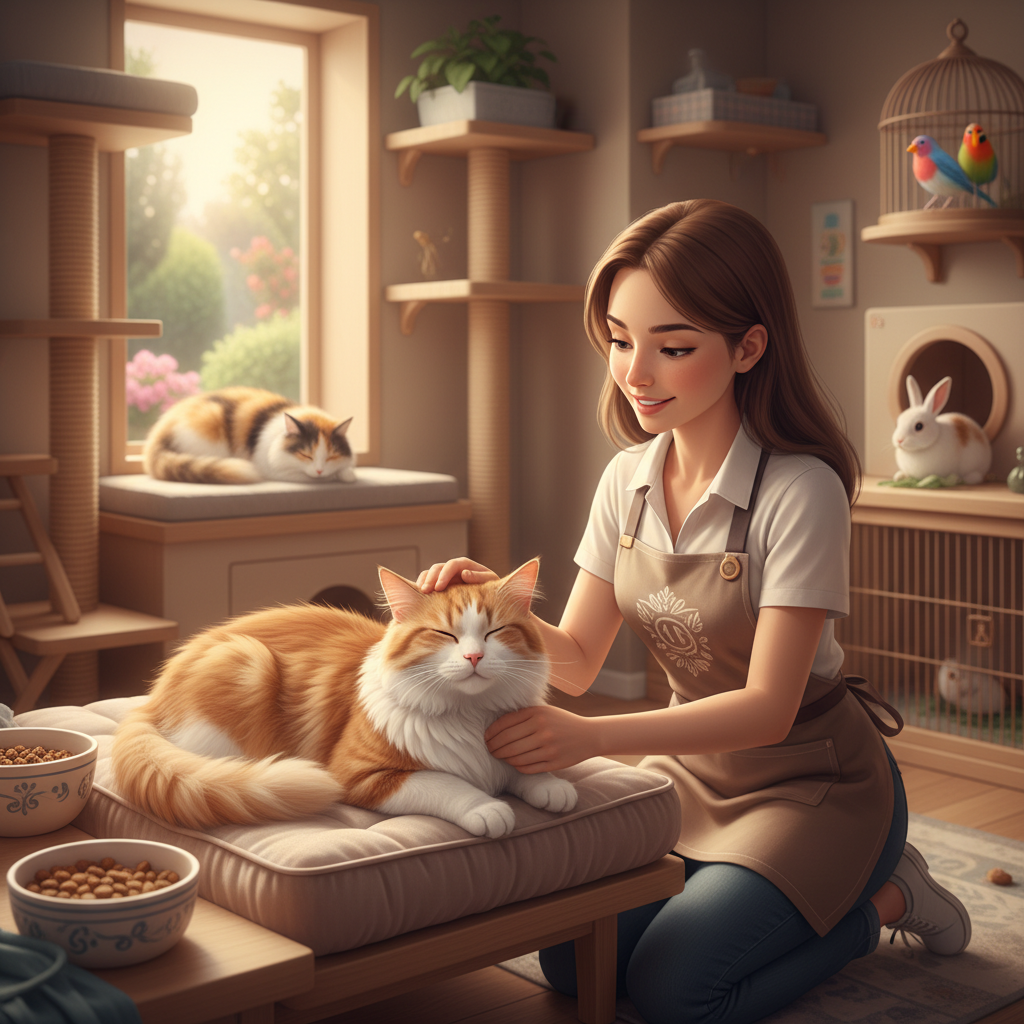
Live-in sitters move into the home for the duration of the trip, providing continuous presence, overnight supervision, and a routine close to the family's. This model is generally recommended for dogs, anxious cats, senior animals on multiple medications, or mixed households with poultry that require dawn and dusk attention. Professional guidance from PSI emphasises that continuous presence reduces the risk of undetected illness and behavioural regression, especially during long absences.
Average Daily Rates by Region in July
Rates in France fluctuate by region, sitter status, and number of animals. The figures below reflect commonly observed ranges during July holidays and should be treated as indicative rather than fixed prices.
Drop-In Visit Rates
- Paris and Ile de France: around 15 to 25 EUR per visit, with two visits a day commonly billed at 30 to 45 EUR.
- Provence Alpes Cote d'Azur: around 17 to 28 EUR per visit, rising along the Riviera during peak weeks.
- Nouvelle Aquitaine (including the Basque coast): around 14 to 22 EUR per visit.
- Occitanie and Bretagne: around 12 to 20 EUR per visit.
- Rural Auvergne, Centre Val de Loire, and Grand Est: around 10 to 18 EUR per visit, often the most affordable option.
Live-In House Sitting Rates
- Paris and Cote d'Azur: around 40 to 70 EUR per day, sometimes higher for multi-pet villas.
- Major regional cities (Lyon, Bordeaux, Toulouse, Nantes): around 35 to 55 EUR per day.
- Rural areas: around 25 to 45 EUR per day, with some sitters offering reduced rates in exchange for a quiet retreat.
Multi-pet surcharges of 3 to 8 EUR per additional animal are common. Holiday surcharges around 14 July (Fete Nationale) and the first weekend of August are also widely applied.
What a Garde a Domicile Contract Should Cover
A written contract protects both parties and is strongly recommended even for trusted neighbours. Professional consensus from PSI and NAPPS suggests the following minimum clauses:
- Identification: full names, addresses, contact numbers, and SIRET number if the sitter is registered as auto-entrepreneur.
- Service period: exact start and end dates and times, including key handover and return.
- Scope of duties: species-by-species tasks, feeding schedule, exercise, medications, cleaning, mail, plants, and security checks.
- Pet inventory: list of animals with name, species, age, microchip number, vaccination status, and known medical conditions.
- Veterinary authority: named regular vet, named emergency clinic, written authorisation to seek treatment up to an agreed financial ceiling.
- Payment terms: daily rate, deposit, refund policy, late cancellation fees, and method of payment.
- House rules: visitors, smoking, internet use, vehicle use, and areas of the home that are off limits.
- Confidentiality and data: handling of alarm codes, keys, and personal information.
- Insurance declaration: proof of responsabilite civile coverage and any platform guarantee.
- Termination: conditions under which either party may end the arrangement, including emergency replacement plans.
Insurance and Liability Differences
Liability in French pet sitting depends heavily on the sitter's legal status. Owners should ask for documentation before booking.
Casual and Informal Sitters
Friends, neighbours, or students offering informal help may rely on their personal responsabilite civile vie privee, usually bundled with home insurance. Coverage for damage to the home or accidental injury to the pet can be limited and may exclude paid arrangements.
Auto-Entrepreneur Pet Sitters
Registered self-employed sitters are expected to carry responsabilite civile professionnelle, which covers damage caused during the assignment. Some also hold ACACED certification, the French knowledge attestation required for those handling domestic carnivores professionally. Owners can request a copy of both documents.Platform-Based Sitters
Online platforms commonly bundle a guarantee that may cover veterinary costs after an incident, third-party damage, and trip interruption. Coverage caps, excesses, and exclusions vary, so owners should read the policy summary rather than rely on marketing language. Pre-existing conditions are almost always excluded.
Owner Responsibilities
Regardless of the sitter's cover, the owner's home insurance and pet's vaccinations should be current. For dogs classified as chiens de categorie 1 ou 2 under French law, additional liability rules and muzzle requirements apply and must be communicated in writing.
Handling Multi-Pet Homes With Cats and Chickens
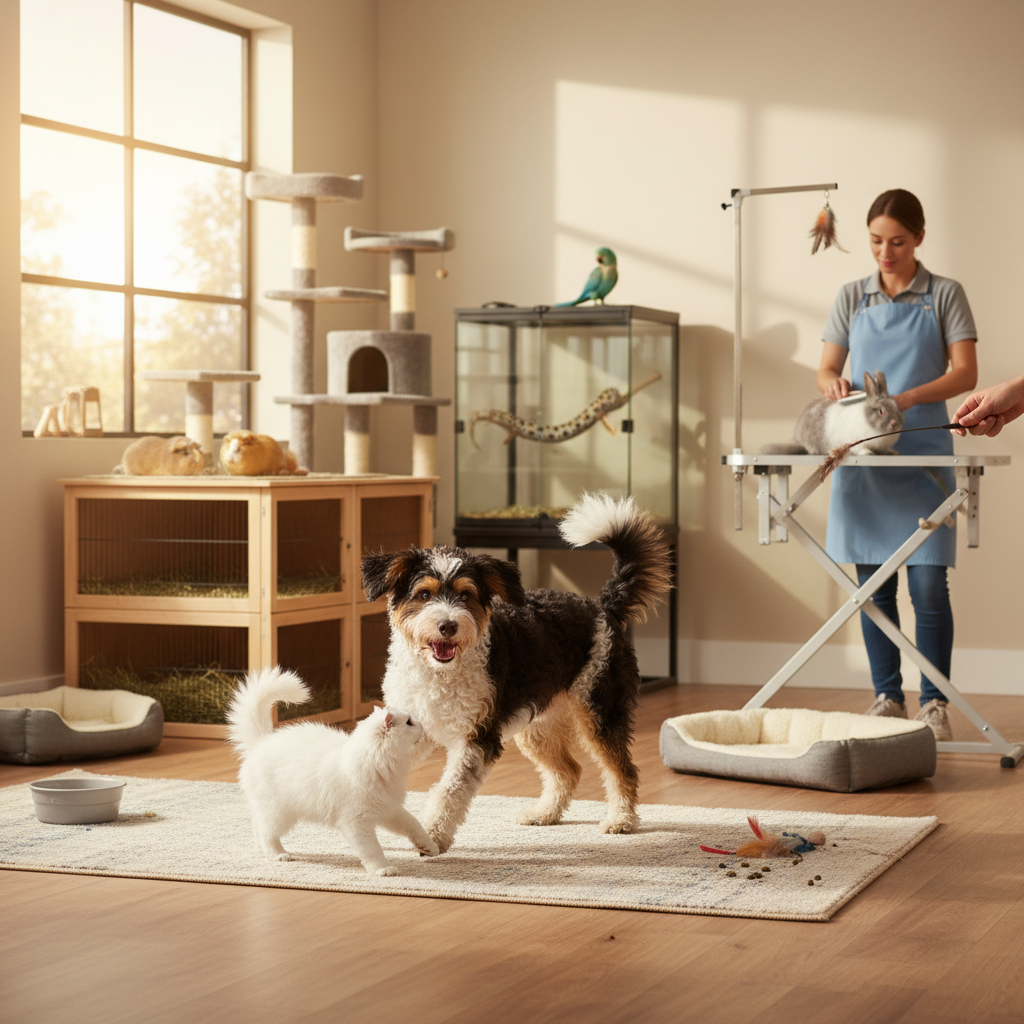
Mixed households are common in rural France, where a family may keep two indoor cats, a small flock of laying hens, and sometimes a rabbit or pond fish. Each species requires distinct handling, and the briefing should reflect that.
Cats
Independent adult cats often tolerate drop-in visits, but anxious cats and seniors with chronic kidney disease, diabetes, or hyperthyroidism usually benefit from live-in care. Owners commonly report that the most frequent issue on night one is hiding and reduced appetite, which the sitter should monitor without forcing interaction. Fear Free Pets principles emphasise low-stress handling, predictable routines, and minimising changes to litter type and feeding location. For senior felines on subcutaneous fluids or special diets, sitters should be briefed in person and shown the technique. For technology that supports remote monitoring, see the guide on smart cat feeders and the related overview of smart litter boxes for senior cat kidney health.
Chickens
Backyard hens need daily egg collection, fresh water, secure coop closure at dusk, and inspection for signs of mites, respiratory issues, or predator attempts. July heat increases the risk of heat stress, so sitters should be told where to find shade structures, electrolyte sources, and the dust bathing area. Biosecurity matters: sitters who also visit other poultry homes should change footwear and wash hands before entering the run. Suspected illness, sudden drop in egg laying, or any wound from a predator should trigger a call to an avian-experienced vet.
Cross Species Considerations
Cats and chickens generally coexist safely once the flock is adult, but sitters should never let a cat into the run unsupervised, and chicks should always be kept separate. If the home also includes a dog, briefings should clarify supervised garden access and the recall command used.
How to Find and Vet a Trustworthy Sitter
Owners can shortlist sitters through dedicated French platforms, local veterinary clinics, breed clubs, or word of mouth in the village. Vetting steps recommended by PSI and NAPPS include:
- Verifying identity, SIRET registration, and ACACED certification where applicable.
- Requesting at least two recent references and contacting them directly.
- Holding a pre-booking meet and greet in the home, with the pets present.
- Asking how the sitter handles common scenarios: a cat that refuses food for 24 hours, a hen found lethargic at dusk, a thunderstorm during the night.
- Confirming pet first aid training, ideally from a recognised provider.
Red Flags and Green Flags
Green Flags
- Detailed written quote and contract offered without prompting.
- Willingness to do a trial visit before the holiday.
- Clear questions about vaccinations, medications, and behavioural history.
- Carries a basic pet first aid kit and knows the nearest 24 hour clinic.
- Provides daily updates with photos at agreed times.
Red Flags
- Cash only with no receipt or contract.
- Reluctance to share insurance documents or references.
- Overbooking, suggested by vague availability or rushed visits.
- Dismissive attitude toward anxious behaviour or chronic conditions.
- No backup plan if the sitter becomes ill.
Special Considerations for Anxious or Elderly Pets
Senior animals and pets with diagnosed anxiety usually do better with live-in care. Veterinary guidelines suggest that environmental stability, predictable feeding times, and minimal handling changes reduce the likelihood of stress related flare ups. For older cats in particular, subtle signs such as hiding, reduced grooming, or altered litter habits can be early indicators of pain or illness and should be reported promptly. For an in depth look at body language reading in seniors, see the article on senior cats and Nordic midnight sun body language. Owners of double coated dogs heading into hot July weather should also review why you should never shave a double coated dog in summer and consider lighter exercise schedules from the backyard conditioning circuit.
Emergency Contact Protocol
Every assignment should include a one page emergency sheet stored on the fridge and shared digitally with the sitter. It should list:
- Owner mobile, alternative contact, and time zone if travelling abroad.
- Regular vet and 24 hour emergency clinic with address, phone, and a written treatment authorisation.
- Pet insurance policy number and claims line.
- Trusted neighbour with a spare key.
- Utility emergencies: water shutoff, fuse box, alarm code reset.
- Local services: locksmith, plumber, and the nearest pharmacy.
For travel adjacent guidance and summer specific scenarios, the cat carrier and car travel training guide and the pet first aid kit overview are useful references for assembling supplies.
Sitter Briefing Template for the Grandes Vacances
The following template can be printed and left on the kitchen counter alongside keys and contracts. Adjust to match the household.
1. Household Overview
- Owner names, mobile numbers, and travel itinerary with dates.
- Property address, alarm code, Wi-Fi, and rubbish collection day.
- Trusted neighbour and spare key location.
2. Pet Profiles
- Cat 1 and Cat 2: name, age, microchip, diet brand and portion, medications, litter type, favourite hiding spots, and behaviour notes.
- Chickens: number of hens, breed, feed type, treat allowance, coop closure time, egg laying baseline, and predator history.
- Any other animals: fish, rabbits, dogs.
3. Daily Schedule
- 07:00 Open coop, refresh water, collect eggs, feed cats.
- 13:00 Welfare check, top up shade and water for hens.
- 19:30 Evening cat feed, scoop litter, monitor for any illness.
- 21:30 Close coop securely, final house check.
4. Medical and Emergency Information
- Regular vet and emergency clinic details.
- Authorisation letter and financial ceiling.
- Insurance details and claims process.
5. House Rules and Comfort
- Approved rooms and off limits areas.
- Visitor and smoking policy.
- Appliance quirks, watering schedule for plants, and pool safety.
6. Communication Plan
- Daily update format and preferred time.
- Photo expectations.
- When to call rather than message.
Final Word
July holidays in France can be a relaxing time for the family and a stable, well cared for period for the pets, provided the right model is chosen and the briefing is detailed. Drop-in visits suit independent animals and short trips, while live-in garde a domicile is generally the safer choice for multi-pet rural homes, anxious cats, senior pets, and longer absences. A clear contract, verified insurance, a thorough briefing, and a tested emergency plan turn an ordinary sitter arrangement into a professional standard of care that aligns with PSI, NAPPS, and Fear Free principles.
Frequently Asked Questions
What is the typical July daily rate for a live-in pet sitter in France? ↓
Is a written contract legally required for a garde a domicile in France? ↓
What insurance should a French pet sitter carry? ↓
Can the same sitter look after cats and backyard chickens? ↓
How should owners prepare an anxious cat for a two week absence? ↓

Laura Chen
Pet Sitter & Travel Specialist
Pet sitter and travel specialist — practical logistics, sitter vetting, and anxiety management for travelling pet owners.
Content Disclosure
This article was created using state-of-the-art AI models with human editorial oversight. It is intended for informational and entertainment purposes only and does not constitute veterinary medical advice. Always consult a licensed veterinarian for your pet's specific health needs. Learn more about our process.