Small rodents like hamsters and gerbils can overheat fatally within minutes. This guide covers optimal temperature ranges, humidity control, safe cooling methods, and when air conditioning becomes medically necessary.
Key Takeaways
- Syrian hamsters tolerate roughly 18 to 24 °C (65 to 75 °F); dwarf hamsters prefer 18 to 22 °C; gerbils tolerate a slightly wider range of 18 to 26 °C.
- Temperatures above 26 °C (79 °F) for hamsters or above 30 °C (86 °F) for gerbils can trigger heat stroke, which is a genuine veterinary emergency.
- Humidity above 50 to 55 percent combined with elevated heat dramatically accelerates heat stress in all small rodents.
- Never submerge an overheating hamster or gerbil in cold water or ice. Rapid cooling causes circulatory shock.
- If a rodent is limp, breathing open mouthed, or unresponsive, transport to an emergency veterinarian immediately.
Why This Is a Genuine Emergency
Heat stroke in small rodents progresses from subtle lethargy to organ failure and death in as little as 15 to 30 minutes. Owners commonly report that a hamster or gerbil "seemed fine an hour ago," not realising that small body mass means core temperature can spike dangerously with minimal environmental change. Unlike dogs or cats, hamsters and gerbils cannot pant effectively and have almost no capacity to sweat. Their only physiological option is spreading saliva on their fur or flattening themselves against a cool surface, both of which are grossly insufficient when ambient temperature exceeds the species' safe range.
Veterinary emergency guidelines emphasise that heat stroke constitutes a true triage category: any delay in recognition or cooling can mean the difference between survival and death. This is not a "wait and see" situation.
Optimal Temperature Ranges by Species
Syrian (Golden) Hamsters
The consensus among exotic animal veterinary references is that Syrian hamsters thrive at 18 to 24 °C (65 to 75 °F). Sustained exposure above 26 °C is associated with heat stress. Above 30 °C, the risk of fatal heat stroke rises sharply. Syrian hamsters are also susceptible to torpor (a hibernation like state) below about 10 °C, so overcooling the room is equally dangerous.
Dwarf Hamsters (Roborovski, Campbell's, Winter White)
Dwarf species generally prefer 18 to 22 °C (65 to 72 °F), sitting at the cooler end of the spectrum compared to Syrians. Their smaller body mass makes them even more vulnerable to rapid temperature shifts in either direction.
Gerbils (Mongolian Gerbils)
Gerbils originate from arid steppe environments and tolerate a somewhat broader range of 18 to 26 °C (65 to 79 °F). However, they are poorly adapted to humidity. Gerbils may tolerate brief periods up to 28 to 29 °C in very dry air but begin showing distress quickly if humidity is simultaneously elevated.
Humidity Control for Small Rodents
Relative humidity between 35 and 50 percent is generally considered safe for hamsters and gerbils. Humidity above 55 percent impairs the evaporation of saliva (the rodent's main cooling mechanism) and promotes bacterial or fungal growth in bedding, compounding respiratory stress during warm weather.
Practical humidity management tips include:
- Use a digital hygrometer placed at cage level, not on a high shelf where readings differ significantly.
- Run a small dehumidifier in the room if ambient humidity consistently exceeds 55 percent during spring and summer.
- Avoid placing cages in kitchens, bathrooms, or laundry areas where humidity spikes are common.
- Change bedding more frequently in humid weather: damp substrate generates heat through decomposition and harbours mould.
For owners also managing aquariums in warm climates, humidity control overlaps significantly. Related guidance on managing tank environments in heat can be found in our article on tropical fish tank setup for hot climate beginners and tips on cutting aquarium energy and water waste.
Recognising Heat Stress: Red Flag Signs
Heat stress in small rodents progresses through identifiable stages. Knowing these signs allows owners to intervene before the condition becomes irreversible.
Early Warning Signs (Act Within Minutes)
- Lethargy and reluctance to move: the rodent lies flat against the cage floor or a cool surface.
- Rapid breathing: visible chest movements that are noticeably faster than normal resting rate.
- Excessive saliva spreading: hamsters may groom frantically, wetting their chest and forelimbs.
- Reduced appetite: ignoring food or treats that would normally provoke an immediate response.
Severe and Critical Signs (Emergency: Transport Immediately)
- Open mouth breathing: small rodents virtually never breathe with mouths open unless in extreme distress.
- Limp or floppy body: when picked up, the animal feels abnormally relaxed with no muscle tone.
- Drooling or wet chin and chest (distinct from normal grooming behaviour).
- Staggering or loss of coordination when attempting to walk.
- Unresponsiveness: failure to react to gentle touch or voice, which suggests possible loss of consciousness.
- Seizures or tremors: involuntary muscle contractions indicate severe neurological compromise.
Professional veterinary emergency standards treat open mouth breathing, unresponsiveness, and seizures in small mammals as immediate triage priorities. These animals need veterinary intervention, not home observation.
Immediate First Aid Steps (The Next 10 Minutes)
If heat stress signs are detected, follow these steps while simultaneously arranging transport to an emergency veterinarian:
- Move the cage (or the animal) to the coolest room available. A tiled bathroom floor or air conditioned bedroom is ideal. Avoid basements that may be damp.
- Offer water immediately. Use a shallow dish, not just a bottle, so a weakened animal can drink without effort. Do not force water into the mouth: aspiration pneumonia can result.
- Apply lukewarm (not cold) dampened cloths. Lightly drape a cloth moistened with tepid water over the animal's back and ears. Evaporative cooling at a gentle pace is the safest approach.
- Increase airflow. A fan directed near (not directly at) the cage helps evaporate moisture from the cloth. Avoid aiming a powerful fan directly into the enclosure, which can cause stress and hypothermia in a small body.
- Monitor responsiveness. Note the time you began cooling and whether the animal's breathing rate changes. Report this timeline to the veterinarian.
What NOT to Do: Common Dangerous Mistakes
- Never submerge a hamster or gerbil in cold or ice water. Rapid peripheral vasoconstriction can cause cardiovascular shock and paradoxically trap heat in the core organs. This is consistent with RECOVER resuscitation principles used in veterinary emergency medicine, which warn against aggressive cooling methods in small patients.
- Never place a rodent in the refrigerator or freezer. This causes hypothermia and severe stress. Hamsters are prone to torpor at low temperatures, which can be mistaken for death, and rewarming from torpor carries its own risks.
- Never apply rubbing alcohol to paws or ears. This folk remedy is sometimes cited online but can cause skin irritation and toxic fume inhalation in a tiny enclosed space.
- Never delay veterinary transport to "see if cooling works." Begin first aid and transport simultaneously. Organ damage from heat stroke may be invisible externally.
- Never withhold water thinking the animal might choke. Offer water in a shallow dish and let the animal drink voluntarily.
Getting to the Emergency Vet Safely
Transport a heat stressed rodent in a small, well ventilated carrier. Place a lukewarm damp cloth on one side and leave a dry area so the animal can choose its comfort zone. If the car is air conditioned, set it to a moderate temperature (around 20 to 22 °C) rather than blasting cold air directly at the carrier. Bring a small water dish secured to prevent spilling.
Call ahead to the emergency clinic to confirm they see exotic small mammals. Not all after hours veterinary facilities have staff experienced with rodent species. The AVMA's veterinary locator or local exotic animal veterinary societies can help identify appropriate facilities.
What to Tell the Vet on Arrival
Emergency triage for small mammals is faster when owners provide concise information. Prepare the following:
- Species, age, and weight if known.
- Ambient temperature and humidity in the cage room (check your thermometer and hygrometer before leaving).
- Time you first noticed symptoms and what those symptoms were.
- Cooling measures already taken and the animal's response.
- Any pre existing health conditions, recent illness, or medications.
- Diet and water intake over the prior 24 hours.
DIY Cooling Methods That Are Safe
The following methods are appropriate for prevention and mild early intervention only. They are not substitutes for veterinary care once moderate or severe signs appear.
Ceramic and Stone Tiles
Place an unglazed ceramic tile or a smooth, flat stone (such as a slate tile) in the cage. These materials absorb body heat. For added effect, keep a spare tile in the refrigerator and rotate tiles every few hours during hot days. Always ensure the tile is not ice cold: place it at room temperature for a few minutes after removing from the fridge.
Frozen Water Bottles (External to the Cage)
Fill a small plastic bottle with water, freeze it, and wrap it in a cloth. Place it outside the cage wall so the animal can lean against the cool side without direct contact with condensation. Gerbils, in particular, should not have access to wet surfaces inside their enclosure, as moisture disrupts their coat's insulating properties.
Sand Baths (Gerbils)
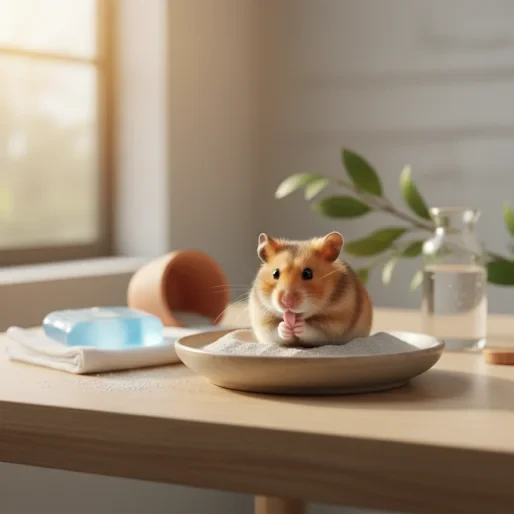
Gerbils naturally use sand baths to regulate skin oils. During warm weather, a sand bath dish stored in a cool location before offering can provide a mildly cooling substrate. Use chinchilla safe bathing sand, not calcium based "dust."
Room Relocation Strategy
Before summer arrives, identify the coolest room in the home. North facing rooms (in the Northern Hemisphere), ground floor rooms with tile or stone flooring, and rooms with effective curtains or blinds typically stay 3 to 5 °C cooler than sun exposed upper floors. Transition the cage gradually over two to three days to avoid stress from a sudden environmental change.
Monitoring Technology
Smart temperature and humidity sensors that send alerts to a phone are increasingly affordable and highly recommended for small pet owners. Wearable and environmental monitoring technology is advancing rapidly in the pet space; for broader context on pet monitoring devices, see our article on AI pet wearables in 2026.
When Air Conditioning Becomes Medically Necessary
Air conditioning transitions from a convenience to a medical necessity under the following conditions:
- Ambient room temperature consistently exceeds 26 °C despite relocation, fans, and passive cooling methods.
- Humidity remains above 55 percent in combination with temperatures over 24 °C.
- The animal is elderly, obese, pregnant, or has a respiratory condition, all of which lower the threshold for heat stress significantly.
- The home is in a climate where nighttime temperatures do not drop below 25 °C, preventing the cage room from cooling naturally overnight.
When using air conditioning, set the thermostat to a target of 20 to 24 °C. Avoid placing the cage directly in the path of cold airflow from the unit. Temperature fluctuations of more than 5 °C within a short period can trigger torpor in hamsters or respiratory infections in both hamsters and gerbils. A stable, moderate temperature is always preferable to cycling between hot and cold.
Owners in regions with extreme summer heat (Middle East, South Asia, parts of the southern United States, and Mediterranean climates) should consider air conditioning a baseline requirement rather than an optional comfort for keeping hamsters or gerbils.
Recovery and Follow Up at Home
Animals that have experienced heat stress, even if they appear to recover quickly, should be monitored closely for 48 to 72 hours. Veterinary guidance typically recommends:
- Monitoring water intake: increased drinking is expected during recovery, but refusal to drink warrants a return visit.
- Watching for diarrhoea or changes in droppings, which may indicate gastrointestinal compromise from the heat event.
- Keeping the cage in a temperature controlled environment at the lower end of the species' comfort range for at least one week.
- Avoiding handling or play sessions that generate additional body heat during the recovery window.
- Following up with the veterinarian if any new symptoms appear, including nasal discharge, wheezing, or continued lethargy.
Heat stroke can cause organ damage that manifests days later. A rodent that "bounced back" may still develop kidney complications or neurological signs. Professional follow up is always warranted.
Planning Ahead: The Pre Summer Checklist
- Install a digital thermometer and hygrometer at cage level by early spring.
- Identify and test the coolest room in your home before temperatures rise.
- Stock ceramic tiles, frozen bottle supplies, and a shallow backup water dish.
- Confirm your nearest emergency veterinary clinic accepts small exotic mammals, and save the number in your phone.
- If relying on air conditioning, have the unit serviced before summer. A broken AC during a heat wave is the most common scenario veterinary clinics see preceding small mammal heat stroke cases.
- Consider pet insurance options that cover exotic animals, as emergency visits for small mammals can be unexpectedly costly.
Frequently Asked Questions
What temperature is too hot for a hamster? ↓
Can I put ice in my hamster's cage to cool it down? ↓
How can I tell the difference between a sleeping hamster and one in heat distress? ↓
Do gerbils handle heat better than hamsters? ↓
When is air conditioning medically necessary for small rodents? ↓

Dr. Ana Reyes
Emergency & Critical Care Veterinarian
Emergency and critical care veterinarian — life-saving first-aid guidance and emergency recognition for pet owners.
Content Disclosure
This article was created using state-of-the-art AI models with human editorial oversight. It is intended for informational and entertainment purposes only and does not constitute veterinary medical advice. Always consult a licensed veterinarian for your pet's specific health needs. Learn more about our process.