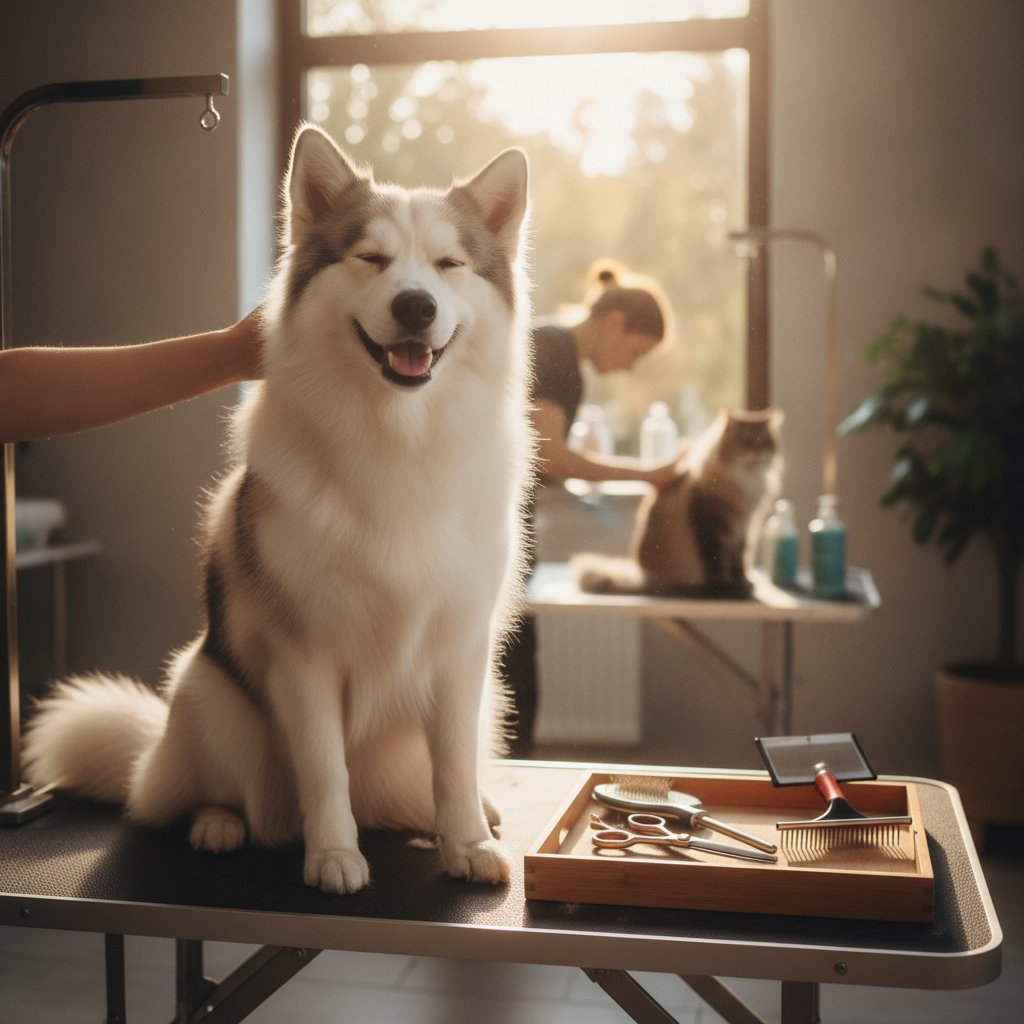
As winter undercoats impact, owners face the difficult choice between saving the coat or starting fresh. This professional guide outlines the safety criteria for dematting versus shaving.
Key Takeaways
- The Comb Test: If a metal greyhound comb cannot pass from the skin to the ends of the hair, the coat is matted, not just tangled.
- Humanity Over Vanity: Professional standards dictate that if dematting causes pain or takes excessive time, a shave-down is the only ethical option.
- Scissor Danger: Never use scissors to cut mats out. Skin often 'tents' up into the mat, leading to severe lacerations requiring veterinary stitches.
- Ear Hematoma Risk: Shaving heavy mats off ear leathers can cause blood vessels to burst; immediate head wrapping is often required.
Spring presents a unique challenge for double-coated and long-haired breeds. As the daylight hours increase, the dense winter undercoat releases from the follicle—a process known as 'blowing coat.' If this loose dead hair is not brushed out immediately, it becomes trapped within the guard hairs, creating a dense webbing that tightens against the skin.
This webbing, known as matting or felting, is not merely a cosmetic issue. It restricts airflow to the skin, traps moisture, and creates a breeding ground for bacteria and parasites. For owners, the dilemma is often emotional: attempt to save the fluffy appearance through tedious detangling, or accept a short 'shave-down' for the animal's comfort. This guide outlines the professional decision-making matrix used by certified groomers to determine the safest course of action.
The Mechanics of Spring Matting
Unlike simple surface tangles, spring mats often start at the skin level. When a dog sheds its winter layer, the dead hairs cling to the live coat. Moisture from spring rains or humidity accelerates this process, causing the woolly undercoat to felt like a wool sweater washed in hot water. Professional groomers note that this often happens deceptively; the top of the coat may look brushed, while a solid 'pelt' forms underneath.
For more on the biology of this seasonal change, refer to The Great Spring Shed: A Vet Nurse’s Guide to Managing the Seasonal Coat Blow.
The Assessment: Shave vs. Detangle
To determine if a coat can be saved, professionals use a specific assessment protocol. This relies on the 'Comb Test' rather than visual inspection.
When to Detangle
Dematting is considered a viable and humane option only under the following conditions:
- Loose Webbing: You can see the skin through the mat when parting the hair.
- Location: The mats are located in non-sensitive areas (e.g., the ruff or flanks) rather than high-sensitivity zones like the armpits, groin, or behind the ears.
- Tolerance: The animal tolerates brushing without signs of stress (panting, lip licking, pulling away).
- Time Constraint: The entire process can be completed in under 15 to 20 minutes per session.
When to Shave (The Humane Choice)
Professional grooming associations, such as the IPG, adhere to a code of ethics that prioritizes the animal's comfort over aesthetic preferences. Shaving is mandatory when:
- The Felt is Tight: The matting is tight against the skin, allowing no space to insert a comb.
- Sanitary Areas are Compromised: Matting in the groin or perianal area traps urine and feces, leading to ammonia burn.
- Hematoma Risk: The ears are heavily matted (see below).
- Behavioral Stress: The animal shows signs of pain or aggression when the area is touched.
Owners attempting to detangle severe mats often inadvertently cause 'brush burn,' a painful abrasion of the skin caused by repetitive slicker brush strokes.
The Dangers of Home Removal
A common error owners make is attempting to cut mats out with kitchen scissors. This is one of the leading causes of grooming-related emergency vet visits.
The Skin Tenting Phenomenon
When hair mats, it pulls the skin tightly into the center of the knot. This is called 'tenting.' When an owner slides scissors under the mat to cut it, they frequently slice through this tented skin. The result is a gaping wound that almost always requires sedation and sutures. Rule of thumb: If you cannot slide a comb between the mat and the skin, do not cut.
Ear Hematomas
Matting on ear leathers restricts blood flow to the tip of the ear. When this mat is shaved off, blood rushes back into the capillaries too quickly, causing them to burst. The ear flap fills with blood, resembling a water balloon. Professionals mitigate this by shaving slowly and immediately securing the ears against the head with a wrap (using a product like a Happy Hoodie) to prevent the dog from shaking its head. If you suspect ear matting, this is a procedure best left to professionals.
Safe Detangling Techniques
If the assessment indicates the coat is salvageable, correct technique is vital to prevent pain and damage to the hair shaft.
Tools Required
- High-Quality Slicker Brush: Choose one with long, flexible pins designed for double coats. See Eco-Friendly Grooming for sustainable tool options.
- Metal Greyhound Comb: Used to check work.
- Conditioning Spray: A silicone-based or natural slip agent to reduce friction. Dry brushing breaks the hair.
- Cornstarch: A groomer's secret for absorbing grease in oily mats, making them easier to separate.
The Line Brushing Method
Randomly brushing over the top of the coat is ineffective. The only effective method is 'Line Brushing':
- Part the Hair: Lift a layer of hair up to expose a line of skin.
- Brush Down: Brush the hair below the part, working from the skin out.
- Check: Run the metal comb through that section. If it glides, move the line up one inch and repeat.
Post-Grooming Skin Care
Whether the animal is shaved or dematted, the skin underneath is often sensitive. Trapped moisture under mats may have caused yeast infections or hot spots.
Inspect the skin immediately after grooming. If red, moist patches are visible, clean the area gently and prevent the animal from licking. For persistent issues, veterinary consultation is necessary. Read more about skin complications in Humidity and Hounds: A Vet Nurse's Guide to Preventing Hot Spots and Yeast.
Hidden Risks: Parasites
A matted coat provides excellent cover for external parasites. Ticks, in particular, can hide deep within the felted hair, close to the warmth of the skin, making them impossible to detect during a visual check. During the spring season, removing the matting is often the only way to locate and remove these pests safely. Refer to Spring Tick Prevention and Disease Awareness for protocols on handling parasites found during grooming.
Conclusion
The decision to shave a pet is never taken lightly, but hair grows back; damaged skin takes much longer to heal. By recognizing the difference between a manageable tangle and a health-compromising mat, owners can make the compassionate choice. Regular maintenance using the line brushing technique during the shedding season is the best prevention against the spring shave-down.
Frequently Asked Questions
Can I use scissors to cut mats out of my dog's fur? ↓
Why did the groomer shave my dog instead of brushing it out? ↓
How do I prevent mats during spring shedding? ↓
Does shaving a double-coated dog ruin the coat? ↓
Sophie Bianchi
Certified Master Pet Groomer
Certified master pet groomer — breed-standard techniques, skin health awareness, and at-home grooming guidance.
Content Disclosure
This article was created using state-of-the-art AI models with human editorial oversight. It is intended for informational and entertainment purposes only and does not constitute veterinary medical advice. Always consult a licensed veterinarian for your pet's specific health needs. Learn more about our process.