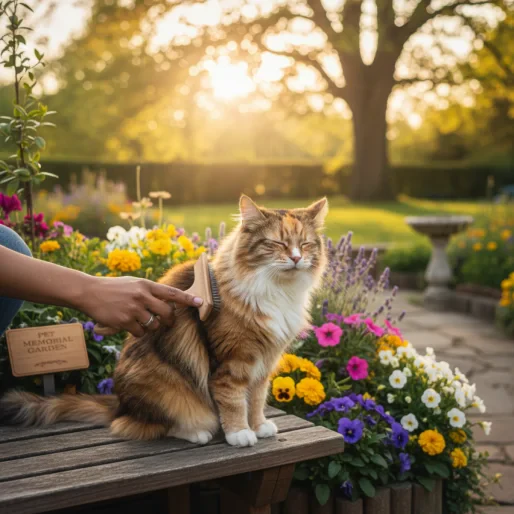

In this article
- Key Takeaways
- Why a Memorial Garden Suits the Canadian Spring
- Understanding Your Hardiness Zone
- Tools, Supplies, and What to Budget
- Pet-Safe Plants That Thrive in Canadian Gardens
- Plants to Avoid in a Canadian Pet Memorial Garden
- Choosing a Memorial Tree for a Biodegradable Urn
- Memorial Markers for Canadian Weather
- What to Watch For After Planting
- When to Seek Emergency Veterinary Care
- How a Memorial Garden Supports Grief
- Seasonal Maintenance for Canadian Gardens
Key Takeaways
- Every plant chosen for a pet memorial garden should be verified against the ASPCA Toxic and Non-Toxic Plants database before purchase.
- Canadian hardiness zones (ranging from 0a in the Far North to 9a on coastal British Columbia) determine which memorial plants and trees will survive year-round.
- Pet-safe spring flowers that perform well across most of Canada include roses, sunflowers, snapdragons, zinnias, and petunias.
- Biodegradable urns with native Canadian tree species (sugar maple, white birch, red oak) offer a meaningful and climate-appropriate tribute.
- Cocoa shell mulch is toxic to dogs; use cedar bark or untreated wood chips instead.
- If a surviving pet ingests unknown plant material, contact a veterinarian or the ASPCA Animal Poison Control Center at (888) 426-4435 immediately. [LOCAL_VET_EMERGENCY_en-ca]
Why a Memorial Garden Suits the Canadian Spring
After a long winter, the arrival of spring in Canada carries a particular emotional weight. For pet owners coping with the loss of a companion animal, the thaw can feel bittersweet: warmer days return, but without the dog bounding through the backyard or the cat stretching on the patio. Channelling that grief into a living memorial garden offers structure, purpose, and a reason to step outside during the weeks when gardens across the country come back to life.
Veterinary bereavement support is an area the Canadian Veterinary Medical Association (CVMA) recognises as important to both client wellbeing and the human-animal bond. While formal horticultural therapy programs exist at some Canadian hospitals and wellness centres, the core idea applies at home: routine garden care, sensory engagement with soil, sunlight, and growing things, and the visible progress of new life can all ease the disorientation of grief.
Understanding Your Hardiness Zone
Canada spans Plant Hardiness Zones 0a through 9a, as mapped by Natural Resources Canada. This classification is the single most important factor when choosing memorial plants and trees that will survive outdoors year-round. Before selecting anything, identify your zone:
- Zones 0a to 2b (Far North, northern Prairies): Extremely cold winters, sometimes reaching below minus 40°C. Growing seasons are short (roughly late May to early September). Focus on cold-hardy perennials and annuals that mature quickly.
- Zones 3a to 4b (southern Prairies, much of Ontario and Quebec): Winters regularly reach minus 30°C to minus 20°C. Spring planting generally begins in mid to late May after the last frost.
- Zones 5a to 6b (southern Ontario, parts of the Maritimes, sheltered Quebec valleys): More moderate. Last frost typically falls in late April to mid-May, allowing an earlier start.
- Zones 7a to 9a (coastal British Columbia, parts of Vancouver Island): Mild, maritime climate. Some planting is possible as early as March, and a wider range of species will overwinter.
Natural Resources Canada maintains an online Plant Hardiness Zone map that can be searched by postal code.
Tools, Supplies, and What to Budget
Basic Supplies
- Garden fork, spade, and hand trowel
- Compost or well-rotted organic matter (a standard bag of garden compost runs approximately $8 to $15 CAD at most Canadian garden centres)
- Watering can or gentle-spray hose attachment
- Pet-safe mulch: cedar bark chips or untreated wood chips (avoid cocoa shell mulch, which contains theobromine and is toxic to dogs)
- Gardening gloves
- Soil pH testing kit (around $10 to $20 CAD; helpful for matching tree species to soil conditions)
- A printed ASPCA pet-safe plant list
Planning Materials
- A rough sketch of your garden area with measurements in metres
- Notes on sun exposure throughout the day (full sun, partial shade, full shade)
- Your chosen memorial marker or biodegradable urn
- Temporary plant labels for layout planning
Overall, a modest pet memorial garden in Canada can typically be established for $100 to $300 CAD, depending on the number of plants, choice of marker, and whether a biodegradable urn is included.
Pet-Safe Plants That Thrive in Canadian Gardens
All plants listed below are confirmed non-toxic to dogs and cats by the ASPCA. They also perform well in the growing conditions found across most Canadian hardiness zones.
- Roses (Rosa spp.): Hardy shrub roses bred for Canadian conditions (such as the Explorer and Parkland series developed by Agriculture and Agri-Food Canada) are reliably winter-hardy to Zone 2 or 3. Safe for dogs and cats. Consider thornless cultivars if surviving pets roam the garden.
- Sunflowers (Helianthus annuus): Fast-growing annuals that thrive in the long summer daylight hours across all provinces. Completely non-toxic to pets.
- Snapdragons (Antirrhinum majus): Cool-season annuals that tolerate light frost, making them ideal for Canadian spring planting. Safe for all household pets.
- Zinnias (Zinnia elegans): Warm-season annuals best planted after the last frost. Non-toxic and available in many colours.
- Petunias (Petunia spp.): Widely available at Canadian garden centres from May onward. Low-growing, colourful, and safe for dogs and cats.
- Asters (Aster spp.): Native asters are abundant across Canada. New England asters bloom in late summer and autumn, extending the garden's colour. Pet-safe and pollinator-friendly.
- Marigolds (Tagetes spp.): The common garden marigold (Tagetes) is listed as non-toxic by the ASPCA. Do not confuse with Marsh Marigold (Caltha palustris), a native wetland plant that is toxic.
Plants to Avoid in a Canadian Pet Memorial Garden
- Lilies (Lilium and Hemerocallis): Extremely toxic to cats. Even small exposures, including pollen on fur, can cause fatal kidney failure. Many varieties are sold at Canadian garden centres each spring; avoid them entirely if cats are present.
- Tulips and Hyacinths: Popular in Canadian spring gardens, but bulbs contain concentrated toxins. Dogs that dig may unearth and chew them.
- Sago Palm (Cycas revoluta): Sometimes sold as a houseplant or patio plant in Canada. All parts are extremely toxic to dogs and cats.
- Azaleas and Rhododendrons: Common in British Columbia and parts of the Maritimes. Toxic to dogs and cats, causing vomiting, diarrhoea, and potentially cardiovascular collapse.
- Autumn Crocus (Colchicum autumnale): Highly toxic, causing multi-organ failure.
- Yew (Taxus spp.): Widely used in Canadian landscaping as hedging. Nearly all parts are toxic to dogs, cats, and horses. Do not plant near a memorial garden where pets have access.
Choosing a Memorial Tree for a Biodegradable Urn
Biodegradable urns designed to grow into trees are a particularly fitting option in Canada, where trees define the landscape. The urn holds cremated remains in a lower compartment and a seed or young seedling in an upper compartment. As the urn breaks down, the remains nourish the growing tree.
When choosing a species, prioritise native Canadian trees that are non-toxic to pets and suited to your hardiness zone:
- Sugar Maple (Acer saccharum): Hardy to Zone 3. Non-toxic to dogs and cats. An iconic Canadian choice.
- White Birch (Betula papyrifera): Hardy to Zone 2. Pet-safe and visually striking with its white bark.
- Red Oak (Quercus rubra): Hardy to Zone 3. Non-toxic. Long-lived and stately.
- Apple (Malus domestica): Hardy to Zone 3 or 4 depending on cultivar. The tree itself is pet-safe, though seeds should not be consumed in quantity.
Avoid yew (Taxus), black walnut (Juglans nigra, which produces juglone toxic to some animals), and any species not verified as safe for your pets.
Planting a Biodegradable Urn
- Dig a hole to the depth specified by the urn manufacturer, typically around 10 to 15 cm from the surface.
- Place the cremated remains in the lower compartment as directed.
- Add the seed or seedling and any included growth medium to the upper compartment.
- Close the urn, place it in the hole, and cover with soil.
- Water gently and consistently. Young seedlings need regular moisture through their first growing season.
- In Zones 2 to 4, protect the young tree from its first winter using burlap wrapping or horticultural fleece.
Memorial Markers for Canadian Weather
Canadian winters test outdoor materials. Choose markers that withstand freeze-thaw cycles:
- Granite: The most durable option. Withstands extreme cold and moisture. Engravings remain legible for decades. Expect to pay $80 to $250 CAD or more depending on size and detail.
- Slate: Attractive and natural-looking, but may develop surface flaking over many freeze-thaw cycles. Best in sheltered garden spots.
- Fieldstone or river stone: Blends well with naturalistic Canadian garden designs. Shallower engravings may weather gently over time.
- Cast resin or concrete: More affordable (typically $30 to $80 CAD) but less durable in harsh winter conditions. Suitable for covered or semi-sheltered locations.
Set flat markers slightly into the ground on a thin bed of sand to prevent frost heaving. Upright markers may need a small concrete footing, especially in areas with heavy spring runoff or clay soils common in parts of Ontario and the Prairies.
What to Watch For After Planting
Garden Concerns
- Surviving pets digging: Freshly turned soil attracts dogs. Protect urn sites with a low decorative fence or a ring of larger stones for the first growing season.
- Late frost damage: In Zones 2 to 5, late spring frosts (sometimes into early June) can damage tender new plants. Keep horticultural fleece on hand to cover plants overnight if frost is forecast.
- Weeds and unknown growth: Remove unfamiliar plants promptly and cross-check them against the ASPCA database before allowing pets near the area.
Pet Health Concerns
- Monitor for signs of plant ingestion: drooling, pawing at the mouth, vomiting, diarrhoea, or unusual lethargy.
- Watch for skin irritation from contact with certain plants or mulch.
- Cats that eat grass regularly may sample new garden plants. Consider planting a patch of cat grass (wheatgrass) nearby to redirect this behaviour.
When to Seek Emergency Veterinary Care
Contact a veterinarian immediately if a surviving pet shows any of the following after time in or near the memorial garden:
- Repeated vomiting or dry heaving
- Bloody diarrhoea or stool containing plant material
- Excessive drooling, especially with mouth swelling
- Tremors, seizures, or collapse
- Sudden lethargy, unsteadiness, or refusal to eat
- Difficulty breathing or facial swelling
Bring a sample or photograph of the suspected plant to the clinic. For urgent toxicology guidance, the ASPCA Animal Poison Control Center can be reached at (888) 426-4435 (a consultation fee applies). [LOCAL_VET_EMERGENCY_en-ca]
How a Memorial Garden Supports Grief
Pet ownership creates daily structure: feeding schedules, walks, grooming. When a pet dies, that structure disappears. Tending a garden reintroduces gentle daily obligations (watering, weeding, observing new growth) that provide a reason to go outside, especially during the early, most disorienting phase of loss.
Gardening engages multiple senses simultaneously: the feel of soil, the scent of flowers, the warmth of spring sun, the visual progress of buds opening. Mental health professionals describe this kind of multi-sensory engagement as grounding, a technique that redirects attention from overwhelming thoughts to the present moment.
For households with remaining pets, the memorial garden becomes a shared space. A dog resting beside the flower bed, a cat sunning near the marker: these quiet moments of companionship, in a place dedicated to a lost friend, can offer unexpected comfort and continuity.
Seasonal Maintenance for Canadian Gardens
- Spring: Prepare soil after the last frost date for your zone. Plant annuals and check perennials for winter damage. Prune the memorial tree if needed, following CVMA and provincial arborist guidelines for safe pruning near pets.
- Summer: Water regularly, particularly during heat waves common in southern Ontario and the Prairies. Deadhead spent flowers. Use pet-safe pest control (hand-picking, companion planting) rather than chemical pesticides.
- Autumn: Remove spent annuals. Apply a fresh layer of mulch to protect roots from winter. Only plant spring bulbs that are confirmed pet-safe.
- Winter: Wrap young memorial trees with burlap or horticultural fleece in Zones 2 to 5. Brush heavy snow from branches to prevent breakage. Clean and inspect engraved markers for frost damage.
Frequently Asked Questions
Content Disclosure
This article was created using state-of-the-art AI models with human editorial oversight. It is intended for informational and entertainment purposes only and does not constitute veterinary medical advice. Always consult a licensed veterinarian for your pet's specific health needs. Learn more about our process.