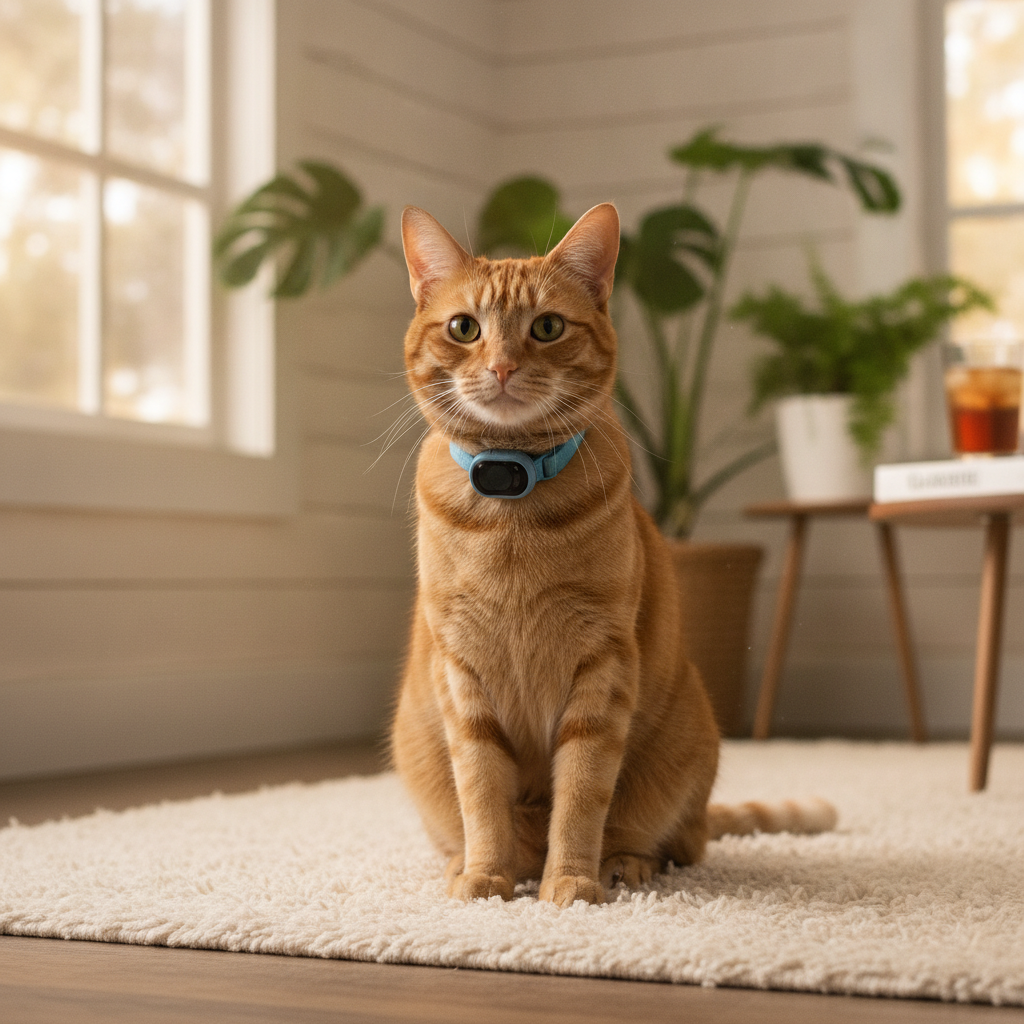
Canadian pet owners can use wearable heart monitors to track resting heart rate and respiratory trends year round, including through harsh winters. This 2026 guide covers device options, CAD pricing, cold weather considerations, and veterinary integration across provinces.
Key Takeaways for Canadian Pet Owners
- Pet wearable health monitors in 2026 use optical sensors, accelerometers, and AI algorithms to flag subtle shifts in resting heart rate and respiratory rate that may signal early heart disease in dogs and cats.
- No consumer wearable replaces veterinary diagnostics such as ECG or echocardiography, but trending data over weeks and months can prompt earlier visits to your veterinarian.
- Canadian winters present unique challenges: extreme cold (down to minus 30°C or lower) can affect battery life and sensor accuracy, making device selection and fit especially important.
- Veterinary data sharing is now standard on most premium collars, enabling Canadian vets to review trends remotely, a feature well suited to rural areas where clinics may be hundreds of kilometres away.
- Subscription costs in CAD often exceed the hardware price over a device's lifetime, so factor monthly fees into your New Pet Budget Canada: First Year Costs for 2026.
Why Heart Disease Detection Matters in Canada
Heart disease affects a significant proportion of companion animals. Veterinary literature suggests roughly 10% of dogs seen in primary care have some form of cardiac disease, and hypertrophic cardiomyopathy (HCM) is among the most common cardiac conditions in cats. The Canadian Veterinary Medical Association (CVMA) emphasises the importance of routine wellness exams, but even with annual checkups, gradual changes such as a slowly rising resting heart rate, increased respiratory rate during sleep, or reduced activity may go unnoticed between appointments.
In Canada, where universal healthcare does not extend to pets, early detection can also reduce long term treatment costs. Cardiac workups involving echocardiography and specialist referrals can run from $500 to over $2,000 CAD depending on the province. Catching warning signs early through continuous home monitoring may help owners and veterinarians intervene before conditions become advanced and costly.
Cold Weather and Canadian Climate Considerations
Canada's climate introduces practical factors that pet owners in milder regions do not face. When selecting and using a wearable heart monitor, keep the following in mind:
- Battery performance in cold: Lithium batteries lose capacity in extreme cold. A device rated for 10 days of battery life at 20°C may last only 6 to 7 days when a dog spends extended time outdoors in minus 15°C to minus 30°C conditions common across the Prairies, Ontario, and Quebec in winter.
- Sensor contact through thick coats: Many Canadian breeds and mixed breeds carry dense double coats (think Siberian Huskies, Newfoundlands, Bernese Mountain Dogs, and Canadian Eskimo Dogs). Optical PPG sensors require close skin contact, and thick undercoat can interfere with readings. Manufacturers generally recommend positioning the sensor snugly against the underside of the neck where fur is thinner.
- Moisture and condensation: Moving between a warm indoor environment and minus 20°C air causes condensation. Look for devices with an IP67 or higher water resistance rating to protect sensor integrity.
- Seasonal activity shifts: Many dogs and cats in Canada are significantly less active during winter months. AI baseline algorithms should account for seasonal variation in activity levels. A drop in activity in January is expected and should not automatically trigger an alert if the pet is otherwise healthy.
How Pet Wearables Detect Early Cardiac Warning Signs
Sensors and AI Baselines
Most pet health monitors use photoplethysmography (PPG) optical sensors, multi-axis accelerometers, and in some cases temperature sensors. PPG sensors emit light into the skin and measure blood volume changes to estimate heart rate. Accelerometers detect motion, enabling the device to isolate resting heart rate from active readings.
Advanced devices in 2026 build a personalised baseline for each pet over the first one to two weeks. The AI flags deviations from that individual baseline rather than relying on generic breed averages. This matters because a retired Greyhound may have a Adopting a Retired Greyhound in Canada: Care Guide around 50 to 70 bpm, while a healthy Chihuahua may sit between 100 and 140 bpm.
What Devices Measure
- Resting heart rate (RHR): Collected during sleep or calm rest. A gradual upward trend over weeks may indicate developing cardiac insufficiency, pain, or systemic illness.
- Resting respiratory rate (RRR): A sleeping respiratory rate consistently above 30 breaths per minute in dogs and cats is a well established early indicator of congestive heart failure, as noted in veterinary cardiology guidelines.
- Heart rate variability (HRV): Reduced HRV can indicate autonomic nervous system imbalance associated with cardiac disease or stress.
- Activity levels and sleep patterns: Decreased exercise tolerance and increased sleep duration can be secondary markers of progressing heart disease.
What Resting Heart Rate Trends Mean
Veterinary references provide general resting heart rate ranges: small dogs typically fall between 90 and 140 bpm, medium dogs between 70 and 110 bpm, and large dogs between 60 and 90 bpm. Cats generally range from 150 to 220 bpm, though stress in a clinic can push readings higher.
A single elevated reading is rarely significant. The trend is what matters. A dog whose average RHR gradually climbs from 75 bpm to 95 bpm over three months warrants veterinary attention, even if 95 bpm is technically within a normal range. Elevated heart rate can also result from pain, fever, anxiety, dehydration, or medication side effects. Wearable data should always be interpreted alongside a clinical examination.
If your pet's monitor generates a persistent alert, contact your veterinarian or your nearest emergency veterinary service.
ASPCA Animal Poison Control / Local Emergency Vet
Call the ASPCA Poison Control hotline (also serves Canada) or contact your nearest emergency veterinary hospital.
The ASPCA hotline charges a consultation fee. For non-poison emergencies, search for a 24-hour veterinary hospital in your city.
Device Comparison for the Canadian Market (2026)
Below is a comparison of five wearable health monitors available to Canadian pet owners. All prices are approximate in CAD.
| Feature | PetPace 3.0 | Maven Pet | Invoxia Biotracker 2026 | Tractive DOG 6 / CAT 6 | DocuPet HomeSafe |
|---|---|---|---|---|---|
| Species | Dogs and cats | Dogs and cats | Dogs | Dogs (CAT 6 arriving mid 2026) | Dogs and cats |
| Heart rate monitoring | Yes, continuous | Yes, continuous | Yes, continuous at rest | Yes, resting HR | Yes, resting HR |
| HRV tracking | Yes | Limited | Yes | No | Yes |
| GPS tracking | Yes | No | Yes | Yes | Yes |
| Vet data sharing | Dashboard plus telemedicine | Exportable reports | One click share | Limited | One click share |
| Approx. hardware cost (CAD) | Around $410 | Included with subscription | Check manufacturer site | Around $95 | Check manufacturer site |
| Subscription (CAD) | From approx. $20/month | Approx. $27 to $48/month (up to 3 pets) | Tiered plans available | From approx. $7/month | Annual subscription required |
| Battery life | 5 to 10 days | 5 to 7 days | Up to 15 days | Up to 14 days | Varies |
PetPace 3.0
The most clinically oriented consumer device. It tracks heart rate, respiratory rate, HRV, temperature, activity, posture, and pain indicators. Its integrated telemedicine feature connects owners with licensed veterinarians who can review collar data during a consultation. At roughly $410 CAD for hardware plus around $20 CAD per month, it is the most expensive option. Battery life may be shorter in Canadian winter conditions.
Maven Pet Health Tracker
Maven offers published validation data showing respiratory rate accuracy within one breath per minute of manual counts. The 14 gram sensor suits cats and small dogs. No GPS, so it is purely a health monitor. The multi-pet subscription (up to three pets, approximately $27 to $48 CAD per month) offers value for Canadian households with multiple animals.
Invoxia Biotracker 2026
Combines health monitoring with real time GPS tracking. Battery life of up to 15 days is among the best, which helps offset cold weather battery drain. Particularly relevant for breeds prone to valvular disease, such as Cavalier King Charles Spaniels. Dogs only as of early 2026.
Tractive DOG 6 and CAT 6
The most affordable option at roughly $95 CAD for hardware and approximately $7 CAD per month. Adds resting heart rate and respiratory rate monitoring alongside GPS. Lacks HRV, temperature, or deep vet integration. The CAT 6 Mini is expected mid 2026.
DocuPet HomeSafe
Offers heart rate, respiratory rate, GPS, and one click vet data sharing on the 4G LTE-M network. Annual subscription required. Clinical validation data is less publicly documented than PetPace or Maven.
Which Device Fits Your Situation in Canada
- Medically monitored pets: PetPace 3.0 or Maven for the deepest health data and best veterinary integration. Useful for breeds with elevated cardiac risk such as Cavalier King Charles Spaniels, Dobermans, Maine Coons, Ragdolls, and Newfoundlands.
- Budget conscious owners: Tractive DOG 6 provides basic cardiac trending at the lowest cost. Include these expenses in your New Pet Budget Canada: First Year Costs for 2026.
- Rural and remote locations: GPS enabled devices (Invoxia, Tractive, DocuPet) are particularly valuable in rural Canada where a lost pet may face wildlife encounters and extreme weather. Invoxia's long battery life suits extended outdoor time.
- Cats: Maven or PetPace currently offer validated feline compatibility. Indoor cats benefit from monitoring alongside enrichment strategies, especially during long Canadian winters when they may be less active for months.
- Multi-pet households: Maven's multi-pet subscription is cost effective for families with two or three animals, including those introducing a new puppy alongside a senior dog.
Canadian Pet Insurance and Wearable Data
Pet insurance is widely used in Canada, with several major providers operating nationally. While no major Canadian insurer currently offers direct premium discounts for wearable use, documented health data from a monitor can support claims and demonstrate proactive care. Some policies cover diagnostic workups prompted by wearable alerts if they lead to a confirmed diagnosis. Review our Cat Insurance in Canada: 2026 Feline Policy Costs for more on feline coverage options in Canada.
Sensor Accuracy and Honest Limitations
No consumer pet wearable can diagnose heart disease. These devices detect trends that warrant professional follow up, but an alert is not a diagnosis. Conditions like mitral valve disease, dilated cardiomyopathy, or HCM require echocardiography, ECG, and assessment by a veterinarian or veterinary cardiologist.
Accuracy depends on proper collar fit and fur density. Thick double coated breeds common in Canada may produce noisier optical readings. Motion during activity degrades PPG accuracy, which is why resting and sleeping measurements are far more reliable. Current AI algorithms have reportedly reduced false positive rates compared to earlier models, though independent confirmation is limited.
Some pets will not tolerate a collar mounted sensor. Cats may resist anything beyond a lightweight breakaway collar. Gradual introduction with positive reinforcement is recommended. Data overload is also a concern: veterinary professionals suggest focusing on weekly and monthly trend summaries rather than checking individual readings obsessively.
Looking Ahead
The pet wearable market continues to evolve, with features such as AI driven feeding integration already emerging. As sensor miniaturisation continues and veterinary telemedicine expands across Canadian provinces, wearable monitors are likely to become a routine part of preventive pet healthcare. For now, choose a device based on your pet's health needs, your budget in CAD, and your veterinarian's willingness to integrate wearable data into their workflow.
Frequently Asked Questions
Do pet wearable heart monitors work in Canadian winter temperatures? ↓
How much do pet heart monitors cost in Canada? ↓
Can my Canadian veterinarian access data from a pet wearable? ↓
Will pet insurance in Canada cover costs related to wearable health alerts? ↓
Do pet heart monitors work on thick coated Canadian breeds like Huskies or Newfoundlands? ↓

Priya Nair
Dog Breed Advisor & Adoption Counsellor
Dog breed advisor and adoption counsellor — honest breed comparisons and lifestyle matching for prospective owners.
Content Disclosure
This article was created using state-of-the-art AI models with human editorial oversight. It is intended for informational and entertainment purposes only and does not constitute veterinary medical advice. Always consult a licensed veterinarian for your pet's specific health needs. Learn more about our process.