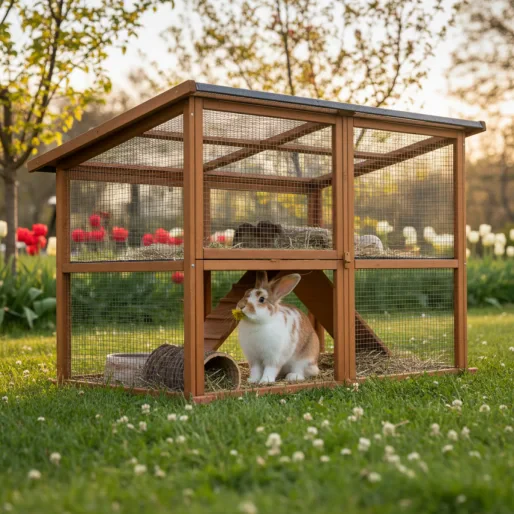
Canadian rabbit owners face a compressed outdoor season, aggressive native predators, and dramatic temperature swings. This checklist covers everything needed to keep outdoor enclosures safe from late spring through early autumn across Canadian climate zones.
Key Takeaways for Canadian Rabbit Owners
- Canada's outdoor rabbit season is short: typically mid May through September in most provinces, with earlier starts possible on the Pacific coast.
- Predator proofing must account for coyotes, raccoons, fishers, red foxes, birds of prey, and (in some areas) black bears investigating enclosures.
- Hardware cloth (16 gauge welded wire, 1.3 cm by 2.5 cm openings) is essential. Standard chicken wire does not stop Canadian predators.
- Heat stress becomes a risk above roughly 26 °C. Humidity in Ontario and Quebec summers increases the danger significantly.
- Dozens of common Canadian garden and wild plants are toxic to rabbits: lupins, foxglove, buttercups, lily of the valley, and baneberry among them.
- Keep your rabbit savvy veterinarian's details and posted at the enclosure at all times.
ASPCA Animal Poison Control / Local Emergency Vet
Call the ASPCA Poison Control hotline (also serves Canada) or contact your nearest emergency veterinary hospital.
The ASPCA hotline charges a consultation fee. For non-poison emergencies, search for a 24-hour veterinary hospital in your city.
Canada's Compressed Outdoor Season
Unlike temperate climates with a long spring and gradual warm up, most of Canada transitions rapidly from freezing conditions to warm weather. In the Prairies, overnight frost can persist into late May. In Ontario and Quebec, spring arrives unevenly, with warm afternoons followed by near freezing nights well into May. British Columbia's Lower Mainland offers the earliest start, often by mid April, though persistent rain introduces its own enclosure challenges.
This compressed timeline means Canadian rabbit owners need to complete their full enclosure inspection and setup within a narrow window. Waiting until June is tempting but wastes valuable outdoor enrichment time. The recommended approach is to begin structural inspections and repairs in April (while the enclosure is still empty), conduct the toxic plant audit in early to mid May as growth becomes visible, and begin supervised outdoor sessions once overnight temperatures stay reliably above 10 °C.
Predator Proofing for Canadian Wildlife
Mesh and Materials
Canada's predator profile is aggressive and diverse. Raccoons are present in nearly every urban and suburban area from coast to coast. Coyotes have expanded into every province, including urban centres like Toronto, Vancouver, and Montreal. Red foxes are common across southern Canada. Fishers (a large, agile member of the weasel family) are found in forested regions of Ontario, Quebec, and the Maritimes and are capable of breaking through lightweight materials.
Professional consensus from the Canadian Veterinary Medical Association (CVMA) and rabbit rescue organisations is clear: 16 gauge galvanised welded wire mesh with openings no larger than 1.3 cm by 2.5 cm is the minimum standard. Standard chicken wire is inadequate and should never be the primary barrier. Budget around $40 to $80 CAD per roll of hardware cloth at Canadian hardware retailers.
Overhead Threats
Red tailed hawks, great horned owls, and bald eagles all prey on small animals. In rural and semi rural areas across every province, aerial predation is a realistic threat. Enclosures must have fully covered roofs: either solid panels or securely fastened hardware cloth. Open top exercise runs should only be used under direct human supervision.
Below Ground Defence
Canadian freeze thaw cycles create soil movement that can shift buried barriers over time. An outward facing wire apron buried at least 30 cm deep around the full perimeter is recommended. In areas with heavy clay soils (common in parts of Ontario and the Prairies), an L shaped horizontal apron laid just beneath the surface and extending 30 to 60 cm outward may be more practical, as deep burial in dense clay is labour intensive. Check the apron each spring for frost heave displacement.
Latches and Raccoon Proofing
Raccoons in Canada are both abundant and remarkably dexterous. Simple bolt latches, hook and eye closures, and basic spring catches are insufficient. Every access point requires a two step latch system: a bolt paired with a carabiner or small padlock. This is not optional in Canadian settings. Raccoon attacks on domestic rabbits are regularly reported to wildlife and animal control services across the country.
Night Protocol
Most predator attacks occur between dusk and dawn. The safest approach is to bring rabbits into a secure indoor space (house, garage without vehicle fumes, or shed) every evening. If rabbits must remain outside overnight, motion activated lights and audible deterrent devices around the perimeter provide an additional layer of protection, though they are not a substitute for proper structural security.
Heat and Humidity: A Misunderstood Canadian Risk
Many Canadian rabbit owners underestimate summer heat risk because they associate Canada with cold. However, Environment and Climate Change Canada regularly records humidex values above 35 °C in southern Ontario, Quebec, and parts of the Maritimes during July and August. Rabbits cannot pant effectively and rely on their ears for thermoregulation. Veterinary guidance consistently flags ambient temperatures above roughly 26 °C as the danger threshold, and high humidity makes the risk worse because it impairs evaporative cooling.
Shade and Ventilation
At least 60 to 70 percent of the enclosure should be shaded during peak sun hours (approximately 10:00 to 16:00). Shade cloth rated at 70 to 90 percent UV block is available at Canadian garden centres and typically costs $20 to $50 CAD depending on size. Ceramic or stone tiles placed inside the enclosure provide cool resting surfaces. Any enclosed shelter section needs cross ventilation through mesh panels on at least two opposing sides.
Emergency Cooling
During heat events, keep these items ready: frozen water bottles wrapped in a thin cloth for rabbits to lean against, a ceramic tile rotated from the refrigerator, and multiple heavy tip proof water bowls checked at least twice daily. If Environment Canada issues a heat warning for your region (generally 30 °C or above for two or more consecutive days), bring rabbits indoors to a climate controlled space.
Toxic Plants Common in Canadian Gardens
Canada's diverse growing zones mean the plant risk profile varies by region, but several toxic species are found nationwide or across large portions of the country. A thorough plant audit within a 2 metre radius of the enclosure is non negotiable before any rabbit access.
Toxic Plants to Remove or Exclude
- Foxglove (Digitalis purpurea): contains cardiac glycosides; potentially fatal. Common in BC and Maritime gardens.
- Lily of the Valley (Convallaria majalis): cardiac toxin; all parts dangerous. Widely planted across Canada.
- Buttercups (Ranunculus species): cause oral irritation and digestive upset. Found in lawns and meadows coast to coast.
- Lupins (Lupinus species): wild lupins are common in Ontario, Quebec, and the Maritimes. Toxic to rabbits.
- Baneberry (Actaea species): native woodland plant found across much of Canada. Highly toxic.
- Rhododendron and Azalea (Rhododendron species): contain grayanotoxins. Very common in BC gardens and increasingly planted in Ontario.
- Yew (Taxus species): extremely toxic; very small amounts can be fatal. Widely used as ornamental hedging.
- Rhubarb leaves (Rheum rhabarbarum): contain oxalic acid. Rhubarb is a popular Canadian garden crop, making this a frequent hazard.
- Nightshade (Solanum species): found as weeds in gardens and disturbed soil across southern Canada.
Safe Plants for the Enclosure Area
- Timothy grass and orchard grass (excellent forage and widely grown in Canada)
- Clover (in moderation)
- Dandelion (leaves and flowers, from pesticide free areas only)
- Chamomile
- Calendula (pot marigold)
- Sunflower
Repeat the plant audit each May, as self seeding plants appear year to year. Photograph unidentified species and consult a reliable identification resource before allowing rabbit access.
Escape Prevention
Rabbits can dig rapidly in the soft, thawed soil of a Canadian spring. They can squeeze through any gap their skull fits through (roughly 7 to 8 cm for a medium breed) and can jump 60 to 90 cm vertically. Enclosure walls should be at least 90 to 120 cm high, or the enclosure should be fully roofed.
Inspect the entire structure at least once monthly, plus after any significant weather event (spring storms, hail, or heavy rain that may cause soil erosion around the base). Check for rust or corrosion at ground level (road salt residue tracked into yards accelerates corrosion in many Canadian cities), loose fasteners, warped or rotted wood, and gaps at panel joints or where the structure meets the ground.
All outdoor rabbits should be microchipped with current owner details registered. Microchipping is available through veterinary clinics across Canada and typically costs $50 to $80 CAD. For additional security, GPS tracking devices designed for small pets can provide real time location data during outdoor time.
Provincial Considerations
Animal welfare legislation in Canada is province based. Most provinces enforce animal cruelty provisions under their respective provincial animal welfare acts, and municipalities may have additional bylaws regarding outdoor animal enclosures. In Ontario, the Provincial Animal Welfare Services (PAWS) Act sets standards for animal care. In British Columbia, the BC SPCA has enforcement authority under the Prevention of Cruelty to Animals Act. Quebec's Animal Welfare and Safety Act imposes specific obligations on pet owners regarding adequate shelter and protection. Check your municipal bylaws before installing a permanent outdoor structure, as some municipalities require permits for structures above a certain size.
Emergency Kit for Canadian Conditions
Store a dedicated emergency kit near (not inside) the outdoor enclosure throughout the season:
- Veterinary contact card: your rabbit savvy vet's phone number, after hours emergency clinic details, and .
ASPCA Animal Poison Control / Local Emergency Vet
Call the ASPCA Poison Control hotline (also serves Canada) or contact your nearest emergency veterinary hospital.
The ASPCA hotline charges a consultation fee. For non-poison emergencies, search for a 24-hour veterinary hospital in your city.
- Secure pet carrier: ventilated, appropriate for emergency transport.
- Basic first aid supplies: sterile gauze, saline solution, blunt tipped scissors, styptic powder, tweezers for tick removal (blacklegged ticks carrying Lyme disease are expanding across Ontario, Quebec, Manitoba, and the Maritimes).
- Thermal management: frozen water bottles and a ceramic cooling tile for heat; a lightweight blanket for shock or sudden temperature drops (Canadian evenings can cool rapidly even in summer).
- Spare water bottle and bowl.
- Flashlight: for evening or emergency inspections.
- Repair materials: cable ties, spare mesh offcuts, a multi tool, and spare latch hardware.
- Record sheet: note incidents, structural issues, and unusual behaviour for veterinary reference.
Seasonal Maintenance Timeline for Canada
April: Inspection and Repair
Complete structural inspection of mesh, joints, latches, and wood for winter damage. Canadian winters are hard on outdoor structures: check for frost heave around buried barriers, salt corrosion on metal components, and moisture damage to wood frames. Order replacement materials early.
May: Plant Audit and Startup
Conduct the toxic plant audit as new growth appears. Clean and disinfect the hutch or shelter with rabbit safe disinfectant. Refresh substrate. Begin supervised outdoor sessions once overnight temperatures stay above 10 °C. Confirm parasite prevention is up to date with your veterinarian: tick risk in expanding Lyme disease zones makes this especially important. See Spring Parasite Prevention for detailed guidance.
June to August: Active Season
Monitor shade coverage as sun angles shift. Check water at least twice daily. Inspect for fly activity (fly strike can develop within hours in warm, humid conditions). Conduct monthly structural inspections and latch checks. Monitor Environment Canada forecasts and bring rabbits indoors during heat warnings or severe storm alerts.
September: Wind Down
Conduct a full structural review. In most of Canada, outdoor rabbit time ends by late September as overnight temperatures drop. Deep clean the enclosure, remove soiled substrate, and treat wood with pet safe preservative before winter storage.
Printable Safety Checklist
- ☐ Mesh is 16 gauge welded wire, openings no larger than 1.3 cm by 2.5 cm.
- ☐ Roof is fully covered (solid or mesh).
- ☐ Buried wire apron or floor mesh installed, checked for frost heave displacement.
- ☐ All doors secured with two step latches (raccoon proof).
- ☐ Shade covers at least 60 to 70 percent of enclosure during peak sun.
- ☐ Cross ventilation in all enclosed shelter sections.
- ☐ Emergency cooling supplies available.
- ☐ Water checked twice daily with multiple sources.
- ☐ Toxic plant audit completed within 2 metre radius.
- ☐ Enclosure walls at least 90 to 120 cm high, or fully roofed.
- ☐ Monthly structural inspection completed and logged.
- ☐ Rabbits microchipped with current registration.
- ☐ Emergency kit stocked and checked monthly.
- ☐ Veterinary emergency numbers and posted at enclosure.
ASPCA Animal Poison Control / Local Emergency Vet
Call the ASPCA Poison Control hotline (also serves Canada) or contact your nearest emergency veterinary hospital.
The ASPCA hotline charges a consultation fee. For non-poison emergencies, search for a 24-hour veterinary hospital in your city.
- ☐ Night protocol in place.
- ☐ Fly strike checks conducted daily in warm weather.
- ☐ Parasite prevention current, including tick protection in Lyme risk areas.
Frequently Asked Questions
When can I start putting my rabbit outside in Canada? ↓
What predators threaten outdoor rabbits in Canada? ↓
Is heat really a risk for rabbits in Canada? ↓
Do I need a permit for an outdoor rabbit enclosure in Canada? ↓
How much does it cost to set up a safe outdoor rabbit enclosure in Canada? ↓

Tom Ashford
Pet Safety & Home Consultant
Pet safety and home-proofing specialist — systematic hazard prevention and emergency preparedness for pet owners.
Content Disclosure
This article was created using state-of-the-art AI models with human editorial oversight. It is intended for informational and entertainment purposes only and does not constitute veterinary medical advice. Always consult a licensed veterinarian for your pet's specific health needs. Learn more about our process.