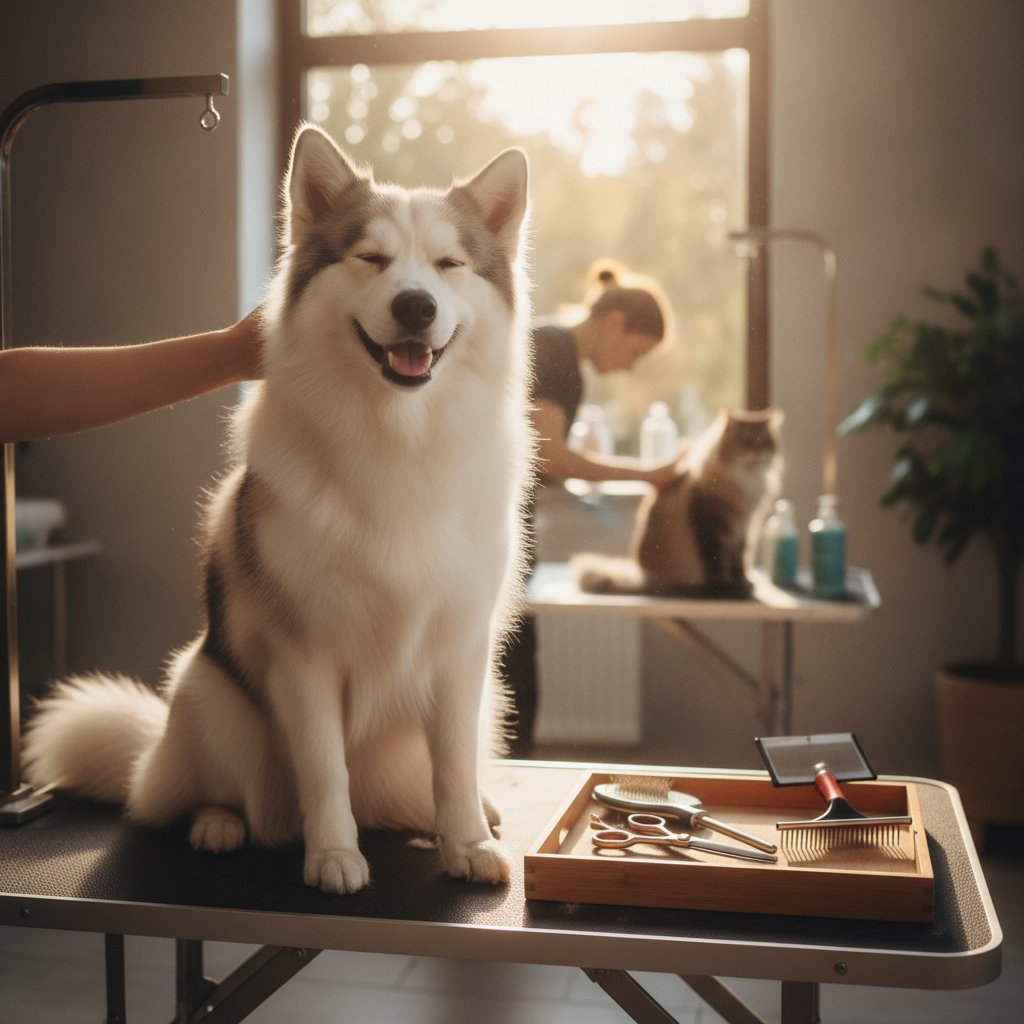
Canadian springs trigger intense coat blow in double-coated breeds after months of heavy winter undercoat growth. This guide covers climate-specific timing, grooming tools, warning signs, and professional resources for Canadian dog owners.
Key Takeaways
- In Canada, spring coat blow typically begins between late March and mid-May depending on province, with the heaviest shedding lasting two to four weeks.
- Dogs that endured a full Canadian winter grow significantly denser undercoats than those in milder climates, making thorough removal especially important.
- Undercoat rakes lift loose fur safely, while deshedding blades cut and thin; rakes are the preferred primary tool during heavy blow.
- Patchy, symmetrical, or sudden hair loss is not normal shedding. The Canadian Veterinary Medical Association (CVMA) recommends prompt veterinary assessment for abnormal coat loss.
- Professional grooming at least once during peak coat blow helps prevent hot spots, matting, and concealed skin issues.
Why Canadian Winters Make Coat Blow More Intense
Double-coated breeds such as Siberian Huskies, Alaskan Malamutes, Samoyeds, German Shepherds, Golden Retrievers, and Bernese Mountain Dogs are among the most popular dogs in Canada, and for good reason: their dense undercoats are well suited to cold climates. After months of temperatures that can plunge to -30°C or lower in provinces like Alberta, Manitoba, and Ontario, these dogs develop an exceptionally thick insulating layer. When daylight hours increase in spring, hormonal shifts triggered by photoperiod changes cause this undercoat to release in large volumes. Groomers refer to this as "coat blow" or "blowing coat."
The sheer density of winter undercoat in Canadian dogs means that spring coat blow tends to be heavier and more prolonged than in warmer regions. If the dead undercoat is not removed, it compresses against the skin and traps moisture, creating conditions favourable to hot spots (acute moist dermatitis), fungal overgrowth, and painful matting. This is particularly concerning as snow melts and dogs encounter wet ground, mud, and increased humidity, especially in Eastern Canada and British Columbia's coastal areas.
Thorough undercoat management supports healthy air circulation through the coat, preserves the dog's natural temperature regulation, and provides an opportunity to inspect the skin for parasites, lumps, or irritation that may have been hidden beneath heavy winter fur.
Regional Timing Across Canada
Spring coat blow does not happen on a single schedule across the country. General timing patterns include:
- British Columbia (coastal): Milder winters mean lighter undercoat growth. Coat blow may begin as early as late February or March, and tends to be less dramatic.
- Prairies (Alberta, Saskatchewan, Manitoba): Intense cold produces very dense undercoats. Expect heavy coat blow from mid-April through May.
- Ontario and Quebec: Variable winters; coat blow typically peaks in April, sometimes extending into early May in northern areas.
- Atlantic provinces: Cool, damp springs can delay coat blow into May. The humidity also increases the risk of moisture-trapped skin infections during shedding.
- Northern territories: Dogs may not begin significant shedding until late May or even early June, given the extended cold season.
Indoor dogs exposed to consistent artificial lighting and central heating may shed more evenly year-round rather than in distinct seasonal bursts. However, most Canadian dogs that spend significant time outdoors will follow a pronounced spring shedding pattern.
Tools and Products for Canadian Dog Owners
Undercoat Rakes
An undercoat rake features rounded, rotating metal pins spaced widely enough to pass through the guard coat without cutting it. The pins reach the loose undercoat and lift it away from the skin. This is generally considered the safest hand tool for routine undercoat removal and is particularly well suited to the heavy, plush coats common in Canadian double-coated breeds.
Best suited for: Breeds with thick undercoats such as Samoyeds, Alaskan Malamutes, Chow Chows, and Newfoundlands.
Deshedding Tools
Deshedding tools use a fine-toothed stainless steel edge to catch and remove loose undercoat. They work faster than rakes but can cut through live undercoat if used with excessive pressure. Limit use to three to five passes per area, and avoid bony prominences such as hips and spine.
Best suited for: Moderate-undercoat breeds like Labrador Retrievers, Border Collies, and Australian Shepherds.
Choosing Between Them
| Factor | Undercoat Rake | Deshedding Tool |
|---|---|---|
| Removal method | Lifts and pulls | Catches and cuts |
| Risk to guard coat | Low | Moderate if overused |
| Speed | Slower, more thorough | Faster surface passes |
| Skill level | Beginner-friendly | Requires controlled pressure |
| Ideal frequency during blow | Several times per week | Once or twice per week maximum |
Additional Supplies
- Slicker brush: For smoothing the topcoat and catching remaining loose fur after raking.
- Steel comb (Greyhound comb): If the comb passes through without snagging, the section is clear of dead undercoat.
- Detangling spray or light conditioner: Reduces static and friction. Avoid heavy silicone-based products that clog the undercoat.
- High velocity dryer: A powerful tool that blasts loose undercoat free; covered in detail below.
Quality grooming tools in Canada typically range from $25 to $80 CAD for rakes and deshedding tools, with high velocity dryers starting around $100 to $250 CAD for home-use models. Pet supply retailers across Canada stock these items both in-store and online.
Step-by-Step Coat Blow Grooming Routine
Step 1: Pre-Grooming Assessment
Run both hands through the coat, feeling for mats, lumps, scabs, or tender areas. Focus on behind the ears, the axillary region ("armpits"), the groin, and around the collar line. After a long Canadian winter, salt residue from sidewalk de-icers can cause dryness and irritation on the legs and belly, so inspect these areas carefully for cracking or redness.
Step 2: Bathing
A warm bath with a mild, soap-free dog shampoo loosens dead undercoat significantly. Work the shampoo down to the skin, rinse thoroughly, and follow with a light conditioner to help separate the undercoat from the guard coat. Avoid bathing more than once every three to four weeks unless directed by a veterinarian, as over-bathing strips natural oils.
Canadian tap water in many municipalities is quite hard, which can leave mineral residue in the coat. A final rinse with slightly diluted conditioner can help counteract this.
Step 3: High Velocity Drying
A high velocity (force) dryer blasts room-temperature or warm air at high speed, pushing water and loose fur out of the coat. This step dramatically reduces grooming time.
- Start on a moderate setting. Introduce airflow at the shoulder or hip before working toward the head.
- Direct the nozzle at roughly 45 degrees to the skin in the direction of coat growth. Keep it approximately 10 to 15 cm from the skin.
- Work from the rear forward: flanks, chest, legs, then head on a reduced setting near the ears and eyes.
- Never direct airflow into the ear canal.
Safety note: Dogs with heart conditions, severe anxiety, or brachycephalic anatomy may not tolerate the noise and pressure. Towel drying followed by hand-tool grooming is the safer alternative for these dogs.
Step 4: Undercoat Raking
Hold the undercoat rake at a slight angle and draw it through the coat in the direction of growth using short, gentle strokes. Work section by section: rear legs, haunches, back, sides, chest, front legs, neck ruff, and tail. The tail and "britches" (rear thigh feathering) typically hold the most stubborn undercoat. Remove accumulated fur from the rake teeth after every few strokes.
Step 5: Optional Deshedding Pass
If significant loose undercoat remains after raking, use a deshedding tool with minimal pressure, limiting each area to three to five passes. Skip thin-skinned areas (belly, inner thighs, face).
Step 6: Comb-Through Check and Skin Inspection
Run a steel Greyhound comb through every section. Smooth passage from skin to tip confirms adequate undercoat removal. With the coat thinned, examine the skin for redness, flaking, pustules, hot spots, or unusual hair loss. Photograph anything concerning for veterinary reference.
Normal Coat Blow vs. Abnormal Hair Loss
Distinguishing healthy shedding from pathological hair loss is one of the most common concerns during Canadian springs.
Normal Coat Blow
- Occurs seasonally, triggered by increasing daylight.
- Shedding is diffuse and roughly even across the body.
- Undercoat comes out in soft tufts; guard coat remains intact.
- Skin underneath appears healthy: pink, smooth, free of sores.
- The dog's behaviour and energy remain normal.
Warning Signs Requiring Veterinary Attention
- Patchy or asymmetrical bald spots: May indicate hormonal imbalance (hypothyroidism, Cushing's disease), fungal infection, or parasitic infestation such as Demodex mites.
- Excessive scratching, licking, or chewing: Suggests allergies, flea allergy dermatitis, or anxiety rather than passive shedding.
- Skin changes: Redness, darkened pigmentation, scaling, crusting, or greasy texture beneath thinning fur.
- Symmetrical flank alopecia: Bilateral hair loss without inflammation can indicate seasonal flank alopecia or an endocrine disorder. This condition is documented with some frequency in Canadian veterinary practice, possibly due to the extreme photoperiod variation at northern latitudes.
- Heavy shedding outside normal windows: Significant hair loss in midwinter (December through February) may reflect stress, nutritional deficiency, or underlying disease.
- Behavioural changes: Lethargy, weight change, increased thirst, or appetite shifts alongside hair loss point to systemic illness.
The CVMA recommends consulting a veterinarian promptly when abnormal shedding patterns are observed. A veterinary dermatologist can perform skin scraping, trichography (microscopic hair analysis), or blood panels to rule out medical causes.
ASPCA Animal Poison Control / Local Emergency Vet
Call the ASPCA Poison Control hotline (also serves Canada) or contact your nearest emergency veterinary hospital.
The ASPCA hotline charges a consultation fee. For non-poison emergencies, search for a 24-hour veterinary hospital in your city.
Professional Grooming in Canada
A professional grooming session during peak coat blow typically costs between $80 and $200 CAD depending on breed size, coat condition, and region. Urban centres like Toronto, Vancouver, and Calgary tend to be at the higher end of that range.
When selecting a groomer, look for certification through recognized bodies. In Canada, the Canadian Professional Pet Stylists (CPPS) offers credentials, and some groomers hold international certifications through the International Professional Groomers (IPG) or the National Dog Groomers Association of America (NDGAA), which is also recognized in Canada.
When to Book a Professional
- Mats have formed close to the skin, especially in sensitive areas.
- Coat blow is exceptionally heavy and you lack a high velocity dryer.
- The dog becomes aggressive or panicked during grooming.
- Signs of skin disease require careful handling around affected areas.
- You are unsure whether your dog has a single or double coat, particularly with mixed-breed rescues.
Critical Mistakes to Avoid
- Shaving a double coat: Clipping the coat short does not help dogs stay cool. It can cause sunburn, improper regrowth (post-clipping alopecia), and loss of natural insulation and UV protection. This is equally relevant in Canada, where summer UV exposure is significant, particularly from May through August.
- Neglecting the belly and legs: These areas accumulate loose undercoat and are prone to matting from spring mud and moisture.
- Using human grooming tools: Human brushes and scissors are not designed for canine coat density and increase the risk of skin injury.
- Ignoring salt and de-icer residue: Before beginning spring grooming, ensure paws and lower legs are free of chemical residue from winter sidewalk treatments, which can irritate the skin during brushing.
Frequency Guide by Coat Type
- Heavy double coat (Samoyed, Alaskan Malamute, Newfoundland): Brush every one to two days during active coat blow. Book at least one professional session during peak shedding.
- Moderate double coat (Golden Retriever, German Shepherd, Bernese Mountain Dog): Brush every two to three days during coat blow. A slicker brush handles lighter sessions.
- Light double coat (Labrador Retriever, Pembroke Welsh Corgi, Shiba Inu): Two to three sessions per week is typically sufficient.
Outside of coat blow season, most double-coated breeds benefit from a thorough weekly brushing to prevent mat buildup and distribute natural skin oils.
Frequently Asked Questions
When does spring coat blow typically start in Canada? ↓
How much does professional deshedding cost in Canada? ↓
Should I shave my double-coated dog in summer? ↓
How can I tell if my dog's shedding is abnormal? ↓
Does Canadian winter affect how much my dog sheds in spring? ↓

Sophie Bianchi
Certified Master Pet Groomer
Certified master pet groomer — breed-standard techniques, skin health awareness, and at-home grooming guidance.
Content Disclosure
This article was created using state-of-the-art AI models with human editorial oversight. It is intended for informational and entertainment purposes only and does not constitute veterinary medical advice. Always consult a licensed veterinarian for your pet's specific health needs. Learn more about our process.