
In this article
Key Takeaways
- Canadian spring weather is highly variable: outdoor grazing should only begin once daytime temperatures reliably stay above 10°C, which may not occur until late April in southern Ontario or May in the Prairies.
- Predator-proof runs must account for coyotes, raccoons, hawks, and neighbourhood dogs: use weld mesh (not chicken wire), a fully enclosed roof, and bolt-snap locks.
- Toxic plants common in Canadian gardens include buttercup, foxglove, lily of the valley, and poison hemlock. Identify and remove them before every session.
- The Canadian Veterinary Medical Association (CVMA) emphasises that rabbits and guinea pigs are exotic species requiring specialised veterinary care: locate an exotics vet before starting outdoor sessions.
- Gradually introduce fresh grass over 7 to 10 days to prevent gastrointestinal stasis or bloat.
When Can Canadian Rabbits and Guinea Pigs Go Outside?
Spring arrives at vastly different times across Canada. On the Pacific coast of British Columbia, daytime temperatures may reach 10°C to 15°C by mid-March. In southern Ontario and Quebec, consistent above-10°C days often do not arrive until late April. On the Prairies and in Atlantic Canada, pet owners may need to wait until May or even early June before conditions are safe for small herbivores.
The safe outdoor grazing range for rabbits and guinea pigs is roughly 10°C to 25°C. Guinea pigs are less cold-tolerant than rabbits and should not be placed outside in temperatures below 10°C, even for short periods. Canadian spring days can start cool and warm quickly, or shift from sunshine to near-freezing wind in under an hour. An outdoor thermometer placed at ground level inside the run (not at human standing height) is essential for monitoring conditions accurately.
Environment and Climate Change Canada forecasts and hourly weather alerts are useful tools for planning grazing sessions. If a frost advisory or wind chill warning is in effect, keep your pets indoors.
Materials and Setup for Canadian Conditions
Building a Predator-Proof Run
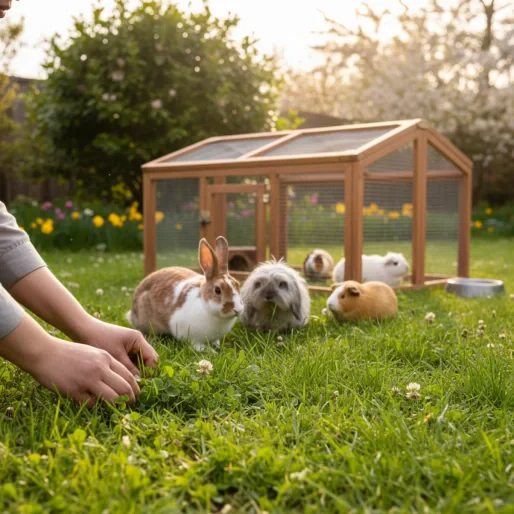
Canada's predator landscape is more intense than many new pet owners expect, even in suburban areas. Coyotes are present in every province and have adapted to urban environments in cities like Toronto, Vancouver, Calgary, and Ottawa. Raccoons are extremely dexterous and can open simple latches. Red-tailed hawks, Cooper's hawks, and great horned owls are common aerial threats.
Essential construction details include:
- Weld mesh panels with openings no larger than 13 mm x 25 mm for guinea pigs. Chicken wire is inadequate: coyotes, foxes, and raccoons can tear through it.
- A fully enclosed roof made of weld mesh or a solid panel. Open-top runs leave pets exposed to raptors, crows, and cats.
- Bolt-snap locks or combination padlocks on all doors and lids. Raccoons can defeat hook-and-eye latches with ease.
- A mesh skirt extending at least 30 cm outward from the base, weighted with paving stones or landscape pavers, to prevent digging predators from reaching underneath.
- UV-resistant cable management: all mesh joins should be secured with cage clips or stainless steel screws. Plastic cable ties degrade quickly under Canadian summer UV exposure.
For two rabbits, the minimum recommended run footprint is approximately 3 m x 2 m x 1 m high. For two guinea pigs, a minimum of 1.5 m x 1 m is acceptable, though larger is always better.
Weatherproofing for Canadian Spring
Canadian spring weather demands more robust shelter than milder climates. Cover one third to one half of the run roof with a waterproof tarpaulin or shade cloth rated for UV exposure. This provides protection from sudden rain showers, hail (common in the Prairies during late spring), and direct sun. Place a solid hideaway shelter inside the run: a wooden arch, tunnel, or enclosed box with an entrance hole. Rabbits and guinea pigs are prey animals and become stressed without a bolt-hole to retreat to.
Position the water source in the shaded section to keep it cool. In early spring, check that water bottles have not frozen if temperatures dip near 0°C during a session. Heavy ceramic bowls are less prone to tipping than lightweight plastic ones.
Toxic Plants in Canadian Gardens
Spring growth brings rapid weed emergence across Canada. Before placing the run, walk the entire area on hands and knees and remove all identifiable weeds. The following plants are commonly found in Canadian gardens and are toxic to rabbits and guinea pigs:
- Buttercup (Ranunculus spp.): Bright yellow flowers, lobed leaves. Contains protoanemonin, which causes mouth irritation, drooling, and gut pain.
- Foxglove (Digitalis purpurea): Tall spikes of tubular purple or pink flowers. Contains cardiac glycosides. Even a small amount can be fatal.
- Lily of the valley (Convallaria majalis): Common in shaded Canadian gardens. Low-growing with bell-shaped white flowers. Cardiac glycosides throughout the plant.
- Poison hemlock (Conium maculatum): Found along roadsides and disturbed ground across southern Canada. Tall, white umbrella-shaped flower clusters, purple-blotched stems. Extremely poisonous.
- Ragwort (Jacobaea vulgaris): Yellow daisy-like flower clusters. Contains pyrrolizidine alkaloids causing irreversible liver damage. Particularly common in British Columbia and Atlantic Canada.
- Spreading dogbane (Apocynum androsaemifolium): A native Canadian plant found in open woodlands and field edges. Contains cardiac glycosides similar to foxglove.
- Nightshade species: Both deadly nightshade and bittersweet nightshade are found in parts of Canada and contain dangerous alkaloids.
If any section of the lawn has been treated with herbicides, pesticides, or fertiliser within the past four to six weeks, it is unsafe for grazing. Many Canadian lawn care products contain chemicals toxic to small animals. A reliable approach is to photograph unidentified plants and cross-reference them with the Canadian Biodiversity Information Facility or the ASPCA Poison Control database before allowing grazing.
Gradual Grass Introduction
This step is critical and frequently overlooked. A rabbit or guinea pig that has been on hay and pellets throughout the long Canadian winter can develop serious gastrointestinal stasis or bloat if suddenly given unlimited fresh grass. Veterinary guidelines recommend starting with 15 to 20 minutes of grazing on day one and increasing by 10 to 15 minutes each day over 7 to 10 days.
Watch for soft or watery droppings, a hunched posture, or refusal to eat hay after returning indoors. These signs indicate digestive disturbance. Absence of droppings over a couple of hours in a rabbit is a potential sign of GI stasis, which is a veterinary emergency.
For guidance on grooming long-haired breeds during the spring moult, see Spring Grooming Guide for Long-Haired Rabbits.
Supervision and Session Length
Frequency of Checks
Even in a well-built predator-proof run, check on your pets at least every 15 to 20 minutes. Placing the run within view of a kitchen or living room window is practical for many Canadian homeowners. Never leave rabbits or guinea pigs outdoors overnight in a temporary run: nighttime temperatures in Canadian spring regularly drop below 5°C, and nocturnal predators (coyotes, owls, raccoons, weasels) are most active after dark.
Recommended Session Lengths
- Cool days (10°C to 16°C): Up to 2 to 3 hours for rabbits; 1 to 2 hours for guinea pigs.
- Warm days (17°C to 24°C): 1 to 2 hours, with mandatory shade.
- Hot days (above 25°C): Early morning or late evening only, sessions under one hour. During Canadian heat waves (increasingly common in July and August), consider skipping outdoor time entirely.
Signs of Heat Stress
Rabbits lack effective cooling mechanisms and can develop heatstroke rapidly. Watch for rapid open-mouth breathing, lethargy, wet nose and chin from excessive salivation, or red and pale ears. If these signs appear, move the animal to a cool indoor area immediately, offer water, gently dampen the ears with cool (not ice-cold) water, and contact a veterinarian. [LOCAL_VET_EMERGENCY_en-ca]
Post-Grazing Health Checks
After each session, conduct a thorough body check:
- Ticks: Black-legged ticks (deer ticks) are expanding their range across southern Canada, particularly in Ontario, Quebec, Nova Scotia, and Manitoba. While Lyme disease primarily affects dogs and humans, tick attachment can cause irritation and secondary infection in small animals.
- Fly eggs: Small white or yellow clusters on fur, especially around the rear. Flystrike (myiasis) is a life-threatening emergency where blowfly larvae burrow into skin. It can develop in as few as 12 to 24 hours in warm weather. The risk increases from June onward in most Canadian regions.
- Grass seeds: Check ears, eyes, and between toes for lodged seeds or plant material.
- Coat and skin: Look for scratches, insect bites, or signs of irritation.
Monitor appetite and droppings over the following hours. A guinea pig or rabbit that stops eating or produces no droppings within a few hours of returning inside should be assessed promptly by a veterinarian experienced with exotic species.
Finding an Exotics Vet in Canada
Rabbits and guinea pigs are classified as exotic companion animals in veterinary medicine and require practitioners with specialised training. Not every general practice veterinary clinic in Canada is equipped to handle emergencies such as GI stasis or flystrike in small herbivores. The CVMA (Canadian Veterinary Medical Association) maintains provincial regulatory body listings that can help locate qualified practitioners. Provincial veterinary associations in Ontario (CVO), British Columbia (CVBC), Alberta (ABVMA), and Quebec (OMVQ) also offer searchable directories.
Pet insurance is widely available in Canada through providers and can help offset the cost of exotic animal emergency care, which can range from $200 to $1,000 CAD or more depending on the treatment required. Having your vet's emergency contact number saved on your phone before the first outdoor session is a practical step. For guidance on managing veterinary costs, see Vet Visit Costs in Canada: Budget Alternatives for Owners.
Ongoing Maintenance
- Before each session: Walk the grazing area to check for new weed growth, wild animal droppings, and debris. In areas where wild rabbits, groundhogs, or squirrels are active, be aware that bare soil patches may harbour parasites such as Encephalitozoon cuniculi spores.
- Weekly: Re-inspect all mesh joins, locks, and frame connections. Canadian freeze-thaw cycles in early spring can loosen ground pegs and warp timber framing.
- Monthly: Move the run to a fresh patch of grass if possible. This reduces parasite load and allows the previous patch to recover.
- Seasonally: As spring transitions to summer, increase shade coverage, monitor for flystrike risk, and review the latest provincial animal welfare regulations. For updates on pet ownership rules, see New Pet Ownership Laws in Canada for 2026.
Quick Reference Checklist
- Daytime temperatures reliably above 10°C before starting outdoor sessions.
- Run built with weld mesh, enclosed roof, and bolt-snap locks.
- Ground edges anchored or skirted to deter coyotes and raccoons.
- Toxic weeds identified and removed; no recent lawn chemical use.
- Shade covering at least one third of the run.
- Hideaway shelter and fresh hay inside.
- Clean, unfrozen water accessible and tested.
- Thermometer placed at ground level inside the run.
- Grazing introduced gradually over 7 to 10 days.
- Checks every 15 to 20 minutes; never left out overnight.
- Post-session body check completed (ticks, fly eggs, grass seeds).
- Exotics vet identified and emergency number saved.
Frequently Asked Questions
Content Disclosure
This article was created using state-of-the-art AI models with human editorial oversight. It is intended for informational and entertainment purposes only and does not constitute veterinary medical advice. Always consult a licensed veterinarian for your pet's specific health needs. Learn more about our process.