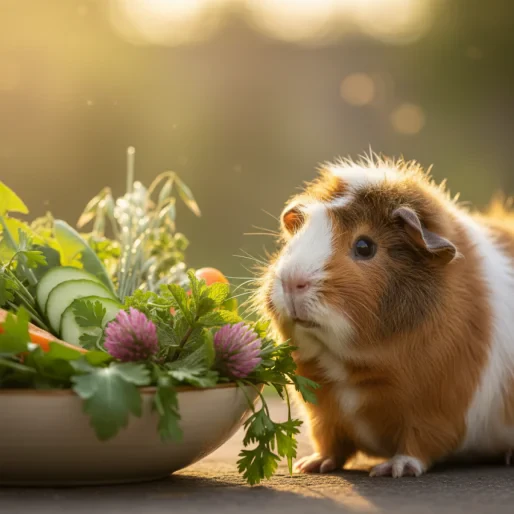
Learn how to safely transition guinea pigs from a winter hay diet to fresh spring grass and seasonal vegetables. Includes vitamin C needs, portion sizes, and bloat prevention.
Key Takeaways
- Transition guinea pigs from hay to fresh grass gradually over 10 to 14 days to prevent dangerous gastrointestinal bloat.
- Guinea pigs cannot synthesise vitamin C internally and require 10 to 30 mg per kg of body weight daily, depending on life stage and health status.
- Fresh grass must be hand picked, never fed from mower clippings, which ferment rapidly and cause fatal bloat.
- Portion sizes for fresh vegetables should be roughly one cup of mixed greens per day for an adult guinea pig weighing around 900 to 1,200 g.
- Certain vegetables, including iceberg lettuce, raw potatoes, and any plants from the onion family, are toxic and must be avoided entirely.
Why Spring Feeding Matters for Guinea Pigs
After months of a hay dominant winter diet, the arrival of spring brings a welcome variety of fresh grasses, herbs, and leafy vegetables. However, a guinea pig's hindgut fermentation system is highly sensitive to abrupt dietary changes. The caecal microbiome adapts slowly, and sudden exposure to moisture rich, sugar laden spring grass can trigger serious digestive emergencies including gastric dilation (bloat) and dysbiosis.
Veterinary guidelines from organisations such as the British Veterinary Association (BVA) and the Royal Society for the Prevention of Cruelty to Animals (RSPCA) consistently emphasise that dietary changes for guinea pigs must be incremental. This guide outlines a safe, evidence based protocol for the spring transition.
Understanding Guinea Pig Digestive Physiology
Guinea pigs are strict herbivores with a digestive tract designed for continuous fibre intake. Their large caecum houses billions of microorganisms that break down cellulose through fermentation. This microbial population is specialised: it adjusts its composition based on what the animal eats regularly. When a novel food source is introduced too quickly, the existing microbial balance is disrupted, producing excess gas and potentially life threatening bloat.
Timothy hay, orchard grass hay, or other long stem grass hays should remain the foundation of a guinea pig's diet year round, comprising approximately 80% of daily intake. Fresh vegetables and grass supplement this base but never replace it.
The 14 Day Spring Grass Introduction Protocol
Days 1 to 3: Micro Portions
Begin by offering a small handful (roughly 10 to 15 g) of freshly picked grass once daily. Select young, pesticide free grass from areas not treated with herbicides or fertilisers. Monitor droppings closely: they should remain well formed, oval, and consistent in colour.
Days 4 to 7: Gradual Increase
Double the portion to approximately 25 to 30 g, offered in two small servings across the day. If droppings become soft, watery, or irregular, reduce the amount and hold at the previous level for two additional days before progressing.
Days 8 to 10: Adding Variety
Introduce one new seasonal vegetable alongside the grass, such as a few leaves of romaine lettuce or a thin slice of bell pepper. Only add one new item every two to three days so the source of any digestive upset can be identified easily.
Days 11 to 14: Approaching Full Portions
By the end of the second week, guinea pigs can typically tolerate a full daily serving of mixed fresh greens (approximately one cup for an adult) alongside moderate grass access. Continue to observe droppings and appetite throughout.
Critical Rules for Fresh Grass
- Never feed lawn mower clippings. Cut grass ferments rapidly, producing gases that cause fatal bloat within hours.
- Avoid wet grass. Excess moisture accelerates fermentation in the gut. Let freshly picked grass wilt for 15 to 20 minutes before offering it.
- Check for contaminants. Grass near roadsides, treated gardens, or areas frequented by wild animals may carry pesticides, heavy metals, or parasites.
- Supervise outdoor grazing. If guinea pigs graze in a run, ensure the area is free from toxic plants such as buttercups, foxgloves, and daffodils. For more on toxic garden plants, see our guide on toxic garden products and spring safety, which covers cross species hazards.
Daily Vitamin C Requirements
Unlike most mammals, guinea pigs lack the enzyme L gulonolactone oxidase, making them unable to synthesise ascorbic acid (vitamin C) internally. This is a well documented physiological trait shared with humans and a small number of other species.
Recommended Intake by Life Stage
| Life Stage | Body Weight Range | Daily Vitamin C |
|---|---|---|
| Young (under 6 months) | 200 to 500 g | 10 to 15 mg per kg |
| Healthy adult | 700 to 1,200 g | 10 to 30 mg per kg |
| Pregnant or nursing sow | 800 to 1,400 g | 30 to 50 mg per kg |
| Ill or recovering | Variable | Up to 50 mg per kg (vet guided) |
Best Dietary Sources of Vitamin C
- Bell peppers (especially red and yellow): Among the richest sources, offering roughly 120 to 190 mg per 100 g.
- Kale and parsley: High in vitamin C but also high in calcium; offer in moderation (two to three times per week) to reduce urinary stone risk.
- Broccoli florets: Good vitamin C content, but may cause gas if overfed. Offer small pieces two to three times per week.
- Strawberries and kiwi: Useful occasional treats (once or twice weekly) due to sugar content.
Vitamin C degrades quickly in water and in stored pellets. Guinea pig specific pellets fortified with stabilised vitamin C should be used within 90 days of manufacture. Adding vitamin C drops to water bottles is generally discouraged by veterinary nutritionists, as the vitamin oxidises rapidly and may alter water taste, reducing intake.
Portion Size Guidelines by Age and Weight
Hay (Unlimited)
All guinea pigs, regardless of age, should have unlimited access to high quality grass hay at all times. Timothy hay is the most commonly recommended variety for adults. Younger guinea pigs (under 6 months) and pregnant sows may benefit from alfalfa hay's higher calcium and protein content, but this should be phased out by adulthood to prevent bladder stones.
Fresh Vegetables
| Age and Weight | Daily Vegetable Portion | Notes |
|---|---|---|
| Under 6 months (200 to 500 g) | Half cup mixed greens | Introduce one vegetable at a time over several days |
| Adult, 700 to 1,000 g | One cup mixed greens | Split into two servings (morning and evening) |
| Adult, over 1,000 g | One to 1.25 cups mixed greens | Adjust based on weight stability and droppings |
| Senior (5+ years) | Three quarters to one cup | Monitor weight weekly; seniors may lose condition |
Pellets
A measured portion of guinea pig specific pellets, typically around one eighth of a cup (approximately 15 to 20 g) per day for an adult, supplements the hay and vegetable diet. Pellets should be plain, timothy based, and free from seeds, dried fruit, or coloured pieces, which add sugar and encourage selective feeding.
Safe Spring Vegetables and Herbs
- Daily staples: Romaine lettuce, green leaf lettuce, cucumber, bell peppers (any colour), endive, chicory
- Three to four times per week: Coriander (cilantro), dill, basil, courgette (zucchini), celery
- Two to three times per week (higher calcium or oxalate): Kale, parsley, spinach (in small amounts), dandelion greens
- Occasional treats (once or twice weekly): Carrot (small slices), tomato (fruit only, no leaves or stems), apple (seedless, small piece), blueberries
Aim for variety: offering three to five different vegetables daily helps ensure a broad micronutrient profile and keeps guinea pigs mentally stimulated.
Foods That Cause Dangerous Bloat
Gastrointestinal bloat (gastric dilation) is a veterinary emergency in guinea pigs. Unlike dogs and cats, guinea pigs cannot vomit, so trapped gas and fermented food have no escape route except through continued digestion. Bloat can become fatal within hours if untreated.
High Risk Foods
| Food | Risk Factor | Severity |
|---|---|---|
| Lawn mower clippings | Rapid fermentation, heat buildup | Potentially fatal |
| Cabbage and Brussels sprouts | High sulphur compounds, gas production | High |
| Cauliflower | Cruciferous gas production | Moderate to high |
| Bread, cereals, grains | Starch fermentation, not species appropriate | High |
| Sugary fruits in excess | Rapid sugar fermentation in caecum | Moderate |
| Wet or wilted greens left in cage | Bacterial growth, fermentation | Moderate to high |
Toxic Foods: Complete Avoidance List
| Food | Reason |
|---|---|
| Onions, garlic, leeks, chives | Contain thiosulphates; cause haemolytic anaemia |
| Raw or green potatoes | Contain solanine; toxic to guinea pigs |
| Rhubarb (leaves and stalks) | High oxalic acid; causes kidney damage |
| Avocado | Contains persin; toxic to most small animals |
| Chocolate and caffeine | Theobromine and caffeine toxicity |
| Tomato leaves and stems | Contain tomatine; toxic (fruit flesh is safe) |
| Iceberg lettuce | Very low nutrition, high water; causes diarrhoea |
| Dairy, meat, eggs | Guinea pigs are strict herbivores; GI distress |
Recognising Bloat: Warning Signs
Early detection is critical. Owners should watch for these symptoms, particularly during the spring transition period:
- Visibly distended, tight abdomen
- Refusal to eat or drink
- Sitting hunched with eyes partly closed
- Reduced or absent droppings
- Audible gurgling from the abdomen
- Laboured breathing (pressure on diaphragm from gas)
- Teeth grinding (sign of pain in guinea pigs)
If bloat is suspected, contact an exotics experienced veterinarian immediately. Do not attempt home remedies. Time is critical, and veterinary intervention typically involves gut motility drugs, pain management, and sometimes decompression.
Special Dietary Considerations
Pregnant and Nursing Sows
Pregnant guinea pigs have elevated energy and vitamin C needs. Alfalfa hay may be reintroduced during late pregnancy and lactation for its higher calorie and calcium density. The spring transition should be even more gradual for pregnant sows, as hormonal changes already affect gut motility.
Senior Guinea Pigs (5+ Years)
Older guinea pigs may have reduced appetite, dental issues, or chronic conditions affecting nutrient absorption. Vegetables should be cut into smaller pieces, and softer greens may be better tolerated. Weekly weigh ins help detect gradual weight loss early. For general guidance on caring for ageing small pets during seasonal changes, owners of multiple species may also find helpful parallels in our spring rabbit grooming guide.
Guinea Pigs With Urinary Issues
Guinea pigs prone to bladder sludge or calcium oxalate stones should have limited access to high calcium vegetables (parsley, kale, spinach, dandelion greens). Focus on low calcium options like romaine lettuce, bell peppers, and cucumber. A veterinarian may also recommend filtered or low mineral water.
Reading Guinea Pig Pellet Labels
When selecting commercial pellets, look for:
- Timothy hay as the first ingredient (not alfalfa, for adults)
- Stabilised vitamin C listed in the guaranteed analysis
- No added sugars, seeds, dried fruit, or coloured pieces
- Crude fibre content of at least 15 to 20%
- Calcium to phosphorus ratio close to 1.5:1
Pellets are a supplement, not the dietary foundation. Overfeeding pellets at the expense of hay is one of the most common feeding errors reported by exotic animal veterinarians and can lead to obesity, dental disease, and reduced gut motility.
Spring Feeding Schedule Template
Morning
- Refresh unlimited hay supply
- Offer half the daily vegetable portion (half cup for adults): for example, a few romaine leaves, a strip of bell pepper, and a sprig of coriander
- Provide measured pellet portion (approximately one eighth cup)
Afternoon (Optional Enrichment)
- Offer a small amount of freshly picked, wilted grass (following the 14 day introduction schedule)
- Scatter a few herb leaves (basil, dill) for foraging enrichment
Evening
- Offer the remaining vegetable portion
- Remove any uneaten fresh food from the morning to prevent spoilage
- Check hay supply and top up if needed
- Ensure fresh, clean water is available (bottle or bowl, checked daily)
When to Consult a Veterinarian
Professional veterinary guidance is essential in the following situations:
- Diarrhoea lasting more than 24 hours
- Any signs of bloat (see warning signs above)
- Weight loss exceeding 50 g in a week without dietary change
- Drooling, difficulty chewing, or dropping food (potential dental disease)
- Rough coat, lethargy, or joint swelling (possible scurvy from vitamin C deficiency)
- Blood in urine (potential urinary stones, requiring dietary adjustment)
Guinea pig medicine falls within the exotic animal speciality. Owners should seek veterinarians with experience in small herbivore care whenever possible. For broader seasonal pet health considerations, explore our spring poisoning emergency guide, which highlights the importance of rapid veterinary response across species.
Frequently Asked Questions
How long should the spring diet transition take for guinea pigs? ↓
Why can guinea pigs not eat lawn mower clippings? ↓
How much vitamin C does a guinea pig need each day? ↓
What vegetables are safe to feed guinea pigs daily? ↓
What are the signs of bloat in guinea pigs? ↓

Sarah Mitchell
Canine Nutrition Consultant
Canine nutrition consultant — evidence-based feeding guidance, label literacy, and diet planning without brand bias.
Content Disclosure
This article was created using state-of-the-art AI models with human editorial oversight. It is intended for informational and entertainment purposes only and does not constitute veterinary medical advice. Always consult a licensed veterinarian for your pet's specific health needs. Learn more about our process.