Spring moult demands significant nutritional support for pet birds. This guide covers protein requirements, amino acid gaps in seed diets, bathing schedules, and feather quality indicators that signal deficiency.
Key Takeaways
- Feather keratin is roughly 90% protein, making the moult one of the most protein demanding periods in a bird's annual cycle.
- All seed diets are commonly deficient in methionine, lysine, and other sulphur containing amino acids critical for feather synthesis.
- Bathing frequency should increase during active moult to soften keratin sheaths and soothe skin irritation.
- Stress bars, translucent shafts, and retained pin feathers are visible signs of nutritional shortfall during moult.
- Any therapeutic or supplemental diet changes should be guided by an avian veterinarian.
Why Spring Moult Is a Nutritional Turning Point
Most companion parrots, finches, canaries, and budgerigars undergo a significant feather moult in spring, triggered by increasing photoperiod. During this period, birds may replace a large proportion of their plumage over several weeks. Because feathers are composed almost entirely of beta keratin, a structural protein, the metabolic cost of regrowing a full coat of feathers is substantial. Avian nutrition research consistently identifies moult as one of the most energy and protein intensive phases outside of egg laying and chick rearing.
Owners who feed a primarily seed based diet often notice that moult seems prolonged, feathers look dull, or pin feathers break before fully emerging. These observations frequently trace back to nutritional gaps that become visible only when the body's demand for specific nutrients spikes. Understanding what birds need during moult, and where common diets fall short, helps owners intervene early and support healthy feather regrowth.
Protein Requirements During Active Moult
Baseline Versus Moult Period Needs
For most psittacines (parrots and parakeets), maintenance protein requirements generally fall in the range of 10% to 14% of the diet on a dry matter basis, depending on species and activity level. During active moult, protein needs can increase meaningfully, with avian nutritionists typically recommending diets that provide around 14% to 18% protein on a dry matter basis for moulting birds. Some larger species or heavy moulters may benefit from the upper end of that range.
Formulated pellets designed for companion birds are generally manufactured to meet these higher protein thresholds. Seed mixes, however, rarely achieve adequate protein levels without supplementation, and the protein they do provide has significant amino acid imbalances.
Protein Quality Matters More Than Quantity
Crude protein percentage on a label does not tell the full story. Bioavailability, the proportion of dietary protein the bird can actually absorb and use, varies dramatically between protein sources. Plant proteins from seeds tend to have lower digestibility than animal derived proteins or properly formulated pelleted diets. A seed mix may list an apparently reasonable protein content, yet deliver far less usable protein to the bird's system than the number suggests.
Owners who are new to bird keeping sometimes assume that seeds are nutritionally complete. As discussed in What First Time Budgie Owners Get Wrong, seed heavy diets are one of the most common early mistakes, and moult season reveals those gaps quickly.
Amino Acid Gaps in Seed Based Diets
The Methionine and Lysine Problem
Feather keratin synthesis depends heavily on sulphur containing amino acids, particularly methionine and cysteine. Lysine is also essential for feather structural integrity. Most seed mixes built around millet, sunflower, and safflower are notably low in these critical amino acids. Methionine is often the first limiting amino acid in seed diets for birds, meaning it runs out before other amino acids, effectively bottlenecking protein synthesis regardless of how much total protein the bird consumes.
This is analogous to label literacy principles in pet nutrition: just as dog owners learn that the crude protein figure on a kibble bag can be misleading without understanding the protein source (as emphasised in AAFCO and FEDIAF feeding guidelines for companion animals), bird owners must look beyond simple percentages to assess amino acid adequacy.
Other Common Deficiencies in Seed Diets
Beyond amino acid imbalances, seed heavy diets are frequently deficient in:
- Vitamin A (or its precursor beta carotene): Critical for skin and feather follicle health. Deficiency contributes to poor feather texture and increased susceptibility to feather follicle infections.
- Calcium: While more commonly discussed in relation to egg binding, calcium also plays a role in overall integumentary health.
- Omega 3 and Omega 6 fatty acids in proper ratios: Sunflower and safflower seeds are very high in omega 6 fatty acids but low in omega 3s. This imbalance can promote inflammatory processes in the skin.
- Vitamin D3: Especially in indoor birds without access to unfiltered sunlight or full spectrum lighting, vitamin D3 is commonly insufficient.
- Iodine: Particularly relevant for budgerigars and other small parakeets, iodine deficiency affects thyroid function, which in turn regulates moulting cycles.
Bridging the Gaps
The most straightforward way to address amino acid and micronutrient gaps is to transition birds to a high quality formulated pellet as the dietary base (typically 60% to 80% of total intake), supplemented with fresh vegetables, small amounts of fruit, and limited seeds offered as enrichment rather than staple nutrition. Cooked egg (a complete protein source) offered in small amounts during moult is a commonly recommended supplemental protein source in avian nutrition literature. Sprouted seeds can also improve amino acid availability compared to dry seeds.
Important: any significant dietary transition should be done gradually and, ideally, with input from an avian veterinarian. Abrupt changes in diet can cause stress and food refusal, particularly in birds that have eaten seeds exclusively for years.
Bathing Frequency During Moult
Why Bathing Matters More During Moult
As new feathers emerge, they are encased in keratin sheaths (often called pin feathers). These sheaths need to soften and flake away for the feather to unfurl properly. Regular bathing helps this process by hydrating the sheaths, soothing irritated skin, and reducing the discomfort associated with dozens of emerging pin feathers simultaneously.
Moulting birds often appear itchy or restless. Increased preening is normal, but excessive feather picking can develop if skin irritation goes unaddressed. Adequate bathing is one of the simplest interventions to reduce discomfort.
Recommended Bathing Schedules
During active moult, most avian care guidelines suggest increasing bathing opportunities:
- Small birds (budgerigars, finches, canaries): Offer a shallow bath dish daily. Many small birds prefer to bathe on their own terms rather than being misted.
- Medium birds (cockatiels, conures, small parrots): Misting with lukewarm water 3 to 5 times per week, or offering a shower perch, tends to work well. Some individuals prefer a shallow dish.
- Large parrots (African greys, macaws, cockatoos): Misting or showering 3 to 4 times per week is commonly recommended. Large parrots with heavy powder down production (cockatoos, African greys) especially benefit from frequent bathing during moult.
Water should always be lukewarm, never hot or cold. Avoid adding soaps, oils, or commercial feather sprays unless specifically recommended by an avian veterinarian, as these can disrupt the natural structure of developing feathers.
Humidity and Environment
Indoor environments, especially those with central heating or air conditioning, often have humidity levels well below what tropical and subtropical bird species evolved in. Ambient humidity of 40% to 60% is generally considered beneficial for feather health. During moult, placing a room humidifier near (but not directly on) the bird's living space can complement regular bathing.
Feather Quality Indicators That Signal Nutritional Deficiency
What Healthy New Feathers Look Like
Healthy incoming feathers have smooth, continuous barbs with even colouration, a sturdy but flexible shaft (rachis), and emerge fully from pin feather sheaths without breakage. The feather should lie flat against the body and interlock smoothly with neighbouring feathers. In species with iridescent or brightly coloured plumage, vibrant colour is itself an indicator of adequate nutrition, as pigment deposition depends on amino acids and micronutrients being available during feather formation.
Warning Signs to Monitor
The following feather abnormalities are commonly associated with nutritional deficiency during moult:
- Stress bars (fault lines): Horizontal lines of weakness running across the feather vane. These indicate a disruption in keratin deposition, often caused by nutritional stress, illness, or environmental disturbance during feather growth. Stress bars make feathers prone to breaking at the line.
- Translucent or thin feather shafts: A rachis that appears unusually thin or almost see through may indicate insufficient protein or calcium availability during formation.
- Retained pin feathers: Pin feathers that remain encased in their keratin sheaths for abnormally long periods, or that dry out and become flaky without unfurling, can signal protein or vitamin A deficiency.
- Colour abnormalities: Faded, uneven, or unusually pale feathers in species that normally have vivid colouring can reflect amino acid or pigment precursor deficiency. In African greys, for example, the appearance of red feathers in normally grey plumage areas is a well documented indicator of potential nutritional or health concerns.
- Feather breakage and fraying: New feathers that break, fray, or split shortly after emerging are often structurally compromised due to inadequate sulphur amino acid supply during formation.
- Prolonged or incomplete moult: A moult that extends well beyond the typical 6 to 12 week window, or one that appears to stall with patchy feather coverage, may indicate systemic nutritional deficiency or underlying illness.
When to Consult an Avian Veterinarian
Any of the following should prompt a veterinary consultation:
- Bald patches that persist for more than a few weeks without new feather growth
- Feathers emerging with blood visible in the shaft (may indicate a clotting issue or injury)
- Significant behavioural changes alongside moult (lethargy, appetite loss, aggression)
- Evidence of self mutilation or feather destructive behaviour
- Moult that does not resolve within a reasonable timeframe for the species
Feather destructive behaviour in particular can have nutritional, hormonal, environmental, or psychological causes. An avian veterinarian can run bloodwork and dietary analysis to identify whether the root cause is nutritional.
Building a Moult Support Feeding Plan
Dietary Foundation
A moult support plan generally includes:
- High quality formulated pellet: As the dietary base, providing balanced amino acids, vitamins, and minerals. Look for pellets that list specific protein sources and avoid excessive artificial colourants or added sugars.
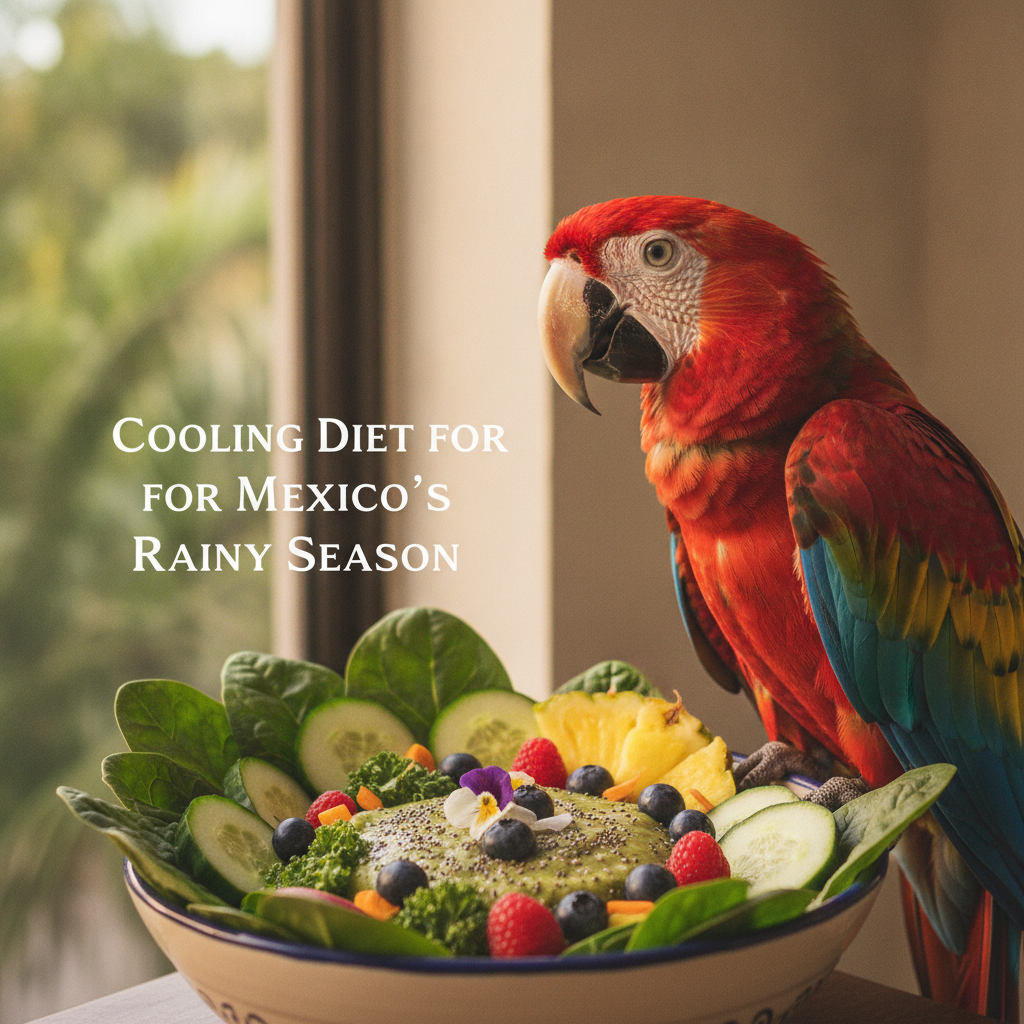
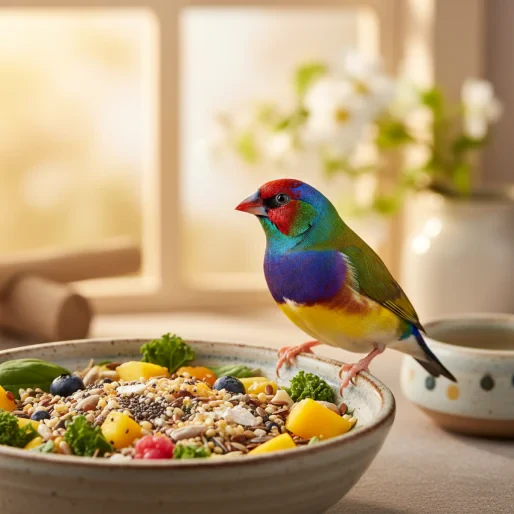
- Fresh vegetables daily: Dark leafy greens (kale, Swiss chard, dandelion greens), orange vegetables (sweet potato, carrot, butternut squash) for beta carotene, and cruciferous vegetables (broccoli) for additional micronutrients.
- Supplemental protein during moult: Small amounts of cooked egg (with shell for calcium), cooked legumes (lentils, chickpeas), or sprouted seeds offer bioavailable protein and amino acids.
- Limited seeds and nuts: Offered as foraging enrichment, not as staple nutrition. Small birds might receive a teaspoon of seed mix daily; larger parrots might receive a few nuts.
Portion Considerations
Birds generally self regulate intake reasonably well when offered a balanced diet. During moult, slight increases in food consumption are normal and should be accommodated. Portion control becomes more critical for obesity prone species or individuals with restricted mobility. Weighing birds weekly on a gram scale is the most reliable way to monitor body condition during moult, as feather loss can mask weight changes that are visible externally.
Foods That Are Toxic to Birds
| Food | Risk |
|---|---|
| Avocado (all parts) | Contains persin; potentially fatal cardiac and respiratory toxicity |
| Chocolate | Theobromine toxicity; cardiac and neurological effects |
| Caffeine (coffee, tea) | Cardiac stimulation; potentially fatal arrhythmias |
| Onion and garlic | Can cause haemolytic anaemia; avoid all forms |
| Alcohol | Rapid toxicity even in very small amounts |
| Fruit pits and apple seeds | Contain cyanogenic compounds; remove all seeds and pits |
| High salt foods | Electrolyte imbalance; kidney stress |
| Raw dried beans | Contain haemagglutinin; must be fully cooked before offering |
Environmental Support Beyond Nutrition
Nutrition is the foundation of a healthy moult, but environmental factors also play a significant role:
- Light cycles: Consistent photoperiods of 10 to 12 hours of light help regulate hormonal triggers for moult. Erratic lighting can prolong or disrupt the moulting process.
- Sleep quality: Birds need 10 to 12 hours of quiet, uninterrupted darkness. Sleep deprivation is a significant physiological stressor that can impair feather quality.
- Stress reduction: Moult is inherently stressful. Minimising environmental stressors (loud noises, household disruption, cage relocation) during active moult supports better outcomes.
- Air quality: Cooking fumes (especially from nonstick cookware containing PTFE), aerosol sprays, and cigarette smoke are respiratory hazards for birds at all times, but compromised birds during moult may be especially vulnerable.
For owners who travel during the moulting season, ensuring that pet sitters understand these environmental requirements is essential. Just as separation anxiety protocols matter for dogs in the care of sitters (as covered in How Pet Sitters Handle Dog Separation Anxiety), bird sitters need clear instructions about diet, bathing, and light cycles during moult.
Special Considerations by Species Group
Budgerigars and Small Parakeets
Budgerigars are especially prone to iodine deficiency, which can disrupt thyroid regulated moulting. A formulated pellet base typically addresses this. Budgies also benefit from cuttlebone access for calcium and beak conditioning during moult.
Cockatiels
Cockatiels are heavy powder down producers. Increased bathing during moult helps manage powder buildup and skin comfort. They are also prone to night frights, which can damage emerging blood feathers; a small nightlight can reduce this risk.
Larger Parrots
African greys, Amazons, macaws, and cockatoos have longer moulting cycles and higher absolute protein demands. Calcium supplementation (under veterinary guidance) is particularly important for African greys, which are known to be prone to hypocalcaemia. Larger parrots also benefit from foraging enrichment during moult, as the discomfort of pin feathers can increase stress related behaviours.
Frequently Asked Questions
See below for answers to the most common questions about supporting pet birds through spring moult.
Frequently Asked Questions
How long does a normal spring moult last in pet birds? ↓
Can birds eat boiled eggs during moult for extra protein? ↓
Should seed be eliminated entirely during moult? ↓
What does a stress bar on a feather look like? ↓
Is feather plucking during moult always a nutritional problem? ↓

Sarah Mitchell
Canine Nutrition Consultant
Canine nutrition consultant — evidence-based feeding guidance, label literacy, and diet planning without brand bias.
Content Disclosure
This article was created using state-of-the-art AI models with human editorial oversight. It is intended for informational and entertainment purposes only and does not constitute veterinary medical advice. Always consult a licensed veterinarian for your pet's specific health needs. Learn more about our process.