As wildfire seasons lengthen, smoke and haze become critical wellness challenges for our pets. Learn a certified coach's protocol for indoor enrichment, respiratory protection, and maintaining fitness during poor air quality days.
Building Resilience Against the Haze
In my years as a canine fitness practitioner, I have watched 'smoke season' evolve from a rare anomaly into a regular part of the annual calendar for many pet owners. Whether it is caused by regional wildfires, agricultural burning, or urban inversion layers, haze presents a specific physiological challenge to our pets. Unlike us, they cannot wear N95 masks effectively, and their proximity to the ground often exposes them to settling particulates.
The goal of this guide is not just immediate safety, it is about preservation. We want to preserve your pet's respiratory health, their conditioning, and their mental well-being even when the Air Quality Index (AQI) forces us indoors. By adopting a proactive wellness protocol, we can minimize the inflammatory impact of PM2.5 (fine particulate matter) and keep our pets thriving until the skies clear.
Key Wellness Takeaways
- Know Your Numbers: An AQI over 100 is the threshold for modifying exercise; over 150 requires a strict indoor protocol for all pets.
- The Micro-Climate: Your indoor environment must be actively managed with filtration to serve as a recovery zone.
- Mental Over Physical: When lung-taxing cardio is off the table, switch to high-intensity mental enrichment to manage energy.
- Hydration is Defense: Wet mucous membranes are the body's first line of filtration; hydration is non-negotiable.
Understanding the Respiratory Risk
Fine particulate matter (PM2.5) is microscopic, less than 2.5 microns in diameter. These particles are small enough to bypass the natural filtration of the nose and throat, lodging deep in the lungs and even entering the bloodstream. For a high-performance dog or a senior cat, the inflammatory response can be swift.
In my practice, I advise clients to treat smoke exposure like a cumulative injury. One walk in hazy air might not cause immediate symptoms, but repeated exposure creates a 'debt' of inflammation that the body must pay off. Prevention is the only sustainable strategy.
Vulnerable Populations
While all pets are at risk, certain groups require what I call 'Level Red' precautions immediately:
- Brachycephalic Breeds: Pugs, Bulldogs, and Persians already have compromised airways.
- Seniors: Older pets often have reduced lung elasticity.
- Puppies and Kittens: Their respiratory systems are still developing.
- Pets with Pre-existing Conditions: Asthma, collapsing trachea, or heart disease.
The Indoor Sanctuary Protocol
When the air outside is hazardous, your home must be a fortress. We cannot control the weather, but we can control the micro-climate where your pet spends 23 hours a day.
1. Filtration and Airflow
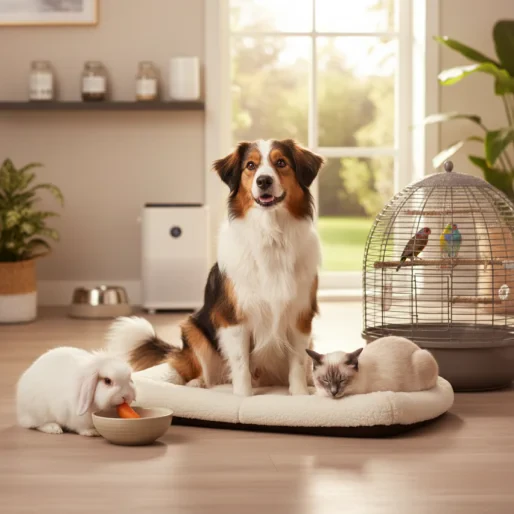
Running a high-efficiency particulate air (HEPA) purifier is the gold standard. Place it in the room where your pet sleeps. If you do not have central AC, avoid opening windows at night 'to let cool air in' during smoke events, as smoke often settles near the ground overnight.
2. Reduce Indoor Pollutants
During a haze event, the pet's respiratory system is already under siege. Do not add to the load. Pause the use of essential oil diffusers, strong cleaning chemicals, or candles. Just as we discuss in preventing environmental irritants like humidity, keeping the indoor air neutral is vital for recovery.
Fitness Maintenance During Confinement
The biggest frustration I hear from clients is: "My dog is climbing the walls without his walk." This is where we pivot from physical conditioning to mental conditioning. We can tire a dog out just as effectively with brain work as we can with a 5k run, without the respiratory tax.
The 'Brain Game' Circuit
Replace the morning walk with 20 minutes of intense mental focus. This keeps the routine stable, which is crucial for behavioral health, a concept I emphasize when discussing resetting routines after disruptions.
- Scent Work: Hide low-calorie treats around the living room. Sniffing increases the breath rate slightly but in a controlled environment, and the mental processing is exhausting.
- Proprioception Training: Use balance pads or couch cushions to work on core stability. Ask for a 'sit-pretty' or a 'stand-stay' on an unstable surface. This builds muscle without heavy panting.
- Trick Training: Teach a new, low-impact trick. The focus required burns significant energy.
Strategic Potty Breaks
Eventually, they have to go outside. To minimize exposure:
- Timing is Everything: Air quality often fluctuates. Use an AQI app to find the cleanest window of the day. Much like timing walks in desert heat, we are looking for the safest physiological window.
- Low Intensity: Leash walks only. No fetch, no running. Heavy panting bypasses the nasal filtration system and pulls air directly into the lungs. Keep mouths closed and sniffing to a minimum if ash is visible.
- The Wipe Down: Smoke leaves a residue of toxic ash on the coat. Pets will groom this off and ingest it. Wipe their paws and coat with a damp cloth immediately upon re-entry.
Nutritional Support and Hydration
Hydration is your pet's internal air filter. The mucosal lining of the respiratory tract needs moisture to trap particles effectively. During smoke events, I recommend adding water or bone broth to dry food to increase total fluid intake.
Consult your vet about antioxidants. In my wellness plans, I often look at omega-3 fatty acids during high-stress periods to help manage systemic inflammation, but this should always be tailored to your specific pet's diet.
Warning Signs: When to Seek Help
Monitor your pet closely. If you observe any of the following, this is no longer a wellness maintenance issue, it is a veterinary emergency:
- Open-mouthed breathing (in cats, this is always an emergency).
- Pale or bluish gums.
- Extreme lethargy or unwillingness to move.
- A cough that is wet or productive.
By shifting our mindset from frustration to adaptation, we can turn a smoke event into a period of rest, recovery, and mental bonding. Stay inside, stay hydrated, and keep the air clean.
Frequently Asked Questions
Can I walk my dog if the air quality is unhealthy? ↓
Do face masks work for dogs during smoke season? ↓

Lena Voss
Pet Wellness & Lifestyle Coach
Pet wellness and lifestyle coach — proactive fitness, weight management, and preventive care for healthier, happier pets.
Content Disclosure
This article was created using state-of-the-art AI models with human editorial oversight. It is intended for informational and entertainment purposes only and does not constitute veterinary medical advice. Always consult a licensed veterinarian for your pet's specific health needs. Learn more about our process.