Bringing a former racing greyhound into a British home requires understanding their unique background. This guide covers the essential transition from kennel to sofa for UK owners.
Understanding the UK Ex-Racer
Adopting a retired greyhound is a distinct experience compared to bringing home a standard rescue dog from a centre like Battersea or the RSPCA. Unlike strays who may have navigated urban environments, the average racing greyhound in the United Kingdom has lived a strictly regimented existence. Their lives have been defined by the routine of the kennel, the company of other dogs, and the specific protocols of the racing industry.
When these dogs enter a domestic home, they experience what behaviourists term 'culture shock.' Common household features such as stairs in a terraced house, glass patio doors, washing machines, and even the texture of carpets are entirely alien to them. Understanding this lack of exposure is critical. What a new owner might perceive as stubbornness is frequently a freeze response triggered by sensory overload.
Furthermore, British weather plays a significant role. Greyhounds have very little body fat and thin coats. The damp, cold maritime climate can be physically uncomfortable for them without appropriate protection, which directly impacts their willingness to walk or settle.
The Decompression Timeline
Professional consensus within the UK rescue community supports the 'Rule of Three' framework for acclimatisation. However, greyhounds often require a more extended timeline due to their institutionalised background.
- 3 Days: Cortisol levels are high. The dog may refuse food, sleep excessively, or pace around the home. They may not understand how to use a garden for toileting.
- 3 Weeks: The dog begins to anticipate the new routine but may start testing boundaries. This is often when separation anxiety becomes apparent as the dog bonds with the owner.
- 3 Months: True personality emerges. The dog feels secure enough to relax fully, often displaying the affectionate 'roaching' (sleeping on their back) behaviour greyhounds are famous for.
Managing Specific Behavioural Quirks
Sleep Startle (Sleep Aggression)
One of the most misunderstood behaviours in retired greyhounds is 'sleep startle.' In racing kennels, dogs have their own personal space and are rarely touched while resting. Consequently, if a new owner touches a sleeping greyhound, the dog may snap or growl reflexively. This is not aggression; it is a survival reflex.
Management Strategy:
- Call Before Touching: Always verbally rouse the dog from a distance before approaching.
- Designated Zones: Ensure the dog has a safe, undisturbed sleeping area, away from high-traffic zones like hallways.
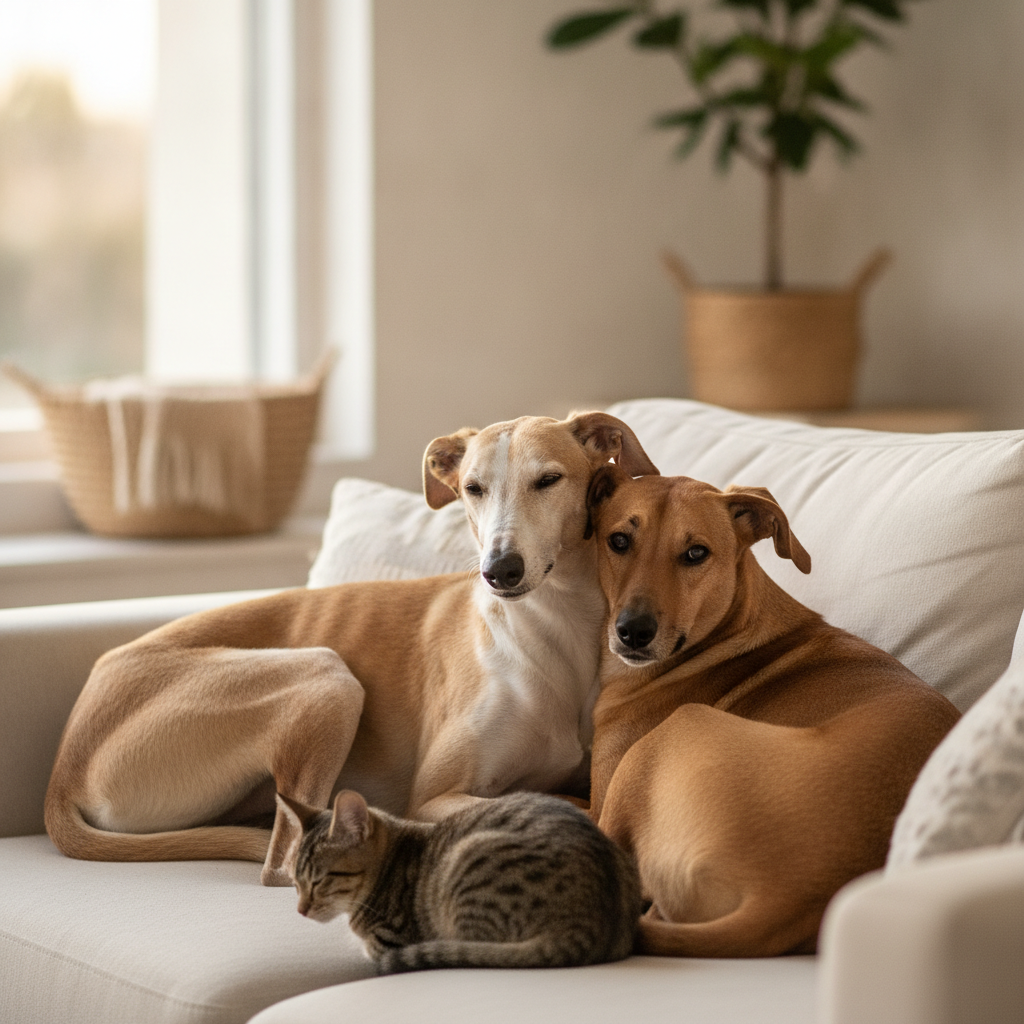
- Furniture Rules: To prevent conflict, behaviourists often recommend keeping greyhounds off sofas and beds initially. If you do allow them on furniture, invite them up only when they are fully awake.
Freezing (Statue Syndrome)
Greyhounds are known for 'freezing' on walks. They plant their feet and refuse to move. In the UK, this is often triggered by specific urban sounds like air brakes on buses, heavy rain, or the noise of refuse collection trucks. It is an involuntary fear response.
Intervention:
- Avoid Force: Pulling on the lead increases tension and reinforces the fear.
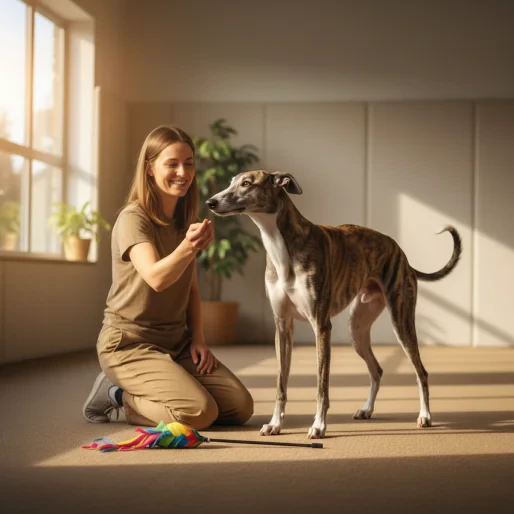
- Redirect: Use a high-value treat (like small pieces of cheese or chicken) to turn the dog in a circle or change direction.
- Coat Check: Ensure the dog is not freezing simply because they are cold or wet. A waterproof coat is essential for UK walks.
Isolation Distress and Separation Anxiety
Retired racers are rarely alone. They are born in litters and housed in kennels with other dogs. Sudden solitude in a quiet house can be terrifying. This often manifests as vocalisation, destruction, or house soiling.
Behavioural modification involves gradual desensitisation. Start by leaving the dog for seconds, then minutes. Many UK owners find that using a dog walker or pet sitter during the work day helps bridge the gap. Additionally, leaving a radio on (often tuned to a talk station like Radio 4 or Classic FM) can provide comforting background noise that mimics the constant activity of a kennel environment.
Environmental Hazards and Safety
The Flight Risk and Lead Laws
Greyhounds are sighthounds. Their genetic imperative is to chase movement. A squirrel darting across a park or a cat on a garden fence can trigger a chase response that overrides recall. Their anatomy allows them to reach speeds of 45mph in seconds.
Standard protocols dictate that greyhounds should strictly be kept on a lead in unfenced areas. A martingale collar (often called a fishtail collar) or a three-point harness is essential, as their narrow heads can slip out of standard collars. Under the Control of Dogs Order 1992, any dog in a public place must wear a collar with the name and address of the owner inscribed on the collar or on a plate or badge attached to it. Mandatory microchipping laws also apply, and details must be kept up to date.
Glass and Slippery Surfaces
Many greyhounds do not understand that glass is a solid barrier. Collisions with patio doors or conservatories are common. Applying decals or masking tape to glass at the dog's eye level is a necessary precaution during the first few weeks. Similarly, laminate or wooden flooring can be terrifying for a dog used to sand or concrete. The lack of traction can cause panic. Using rugs and runners to create 'safe paths' through the house is a standard modification strategy.
Muzzles and Predatory Drift
While many greyhounds are gentle, their predatory motor patterns are highly developed. Small dogs or cats may trigger a 'prey' recognition. This is known as predatory drift. It is not malice; it is instinct.
The Greyhound Trust and other specific rescues often recommend keeping ex-racers muzzled in public initially. Muzzles are familiar to these dogs and are not a sign of aggression. In the UK, where public perception of dogs is currently sensitive due to recent legislation changes regarding other breeds, a muzzled greyhound is seen as a responsible owner managing their dog correctly.
Weather Considerations for the UK
The British climate requires specific gear for greyhounds. They lack the double coat of a Labrador or German Shepherd.
- Winter: A fleece-lined waterproof coat is necessary for temperatures below 10°C.
- Indoors: Many owners use pyjamas or light fleeces indoors during winter, especially if the heating is off at night.
- Summer: While rare, heatstroke is a risk on hot days. Walking early in the morning or late at evening is advised when temperatures exceed 20°C.
When to Seek Professional Help
Most greyhounds transition successfully with time and patience. However, if a dog displays resource guarding, self-injurious behaviour, or aggression, consultation with a professional is required. In the UK, it is advisable to seek a behaviourist registered with the Animal Behaviour and Training Council (ABTC) to ensure they use ethical, science-based methods.
Contact your registered vet's out-of-hours service or find your nearest Vets Now emergency clinic.
All UK vet practices must provide 24/7 emergency cover. Your vet's answerphone will direct you to the on-call service.
Patience is the primary tool. These dogs are learning to be pets for the first time. With consistent routine and empathetic management, the athlete can successfully retire into a beloved companion.
Frequently Asked Questions
Do retired greyhounds need a lot of exercise? ↓
Are greyhounds good with cats? ↓
Why does my greyhound freeze on walks? ↓
Do I need to muzzle my greyhound by law? ↓
What equipment do I need for a retired greyhound? ↓

David Okafor
Certified Animal Behaviourist
Certified animal behaviourist — science-based strategies for fear, anxiety, reactivity, and behavioural challenges.
Content Disclosure
This article was created using state-of-the-art AI models with human editorial oversight. It is intended for informational and entertainment purposes only and does not constitute veterinary medical advice. Always consult a licensed veterinarian for your pet's specific health needs. Learn more about our process.