Most budgerigar owners are surprised to discover that a seed-only diet chronically inverts the calcium-to-phosphorus ratio, quietly undermining bone density, feather quality, and reproductive health. This guide explains the science behind the imbalance and offers practical, vet-aligned strategies for correcting it.
Key Takeaways
- Seed mixes invert the mineral ratio: Most commercially available budgerigar seed mixes are rich in phosphorus and comparatively low in calcium, frequently producing a calcium-to-phosphorus (Ca:P) ratio below 1:1 when it should sit closer to 1.5:1 or 2:1.
- The consequences are cumulative: Chronic mineral imbalance contributes to metabolic bone disease, soft or misshapen beaks, poor feather integrity, and, in breeding hens, a serious risk of egg binding.
- Vitamin D3 is non-negotiable: Without adequate D3 from UVB exposure or diet, calcium cannot be absorbed efficiently regardless of how much is offered.
- Three practical correctives exist: Formulated pellets, calcium-rich leafy greens, and accessible cuttlebone or mineral blocks address the shortfall without complex supplementation protocols.
- Breeding hens and growing chicks carry the highest risk of acute calcium depletion and require proactive dietary adjustment.
- Always consult an avian veterinarian before starting any supplement programme, particularly for birds with pre-existing health conditions.
Understanding the Calcium-to-Phosphorus Relationship in Budgerigars
Calcium and phosphorus are the two most abundant minerals in a bird's body. They work in close concert: calcium underpins skeletal structure, nerve transmission, muscle contraction, and eggshell formation, while phosphorus plays critical roles in energy metabolism, DNA synthesis, and cell membrane integrity. The ratio between these two minerals is at least as important as the absolute quantity of either, because each influences how the other is absorbed and utilised at the intestinal level.
Veterinary avian nutrition consensus generally places the optimal dietary Ca:P ratio for small companion parrots, including budgerigars (Melopsittacus undulatus), at approximately 1.5:1 to 2:1 (calcium to phosphorus). When the ratio tilts in the opposite direction, with phosphorus exceeding calcium intake, the body compensates by drawing calcium from bone stores. Over weeks and months, this process measurably reduces bone mineral density, a condition broadly described as metabolic bone disease or nutritional secondary hyperparathyroidism in avian patients.
Understanding this relationship is the essential first step before evaluating any specific food or supplement. A diet can appear varied and colourful in the bowl while still delivering a structurally imbalanced mineral profile, which is precisely the trap that seed-based feeding routinely sets.
Why Seed-Only Diets Create a Chronic Mineral Imbalance
The Phosphorus Dominance Problem
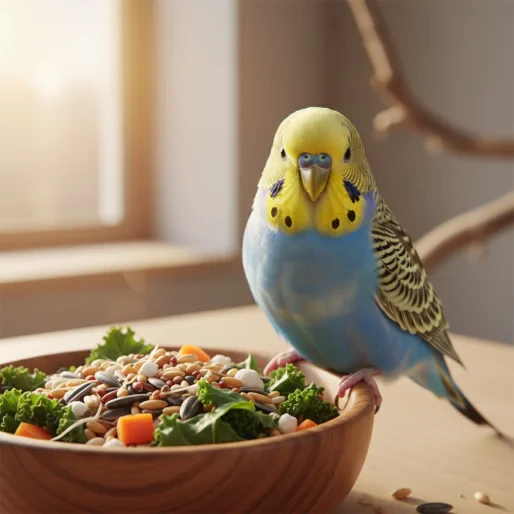
The seeds most commonly sold in budgerigar mixes, including millet (both white and yellow), canary grass seed, and oat groats, share a nutritional characteristic that is rarely highlighted on packaging: they contain substantially more phosphorus than calcium. Nutrient analyses of these ingredients typically show calcium levels that are modest and phosphorus levels that are considerably higher, producing dietary Ca:P ratios well below 1:1 in seed-heavy diets. Budgerigars fed exclusively on these mixes over months or years are therefore in a sustained state of relative calcium deficiency, even when the bird appears outwardly healthy.
The problem is compounded by the fact that seeds are energy-dense and highly palatable. A budgerigar allowed to self-select from a mixed seed bowl will often preferentially consume the highest-fat seeds, such as millet and niger, further narrowing dietary diversity and concentrating the phosphorus surplus. Professional avian nutrition literature consistently describes the seed bowl as offering caloric abundance alongside micronutrient poverty.
How Phytic Acid Compounds the Deficit
Seeds contain phytic acid (phytate), an anti-nutritional compound stored in the seed's outer layers as a phosphorus reserve for germination. Phytate binds to dietary calcium, magnesium, and zinc in the gastrointestinal tract, forming insoluble complexes that the bird cannot absorb. This means that even the modest calcium present in seeds may be partly rendered unavailable before it reaches the bloodstream. The practical implication is that the true bioavailable calcium in a seed diet is lower than raw nutrient tables might suggest, and the effective phosphorus surplus is therefore greater.
For owners who have added a calcium block to the cage and assumed the problem is resolved, this is a critical distinction. If the foundation of the diet is still seed-based, the ongoing phytate load continues to compromise calcium absorption regardless of what is placed alongside the food bowl.
Recognising the Signs of Calcium-Phosphorus Imbalance
Clinical signs of chronic calcium insufficiency in budgerigars range from subtle to severe. Owners commonly report the following observations before a veterinary diagnosis is made:
- Soft or rubbery beak and nails: The keratin structures of the beak and claws require adequate calcium for normal hardness. Abnormal flexibility or unusual growth patterns are frequently reported in birds on prolonged seed diets.
- Reduced feather quality: Feathers that appear dull, frayed at the edges, or slow to regrow after a moult can indicate broader nutritional deficiency. While feather quality is influenced by multiple nutrients, calcium and phosphorus imbalances are a recognised contributing factor.
- Leg weakness or abnormal stance in juveniles: Softening of the long bones during growth can produce splayed legs, reluctance to perch normally, or an unstable gait resembling a rickets-like presentation.
- Egg binding in hens: When a hen lacks sufficient calcium for normal uterine muscle contractions, she may be unable to expel a formed egg. This is a veterinary emergency requiring immediate professional intervention, not home management.
- Seizures and tremors: Severe acute hypocalcaemia can produce neurological signs including muscle fasciculations, seizures, and sudden collapse. These presentations require urgent avian veterinary assessment.
Many of these signs have multiple potential causes, and a definitive diagnosis requires blood biochemistry and, in some cases, radiographic imaging. An avian veterinarian is the appropriate professional to assess any bird displaying the above symptoms.
The Role of Vitamin D3: Calcium's Essential Companion
Calcium absorption in the small intestine is tightly regulated by vitamin D3 (cholecalciferol). Without adequate D3, even a well-constructed diet rich in calcium will yield poor skeletal outcomes because the mineral cannot be transported across the intestinal wall into circulation effectively. Budgerigars synthesise vitamin D3 endogenously when exposed to ultraviolet B (UVB) radiation, specifically in the wavelength range of approximately 290 to 315 nanometres.
Indoor budgerigars housed away from direct, unfiltered sunlight and without access to appropriate avian UVB lighting are at meaningful risk of D3 insufficiency. Standard household glass filters out the UVB spectrum, meaning a bird placed beside a window receives heat and visible light but negligible UVB. Specialist avian UVB lamps designed to replicate a natural light spectrum are recommended by avian veterinarians for indoor birds, particularly those not receiving a nutritionally complete formulated diet containing supplemental D3.
Dietary sources of D3 are limited in a seed-only diet. Formulated pellets for parrots typically include supplemental D3 at levels calibrated for indoor companion birds, making them particularly valuable in this context. Owners supplementing D3 directly should exercise caution: vitamin D3 is fat-soluble and accumulates to toxic levels if over-supplemented. Any supplementation programme beyond what is present in a formulated food should be guided by an avian veterinarian rather than undertaken as an unsupervised home intervention.
Building a Nutritionally Complete Diet
Fortified Pellets: The Foundation of Mineral Balance
Veterinary avian nutrition specialists broadly agree that formulated pellets represent the most reliable way to deliver a balanced Ca:P ratio alongside the full spectrum of vitamins and trace minerals that budgerigars require. Unlike seed mixes, quality pellets are manufactured to a nutritional specification, and reputable products undergo analysis to confirm mineral ratios before reaching market.
Transitioning a seed-habituated budgerigar to pellets is often the most challenging step, as birds raised on seed may initially refuse unfamiliar textures and shapes. Avian nutrition literature recommends a gradual transition over several weeks: beginning with a majority seed and minority pellet mix, then slowly increasing the pellet proportion over time. Offering pellets in the morning when the bird is hungriest and withholding seed for several hours (not days, as prolonged food restriction is dangerous) can encourage exploration of the new food. For a broader nutritional comparison of pellet and seed approaches in psittacines, the TrustMyPets guide on pellet diets vs. seed mixes for parrots provides a useful analytical framework that applies directly to budgerigar feeding decisions.
Pellets should typically constitute the majority of a budgerigar's daily diet, with fresh foods and a modest seed allowance making up the remainder. The precise proportion will depend on individual bird health, life stage, and veterinary guidance.
Calcium-Rich Vegetables and Leafy Greens
Fresh vegetables, particularly dark leafy greens, are an important secondary source of dietary calcium and provide complementary micronutrients including vitamin A precursors, folate, and antioxidants relevant to feather and immune health. Vegetables appropriate for budgerigars that carry a useful calcium contribution include:
- Kale: A reliable calcium source with a favourable Ca:P ratio and good bioavailability, as it is relatively low in oxalic acid compared with some other dark greens.
- Bok choy and pak choi: Low-oxalate brassica greens with moderate calcium content, generally well tolerated by small parrots.
- Broccoli florets: Provide calcium alongside vitamin C and a range of phytonutrients. Offered in small quantities to avoid digestive upset from excessive sulphur compounds.
- Endive and chicory: Bitter greens that tend to be accepted by budgerigars more readily than some alternatives, with a reasonable mineral profile.
- Dandelion greens: Rich in calcium and often relished by budgerigars; ensure any foraged greens come from pesticide-free sources well away from roadsides.
Spinach, Swiss chard, and beet greens are sometimes promoted as calcium sources but are high in oxalic acid, which binds calcium and reduces its bioavailability. While small quantities are unlikely to cause harm, these foods should not be relied upon as primary calcium contributors. For a detailed reference covering safe and toxic greens for psittacines more broadly, the fresh greens for parrots: safe vs. toxic lists article provides species-relevant guidance. Introduce new vegetables gradually and observe the bird's droppings; loose or discoloured droppings following dietary changes warrant veterinary attention if they persist beyond one to two days.
Cuttlebone, Mineral Blocks, and Direct Supplementation
Cuttlebone (the internal shell of the cuttlefish, Sepia spp.) is calcium carbonate in a porous, easily gnawed form. It serves a dual purpose: providing a readily accessible calcium source and offering beak-conditioning activity. Veterinary avian consensus recommends that cuttlebone be available to budgerigars at all times as a free-choice supplement, allowing the bird to self-regulate intake based on physiological need. Cuttlebone should be clipped to the cage bars with the soft, chalky side facing inward and replaced when it becomes soiled or heavily depleted.
Mineral blocks vary considerably in composition. Owners should inspect the ingredient list to confirm that calcium is a primary component and that the product does not contain excessive sodium, artificial colours, or binding agents. Blocks composed primarily of compressed seed or grain offer little mineral benefit beyond what the seed diet already provides and should not be mistaken for a calcium supplement.
Liquid or powder calcium supplements added to drinking water carry a risk of inconsistent dosing and water contamination. The bioavailability of calcium from water-soluble supplements varies, and incorrect concentration can contribute to hypercalcaemia over time. This route of supplementation is better undertaken under veterinary guidance rather than as an unsupervised home intervention.
Reading Commercial Budgerigar Food Labels
Most commercial seed mixes list a guaranteed analysis showing crude protein, crude fat, crude fibre, and moisture. Calcium and phosphorus are less consistently declared, making it difficult to calculate ratios at a glance. Where mineral analysis is provided, the Ca:P ratio is calculated simply by dividing the calcium percentage by the phosphorus percentage. A result below 1.0 (more phosphorus than calcium) is a nutritional warning sign for any food intended as a dietary foundation.
For formulated pellets, a more detailed guaranteed analysis is standard practice. Look for products that specify both calcium and phosphorus values and compare these against the 1.5:1 to 2:1 target range. Products developed in consultation with avian veterinary nutritionists and carrying nutritional adequacy statements from recognised bodies provide greater confidence in mineral balance.
Labels that lead with multiple seed or grain ingredients and list vitamins only as a spray coating on the outer seed layer warrant caution. Budgerigars hull seeds before consuming them, discarding the coated outer layer along with any applied micronutrients. For a practical guide to interpreting pet food label claims and guaranteed analysis statements across species, decoding pet food labels: understanding nutritional guarantees and ingredients covers the key concepts in accessible detail.
Portion Sizing and Daily Feeding Schedule
Budgerigars in the wild are adapted to foraging throughout the day across a wide variety of plant material. Domestic birds benefit from a structured daily routine that encourages dietary diversity and prevents the selective eating habits that seed bowls promote.
A practical daily feeding structure recommended by avian nutrition professionals typically includes the following elements:
- Morning: Offer fresh vegetables or leafy greens first, when the bird is most alert and receptive to new foods. Remove uneaten fresh food after two to four hours to prevent spoilage, particularly in warm environments.
- Throughout the day: Formulated pellets available as a constant, ad libitum food source forming the dietary foundation.
- Afternoon or evening: A small measured quantity of seed mix offered as a dietary component rather than the entire meal. Avian nutrition guidelines generally suggest that seed should represent no more than around 20 to 30 percent of total daily food intake in a corrected diet, though individual needs vary with body weight and activity level.
- Constant access: Fresh water changed daily, and cuttlebone available at all times regardless of whether the bird appears to use it actively.
Owners managing outdoor aviaries should also account for the seasonal nutritional demands created by breeding cycles, moult periods, and ambient temperature variation, all of which influence calcium and energy requirements. The article on preparing outdoor aviaries for cooler autumn nights addresses broader environmental factors that intersect directly with nutritional planning for housed birds.
Special Dietary Considerations
Breeding Hens and Egg Production
Breeding hens represent the highest-risk category for calcium-related health emergencies. Eggshell formation draws heavily on the hen's calcium reserves, and producing a full clutch in rapid succession can deplete bone mineral stores if the diet is inadequate. Avian veterinarians typically recommend increasing dietary calcium availability before and during the breeding season: confirming constant access to cuttlebone, increasing the proportion of calcium-rich vegetables, and ensuring that formulated pellets contribute meaningfully to overall intake.
Signs of egg binding include a hen straining without producing an egg, a visible egg outline through the lower abdomen, or a hen found on the cage floor in a fluffed and lethargic state. This condition constitutes a veterinary emergency and must not be managed at home with heat or gentle pressure alone. Prompt veterinary assessment is critical to the hen's survival.
Juvenile Budgerigars
During the growth phase, young budgerigars have proportionally higher calcium and phosphorus requirements to support rapid skeletal development. A diet that is maintenance-adequate for a healthy adult may be genuinely deficient for a growing chick or recently weaned juvenile. Breeders and new owners should ensure that pellets are available and accepted before significantly reducing parental feeding support, and that cuttlebone is accessible from an early age to establish favourable dietary habits before selective seed preferences become entrenched.
Senior Budgerigars
Older budgerigars, typically those over five to six years of age depending on individual health history, may experience age-related changes in digestive efficiency that affect mineral absorption. Kidney function changes in senior birds can also alter calcium and phosphorus handling, making it important that dietary adjustments for older birds are made in consultation with an avian veterinarian. Elevating calcium intake in a bird with compromised renal function can, in some cases, exacerbate kidney disease rather than protect bone health, which is why individual clinical assessment rather than generalised supplementation is the appropriate approach for senior patients.
Foods That Are Toxic to Budgerigars
While correcting the Ca:P ratio is the focus of this guide, owners must also be aware of foods that are contraindicated for budgerigars entirely. The following table summarises the primary dietary hazards:
| Food or Substance | Toxic Component or Risk | Clinical Concern |
|---|---|---|
| Avocado (all parts) | Persin | Cardiac and respiratory toxicity; considered potentially fatal in birds at small doses |
| Chocolate and cocoa products | Theobromine and caffeine | Cardiac arrhythmia, neurological signs, potentially fatal |
| Onion, garlic, leek, chives | Organosulphur compounds | Haemolytic anaemia; affects red blood cell integrity |
| Apple seeds, cherry pits, peach stones | Cyanogenic glycosides (amygdalin) | Potential cyanide toxicity; the fruit flesh itself is generally considered safe |
| Caffeine (tea, coffee, energy drinks) | Caffeine | Cardiac stimulation, hyperactivity; potentially fatal at low doses in small birds |
| Alcohol (any form) | Ethanol | Hepatic and neurological toxicity; extremely dangerous even in trace amounts |
| Raw dried beans and uncooked legumes | Phytohaemagglutinin (haemagglutinin) | Gastrointestinal and systemic toxicity; cooking destroys the compound |
| Salt and heavily salted human foods | Sodium | Sodium toxicosis and kidney stress; budgerigars have a very low sodium tolerance |
| Mushrooms (particularly wild varieties) | Variable mycotoxins | Hepatic toxicity; generally excluded from avian diets as a precautionary standard |
If a budgerigar is suspected of having ingested any toxic substance, contact an avian veterinarian or a specialist animal poison control service immediately. Birds do not have the same emetic response as mammals; attempting to induce vomiting causes additional harm and should never be attempted.
A Note on Veterinary Oversight and Long-Term Monitoring
Dietary correction in budgerigars can produce measurable improvements in feather quality, activity levels, and beak condition within weeks to months, but progress should be monitored rather than assumed based on visual assessment alone. Annual wellness examinations with an avian-experienced veterinarian, including periodic weight checks (a one or two gram weight change is clinically significant in a bird of this size), provide the objective data needed to confirm that nutritional goals are being met.
For birds already showing signs of metabolic bone disease, a history of egg binding, or abnormal skeletal growth, a supervised rehabilitation diet is strongly recommended over self-directed supplementation. Budgerigars are among the most nutritionally misunderstood companion birds precisely because seed bowls look full, birds appear content, and owners receive little guidance at the point of purchase. Addressing the Ca:P imbalance in these birds is not a complex undertaking, but it does require a deliberate shift in understanding what it means for a bird to be adequately fed versus genuinely nourished.
Frequently Asked Questions
How much cuttlebone should a budgerigar have access to? ↓
Can I correct the Ca:P imbalance simply by adding a calcium supplement to my budgerigar's drinking water? ↓
Which vegetables provide the most bioavailable calcium for budgerigars? ↓
My budgerigar refuses to eat pellets. What transitioning strategies are most effective? ↓
Do breeding hens have different calcium requirements from non-breeding budgerigars? ↓

Sarah Mitchell
Canine Nutrition Consultant
Canine nutrition consultant — evidence-based feeding guidance, label literacy, and diet planning without brand bias.
Content Disclosure
This article was created using state-of-the-art AI models with human editorial oversight. It is intended for informational and entertainment purposes only and does not constitute veterinary medical advice. Always consult a licensed veterinarian for your pet's specific health needs. Learn more about our process.