
In this article
- Key Takeaways
- Why Aquarium Sustainability Matters for Pet Owners
- Preparation: What You Need Before Starting
- Step 1: LED Lighting Upgrades
- Step 2: Smart Timers and Auto-Dosing Systems
- Step 3: Water Change Techniques That Cut Waste by Half
- Step 4: Sustainable Filter Media Options
- Step 5: Monthly Efficiency Audit Template
- What to Watch for During and After Changes
- When to Seek Professional Help
- Bringing It All Together
Key Takeaways
- Switching from fluorescent or metal halide lighting to modern LEDs can reduce aquarium lighting energy use by around 40 to 70 percent.
- Smart timers and auto-dosing systems remove guesswork, cut chemical waste, and stabilise water parameters.
- A targeted water change method (sometimes called the "drip and match" approach) can halve the volume of water sent down the drain each month.
- Sustainable filter media options, including ceramic bio-media and reusable mesh pads, reduce landfill contributions without sacrificing water quality.
- A monthly efficiency audit takes roughly 15 minutes and helps catch energy or water waste before it becomes costly.
Why Aquarium Sustainability Matters for Pet Owners
Fishkeeping is one of the most popular pet hobbies worldwide, but aquariums can be surprisingly resource-hungry. A moderately sized freshwater tank (around 200 litres) may use 150 to 400 kilowatt-hours of electricity per year when heaters, pumps, and lights are factored in. Water changes can add up to hundreds of litres discarded every month. For owners who care about animal welfare and the environment, bringing those numbers down is a practical goal, not just an idealistic one.
This guide walks through five areas where meaningful savings are achievable at home, without compromising the health of the fish or invertebrates in the tank. The same principles apply whether the setup is a nano shrimp tank or a large community aquarium.
For those already exploring eco-friendly routines in other areas of pet care, the Zero Waste Pet Grooming Routine for 2026 covers complementary ground.
Preparation: What You Need Before Starting
Tools and Supplies Checklist
- A plug-in energy monitor (watt meter) to measure real consumption from each device.
- A digital thermometer with logging capability (helpful for heater audits).
- Replacement LED light unit or retrofit LED tubes compatible with the existing fixture.
- A programmable smart plug or aquarium-specific smart timer.
- Buckets or a Python-style water changer with a valve for flow control.
- Water test kit (ammonia, nitrite, nitrate, pH at minimum).
- Sustainable filter media of choice (ceramic rings, sintered glass, reusable foam pads).
- A notebook or spreadsheet for the monthly audit template (provided below).
Safety Considerations
Before modifying any electrical equipment on the tank, always unplug devices, dry hands thoroughly, and use drip loops on all cables running to the outlet. Any electrical work beyond plugging in consumer devices should be handled by a qualified electrician.
Step 1: LED Lighting Upgrades
Why LEDs Make a Measurable Difference
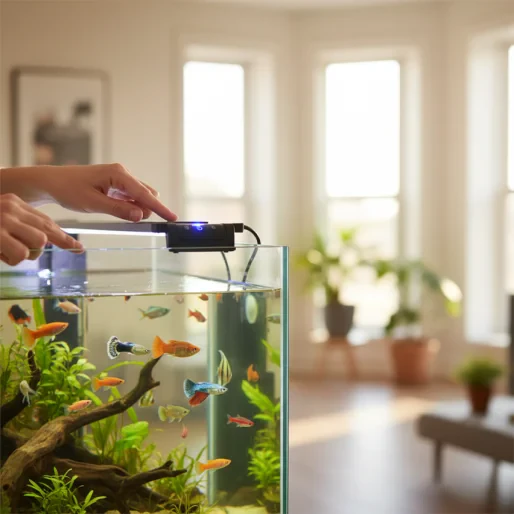
Older fluorescent tubes (T8 or T5) and metal halide fixtures typically draw significantly more wattage than equivalent LED panels. A standard T8 fluorescent fixture for a 120 cm tank might draw 80 to 120 watts, while a comparable LED unit often draws 30 to 50 watts for similar or better light output. Over a year of running 8 hours per day, that difference can translate to 50 to 100+ kilowatt-hours saved, depending on tank size.
How to Choose the Right LED
- Spectrum: For freshwater planted tanks, look for a colour temperature around 6,500K (daylight white). Reef tanks typically need fixtures with specific blue and violet channels for coral health.
- PAR rating: PAR (photosynthetically active radiation) measures usable light for plants and corals. Check whether the fixture's PAR output matches the demands of the specific livestock in the tank.
- Dimmability: Dimmable LEDs allow gradual sunrise and sunset ramps, which reduce fish stress and let owners dial back intensity (and wattage) during low-demand periods.
- Lifespan: Quality LED fixtures are commonly rated for 30,000 to 50,000 hours, meaning less frequent replacement and less electronic waste.
Installation Tips
- Measure the tank's length and depth carefully before purchasing; an undersized LED will leave dark zones.
- If retrofitting LED tubes into an existing fluorescent hood, confirm compatibility and remove the ballast if required (or use a bypass tube). When in doubt, consult the manufacturer's instructions.
- After installing, monitor plant or coral response over two to four weeks. Adjust height or intensity if signs of light stress appear (bleaching in corals, excessive algae in planted tanks).
Step 2: Smart Timers and Auto-Dosing Systems
Smart Timers
A basic mechanical timer works, but a smart plug or aquarium controller offers more precision. Benefits include:
- Custom scheduling: Set different on/off times for lights, CO2 injection, and circulation pumps across the week.
- Remote monitoring: Many smart plugs connect to a phone app, allowing owners to verify that equipment is not running outside scheduled hours, even when away from home.
- Energy tracking: Some smart plugs log cumulative energy use, making audits easier.
Avoid running lights longer than necessary. Most freshwater tanks thrive on 6 to 8 hours of light per day. Reef tanks may need 8 to 10 hours, but rarely more. Excessive photoperiods waste energy and fuel nuisance algae growth.
Auto-Dosing Systems
Automatic dosing pumps dispense precise volumes of liquid fertiliser, trace elements, or water conditioner on a timed schedule. This matters for sustainability because:
- Manual dosing often leads to over-pouring, which wastes product and can destabilise water chemistry.
- Consistent dosing keeps nutrient levels stable, reducing the frequency of large corrective water changes.
- Less chemical waste means less packaging used over time.
Calibrate any dosing pump carefully on installation and re-check the output volume monthly. Small pumps can drift, and even a 10 percent dosing error compounds over weeks.
Step 3: Water Change Techniques That Cut Waste by Half
The Conventional Approach and Its Limits
A typical recommendation is to change 20 to 30 percent of aquarium water weekly. For a 200-litre tank, that is roughly 40 to 60 litres per week, or 160 to 240 litres per month. Much of this water (plus the energy used to heat and dechlorinate it) goes straight to the drain.
The "Drip and Match" Technique
This method prioritises replacing only what is necessary, based on actual water test results rather than a rigid calendar schedule.
- Test first: Before any scheduled water change, test nitrate levels. If nitrate is below 20 ppm in a freshwater tank (or below 5 ppm in a reef), consider skipping or reducing the change volume.
- Partial small changes: Instead of one large weekly change, try two smaller changes (10 to 15 percent each) per week. Smaller volumes are easier to temperature-match and reduce thermal shock risk.
- Reuse removed water: Old aquarium water is typically rich in nitrogen and potassium. It can be used to water houseplants or garden beds, turning waste into a resource.
- Temperature match precisely: Use a thermometer to match replacement water to within 1 degree Celsius of the tank. This avoids the need to add extra heated water to compensate for a temperature mismatch, saving energy.
- Flow-controlled refill: When refilling, use a valve or slow siphon rather than dumping water in. A gentle refill reduces stress on fish and prevents stirring up substrate, which can spike ammonia temporarily.
What to Watch For
- Never skip water changes entirely for extended periods; even in heavily planted tanks, mineral depletion and dissolved organic compound build-up can harm livestock.
- If nitrate readings creep above 40 ppm (freshwater) between changes, increase frequency or volume rather than sticking rigidly to a reduced schedule.
- Monitor fish behaviour after changing routine. Lethargy, gasping at the surface, or colour loss may indicate water quality issues.
Step 4: Sustainable Filter Media Options
Disposable vs Reusable Media
Many aquarium filters ship with proprietary cartridges designed to be discarded monthly. These cartridges often contain a thin layer of carbon and a polyester floss pad. Replacing them monthly generates ongoing plastic and packaging waste, and can actually harm biological filtration by discarding established colonies of beneficial bacteria.
Better Alternatives
- Ceramic bio-rings or sintered glass media: These porous materials host large colonies of nitrifying bacteria. They rarely need replacing (often lasting years) and only require a gentle rinse in old tank water during maintenance.
- Reusable coarse foam pads: Cut-to-fit foam blocks trap debris and can be rinsed and reused dozens of times before they degrade.
- Natural filter media: Lava rock, pumice, or certain types of gravel can serve as effective biological media in sumps or canister filters.
- Activated carbon (when needed): Use carbon selectively (after medication courses, or to remove tannins) rather than running it continuously. This reduces consumption and waste.
How to Transition
- Do not remove all old media at once. Run the new sustainable media alongside the old cartridge for at least three to four weeks to allow bacteria to colonise the new surfaces.
- Remove the old cartridge only after the tank shows stable ammonia (0 ppm) and nitrite (0 ppm) readings with the new media in place.
- Label or date new media so replacement cycles (if any) can be tracked in the audit template.
Step 5: Monthly Efficiency Audit Template
A short monthly check-in prevents gradual efficiency losses from going unnoticed. Use the following template in a notebook or spreadsheet.
Aquarium Efficiency Audit Checklist
| Audit Item | What to Check | Status / Notes |
|---|---|---|
| Lighting wattage | Plug in watt meter. Record actual draw. Compare to previous month. | |
| Light schedule | Confirm timer settings. Total daily hours should match target (6 to 10). | |
| Heater cycling | Check heater run time via smart plug log. Excessive cycling may indicate a failing thermostat or poor insulation. | |
| Pump flow rate | Visually check output. Reduced flow often means clogged impeller (wasting energy). | |
| Water changed this month | Record total litres removed and replaced. Compare to target reduction. | |
| Nitrate trend | Log nitrate before and after each change. Stable or declining trend is ideal. | |
| Filter media condition | Inspect media. Rinse if needed (tank water only). Note any media due for replacement. | |
| Dosing pump calibration | Run a test dose into a measuring cup. Verify output matches programmed volume. | |
| Reuse check | Was old tank water reused for plants or garden? Track volume diverted from drain. | |
| Overall energy (kWh) | Record total kWh for the month from the energy monitor. Compare month over month. |
Completing this audit consistently builds a clear picture of trends. Most owners find that after two to three months of tracking, they can identify the single biggest source of waste in their setup and address it directly.
What to Watch for During and After Changes
- Algae blooms after LED installation: New LEDs can be more intense than old tubes. Reduce the photoperiod or dim the fixture and gradually increase over two weeks.
- Temperature fluctuations: Changing water change volumes or schedules can expose livestock to slight thermal swings. Always temperature-match replacement water.
- Bacterial die-off: Swapping filter media too quickly is one of the most common causes of ammonia spikes in established tanks. Always overlap old and new media.
- Dosing errors: Auto-dosing a fertiliser or supplement at the wrong concentration can harm sensitive species (shrimp and scaleless fish are particularly vulnerable). Double-check calibration after any pump maintenance.
When to Seek Professional Help
While most efficiency upgrades are straightforward, certain situations call for specialist advice:
- Persistent water quality problems (ammonia or nitrite above 0 ppm for more than 48 hours after changes) may indicate a deeper filtration or stocking issue. Consult an experienced aquatics specialist or veterinarian with fish health expertise.
- Electrical concerns: Any signs of corrosion on plugs, tripped circuit breakers, or tingling when touching equipment near the tank require immediate power-off and assessment by a qualified electrician.
- Sick fish: Lethargy, rapid breathing, lesions, or sudden death after modifying the tank setup warrant a water test and, if results are normal, a consultation with a veterinarian experienced in aquatic animal medicine.
Veterinary professionals with aquatic expertise can diagnose issues that water tests alone may not reveal, including parasitic infections, bacterial disease, or toxicity from unsuitable materials introduced during upgrades.
Bringing It All Together
Reducing an aquarium's environmental footprint does not require a complete overhaul overnight. Start with the change that offers the biggest return: for most owners, that is the LED lighting upgrade, which pays for itself in energy savings within 6 to 18 months depending on tank size and electricity costs. Layer in smart timers, refined water change practices, and sustainable filter media over the following weeks.
The monthly audit template keeps progress visible and measurable. Over the course of a year, a typical freshwater setup can realistically see energy consumption drop by 30 to 50 percent and water waste reduced by a similar margin, all while maintaining (or even improving) conditions for the animals in the tank.
Sustainability-minded pet owners looking for additional ways to reduce their household's pet-related footprint may also find useful ideas in the Zero Waste Pet Grooming Routine for 2026 and the Smart Deshedding Tools and AI Coat Apps for 2026 guides.
Frequently Asked Questions
Content Disclosure
This article was created using state-of-the-art AI models with human editorial oversight. It is intended for informational and entertainment purposes only and does not constitute veterinary medical advice. Always consult a licensed veterinarian for your pet's specific health needs. Learn more about our process.