A practical comparison of GPS pet trackers available in the United Kingdom in 2026, with UK pricing in pounds, network coverage considerations, and advice tailored to British weather, regulations, and pet culture. Covers Tractive, Fi, PitPat, and Aorkuler.
Key Takeaways
- GPS pet trackers in 2026 typically deliver 5 to 10 metre accuracy outdoors, with some models achieving closer to 4 to 5 metres during live tracking.
- Battery life ranges from around 5 days on compact cellular models to up to 3 months on low power designs, though real world use in the UK (with frequent rain and variable signal) tends to sit at the lower end of advertised ranges.
- Subscription fees range from zero (PitPat, Aorkuler) to around £15 per month, with annual plans offering savings.
- UK mobile coverage is strong in cities but patchy in rural Scotland, Wales, the Lake District, and parts of Devon and Cornwall, which affects all cellular trackers.
- Since June 2024, cats in England must be microchipped by 20 weeks of age, and dogs have required microchipping since 2016. A GPS tracker complements a microchip: the chip identifies your pet after it is found, while GPS helps you locate it in real time.
Why GPS Tracking Matters for UK Pet Owners
Dogs Trust consistently reports that thousands of stray dogs are handled by local authorities in the UK each year, and a significant proportion are never reunited with their owners. Microchipping is a legal requirement for dogs (since 2016) and for cats in England (since June 2024 under The Microchipping of Cats and Dogs (England) Regulations 2023), but a microchip only works once someone scans it. A GPS tracker serves a different and complementary purpose: it allows owners to locate a missing pet in real time, before the animal reaches a busy road, railway line, or ends up at an overwhelmed rescue centre.
Breeds with high prey drive or escape tendencies are especially common in the UK. Lurchers, Whippets, Springer Spaniels, and Beagles are frequently rehomed through British rescues and are well known for bolting after wildlife. For sighthounds and working breeds, a GPS tracker can be a genuine safety net. If a dog walker, sitter, or boarding kennel is involved, a tracker also gives owners confidence while they are away. For guidance on communicating breed specific tendencies to temporary carers, see What to Tell Your Dog Sitter About Your Dog's Breed Traits: High-Energy Working Dogs, Velcro Breeds, and Independent Sighthounds Compared.
Side by Side Comparison Table (UK Pricing)
| Feature | Tractive (6th Gen) | Fi Series 3+ | PitPat GPS | Aorkuler |
|---|---|---|---|---|
| Tracking Technology | GPS, Wi-Fi, cellular (LTE) | GPS, Wi-Fi, cellular (LTE), Bluetooth | GPS, cellular | Radio frequency (no cellular) |
| Reported Accuracy | Approximately 7 to 8 metres | Approximately 4 to 5 metres during live tracking | Typically 5 to 10 metres | Directional compass with distance readout; no map pinpoint |
| Battery Life | 5 to 12 days (up to 4 weeks with Power Saving Zones) | Up to 3 months (typical real world: 6 to 8 weeks) | 2 to 3 weeks depending on signal | Up to 15 days |
| Subscription Cost | From around £4.50 per month (annual plans available) | Around £15 per month; lower on annual or multi year plans | None (lifetime SIM included) | None (radio frequency, no SIM required) |
| Approximate Device Cost | Around £59 | Around £80 to £120 (often bundled with membership) | Around £149 to £169 | Around £50 to £70 |
| UK Availability | Widely available in the UK | Launched in the UK in early 2026 | UK designed and UK focused | Ships to the UK |
| Health and Activity Monitoring | Activity tracking, bark monitoring | Activity, rest, barking, licking, scratching, eating, drinking | Activity and exercise tracking | Location only |
| Waterproof Rating | IPX7 (submersible) | IP68 (submersible) | IP67 | IP65 (splash resistant) |
Key Differences for UK Owners
Mobile Network Coverage Across the UK
Cellular trackers (Tractive, Fi, PitPat) rely on mobile network infrastructure. In English cities and most suburban areas, coverage is generally reliable. However, the UK has well documented coverage gaps in rural and upland areas: parts of the Scottish Highlands, mid Wales, the Lake District, Dartmoor, Exmoor, and stretches of the North Pennines all have inconsistent 4G coverage. Ofcom's annual Connected Nations reports consistently highlight these gaps.
For owners who walk their dogs in these areas, a cellular tracker may lose its live connection. The device will typically continue logging GPS coordinates and upload them when signal returns, but this creates a delay that can be critical if a dog has bolted.
PitPat uses a bundled UK SIM and is designed around British network infrastructure, which gives it a slight edge in UK specific coverage optimisation. Tractive's Premium plan includes worldwide roaming, useful for owners who travel to the EU with their pets. Fi launched in the UK in early 2026 with dedicated UK support, though long term coverage performance in rural Britain remains to be fully established.
Aorkuler avoids cellular dependency entirely by using radio frequency communication between a collar unit and a handheld controller. This eliminates dead zone problems but limits range to a few miles at best, making it better suited for locating a dog that has wandered nearby rather than one that has covered serious distance.
Waterproofing: More Than a Nice to Have
The UK's temperate maritime climate means rain is a near constant consideration. A tracker that sits on a collar through autumn and winter walks across muddy fields, rainy parks, and stream crossings needs robust waterproofing. IPX7 and IP68 ratings (Tractive and Fi respectively) indicate genuine submersibility and are well suited to British conditions. PitPat's IP67 rating is also adequate for regular wet weather use. Aorkuler's IP65 rating (splash resistant only) is the weakest of the group and may be less durable through a typical British winter.
Battery Life: Advertised vs. Real World in the UK
Battery claims reflect ideal conditions that rarely match everyday British use. Frequent rain, cold temperatures in winter (regularly dropping to 0 to 5°C), and variable signal strength all reduce battery performance. Fi's headline figure of up to 3 months typically translates to 6 to 8 weeks in practice, and in Lost Dog Mode (frequent updates) it drains within 2 days. Tractive's standard models last around 5 to 7 days with regular tracking. PitPat reports 2 to 3 weeks between charges. Aorkuler's 15 day figure is closer to actual experience since radio frequency is less power hungry.
Subscription Costs: The Long Term Picture
Over a typical dog's lifetime of 10 to 15 years, subscription fees can far exceed the hardware cost. At approximately £15 per month, Fi costs around £180 per year, or £1,800 over a decade. Tractive's annual plan at around £54 per year totals approximately £540 over the same period.
PitPat and Aorkuler charge nothing beyond the initial purchase. However, subscription free models may offer fewer features or slower firmware updates. It is worth weighing ongoing costs against the value of health monitoring features. For broader context on managing ongoing pet related costs, see What Pet Insurance Actually Pays Out in the UK: Understanding Excess, Co-Pay, and Annual Benefit Limits.
Lifestyle Match Guide for UK Owners
City Flat With a Small Dog
For owners in London, Manchester, Birmingham, or other well connected cities, Tractive's Basic plan offers a cost effective option. The compact size suits smaller breeds like Jack Russell Terriers or Dachshunds, and the geofencing feature alerts owners immediately if the dog leaves a defined safe zone. Weekly charging is manageable.
Suburban Family With an Active Medium or Large Dog
Fi Series 3+ suits households with active Labradors, Spaniels, or Border Collies. The extended battery life means less frequent charging, and the comprehensive health monitoring can flag changes that warrant a veterinary check. Combining a GPS tracker with enrichment strategies helps manage restlessness; see Using Food Puzzles and Scatter Feeding to Slow Down Fast Eaters: The Nutritional and Behavioural Case for Enrichment Feeding in Dogs.
Rural or Countryside Dog Walker
This is where UK owners face the biggest challenge. If mobile coverage is reliable along walking routes (check Ofcom's coverage checker), Tractive Premium or PitPat work well. If coverage is patchy, particularly in upland areas of Wales, Scotland, or Northern England, Aorkuler's radio frequency approach avoids cellular dependency. Some owners carry both a cellular tracker and an Aorkuler as backup for off lead walks on open moorland.
Budget Conscious UK Owner
PitPat is a strong choice for UK based owners who want to avoid ongoing fees. Designed and supported in Britain, it eliminates subscription costs entirely. Aorkuler also has no fees but offers no map based tracking. For owners who simply want to locate a lost pet without monthly charges, both represent honest, functional options.
UK Regulatory Context
Under the Dangerous Dogs Act 1991 (amended 2024 to include XL Bully type dogs), certain breeds and types are subject to strict requirements including mandatory muzzling and lead use in public. Owners of XL Bully dogs registered under the exemption scheme must keep their dog on a lead and muzzled in public at all times. A GPS tracker provides an additional safety layer for these dogs, offering real time location data if an escape occurs. This is not a substitute for complying with legal requirements, but it is a practical precaution.
Contact your registered vet's out-of-hours service or find your nearest Vets Now emergency clinic.
All UK vet practices must provide 24/7 emergency cover. Your vet's answerphone will direct you to the on-call service.
The British Veterinary Association (BVA) and the Royal College of Veterinary Surgeons (RCVS) both emphasise the importance of identification for pet welfare. Microchipping identifies a pet after recovery; GPS tracking helps prevent loss from becoming permanent. The two technologies work best together.
Adoption Considerations
Rescue organisations across the UK, including Dogs Trust, Battersea, and the RSPCA, regularly rehome dogs with unknown behavioural histories. Escape behaviour, fence jumping, and bolting from open doors are commonly reported in the first weeks after adoption while a dog adjusts to a new home. Why Large Dogs Wait Longer in UK Rescue Centres are particularly affected.
Professional adoption guidance commonly recommends keeping a GPS tracker active for at least the first 3 to 6 months. This is the period when the dog is still learning boundaries and may be most likely to flee if startled. Owners who experience a health scare during this early period should know The First Emergency With a New Puppy: Recognising When Symptoms Require Immediate Vet Attention vs. Calm Observation at Home.
What About AirTags and SmartTags?
Apple AirTags and Samsung SmartTags are not GPS trackers. They rely on crowd sourced Bluetooth networks: when another person's compatible device passes near the tag, the location updates. In densely populated British cities, this can be surprisingly effective and costs nothing beyond the purchase (around £35 for an AirTag). In rural areas, updates may be infrequent. Bluetooth tags lack real time tracking, geofencing, and health monitoring. They are best used as a low cost supplementary layer alongside a proper GPS tracker.
Cats and Lightweight Trackers
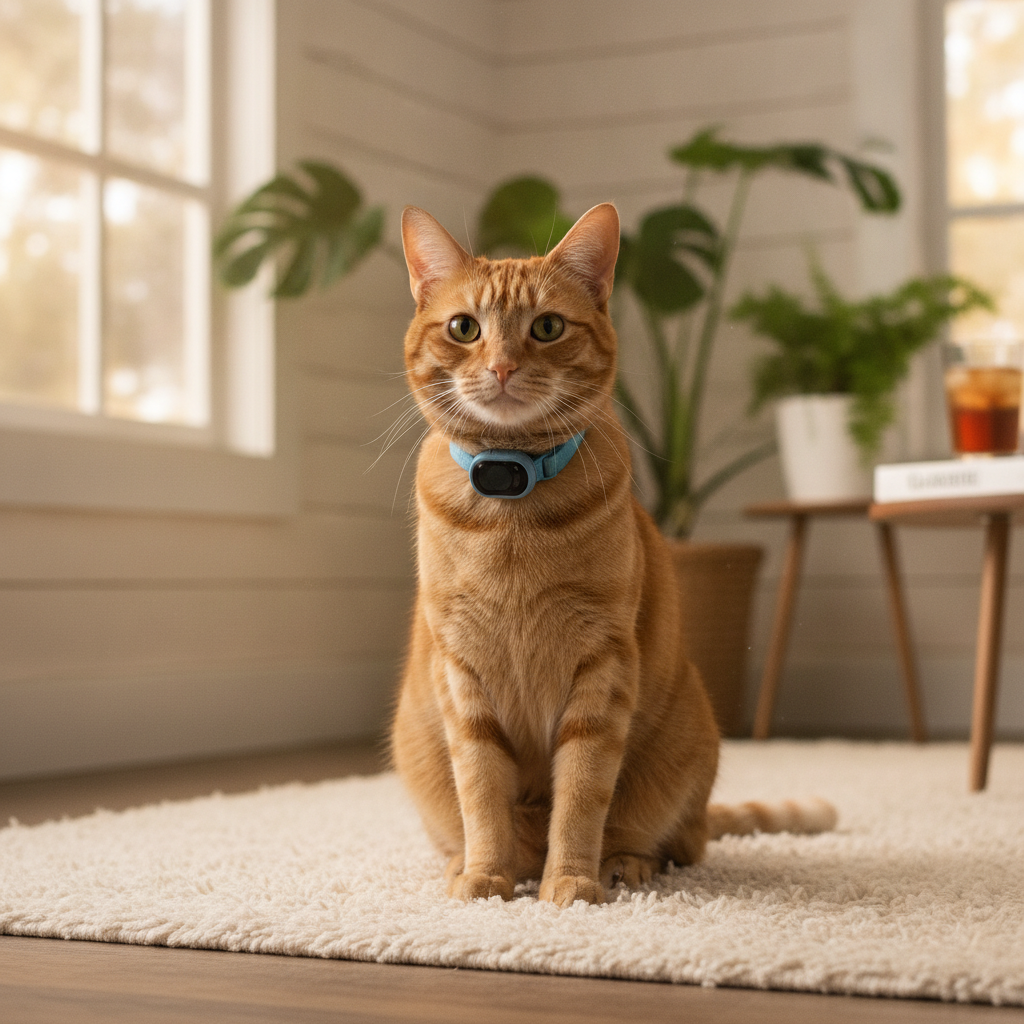
With mandatory cat microchipping now in effect in England, awareness of cat identification is higher than ever. For outdoor cats, GPS trackers under 30 grams are increasingly available. The RCVS and veterinary consensus suggests that a tracker should weigh no more than roughly 5% of the pet's body weight to avoid discomfort. For a 4 kg cat, that means a maximum device weight of around 200 grams, which most current trackers comfortably fall within. Tractive offers a cat specific model that is popular in the UK. For monitoring a cat's behaviour while indoors, a dedicated How Indoor Pet Cameras Help You Monitor Behaviour While Away: What Normal Activity Looks Like and What Footage to Share With Your Vet or Sitter complements a GPS tracker well.
Decision Checklist
- Does your area have strong mobile coverage? Check Ofcom's coverage checker. If yes, cellular GPS trackers will perform well. If coverage is unreliable, consider Aorkuler or a Bluetooth tag as a backup.
- How often can you charge the device? If weekly charging is manageable, Tractive works well. If you prefer less frequent charging, Fi's extended battery life stands out.
- What is your budget over 3 to 5 years? Factor in subscription fees. PitPat's one off cost of around £149 to £169 could save hundreds of pounds over a decade compared to subscription models.
- Do you need health monitoring? Fi Series 3+ offers the most comprehensive behavioural and health data. If location alone is sufficient, simpler options cost less.
- Do you walk in rural or upland areas? Consider carrying a radio frequency tracker as backup, or combining a cellular tracker with a Bluetooth tag.
- Have you recently adopted a rescue dog? A GPS tracker during the settling in period is strongly recommended. Combine it with proper Spring Parasite Prevention: Mistakes UK Pet Owners Make and an initial health check.
Final Perspective
No GPS pet tracker is perfect. Battery claims are optimistic, accuracy degrades indoors and in urban canyons, and mobile coverage gaps remain a reality across much of rural Britain. However, the technology has improved substantially. The peace of mind a reliable tracker provides, especially for escape prone breeds, newly adopted dogs, or pets travelling to unfamiliar places, is difficult to overstate. The best tracker is the one that matches the owner's real daily routine, their local network infrastructure, and their pet's specific risk profile.
Frequently Asked Questions
Do I still need a GPS tracker if my dog is microchipped? ↓
Which GPS pet tracker works best in rural UK areas? ↓
Is PitPat worth the higher upfront cost compared to Tractive? ↓
Are GPS trackers safe for cats? ↓
Do I need a GPS tracker for an XL Bully registered under the exemption scheme? ↓

Priya Nair
Dog Breed Advisor & Adoption Counsellor
Dog breed advisor and adoption counsellor — honest breed comparisons and lifestyle matching for prospective owners.
Content Disclosure
This article was created using state-of-the-art AI models with human editorial oversight. It is intended for informational and entertainment purposes only and does not constitute veterinary medical advice. Always consult a licensed veterinarian for your pet's specific health needs. Learn more about our process.