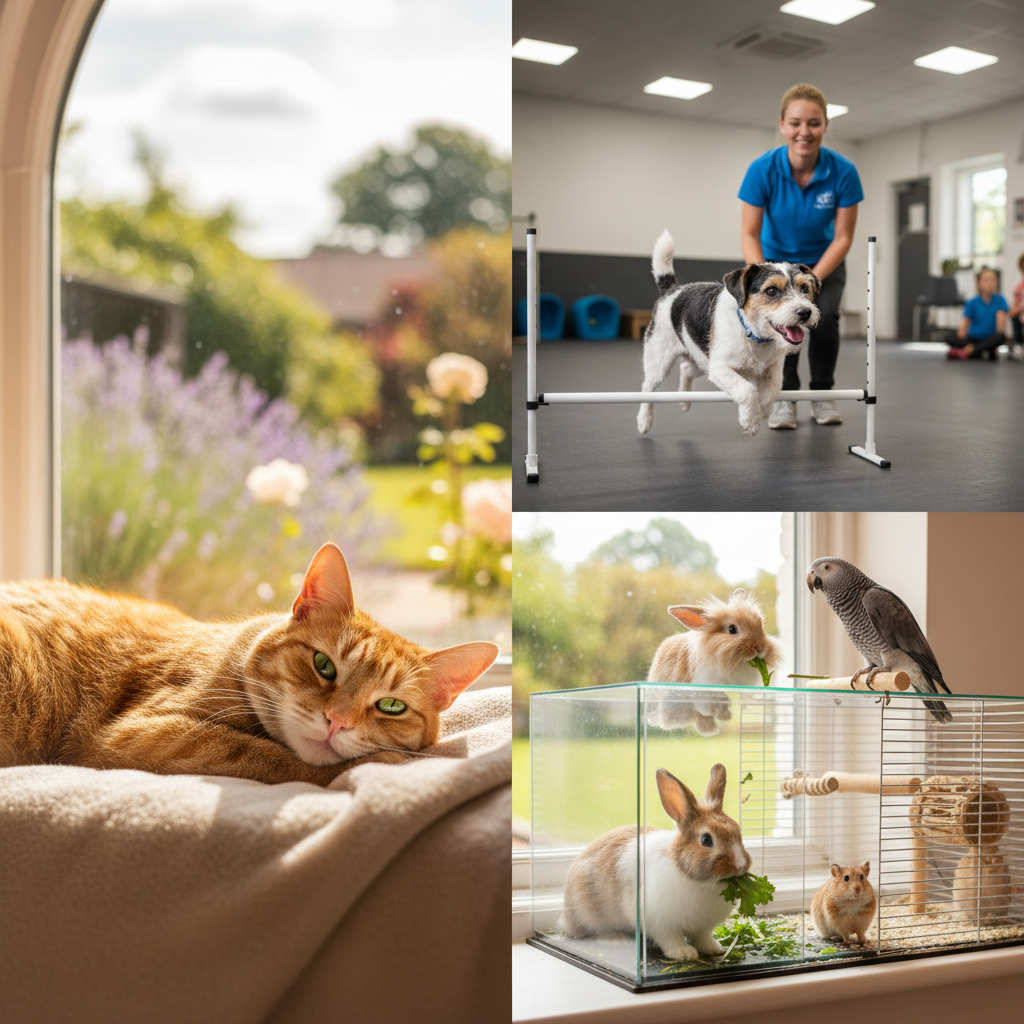
A UK focused guide for parents navigating the loss of a family pet during the long school summer holidays. Covers honest conversations with children, memory boxes, legal home burial, cremation choices, and Blue Cross bereavement support.
Key Takeaways
- The British school summer holidays (roughly mid July to early September in England and Wales, late June to mid August in Scotland) change how families experience pet loss because children are home and routines loosen.
- Honest, age appropriate language is preferred by UK bereavement charities; phrases like 'put to sleep' or 'gone to a farm' can confuse younger children.
- Home burial is legal on owned UK land under DEFRA guidance, provided the pet is not classed as hazardous waste and the grave is sufficiently deep.
- The Blue Cross Pet Bereavement Support Service, SCAS, and Cats Protection Paws to Listen all offer free UK based support by phone, email, or webchat.
- A surviving pet may show appetite, sleep, or behaviour changes; book a veterinary review if signs persist beyond two weeks.
- Warm, humid British summers can complicate aftercare timing, so contact your practice promptly to discuss collection or refrigeration.
Why Summer Holiday Grief Feels Different in the UK
The loss of a family pet is one of the most emotionally significant events a British household can face, and when it lands in the middle of the long school break, the dynamics shift markedly. Children are at home for six or seven continuous weeks in England and Wales, slightly longer in Scotland, and the routines that usually distract them from difficult feelings (school runs, after school clubs, weekend football) have paused. Parents juggling annual leave and remote work often find that grief surfaces unexpectedly during what was meant to be a relaxed family fortnight in Cornwall, the Lake District, or a caravan park on the Norfolk coast.
This guide draws on professional consensus from UK bodies including the British Veterinary Association (BVA), the Royal College of Veterinary Surgeons (RCVS), the Blue Cross, and the Society for Companion Animal Studies (SCAS) to help families support children, choose appropriate aftercare, and look after any surviving animal. It is intended for households across England, Scotland, Wales, and Northern Ireland, with notes where regional practice differs.
Recognising Grief in British Children and Pets
Children: Signs by Age Group
Childhood grief in the UK rarely mirrors adult grief. UK bereavement specialists describe it as 'puddle jumping': intense sadness one moment, racing around the garden with a water pistol the next. This is developmentally typical, not avoidance or coldness.
- Ages 3 to 5: Repeated questions ('When is Bonnie coming back from the vet?'), regression in toileting or sleep, and ongoing chats with the pet are common.
- Ages 6 to 9: Beginning to grasp permanence. May worry about grandparents, ask about the body, or develop tummy aches before bedtime.
- Ages 10 to 12: Often understand fully but mask feelings to protect parents. Watch for withdrawal, irritability, or reluctance to prepare for the new school year in September.
- Teenagers: Grief can be as profound as in adults, sometimes layered with guilt about not walking the dog more during revision or exam season. The mid August GCSE and A level results period can intensify emotions, so build in extra patience around those dates.
The Surviving Pet
Dogs, cats, rabbits, and house birds commonly respond to the loss of a bonded companion. Typical signs include reduced appetite, increased vocalisation, searching the deceased pet's bed or favourite spot, clinginess, or lethargy. Some previously timid animals become bolder once a dominant companion is gone. UK veterinary guidance suggests monitoring any change lasting more than two weeks, or any rapid weight loss, since underlying illness can mimic or accompany grief, particularly in senior pets.
Honest Conversations: What to Say
Clear Language, No Euphemisms
The Blue Cross and Child Bereavement UK both advise against euphemisms with young children. Phrases such as 'put to sleep', 'gone away', or 'lost' can cause genuine confusion, especially at bedtime or before a family flight from Manchester or Gatwick. Simple, factual language works better: 'Bonnie's body stopped working. She has died, and that means she will not come back. It is very sad.'
Sample Scripts by Age
- For a 4 year old: 'Bonnie was very poorly and her body could not get better. She has died. It is okay to feel sad, and it is okay to play too.'
- For an 8 year old: 'The vet helped Bonnie so she would not be in pain anymore. Her body stopped working peacefully. You can ask me anything.'
- For a 12 year old: 'This is one of the hardest parts of loving an animal. Your feelings might come and go all summer, and all of them are normal.'
Answering Their Questions
Children often ask whether the pet was frightened, whether something they did caused the death, or what happens to the body. Answer honestly within their developmental window and reassure them that nothing they did or failed to do caused the loss. Where euthanasia was involved, frame it as a kind decision made with the vet to prevent suffering, in line with RCVS guidance on end of life welfare.
Creating a Memory Box
Memory boxes are one of the most widely recommended UK bereavement activities for children. They give the unstructured holiday days a focus and produce a tangible keepsake the child can revisit as their understanding matures.
Choosing the Box
Any sturdy container works: a shoebox decorated with paint from a local craft shop, a wooden keepsake box, or a biscuit tin lined with fabric. Let the child lead on decoration.
What to Include
- The collar, ID tag, or microchip paperwork
- A clipping of fur (most UK practices will provide this on request)
- A clay or ink paw print, often offered as part of aftercare by UK pet crematoria
- Printed photographs, including silly ones from family holidays
- Handwritten letters from each family member
- Drawings from younger siblings
- A pressed flower from the garden, or a small jar of sand from a favourite beach in Devon, Pembrokeshire, or Northumberland
- The food bowl label or a favourite treat packet
Making It a Ritual
Set aside a quiet afternoon. Light a candle if appropriate, share a favourite memory each, and place items in together. Many UK families revisit the box on the anniversary, the pet's birthday, or whenever a child asks. Keep it accessible rather than hidden in a loft.
Burial and Cremation in the UK
Home Burial
Under DEFRA guidance, burying a pet in your own garden is generally lawful in the UK provided you own the property (not rented or leased without written permission), the pet is not classed as hazardous waste (some chemotherapy drugs and certain euthanasia agents may trigger this; ask your vet), and the grave is dug deep enough to prevent disturbance. A depth of around 0.6 to 0.9 metres (roughly two to three feet) is typical for a small pet, with greater depth for larger dogs such as Labradors, Retrievers, or German Shepherds. Avoid burial near boreholes, watercourses, or the vegetable patch. Wrap the body in cotton, wool, or a wicker casket rather than plastic.
Home burial can be deeply meaningful for children who want a place to visit. Planting a hardy British perennial above the grave, such as lavender, rosemary, or a small native fruit tree, creates a living memorial that copes well with the UK's wet winters and increasingly warm summers.
Communal Cremation
Most UK veterinary practices partner with a registered pet crematorium offering communal cremation, where several pets are cremated together and ashes are not returned. This is typically the most affordable option, often in the region of £30 to £80 for a small to medium pet depending on provider and area.
Individual Cremation
The pet is cremated alone and the ashes returned in a scatter tube or casket, usually within one to two weeks. UK costs typically range from around £100 to £300 depending on pet size, casket choice, and whether home collection or a viewing room is included. The Association of Private Pet Cremation (APPCC) publishes a code of practice, which is a useful benchmark when comparing providers in your area.
Aftercare Timing in Warm Weather
British summers are increasingly warm and humid, and a body should not be kept at home for long periods in July or August. Contact your veterinary practice or chosen crematorium promptly to arrange collection or refrigerated storage. For urgent out of hours guidance, use [LOCAL_VET_EMERGENCY_en-gb].
UK Bereavement Charities and Services
Blue Cross Pet Bereavement Support Service
The Blue Cross runs a long established, free, and confidential Pet Bereavement Support Service staffed by trained volunteers. Support is available by phone, email, and webchat, with hours published on their website. It is open to anyone grieving a pet, including children supported by a parent.
Other UK Resources
- Society for Companion Animal Studies (SCAS): maintains a directory of accredited UK pet bereavement counsellors.
- Cats Protection Paws to Listen: a dedicated grief line for those who have lost a cat.
- The Ralph Site: a UK non profit with an online memorial wall and community forum.
- Winston's Wish and Child Bereavement UK: specialist child grief charities whose resources complement pet specific support.
When to Reach Out
Contact a bereavement service if a child shows persistent sleep disruption, refuses to eat, expresses guilt that does not soften with reassurance, or if an adult is struggling to function. Early gentle support often prevents grief from becoming complicated, particularly when it overlaps with results day, family transitions, or returning to school in September.
Preparing for an Anticipated Loss
Where loss is expected, such as end of life care for a senior Cocker Spaniel or a Cavalier King Charles with heart disease, preparation softens the impact:
- Discuss euthanasia early with your RCVS registered vet, including whether home visits are available in your postcode.
- Talk with children in advance, in language matched to their age.
- Allow children to say goodbye if they wish, but never insist on attendance at the procedure itself.
- Plan a small ritual: a roast chicken supper for the dog, a final walk on a favourite footpath, a family photograph.
- Book holiday travel flexibly so the family is not forced to mask grief immediately afterwards.
Supporting a Surviving Pet
Maintain Routine
Walks, feeding times, and play sessions should continue at the same times. Routine is one of the most stabilising tools for a grieving animal, particularly when children's schedules are already loose. Keep dog walks during cooler parts of the day, ideally before 9am or after 7pm if temperatures exceed 22 to 25 degrees Celsius, since heat stress on top of grief can quickly deplete an older dog.
Quiet Investigation
Some UK behaviourists suggest that, where circumstances allow, a bonded surviving pet may briefly see or smell the deceased companion before removal. This is a personal choice and not always practical, but owners report it can reduce prolonged searching behaviour.
Gentle Enrichment
Introduce low pressure activities: a slow sniffari around a quiet local field, a puzzle feeder for a cat, or fresh forage for a rabbit. Avoid bringing in a new animal in the immediate weeks following loss; decisions about a new pet are best made several months later, once routines have settled.
Children and the Surviving Pet
Encourage children to help with care in age appropriate ways: refilling the water bowl, brushing, or simply sitting calmly nearby. This gives children agency and helps the surviving animal feel secure.
Veterinary Care for the Surviving Pet
Most grief related behaviour resolves within two to six weeks with steady support. Book a veterinary appointment if you observe:
- Appetite loss lasting more than 48 hours in cats or small mammals, or more than three to four days in dogs
- Unexplained weight loss measured in kg over a short period
- Excessive grooming, self mutilation, or sudden aggression
- Persistent night vocalisation
- Toileting accidents in a previously house trained pet
Your vet can rule out concurrent illness, which is especially important in senior pets, and may discuss anxiety support measures consistent with BVA guidance.
When to Seek Emergency Help
For Children
Contact your GP or NHS 111 if a child expresses thoughts of self harm, refuses food and fluids for more than 24 hours, shows extreme withdrawal that does not respond to gentle engagement, or experiences panic attacks. In a life threatening crisis, call 999.
For the Surviving Pet
Emergency veterinary care is warranted for collapse, repeated vomiting, complete refusal of water, laboured breathing, or any sudden severe behavioural change. For out of hours support, use [LOCAL_VET_EMERGENCY_en-gb]. Pet bereavement itself does not cause acute medical emergencies, but the stress of loss can unmask underlying conditions, particularly in older animals.
For Adults
Pet loss is a recognised form of disenfranchised grief in the UK. If you find yourself unable to work, sleep, or care for the family for more than two weeks, speak to your GP. The Blue Cross service and SCAS accredited counsellors can provide structured support alongside any NHS care.
A Final Word for British Families
The long British summer holidays can feel especially heavy when a beloved pet is no longer part of the household routine, whether that is the morning school run, the lunchtime garden mooch, or the evening sofa cuddle in front of the cricket. Yet the same weeks that amplify the absence also offer something rare and precious: uninterrupted time for honest conversation, shared rituals, and slow, family paced healing. Children guided gently through pet loss in a UK home often emerge with a richer understanding of love, responsibility, and the value of remembering well.
Frequently Asked Questions
Is it legal to bury our pet in the garden in the UK? ↓
How much does pet cremation usually cost in the UK? ↓
What UK support is available for a grieving child? ↓
Should we get a new pet straight away to help the children? ↓
Can my surviving dog or cat really grieve? ↓

TrustMyPets Editorial Team
Global Pet Care Experts
Multi-disciplinary editorial team — evidence-based pet care guidance across health, behaviour, and welfare.
Content Disclosure
This article was created using state-of-the-art AI models with human editorial oversight. It is intended for informational and entertainment purposes only and does not constitute veterinary medical advice. Always consult a licensed veterinarian for your pet's specific health needs. Learn more about our process.