Hong Kong's humid plum rain weeks can intensify joint stiffness and disorientation in older dogs. Learn the subtle behavioural signs to track and how to build calm, climate-controlled routines.
Key Takeaways
- Damp heat is a behavioural stressor, not just a comfort issue. Hong Kong's plum rain season (typically mid May through July) combines high humidity, warmth, and low barometric pressure, a combination many owners report worsens joint stiffness and disorientation in senior dogs.
- Track behaviour, not just mobility. Subtle changes in pacing, vocalisation, sleep timing, and orientation are often the earliest signals of pain or canine cognitive dysfunction (CCD).
- Indoor air-conditioned movement matters. Short, low-impact, predictable activity in a temperature and humidity controlled space supports both joints and mental engagement.
- Supplements are a veterinary conversation. Never start joint or cognitive supplements without consulting your vet, especially alongside existing medication.
- A daily observation journal for June and July gives your veterinary team objective data instead of vague impressions.
- Escalate appropriately. Sudden disorientation, distress vocalisation, or self-directed behaviour warrants prompt veterinary and, where relevant, certified behaviourist assessment.
Root Cause: Why Damp Heat Changes Senior Dog Behaviour
When an older dog suddenly seems restless, clingy, or confused during Hong Kong's plum rain weeks, owners often assume the dog is simply bored or seeking attention. The body language frequently tells a different story. Behaviour is the visible output of internal state, and in senior dogs that internal state is heavily shaped by two overlapping processes: musculoskeletal pain (most commonly osteoarthritis) and age-related neurological change (canine cognitive dysfunction).
Osteoarthritis is extremely common in ageing dogs. While the weather does not create arthritis, many owners and clinicians observe that cool, damp, low-pressure conditions appear to coincide with stiffer, more reluctant movement. The mechanisms are not fully proven, but plausible contributors include changes in barometric pressure affecting joint tissues, reduced spontaneous activity when it is uncomfortably humid, and disrupted sleep. Importantly, pain lowers an animal's tolerance threshold. A dog managing comfortably in dry spring weather may, under sustained damp heat, slide closer to the point where normal handling, stairs, or being touched provokes a reaction.
Cognitive decline operates on a parallel track. Canine cognitive dysfunction is a recognised, progressive neurodegenerative condition broadly analogous to dementia. The widely used framework for its signs is the DISHAA model: Disorientation, altered Interactions, Sleep-wake cycle disruption, House-soiling, changes in Activity, and increased Anxiety. Heat, poor sleep, and a monotonous indoor environment during long wet spells can all amplify these signs, making a dog that copes on a normal day appear noticeably more confused during a humid stretch.
Trigger Stacking in the Senior Dog
Behaviourists describe trigger stacking as the accumulation of multiple stressors that individually stay below a dog's coping threshold but together push it over. For a senior dog in plum rain season the stack might look like this: aching joints, a disrupted night of sleep, the disorientation of darker indoor light, the absence of normal outdoor walks, and the background discomfort of humidity. Any single factor is manageable. Together they can produce pacing, whining, or sudden irritability that seems to come from nowhere.
Is It Normal, or Is It a Problem?
Some slowing with age is expected. The goal is to distinguish ordinary ageing from changes that signal pain or cognitive decline requiring intervention.
Likely within the range of normal ageing: gradually shorter walks, a slightly longer warm-up before moving freely, more daytime napping, and mild stiffness after rest that eases once the dog is moving.
Warrants attention and tracking:
- Reluctance to rise, sit, or take stairs that worsens noticeably on damp days.
- New pacing, especially aimless wandering or circling indoors.
- Getting stuck behind furniture, staring at walls, or appearing lost in familiar rooms.
- Changes in vocalisation: new whining, night-time barking, or a different pitch or frequency of sound.
- Reversed or fragmented sleep, restless at night and flat during the day.
- Reduced response to its name or to familiar cues it previously knew well.
- Increased anxiety, clinginess, or conversely, withdrawal from family interaction.
Seek prompt veterinary care if you see sudden, severe disorientation, signs of acute pain (trembling, panting at rest, yelping when touched), repeated house-soiling that is out of character, or any self-directed behaviour such as persistent licking or chewing at a joint. Sudden behavioural change is a medical question first.
Environmental and Social Triggers Specific to Plum Rain Season
Understanding what changes for your dog in June and July helps you intervene at the source rather than only managing symptoms.
Climate Triggers
High humidity reduces a dog's ability to cool through panting, which raises baseline stress and can shorten temper. Damp flooring and slippery tiles, common in Hong Kong apartments during wet spells, make stiff dogs feel insecure underfoot, which can itself produce reluctance and hesitation that looks like confusion. Lower indoor light during overcast days may worsen disorientation in dogs with declining vision or cognition.
Routine and Social Triggers
When heavy rain cancels walks, dogs lose both physical exercise and the predictable structure that anchors their day. For a cognitively declining dog, predictability is protective; its loss is a genuine stressor. Reduced mental stimulation during long indoor stretches can accelerate the appearance of restlessness and night-time activity. Crowded, noisy indoor environments, or a household whose own schedule shifts during the rainy season, add further unpredictability.
Behaviour Modification and Support Techniques
For senior dogs, the aim is rarely to train away a behaviour through pressure. It is to reduce the underlying discomfort, rebuild predictability, and gently re-engage the brain and body. Punishment and flooding (forcing a frightened or confused dog to endure what distresses it) are never appropriate and can worsen anxiety and erode trust.
1. Indoor Air-Conditioned Movement Routines
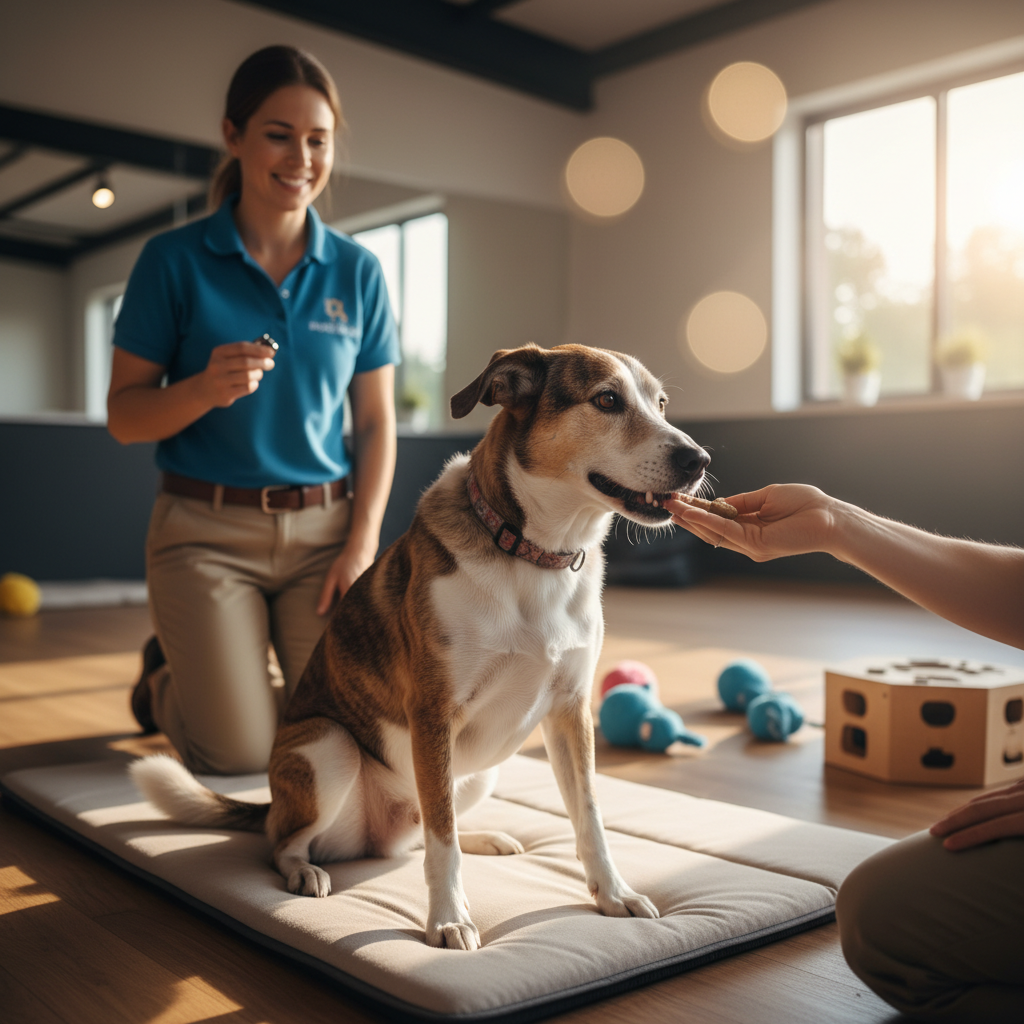
Climate control is one of the most practical interventions available to Hong Kong owners. Aim to keep the dog's main living area cool and dehumidified during the worst of the day. Within that controlled space, build short, frequent, low-impact movement sessions rather than one demanding outing.
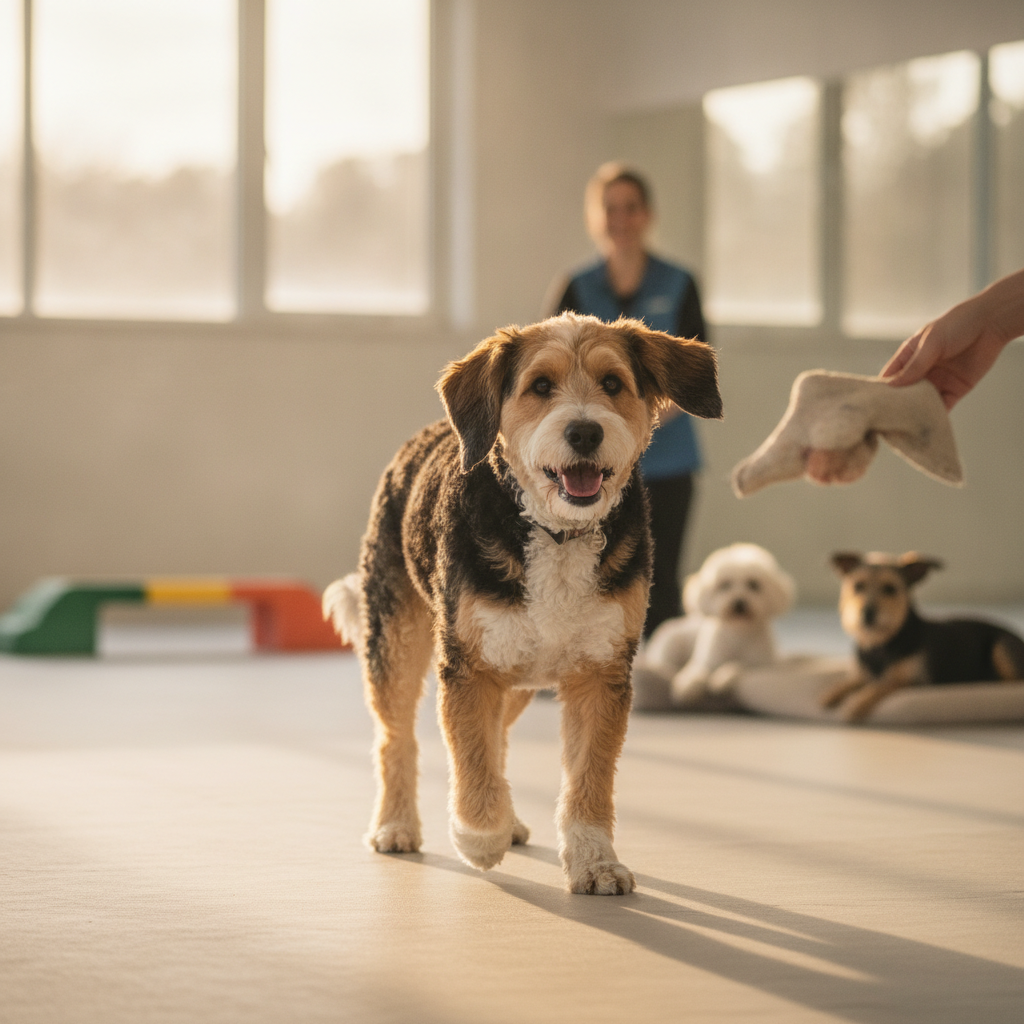
- Little and often. Two to four gentle five to ten minute sessions usually serve a senior dog better than a single long effort.
- Secure footing. Lay non-slip mats or runners along the dog's usual routes so stiff joints feel stable. Insecurity on slick tiles often masquerades as reluctance or confusion.
- Gentle warm-up. Let the dog move at its own pace for the first minutes before any stairs or more demanding movement.
- Scent and search games. Scattering a few pieces of the dog's normal food on a snuffle mat or around a room provides low-impact physical movement and valuable cognitive engagement, which directly supports dogs showing early CCD signs.
These principles echo broader guidance on keeping dogs fit through a wet winter, adapted here for an older, stiffer dog in a humid climate.
2. Predictable Daily Structure
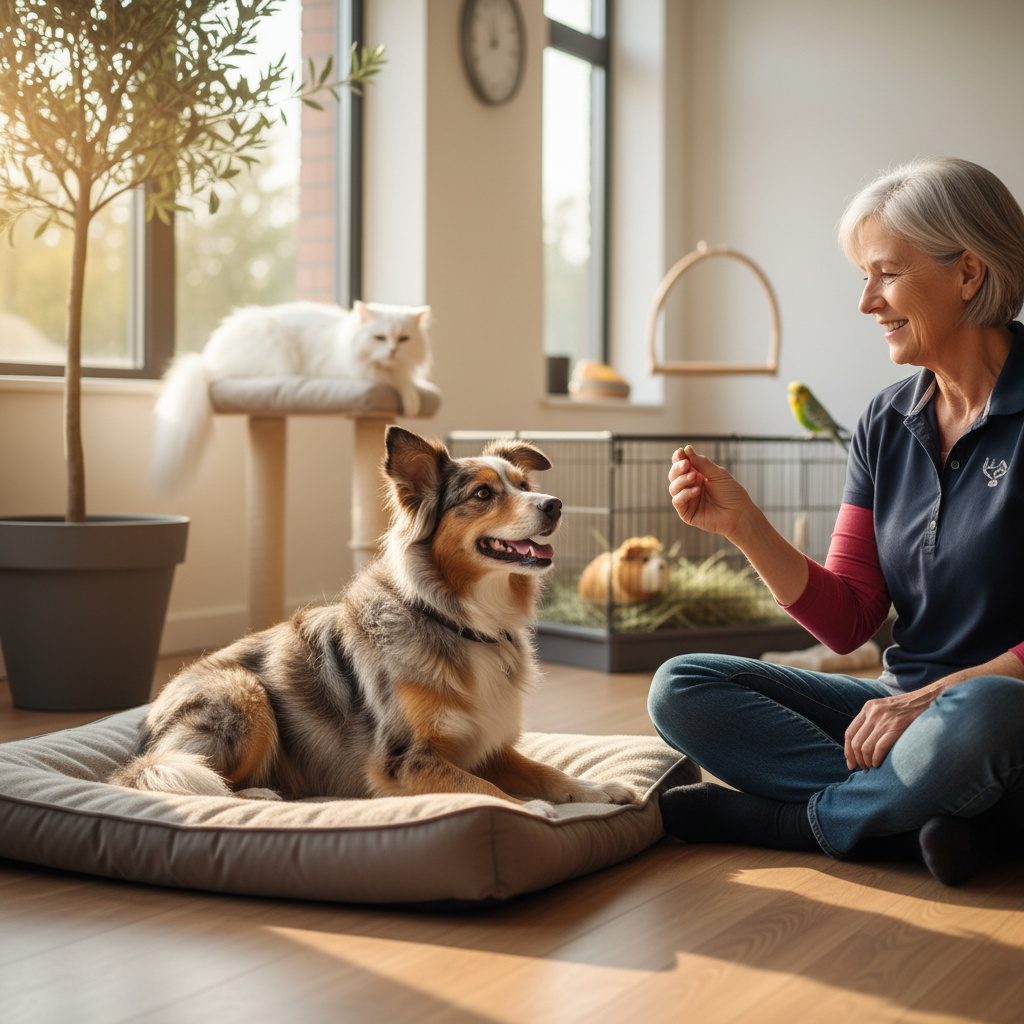
Cognitive support science consistently points to enrichment and routine. Feed, rest, toilet, and activity at consistent times. A stable daily map reduces the anxiety component of CCD and gives a disoriented dog reliable anchors. Keep furniture and the dog's bed, water, and food in fixed positions so a dog with failing vision or cognition can navigate from memory.
3. Counter-Conditioning Around Discomfort Points
If your dog has begun to anticipate discomfort, for example flinching when lifted onto a sofa or hesitating at a slippery doorway, you can use classical counter-conditioning to change the emotional association. Pair the previously worrying moment with something reliably pleasant (a favourite low-calorie treat or calm praise) while keeping the dog comfortably below its stress threshold, the point at which it begins to show worry. Work in tiny steps. If the dog tenses, freezes, or pulls away, you have moved too fast. For pain-related flinching, address the pain with your vet first; no amount of conditioning replaces analgesia.
4. Supporting Sleep
Sleep-wake disruption is both a symptom and an aggravator of cognitive decline. A cool, quiet, consistently dark sleeping area helps. Some owners find a soft night light reduces disorientation for dogs that wake confused, while others find that gentle daytime activity reduces night-time pacing by restoring a more normal rhythm. The calm-environment principles in our guide to helping anxious small dogs in a quiet indoor setting translate well to a senior dog's home rest space.
5. Reading Fear, Anxiety, and Stress (FAS)
The Fear Free FAS scale encourages owners to read subtle signals: lip licking, yawning out of context, a tucked tail, whale eye (whites of the eyes showing), turning away, or trembling. In a senior dog these signs may accompany pain or confusion rather than a classic fear trigger. Learning to spot low-level FAS early lets you intervene before the dog escalates to vocalising or panic.
Management Strategies While You Work
Behaviour and comfort take time to improve. In the meantime, sensible management protects your dog's welfare:
- Modify the environment. Ramps instead of jumps, raised food and water bowls for stiff necks, and orthopaedic bedding reduce daily strain.
- Manage temperature actively. Beyond air conditioning, consider how your dog rests and recovers; our science guide to canine cooling mats and vests explains how to use cooling tools safely without overcooling an older dog.
- Avoid the heat of the day. Where outdoor toileting is still needed, choose cooler, drier windows and keep outings brief.
- Reduce demands. Lower expectations for obedience and tricks during difficult weather. A dog in discomfort or confusion is not being stubborn.
- Keep stress events apart. Avoid stacking grooming, vet trips, visitors, and storms on the same day where you can.
Discussing Supplements With Your Vet
Owners frequently ask about joint and cognitive supplements during the rainy season. The responsible position is clear: these are a conversation to have with your veterinarian, not a self-directed experiment. Categories commonly discussed in veterinary settings include omega-3 fatty acids, certain joint-support compounds, and diets or supplements formulated for cognitive support. Whether any of these is appropriate, and at what dose, depends on your individual dog's diagnosis, kidney and liver function, current medication, and the risk of interactions.
This guide deliberately does not name products or doses. Supplements are not a substitute for a proper veterinary work-up. Persistent stiffness deserves an actual osteoarthritis assessment, and behavioural change deserves a medical screen to rule out pain, metabolic disease, and sensory loss before it is attributed to ageing. Bring your observation journal (below) to that appointment so the conversation is grounded in data.
A Daily Observation Journal for June and July
A simple daily log transforms vague worry into useful clinical information and helps you and your vet see whether a treatment or routine change is actually working. Keep it brief and consistent. Each day, note:
- Weather and indoor climate: outdoor humidity, whether air conditioning and a dehumidifier were running, and approximate indoor temperature.
- Mobility: stiffness on rising (none, mild, marked), willingness on stairs, any limping or favouring of a limb.
- Pacing and orientation: episodes of aimless wandering, circling, getting stuck, or staring; note time of day.
- Vocalisation: new or increased whining, barking, or night sounds, with rough timing and any obvious trigger.
- Sleep: night-time wakings, daytime flatness, restlessness.
- Interaction and appetite: clingy, withdrawn, or normal; eating and drinking as usual.
- Toileting: any accidents or changes.
- FAS signals: lip licking, panting at rest, trembling, whale eye.
A consistency tip: log at the same times each day, ideally morning and evening, and use a simple 0 to 3 scale for stiffness, pacing, and vocalisation so trends are easy to graph. Patterns that line up with humid days are exactly the kind of objective evidence your veterinary team values. Owners often discover their dog's hardest hours are predictable, which lets you pre-empt them with cooling, movement, and reassurance.
When to Consult a Certified Behaviourist or Veterinary Behaviourist
Reach out for professional behavioural support, alongside your primary vet, when:
- Anxiety, night-time distress, or pacing is severe, escalating, or not improving with environmental and medical management.
- You see any aggression, even mild, that is new for your dog. New irritability in a senior dog is frequently rooted in pain and should be assessed, never punished.
- There is self-directed behaviour such as compulsive licking, or signs of panic.
- You feel out of your depth or your dog's welfare and your bond are suffering.
Look for credentials such as a Certified Applied Animal Behaviourist (CAAB), an IAABC certified consultant, or a veterinary behaviourist, professionals who work from humane, science-based principles and reject punishment and flooding. A veterinary behaviourist can also coordinate medical and behavioural treatment, which matters enormously for senior dogs where pain and cognition intertwine.
Caring for an ageing dog through Hong Kong's plum rain season is, at its heart, an exercise in close observation and gentle adjustment. The damp heat will pass, but the habits you build now (a cool, predictable environment, short joint-friendly movement, attentive tracking, and an open dialogue with your vet) protect your dog's comfort and dignity well beyond July. For households juggling other seasonal stressors, our plan for senior dogs and summer fireworks applies the same calm, threshold-aware approach.
Frequently Asked Questions
Does humid weather really make my senior dog's arthritis worse? ↓
How can I tell the difference between normal ageing and cognitive decline? ↓
What indoor exercise is safe for a stiff senior dog during heavy rain? ↓
Should I give my dog joint or cognitive supplements during plum rain season? ↓
When should I involve a certified behaviourist? ↓

David Okafor
Certified Animal Behaviourist
Certified animal behaviourist — science-based strategies for fear, anxiety, reactivity, and behavioural challenges.
Content Disclosure
This article was created using state-of-the-art AI models with human editorial oversight. It is intended for informational and entertainment purposes only and does not constitute veterinary medical advice. Always consult a licensed veterinarian for your pet's specific health needs. Learn more about our process.