A practical UK guide to using automatic cat feeders for weekend getaways. Covers food safety in British climates, legal welfare duties, and backup plans every cat owner needs.
Key Takeaways
- Smart feeders can reliably dispense dry food on a schedule, but under the Animal Welfare Act 2006 you remain legally responsible for your cat's welfare at all times, including when you are away.
- Portion accuracy varies by feeder type and kibble shape; dispensing errors of 10 to 20 percent are common with gravity and rotating tray models.
- Wi-Fi and app connectivity can fail without warning, so always choose a feeder that works offline as a baseline.
- Wet food feeders carry food safety risks after roughly 2 to 4 hours at typical UK indoor room temperature (around 18 to 21 °C).
- Every weekend away plan should include a backup caregiver, multiple water sources, and sufficient clean litter provision.
Your Legal Duty of Care
Before discussing feeders, it is worth noting that cat owners in England and Wales have a legal obligation under the Animal Welfare Act 2006 (with equivalent legislation in Scotland and Northern Ireland) to ensure their pet's needs are met. These needs include a suitable environment, a suitable diet, the ability to exhibit normal behaviour, housing with or apart from other animals as appropriate, and protection from pain, suffering, injury, and disease. Leaving a cat entirely alone for a weekend with only an automatic feeder could, in a worst case scenario, fall short of these requirements. The British Veterinary Association (BVA) recommends that cats left for more than 24 hours should have at least one daily check from a responsible person.
Frequently Asked Questions
1. Can a smart feeder handle all my cat's meals for a full weekend?
For dry food, many modern smart feeders can reliably dispense scheduled meals across a two to three day window. However, food delivery is only one aspect of your cat's care. A feeder cannot refill a water fountain, scoop a litter tray, spot signs of illness, or intervene if something goes wrong. Professional pet care guidelines from bodies such as International Cat Care (based here in the UK) consistently recommend daily human check-ins for cats left longer than 24 hours. Think of the feeder as one layer of a broader safety plan. If you are considering hiring a professional pet sitter for those daily visits, look for individuals with recognised qualifications and insurance, and always request references.
2. How accurate are automatic feeders with portion sizes?
Accuracy depends on the feeder design and your choice of kibble. Hopper style feeders with auger or conveyor mechanisms tend to deliver within 5 to 10 percent of the target amount. Rotating tray feeders use pre-portioned compartments, which removes dispensing variability but locks you into fixed meal sizes. Gravity feeders are the least precise, often leading to overeating. The World Small Animal Veterinary Association (WSAVA) stresses the importance of accurate calorie control, particularly for overweight cats. With feline obesity rates in the UK estimated to be significant by veterinary surveys, portion accuracy genuinely matters. Weigh a few test portions with a kitchen scale before leaving to verify the feeder's accuracy with your specific food brand.
3. Can I use wet food in a smart feeder over a weekend?
This is strongly discouraged. Wet cat food at typical UK indoor temperatures of around 18 to 21 °C becomes a bacterial growth risk after approximately 2 to 4 hours. Some feeders include ice packs or sealed lids to extend freshness, but even these typically keep food safe for only 4 to 8 hours. Over a 48 to 60 hour weekend, no consumer grade feeder can safely maintain wet food through multiple meals. Cats that eat exclusively wet food present a genuine challenge; in those cases, arranging for a pet sitter, a cattery, or asking a trusted neighbour to call in is the safer approach.
4. What happens if the Wi-Fi goes down while I am away?
UK broadband outages, while generally brief, do occur, particularly during storms or scheduled maintenance. A well designed smart feeder stores its feeding schedule on the device itself and dispenses meals regardless of internet connectivity. If the feeder relies entirely on cloud based commands, a broadband outage or router reset could mean missed meals. Before purchasing, confirm the feeder supports offline scheduling. When connectivity drops, you will typically lose remote monitoring, camera access, and push notifications, but meals should still dispense on time.
5. How do I prevent the feeder from jamming?
Jams are the worst case scenario for a weekend trip. Effective prevention strategies include: using uniformly shaped, medium sized kibble as recommended by the feeder manufacturer; not overfilling or underfilling the hopper; cleaning the dispensing mechanism before each trip; and completing a full 24 hour test run at home before relying on it unsupervised. Some premium feeders include jam detection sensors that send alerts to your phone, though these only work while connectivity is maintained. In multi-cat households, two feeders provide useful redundancy and help reduce food guarding.
6. Will my cat figure out how to break into the feeder?
Cats are remarkably persistent problem solvers. Hopper style feeders with twist lock lids and narrow dispensing channels tend to be the most tamper resistant. Tray style feeders with simple snap lids are the most vulnerable. Heavier feeders or those with anti-tip bases are worth considering. Some owners secure feeders to a wall or place them inside a protective enclosure. It is worth testing your cat's determination well before your trip, especially with breeds known for their intelligence and dexterity such as Siamese, Bengal, or British Shorthair cats.
7. How many water sources should I leave?
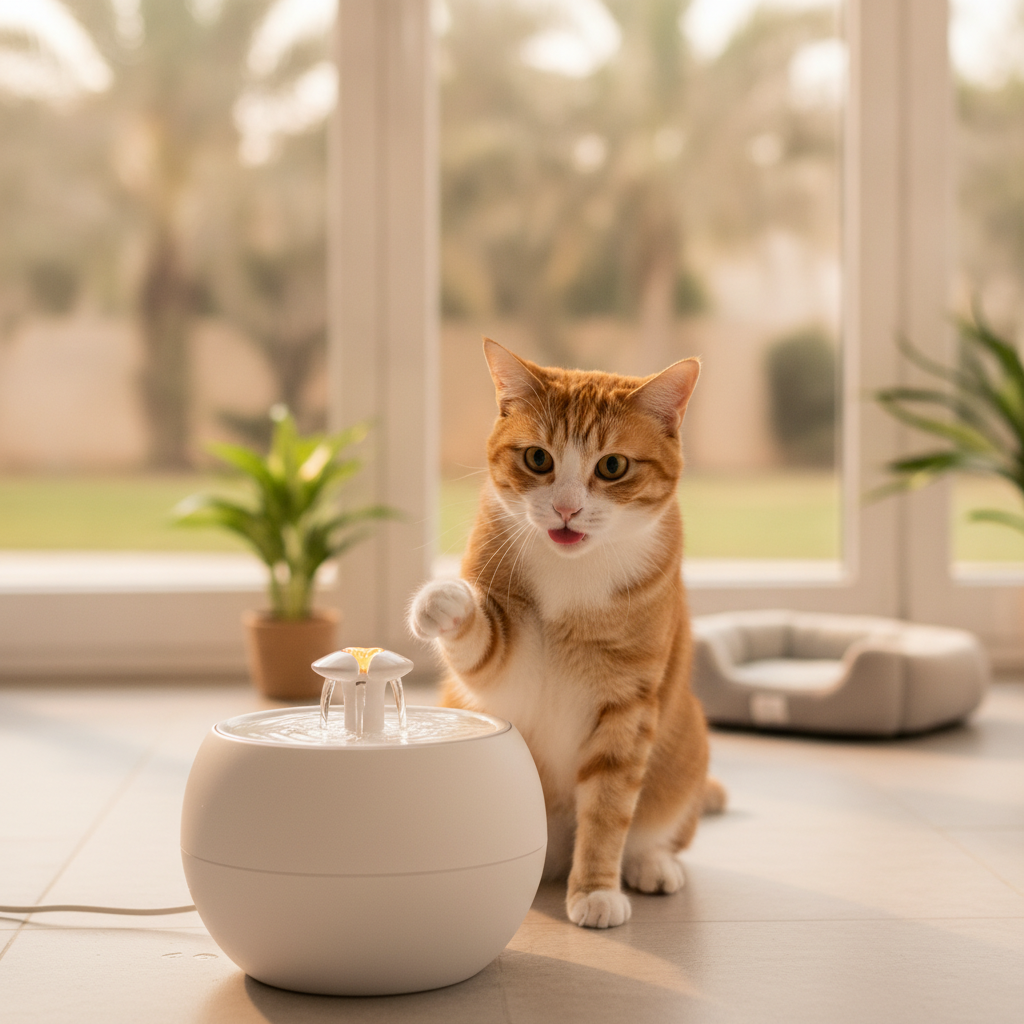
At a minimum, two independent water sources are recommended. A pet water fountain with a filter makes a good primary source, and a heavy, tip resistant bowl of fresh water serves as backup. Cats on dry food diets need adequate hydration, and a single water bowl is a single point of failure. Some owners leave a third water station in a different room. UK tap water is generally safe for cats, so there is no need to use bottled water. Equally important is litter provision; the standard guideline is one tray per cat plus one extra, all freshly cleaned before you leave.
8. Should I get a feeder with a camera?
A built in camera offers genuine peace of mind, letting you visually confirm that food has been dispensed and your cat is eating. However, camera functionality depends on working broadband. Some feeders offer two way audio, which may comfort certain cats but can startle others. A camera does not replace a physical check-in; it is an additional monitoring layer only.
9. Can I use a smart feeder for a cat with diabetes or another medical condition?
Cats with diabetes, chronic kidney disease, or other conditions requiring precise meal timing and medication should generally not be left with only an automatic feeder. Diabetic cats receiving insulin injections need a human to administer the medication and monitor for hypoglycaemia. Even cats on oral medication cannot be guaranteed to consume the dose from a feeder. Veterinary consensus is clear: medically complex cats need hands-on care during absences. Discuss a plan with your vet or arrange professional in-home sitting.
Contact your registered vet's out-of-hours service or find your nearest Vets Now emergency clinic.
All UK vet practices must provide 24/7 emergency cover. Your vet's answerphone will direct you to the on-call service.
10. What is the ideal test period before trusting a new feeder?
Most experienced owners and pet care professionals recommend at least one to two weeks of supervised use. During this period, verify portion accuracy with a kitchen scale, observe whether your cat eats comfortably from the feeder, check for jamming or dispensing issues, confirm that the app and notifications work reliably, and test what happens during a simulated power or Wi-Fi outage. Run through multiple full daily cycles to catch intermittent problems.
11. What if the power goes out?
Many smart feeders include battery backup, typically using D cell or AA batteries to keep the dispensing schedule running during a power cut. Battery backup usually does not power the camera or Wi-Fi module, only the motor and clock. Install fresh batteries before every trip, even if the feeder is normally plugged in. Some feeders lack battery backup entirely, making them unsuitable for unsupervised use. UK power cuts are generally resolved quickly, but winter storms can occasionally cause longer outages, making battery backup essential.
12. Is it ever truly safe to leave a cat alone for a whole weekend?
For a healthy adult cat with no medical conditions, a well prepared 48 hour absence is generally manageable with the right setup: an automatic feeder for dry food, multiple water sources, clean litter trays (at least two), a safe and temperature controlled environment, and daily check-ins from a friend, neighbour, or professional sitter. During summer months, UK homes can overheat, especially south facing rooms and conservatories, so ensure adequate ventilation and shade. Kittens, senior cats, cats with chronic conditions, and cats with separation anxiety should not be left alone for a full weekend under any circumstances.
UK Microchipping and Identification
Since June 2024, microchipping has been compulsory for cats in England. If your cat escapes while you are away, a registered microchip is the single most reliable way to be reunited. Before any trip, confirm your contact details are up to date on the microchip database. This is especially important if a neighbour or sitter is checking in, as they should know the microchip number and your vet's details in case of emergency.
Seasonal Considerations for UK Cat Owners
The UK's temperate maritime climate brings specific considerations. In winter, homes can become cold if heating is on a timer or fails; ensure the thermostat is set to maintain a comfortable temperature (around 18 °C minimum) throughout your absence. In increasingly warm British summers, indoor temperatures can climb unexpectedly, which accelerates wet food spoilage and increases your cat's water requirements. Keep curtains partially drawn in south facing rooms and ensure fresh air circulation where safe to do so.
Myth vs Reality
Myth: A smart feeder and a water fountain mean my cat is fully taken care of for the weekend.
Reality: Under the Animal Welfare Act 2006, you must meet five welfare needs. Food and water are only two of many requirements. Litter tray hygiene, environmental safety, and emergency response all require human involvement.
Myth: Wi-Fi connected feeders always let you monitor meals remotely.
Reality: Wi-Fi dependent features fail when broadband drops. Only feeders with local onboard scheduling continue dispensing reliably during outages.
Myth: Automatic feeders are perfectly accurate with portion sizes.
Reality: Most consumer feeders have a margin of error from 5 to 20 percent depending on kibble type and mechanism. Gravity feeders offer the least control.
Myth: If the feeder has a camera, nobody needs to physically check on the cat.
Reality: Cameras cannot scoop litter trays, refill water, administer medication, or help a cat in distress. They supplement monitoring; they do not replace caregiving.
Quick Reference Fact Box
- Maximum recommended alone time (healthy adult cat): 24 to 48 hours, with at least one daily human check-in.
- Typical dry food feeder portion accuracy: Within 5 to 15 percent for hopper and auger models; less predictable for gravity models.
- Wet food safety at UK room temperature (18 to 21 °C): Approximately 2 to 4 hours.
- Battery backup runtime: Typically 3 to 6 months on standby; check manufacturer specs for active dispensing duration.
- Recommended test period before a trip: 1 to 2 weeks of supervised daily use.
- Minimum water sources for a weekend: 2 independent sources in different locations.
- Minimum litter trays for a weekend: 2 clean trays (one per cat plus one extra).
- UK legal requirement: Cat microchipping compulsory in England from June 2024; similar requirements across devolved nations.
Final Word
Smart automatic feeders are a genuinely useful tool for UK cat owners who travel, but they work best as one component of a thoughtful weekend plan. The feeder handles scheduled dry food delivery. Everything else, from fresh water to litter tray hygiene to emergency response, requires backup systems, redundancy, or a trusted person stopping by. Your obligations under the Animal Welfare Act 2006 do not pause when you go away for the weekend. Test thoroughly, plan for failures, keep your cat's microchip details current, and always have a human safety net in place.
Frequently Asked Questions
Can a smart feeder legally cover my cat's needs for a whole weekend in the UK? ↓
How long does wet cat food last in a feeder at typical UK room temperature? ↓
Is cat microchipping relevant when using automatic feeders for a weekend away? ↓
What should I do about home temperature for my cat during a UK weekend absence? ↓
How do I find a reliable cat sitter for daily check-ins in the UK? ↓

Hannah Cole
Pet Owner Community Advisor
Pet owner community advisor — calm, clear answers to the questions every pet parent asks.
Content Disclosure
This article was created using state-of-the-art AI models with human editorial oversight. It is intended for informational and entertainment purposes only and does not constitute veterinary medical advice. Always consult a licensed veterinarian for your pet's specific health needs. Learn more about our process.