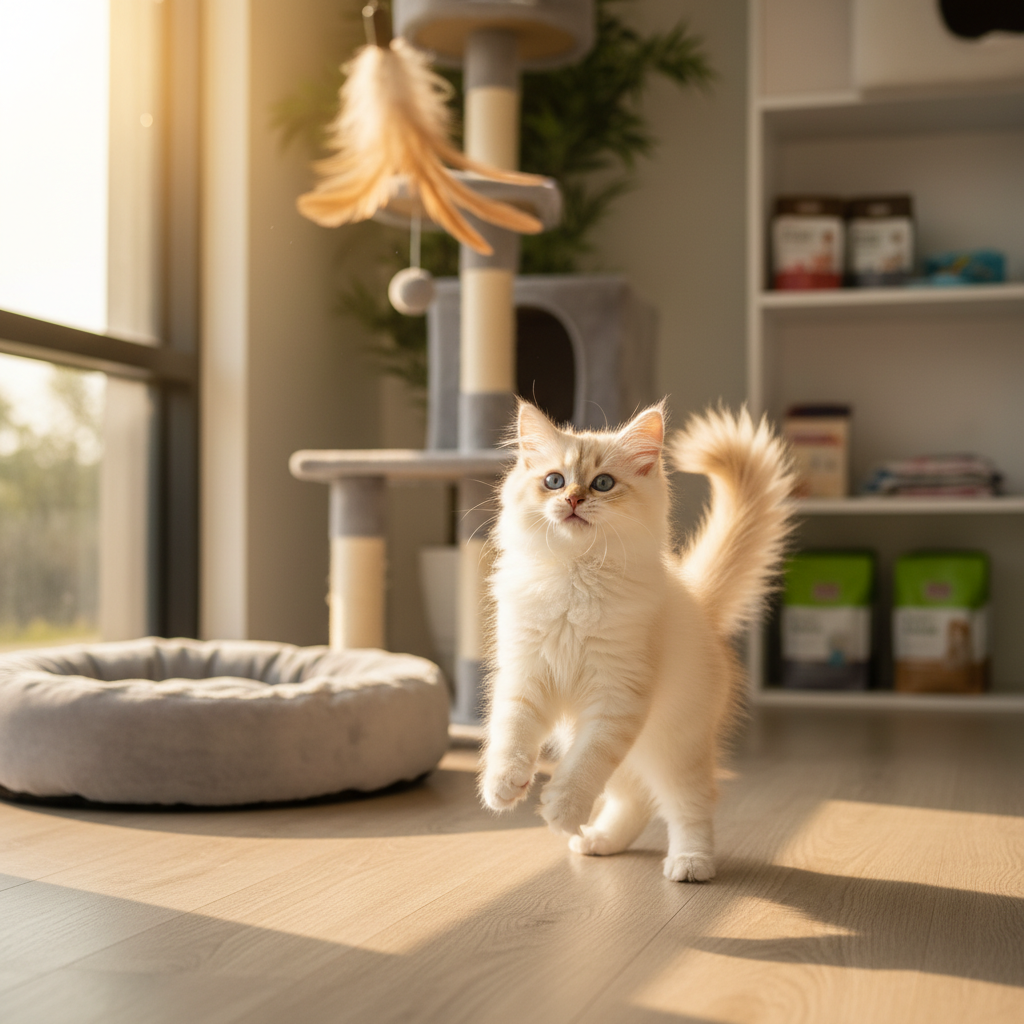
A comprehensive checklist for new kitten owners in Hong Kong, covering vaccinations, high-rise safety, year-round parasite prevention, and local regulations. Tailored for subtropical living in compact urban flats.
Key Takeaways
- Hong Kong's subtropical climate means fleas, ticks, and heartworm are active year round, not just in spring. Continuous prevention is essential from day one.
- Rabies is not present in Hong Kong and rabies vaccination is not compulsory for cats. Core vaccines (FVRCP) remain strongly recommended starting at 6 to 8 weeks of age.
- High-rise syndrome is a serious risk in Hong Kong's densely built environment. Secure window grilles and balcony mesh are non-negotiable for cat households.
- Microchipping is not yet legally required for pet cats in Hong Kong, but is strongly recommended by the SPCA (HK) and veterinary professionals.
- De-sexed cats are permitted in public housing estates managed by the Housing Authority, but tenants should confirm conditions with their estate office.
Why Hong Kong Kittens Need a Local Checklist
Spring marks peak kitten season in Hong Kong, with shelters such as the SPCA (HK), Hong Kong Paws Foundation, and the AFCD (Agriculture, Fisheries and Conservation Department) rehoming facility seeing a surge of arrivals from March through May. However, raising a kitten in Hong Kong presents challenges that differ significantly from temperate climates. Compact flat layouts, floor-to-ceiling windows in high-rise buildings, year-round parasite pressure, and high ambient humidity all shape the way responsible owners should prepare. This checklist addresses those Hong Kong realities step by step.
Vaccination Timeline for Hong Kong Kittens
Core Vaccines
The World Small Animal Veterinary Association (WSAVA) guidelines, widely followed by Hong Kong veterinary clinics, recommend core vaccination for all kittens regardless of indoor or outdoor status. Core vaccines protect against:
- Feline panleukopenia (FPV)
- Feline calicivirus (FCV)
- Feline herpesvirus 1 (FHV-1)
These three are typically combined into a single FVRCP injection. The standard schedule is:
- 6 to 8 weeks: First FVRCP dose
- 12 to 14 weeks: Second FVRCP booster
- 16 to 18 weeks: Third FVRCP booster
- 12 months later: First annual booster, then every 3 years as per current WSAVA guidance
An important Hong Kong distinction: rabies is classified as absent from the territory. There is no legal requirement for cats to receive a rabies vaccination domestically. Rabies vaccination is only necessary if the cat will be travelling internationally. This contrasts with many other regions where rabies vaccination is compulsory.
Non-Core Vaccines
Depending on lifestyle risk, a veterinarian may recommend:
- Feline leukaemia virus (FeLV): Recommended for kittens, especially those with any outdoor access, including unsecured balconies or rooftop areas common in village housing.
- Chlamydophila felis: Sometimes recommended in multi-cat households or for cats adopted from high-density shelter environments.
Vaccination costs in Hong Kong typically range from $300 to $800 HKD per visit, depending on the clinic and the combination of vaccines administered. Always request an itemised vaccination record at adoption and share it with your veterinarian to avoid duplication or gaps.
Microchipping in Hong Kong: What Cat Owners Should Know
Unlike dogs, which must be licensed and microchipped under the Rabies Ordinance (Cap. 421) administered by the AFCD, cats in Hong Kong are not currently subject to a legal microchipping mandate for general pet ownership. However, since April 2024, cats sold by licensed animal traders must be microchipped before sale.
Veterinary consensus strongly favours microchipping for all cats. Key details:
- Hong Kong uses the AVID 9-digit microchip system. Ensure the chip is registered with up-to-date contact details.
- Microchipping can be done at the first veterinary visit and typically costs between $200 and $500 HKD.
- A microchip is not a GPS tracker. It is a passive transponder readable by scanners at veterinary clinics, the SPCA, and AFCD facilities.
- In a city where open windows, shared corridors, and building maintenance access can lead to escapes, microchipping is one of the most reliable ways to reunite a lost cat with its owner.
High-Rise Safety: A Hong Kong Priority
"High-rise syndrome," the veterinary term for injuries sustained from falls, is a well-documented emergency in Hong Kong. With the majority of the population living in high-rise flats, window and balcony safety deserves dedicated attention:
- Window grilles: Many older Hong Kong flats have metal window grilles with gaps wide enough for a kitten to slip through. Fit additional fine mesh (stainless steel or heavy-duty nylon) on the interior side of all openable windows.
- Balconies and utility platforms: These must be fully enclosed with secure mesh. Standard mosquito netting is not strong enough to hold a cat's weight.
- Corridor doors: In Hong Kong's multi-unit buildings, a kitten that slips out of the front door may access stairwells, refuse rooms, or lift lobbies. Fit a door stopper or secondary barrier at your entrance during the kitten's settling-in period.
- Air conditioning units: External AC units often have gaps or vents near windows. Check that these do not create escape routes.
Indoor Setup for Compact Hong Kong Flats
The Safe Room (First 3 to 7 Days)
Even in a small flat, designating a single room or a partitioned area as the kitten's initial territory is essential. This space should contain:
- A litter box placed away from food and water (in compact flats, the bathroom often serves as the litter area)
- Fresh water in a stable, shallow bowl
- Age-appropriate kitten food
- A covered hiding spot: a cardboard box with a blanket works well
- A vertical scratching post (space-efficient and suits Hong Kong's smaller living areas)
- A few safe toys without detachable small parts, string, or ribbon
Kitchen and Living Area
- Install child locks on cabinets containing cleaning products. In open-plan layouts common in newer Hong Kong flats, the kitchen is not a separate room, so extra vigilance is required.
- Store toxic human foods (onions, garlic, grapes, chocolate, xylitol-containing products) in sealed containers.
- Secure rubbish bins with lids. Kittens can tip lightweight bins easily.
- Use cord covers on electrical cables and anchor shelving to walls. Kittens climb, and a toppling shelf in a small room leaves little safe space.
Bathroom and Laundry
- Keep the toilet lid closed. A kitten can fall in and may not be able to climb out.
- Store all medications in a closed cabinet. Paracetamol and ibuprofen are highly toxic to cats even in small amounts.
- Check the interior of washing machines and dryers before every cycle. Kittens are attracted to the warmth and enclosed space, particularly in Hong Kong's cooler months (December to February) when ambient temperatures drop to around 12 to 17°C.
- Secure hair ties, dental floss, and small accessories. Linear foreign bodies are a documented surgical emergency in cats.
Year-Round Parasite Prevention
In temperate climates, flea and tick prevention may be seasonal. In Hong Kong's subtropical environment, parasites remain active throughout the year. The SPCA (HK) recommends monthly flea and tick prevention for all cats, all year round. Key considerations:
- Fleas: Hong Kong's warmth and humidity create ideal conditions for flea survival indoors and outdoors, in every season. Even strictly indoor cats can be exposed via shoes, clothing, or shared building spaces.
- Ticks: Tick-borne disease, sometimes referred to as "tick fever," is present in Hong Kong and can be fatal. Cats with any outdoor access, including village house gardens or unsecured rooftops, are at heightened risk.
- Heartworm: Transmitted by mosquitoes, which are active year round in Hong Kong. Discuss heartworm prevention with your veterinarian.
- Intestinal worms: Routine deworming is recommended. Kittens are commonly treated from as early as 2 weeks of age.
- Never use dog-specific flea or tick products on cats. Products containing permethrin are highly toxic to cats and can be fatal.
Spring and Seasonal Hazards Specific to Hong Kong
- Humidity and mould: Spring in Hong Kong brings extreme humidity, often exceeding 90%. Damp environments encourage mould growth in litter boxes, food storage areas, and bedding. Clean and replace these more frequently during the wet season (March to September).
- Typhoon season preparation: Typhoon season begins in May. Ensure you have a secure carrier, a minimum 5-day supply of kitten food and litter, and a plan for keeping windows sealed during storm signals. Keep vaccination and microchip records accessible.
- Toxic plants: Lilies (all Lilium and Hemerocallis species) are extremely dangerous to cats. Even small exposures can cause kidney failure. Hong Kong flower markets are busiest during Lunar New Year and Easter, both spring events. Remove all lilies, tulips, azaleas, and daffodils from the home.
- Insecticide coils and sprays: Many Hong Kong households use mosquito coils and insecticide sprays, particularly in spring and summer. These can be toxic to cats. Use pet-safe alternatives and ensure adequate ventilation.
- Construction and renovation: Building works are common in Hong Kong. Noise, dust, open doors, and unfamiliar workers entering the flat pose both stress and escape risks for kittens.
Socialisation in a High-Density City
The sensitive period for kitten socialisation is approximately 2 to 9 weeks of age. Most owners adopt at 8 to 12 weeks, meaning much of this window has passed. However, continued gentle socialisation is valuable:
- Expose the kitten to typical Hong Kong household sounds: air conditioning units cycling on and off, construction noise from neighbouring flats, building intercoms, and door buzzers.
- Handle the kitten daily, including touching paws, ears, and mouth, to prepare for veterinary examinations and grooming.
- Introduce visitors calmly and gradually. In small flats, loud gatherings can be overwhelming for a kitten.
- If introducing other pets, do so slowly with supervised interactions and always provide escape routes.
Emergency Preparedness
Prepare the following before an emergency arises:
- Your veterinarian's phone number and clinic address
- The nearest 24-hour emergency veterinary clinic details (several operate across Hong Kong Island, Kowloon, and the New Territories)
SPCA Hong Kong / Emergency Vet Clinics
Contact the SPCA Hong Kong or your nearest 24-hour emergency veterinary clinic.
Several private veterinary hospitals in Hong Kong offer round-the-clock emergency care.
- A hard-sided pet carrier, appropriately sized
- Sterile gauze, self-adhesive bandage wrap, and blunt-tipped scissors
- Digital thermometer (normal feline temperature: approximately 38.1 to 39.2°C)
- Saline solution for flushing minor wounds
- A recent photo of your kitten on your phone
- A copy of vaccination records and microchip details
Housing Considerations
Cat owners in Hong Kong should be aware of housing-specific rules:
- Public housing (Housing Authority estates): De-sexed cats are generally permitted. Confirm current conditions with your estate management office, as rules may vary by estate.
- Private residential buildings: Check the Deed of Mutual Covenant (DMC) for your building. Some DMCs restrict or prohibit pet keeping. Violations can result in fines or legal action from the Incorporated Owners.
- Village houses: Generally more relaxed about pets, but unsecured outdoor areas pose escape and parasite risks.
Common First 30 Day Mistakes in Hong Kong
- Skipping parasite prevention because the cat is "indoor only": In Hong Kong's climate, indoor cats still need year-round flea prevention.
- Relying on window grilles alone: Standard grille gaps are wide enough for kittens. Always add mesh.
- Using mosquito coils or plug-in insecticides freely: These can be toxic. Switch to pet-safe options.
- Giving too much space too soon: Even in a small flat, let the kitten adjust room by room.
- Delaying the first vet visit: Schedule this within 24 to 72 hours of bringing the kitten home.
- Feeding adult cat food: Kittens need higher protein and calorie content. Choose food labelled for kittens or "all life stages."
- Not budgeting for veterinary costs: A basic first-year kitten care budget in Hong Kong, including vaccinations, microchipping, de-sexing, and routine check-ups, typically ranges from $3,000 to $8,000 HKD. Pet insurance is increasingly available in Hong Kong and worth considering early.
First 30 Day Checklist Summary
- Before arrival: Set up safe room, purchase essentials (food, litter, carrier, scratching post, toys), book first vet appointment, kitten-proof the flat, fit window mesh
- Day 1 to 3: Keep kitten in safe room, introduce litter box, begin gentle handling, monitor eating and drinking
- Day 3 to 7: First veterinary visit, begin or continue vaccination schedule, discuss microchipping and year-round parasite prevention
- Week 2: Gradually allow supervised exploration of additional rooms, continue socialisation
- Week 3: Introduce existing pets slowly under supervision, establish play routines
- Week 4: Second vaccination booster (if timing aligns), reassess kitten-proofing as the kitten grows more agile, confirm microchip registration details are accurate
Frequently Asked Questions
Is rabies vaccination required for cats in Hong Kong? ↓
Do I need to microchip my cat in Hong Kong? ↓
Can I keep a cat in Hong Kong public housing? ↓
Do indoor cats in Hong Kong need flea and tick prevention? ↓
How much does first year kitten care cost in Hong Kong? ↓

Tom Ashford
Pet Safety & Home Consultant
Pet safety and home-proofing specialist — systematic hazard prevention and emergency preparedness for pet owners.
Content Disclosure
This article was created using state-of-the-art AI models with human editorial oversight. It is intended for informational and entertainment purposes only and does not constitute veterinary medical advice. Always consult a licensed veterinarian for your pet's specific health needs. Learn more about our process.