Professional pet groomers should hold recognised certifications, carry proper insurance, and meet strict hygiene standards. This guide explains every credential framework, verification method, and red flag owners need to know.
Key Takeaways
- Grooming salons should carry liability insurance, maintain current first aid training, and follow documented hygiene protocols.
- Owners can verify a groomer's credentials through issuing organisations' online registries and by requesting proof of continuing education.
- Red flags include refusal to show certificates, lack of insurance documentation, overcrowded work areas, and resistance to owner observation.
- Any skin abnormality discovered during grooming warrants referral to a veterinary professional rather than at-salon treatment.
Why Groomer Qualifications Matter for Pet Health
Grooming is far more than cosmetic maintenance. A skilled groomer identifies early signs of skin infection, parasites, lumps, and coat deterioration that owners may miss between veterinary visits. Matted fur near the ears or groin, for example, can mask hot spots or fungal growth that worsen rapidly without intervention. Choosing a groomer whose training covers anatomy, breed-specific coat care, and zoonotic disease prevention directly protects a pet's wellbeing.
Conversely, an unqualified groomer may use incorrect blade lengths on a double-coated breed, nick skin folds on brachycephalic dogs, or fail to recognise the difference between normal shedding and alopecia. Professional credentials exist to minimise these risks and give owners an objective way to evaluate competence.
National Credential Frameworks
United States
The two most widely recognised bodies in the US are the International Professional Groomers (IPG) and the National Dog Groomers Association of America (NDGAA). Both offer tiered certification programmes that test practical grooming skills across multiple breed groups, written knowledge of canine anatomy and skin conditions, and safe handling techniques.
- NDGAA National Certified Master Groomer (NCMG): requires passing practical examinations on sporting, non-sporting, terrier, and mixed-breed dogs, plus a written theory test.
- IPG certification levels: range from salon-level proficiency through to instructor credentials, with each tier requiring documented hours of supervised grooming.
Several US states have begun considering or enacting groomer licensing requirements, so professionals should check their state's current regulatory status.
United Kingdom
The British Dog Groomers' Association (BDGA), part of the Pet Industry Federation, operates a register of approved groomers who meet defined training and facility standards. The City & Guilds Level 3 Diploma in Dog Grooming remains the benchmark vocational qualification, covering breed-standard styling, health checks, and salon management.
The English Groomers Group (EGG) and GroomTeam organisations also provide competition-based credentialing that demonstrates advanced skill.
Europe, Australia, and Other Regions
European groomers increasingly pursue certifications through national kennel clubs or trade associations. In Australia, grooming qualifications often sit within broader animal care certificate programmes (such as those under the national vocational education framework). Owners in any country should look for credentials issued by recognised industry bodies rather than short, unaccredited online-only courses.
International Credential Frameworks
Several organisations operate across borders:
- World Grooming Organisation (WGO): sets international competition standards and promotes education benchmarks globally.
- IPG International Certification: recognised in multiple countries and follows a standardised practical assessment format.
- International Certified Master Groomer (ICMG): awarded by the NDGAA and accepted internationally as evidence of advanced competency.
When evaluating an international credential, owners should confirm that the issuing body requires hands-on practical assessment rather than theory-only completion. Certification that lacks a live-animal practical component is generally considered insufficient by industry consensus.
Hygiene and Safety Standards
Salon Sanitation Protocols
A properly run grooming salon follows hygiene practices that parallel veterinary clinic standards in key areas:
- Tool sterilisation: clippers, blades, scissors, and combs should be disinfected between each animal using veterinary-grade disinfectant or UV sterilisation units.
- Table and tub cleaning: non-porous surfaces wiped down and disinfected after every session.
- Towel and bedding management: single-use or freshly laundered textiles for each pet.
- Ventilation and air quality: adequate airflow to manage dander, product fumes, and humidity from bathing areas.
Animal First Aid Certification
Professional groomers should hold a current pet first aid certificate. Accredited programmes, such as those offered through national Red Cross branches or veterinary nursing associations, cover choking response, wound management, seizure protocols, and heatstroke recognition. This training is critical in a salon environment where clipper nicks, allergic reactions, or stress-related episodes can occur.
Safe Handling and Restraint
Qualified groomers understand low-stress handling techniques that reduce injury risk for both the animal and the groomer. This includes correct use of grooming loops (never left unattended), muzzle application when necessary, and recognition of canine and feline stress signals such as whale eye, lip licking, or flattened ears. For guidance on managing anxious animals, the principles in helping a fearful rescue cat build confidence apply to grooming contexts as well.
How to Verify a Groomer's Training
Owners should not rely solely on a groomer's verbal claims. The following verification steps are recommended:
- Request certificate copies: legitimate groomers willingly display or share their credentials. Certificates should include the issuing organisation's name, a certificate number, and a date of issue.
- Check the issuing body's registry: organisations such as the NDGAA, IPG, and BDGA maintain searchable directories of certified members. Cross-referencing a groomer's claim against these registries takes only minutes.
- Ask about continuing education: grooming standards evolve. Credentialed groomers typically complete annual continuing education hours covering new techniques, equipment safety, and dermatological updates.
- Review apprenticeship or mentorship history: many respected groomers trained under experienced mentors for hundreds of supervised hours before working independently.
- Confirm first aid currency: first aid certificates usually expire every two to three years and should be renewed.
Owners researching broader professional standards may also find the pet sitter insurance and bonding guide useful for understanding how care providers demonstrate accountability.
Insurance Requirements for Professional Groomers
Liability Insurance
Professional grooming carries inherent risks: a dog may jump from a table, a cat may react to a product, or equipment may malfunction. Professional liability insurance (sometimes called professional indemnity insurance) covers claims arising from injury to an animal during grooming. Coverage amounts vary by region, but industry guidance typically recommends a minimum of one million US dollars (or equivalent) in general liability coverage.
Bailee Coverage
Because groomers take temporary custody of animals, care, custody, and control (bailee) insurance is essential. This covers situations where a pet is injured, escapes, or dies while in the groomer's care, even if negligence is not proven.
Business Property and Workers' Compensation
Salons with employees should also carry workers' compensation insurance and commercial property coverage for equipment and premises. Mobile groomers need commercial vehicle insurance that covers the grooming unit.
What Owners Should Ask
Owners are within their rights to ask whether a groomer carries current liability and bailee insurance. A professional groomer will provide proof of coverage without hesitation. Refusal to share this information is a significant red flag.
Tools and Products: What a Qualified Salon Uses
Credential programmes train groomers in the correct application of professional-grade tools:
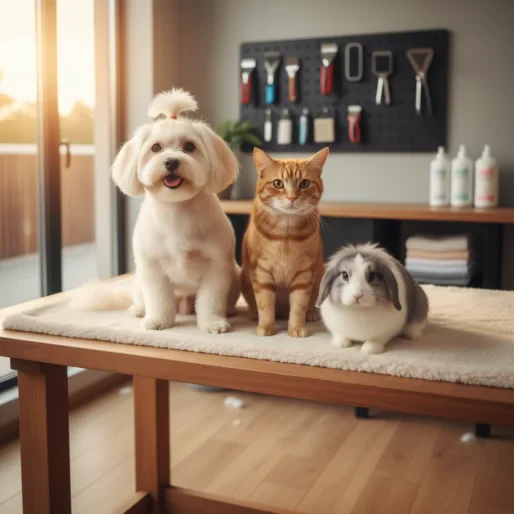
- Clipper systems: variable-speed clippers with detachable blade sets appropriate for different coat densities.
- Scissoring sets: straight, curved, and thinning shears suited to breed-standard trims and finish work.
- Carding and stripping tools: essential for wire-coated terrier breeds where hand-stripping preserves coat texture.
- Dematting tools: used carefully to avoid skin trauma, particularly near sensitive areas such as the axillae and inner thighs.
- Breed-appropriate shampoos and conditioners: pH-balanced for canine or feline skin. A qualified groomer never uses human hair products on animals.
Those interested in sustainable product choices can explore strategies in the zero waste pet grooming routine guide.
Frequency Guide by Coat and Breed Type
Professional grooming frequency depends on coat type, lifestyle, and skin condition:
- Double-coated breeds (e.g., Siberian Husky, Golden Retriever): professional grooming every 6 to 8 weeks for deshedding, undercoat removal via carding, and skin checks. Shaving double coats is generally discouraged by breed-standard protocols as it can damage coat regrowth.
- Single-coated, continuously growing breeds (e.g., Poodle, Bichon Frise): every 4 to 6 weeks for clipping, scissoring, and hygiene trims.
- Wire-coated breeds (e.g., Wire Fox Terrier, Schnauzer): hand-stripping every 8 to 12 weeks to maintain correct coat texture.
- Short-coated breeds (e.g., Boxer, Beagle): professional baths and deshedding every 8 to 12 weeks, with at-home brushing between visits.
- Cats: long-haired breeds such as Persians benefit from professional grooming every 6 to 8 weeks, while short-haired cats may only need professional attention when matting or skin issues arise.
Dogs recovering from surgery or managing joint conditions (see the hydrotherapy after joint surgery guide) may require modified grooming positions and gentler handling.
Warning Signs to Watch for During Grooming
A qualified groomer monitors for health indicators throughout every session:
- Skin abnormalities: redness, flaking, pustules, or unusual pigmentation changes should be documented and the owner advised to consult a veterinarian.
- Parasites: flea dirt, ticks, or mite damage (e.g., mange-associated hair loss) discovered during grooming warrants immediate owner notification.
- Ear issues: excessive wax, foul odour, or inflammation visible during ear cleaning indicates a possible infection requiring veterinary assessment.
- Lumps and masses: any new or changed lump found during grooming should be flagged. Owners considering genetic health insights may find value in AI pet DNA test reports.
- Nail and paw problems: cracked nails, swollen nail beds, or interdigital cysts require veterinary follow-up rather than salon treatment.
Important: professional groomers should never diagnose or treat skin conditions. Their role is detection and referral.
Red Flags When Choosing a Grooming Salon
Owners should be alert to the following warning signs:
- No visible credentials: a salon that cannot produce certificates from recognised bodies may lack formal training.
- Refusal to allow observation: while some salons limit viewing to avoid distracting pets, outright refusal to let owners see the grooming area at any time is concerning.
- No insurance documentation: unwillingness to confirm insurance status suggests the business may be uninsured.
- Overcrowded or chaotic environment: too many animals in a small space increases stress, disease transmission risk, and accident likelihood.
- Dirty equipment or surfaces: visible hair buildup on blades, stained tables, or soiled towels indicate poor hygiene practices.
- Sedation without veterinary oversight: groomers should never administer sedatives. Any sedation must be prescribed and supervised by a veterinarian.
- Cage dryer misuse: unattended cage dryers without temperature controls have been linked to fatal overheating incidents. A responsible salon uses dryers with automatic shutoffs and constant monitoring.
- No intake form or health questions: a qualified groomer asks about allergies, medications, past reactions, and behavioural concerns before every appointment.
Owners selecting any pet care professional, from groomers to breeders, benefit from applying consistent due diligence. The responsible breeder versus puppy mill guide illustrates similar verification principles in a breeding context.
Professional Groomer vs Home Grooming: Decision Guide
Some grooming tasks are safe for owners to perform at home, while others benefit from professional skill:
Safe for Home Care
- Regular brushing and combing (daily for long-coated breeds, weekly for short coats).
- Ear cleaning with veterinarian-approved solutions.
- Basic bathing with species-appropriate shampoo.
- Nail trimming, provided the owner has been shown correct technique and uses proper clippers.
Best Left to Professionals
- Breed-standard haircuts requiring scissoring or pattern clipping.
- Hand-stripping wire coats.
- Dematting severely tangled coats, especially near skin folds or sensitive areas.
- Expressing anal glands (veterinary professionals are preferred for this task).
- Grooming fearful or reactive animals that may bite or injure themselves.
- Any grooming involving animals with known skin conditions, recent surgical sites, or mobility limitations.
Continuing Education and Staying Current
The grooming industry evolves continuously. New tool technologies, updated breed standards, and emerging knowledge about skin health mean that credentials earned years ago require ongoing reinforcement. Reputable certifying bodies mandate or strongly encourage annual continuing education, which may include:
- Workshops on new clipper and blade systems.
- Seminars on canine and feline dermatology updates.
- Low-stress handling and Fear Free certification modules.
- Business management and client communication training.
A groomer who invests in continuing education demonstrates dedication to the craft and to animal welfare.
Summary: Building Confidence in Your Groomer Choice
Selecting a groomer is a decision that directly impacts a pet's physical health and emotional wellbeing. By understanding credential frameworks (IPG, NDGAA, BDGA, City & Guilds), verifying certifications through official registries, confirming insurance coverage, and watching for red flags, owners can make informed choices. A qualified groomer welcomes these questions because transparency is the foundation of professional trust.
When in doubt, ask to see credentials, request proof of insurance, observe the salon environment, and trust professional instincts. A pet's comfort and safety are always worth the extra diligence.
Frequently Asked Questions
What certifications should a professional pet groomer hold? ↓
How can owners verify a groomer's qualifications? ↓
What insurance should a grooming salon carry? ↓
What are the biggest red flags when choosing a grooming salon? ↓
How often should dogs be professionally groomed? ↓
Sophie Bianchi
Certified Master Pet Groomer
Certified master pet groomer — breed-standard techniques, skin health awareness, and at-home grooming guidance.
Content Disclosure
This article was created using state-of-the-art AI models with human editorial oversight. It is intended for informational and entertainment purposes only and does not constitute veterinary medical advice. Always consult a licensed veterinarian for your pet's specific health needs. Learn more about our process.