From managing separation anxiety in high-rise estates to realigning domestic helper routines, discover how to reset your dog's behavior after the chaos of the festive season in Hong Kong.
Key Takeaways for a Hong Kong Reset
- Manage the 'Helper Factor': Ensure your domestic helper is aligned with the new rules; inconsistency between caregivers is the #1 cause of training failure in HK.
- Estate Living Sensitivity: Separation anxiety barking carries higher stakes in high-density apartments; prioritize silence protocols to avoid management complaints.
- Decompression in Density: You do not need a backyard to decompress. Use vertical space and covered crates to create sanctuary zones in small flats.
- The Year-Round Tick Threat: Unlike colder climates, Hong Kong's 'winter' does not kill ticks. Health checks must include parasite prevention.
The red banners are coming down, the lion dances have faded, and the last of the festive plants are being cleared from the lobby. For Hong Kong pet owners, the end of the festive season, spanning from Christmas through to Chinese New Year (CNY), often leaves behind more than just empty lai see packets. It leaves behind a dog that has forgotten its manners.
In our unique high-density urban environment, the impact of the festive season is amplified. Your dog has likely spent weeks navigating crowded family gatherings in a compact apartment, dealing with the noise of firecrackers or celebrations, and consuming rich treats slipped to them by well-meaning relatives. From a behavioral standpoint, the consistent structure required for a calm dog has likely been replaced by a chaotic schedule of late-night gatherings and constant stimulation.
As a trainer working in Hong Kong, I see a specific pattern of regression every February and March. The dog is not being stubborn; they are exhausted and confused. Here is how we apply LIMA (Least Intrusive, Minimally Aversive) principles to reset your household, specifically tailored for the challenges of Hong Kong living.
1. The Physiology of the Reset: Cortisol in Compact Spaces
In a 500-square-foot apartment, there is often nowhere to hide. During the holidays, your dog’s personal space likely shrank to zero. Constant interaction, even if positive, spikes cortisol (stress hormone) levels. In typical suburban environments, a dog might retreat to a yard. In Hong Kong, they are often trapped in the same room as the noise.
Chronic over-arousal can take up to 72 hours to subside. Until those cortisol levels drop, your dog is physiologically incapable of learning new commands. They are in 'survival mode', reacting to every elevator chime or hallway footstep.
The HK Decompression Protocol
- The Covered Sanctuary: If you use a crate, cover it with a heavy blanket to dampen visual stimuli and sound. In small flats, placing the crate in a corner away from the main corridor or the balcony door is crucial to minimize reactivity to street noise.
- Vertical Separation: If you do not have a spare room, use baby gates to partition a 'quiet zone'. Even a visual barrier can lower arousal.
- The 'No-Go' Park Rule: For the first week, avoid the crowded Penfold Park or West Kowloon Art Park on weekends. These areas are high-arousal zones. Opt for quieter, on-leash walks on Bowen Road or local morning trails where the focus is on sniffing (decompression), not wrestling with other dogs.
2. Separation Distress: The Estate Management Risk
Separation anxiety is the most urgent post-festival issue I treat, and in Hong Kong, the stakes are incredibly high. In a detached house, a barking dog is a nuisance; in a high-rise estate like Taikoo Shing or Whampoa Garden, it is a lease violation.
After weeks of having family home, or having the domestic helper present constantly, your dog may panic when the apartment goes quiet. This is not just about the dog's comfort; it is about avoiding complaints to the Building Management Office.
Desensitization for Apartment Living
Do not wait until your first full day back at the office. You must rebuild the 'muscle memory' of solitude immediately.
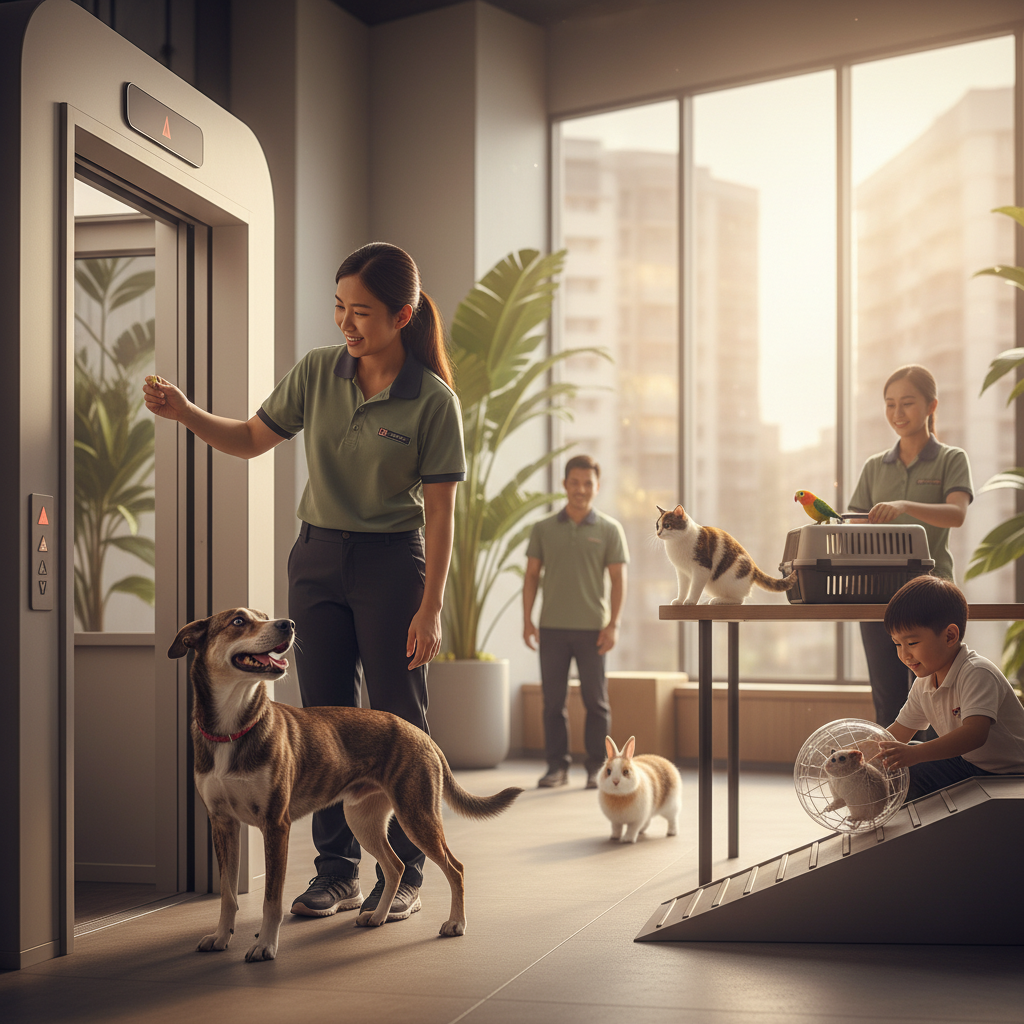
- The 'Lift Lobby' Drill: Put on your work shoes and pick up your keys. Step out into the hallway and wait for the lift. Do not get in. Just let the lift door open and close, then return inside. This desensitizes the dog to the specific acoustic cues of your departure in a building.
- Sound Masking: Apartment walls can be thin. Use a white noise machine or play classical music to mask the sound of neighbors, which often triggers anxious dogs when they are alone.
- The Helper Handoff: If you have a domestic helper, they are often the ones home with the dog. You must instruct them not to constantly engage the dog. The dog needs to learn to be 'alone' even when someone is in the kitchen. Define 'Do Not Disturb' hours where the dog is in their place/crate and the helper ignores them.
3. The 'Grandma Effect': Extinction Bursts and Begging
Chinese New Year feasts are notorious for table scraps. Whether it was a piece of char siu (barbecue pork) or a dropped dumpling, if your dog was fed from the table, they have been conditioned to beg. In operant conditioning terms, they have been on a 'variable ratio schedule of reinforcement', the strongest form of addiction.
When you return to strict kibble-only rules, expect an extinction burst. Your dog will not just whine; they may bark, paw, or jump with increased intensity. If you give in now, perhaps because you are worried about the noise disturbing the neighbors, you will permanently ingrain the behavior.
The Management Strategy
- Physical Management: Use a gate to keep the dog out of the dining area completely. In open-plan HK apartments, this might mean crating them during dinner with a high-value chew (like a bully stick) to compete with the smell of human food.
- Educating the Household: This is critical. You must have a sit-down meeting with everyone living in the house, including elderly relatives and helpers. Explain that 'food is love' is a dangerous concept for the dog right now. One slip-up from Grandma undoes weeks of your training.
4. Leash Manners: Elevators and Crowded Streets
Leash pulling in Hong Kong is often a reaction to environmental pressure. Narrow sidewalks, rushing crowds, and the tight confinement of elevators create a high-pressure environment. Post-festival, your dog's tolerance for this pressure is lower.
If your dog is dragging you to the nearest patch of grass, they are likely over-threshold. Pain can also be a factor. While we don't have icy pavements, the humidity and hard concrete can take a toll.
The 'Elevator Routine'
The walk begins at the front door, not the street. If your dog is frantic in the lift, the walk is already ruined.
- Sit-Wait at the Door: The door does not open until the dog is sitting.
- The Lift Protocol: Teach a strong 'Watch Me' command. In the elevator, the dog should be focused on you, not the door or other passengers. Use high-value treats to reward eye contact for the entire ride down.
- Stop-Wait on Pavement: If they pull on the street, stop. In busy areas like Causeway Bay or Central, move to the side (building line) to avoid blocking pedestrian traffic, but do not move forward until the leash is slack.
5. Biological Needs: The Post-CNY Health Check
Dietary indiscretion is the number one reason for vet visits in February. Fatty foods like pork fat, turnip cake, or traditional sweets can trigger pancreatitis, a life-threatening inflammation. Symptoms include vomiting, a hunched back, and lethargy. This is a medical emergency.
Furthermore, unlike Europe or North America, Hong Kong does not have a 'tick-free' winter. Our mild, humid winters mean Rhipicephalus sanguineus (the brown dog tick) is active year-round. Tick fever (Babesia and Ehrlichia) is endemic and fatal if untreated. If you relaxed your Bravecto or NexGard schedule during the holidays, or if you took your dog hiking in the New Territories (Sai Kung, Tai Mo Shan) during the break, a vet check is prudent.
[LOCAL_VET_EMERGENCY_en-hk]
Also, check your vaccination card. Under AFCD regulations, the Rabies vaccination and dog license must be renewed every three years. Many owners forget this during the holiday chaos. Operating without a valid license is illegal and carries a fine.
6. Mental Stimulation: Beating the Humidity
When the 'plum rains' (spring humidity) arrive, long walks become uncomfortable for brachycephalic breeds (Pugs, Frenchies) and double-coated dogs. Mental stimulation is your best tool for burning energy indoors without overheating.
The 'No-Bowl' Policy: For the next two weeks, banish the food bowl. Feed 100% of meals via:
- Snuffle Mats: Excellent for calming via olfactory stimulation.
- Kong Wobblers: Great for durability on tiled floors.
- Hide and Seek: Hide small piles of kibble around the apartment. This utilizes the dog's seeking system and provides a 'job' that fits within a small footprint.
When to Call a Professional
While a routine reset handles most issues, some behaviors require expert intervention. If you see resource guarding (growling over food or toys), severe separation anxiety (clawing at doors, self-mutilation), or aggression towards family members or helpers, you need a professional.
Look for trainers who use positive reinforcement (R+) methods. In Hong Kong, the industry is unregulated, so verify credentials like CPDT-KA, KPA-CTP, or CSAT. If the behavior is sudden and severe, consult a veterinarian first to rule out pain.
Resetting your dog's routine in Hong Kong requires patience and consistency from the entire household. Align your helper, manage your environment, and prioritize rest. Your dog will find their rhythm again amidst the city bustle.
Frequently Asked Questions
How do I stop my dog begging after Chinese New Year? ↓
Is it safe to stop walking my dog to reset behavior in HK? ↓
What is the biggest health risk for dogs in HK after winter? ↓
My dog barks when I leave the apartment; what should I do? ↓

Mark Sullivan
Certified Professional Dog Trainer
Certified professional dog trainer — positive-reinforcement methods for every breed and behavioural challenge.
Content Disclosure
This article was created using state-of-the-art AI models with human editorial oversight. It is intended for informational and entertainment purposes only and does not constitute veterinary medical advice. Always consult a licensed veterinarian for your pet's specific health needs. Learn more about our process.