
In this article
Key Takeaways
- High-rise syndrome is a serious risk in Hong Kong: secure all windows and balcony grilles before opening them during the warm spring months.
- Puzzle feeders and scent enrichment help manage indoor energy in compact flats where floor space is limited.
- Hong Kong's humidity (often above 80% in spring) degrades dried catnip and silver vine quickly; airtight, dehumidified storage is essential.
- Vertical shelving is the most space-efficient enrichment upgrade for typical Hong Kong apartments.
- Typhoon season begins as early as May: an emergency kit and carrier should be prepared each spring.
Why Spring Enrichment Is Different in Hong Kong
Spring in Hong Kong, roughly March through May, brings rising temperatures (typically 20°C to 28°C), increasing humidity, and longer daylight hours. These conditions trigger heightened alertness in cats, just as they do elsewhere. However, the reality of Hong Kong living introduces specific challenges that generic enrichment advice does not address.
Most Hong Kong cats live in high-rise flats, often smaller than 40 square metres. Outdoor access is rarely an option. Balconies, where they exist, are usually unenclosed or fitted with wide-gap grilles. The combination of open windows for ventilation, elevated floors, and curious cats makes spring the peak season for feline fall injuries in the city. The SPCA (Hong Kong) regularly issues reminders about window safety during warmer months.
This guide provides enrichment strategies specifically adapted for Hong Kong's climate, flat sizes, and local resources.
Window Safety First: Preventing High-Rise Syndrome
Before introducing any window-based enrichment, Hong Kong cat owners must address fall prevention. High-rise syndrome, where cats fall from elevated windows or balconies, is a well-documented veterinary emergency. In a city where most residential buildings exceed 20 storeys, the consequences are often fatal.
Essential steps:
- Install fixed metal window grilles or purpose-built cat-safe mesh screens on every openable window. Standard mosquito mesh is not strong enough to withstand a cat's weight.
- Custom stainless steel mesh screens can be sourced from local hardware suppliers and are typically fitted for $300 to $800 HKD per window, depending on size.
- Sliding windows should have stoppers or locks limiting the opening to no more than 5 cm.
- If the flat has a balcony, full mesh enclosure is recommended. Several Hong Kong pet service providers offer custom balcony netting installations.
- Check all screens and grilles at the start of spring and again before typhoon season, as strong winds can loosen fittings.
Once windows are properly secured, a padded window perch placed on the interior sill gives cats safe access to visual stimulation from birds, insects, and street activity below.
Enrichment for Small Spaces: Room by Room
Living Area: Visual and Auditory Stimulation
Exterior bird feeders, common in houses with gardens, are impractical for most Hong Kong flats. Instead, consider these alternatives:
- Position a sturdy window perch at the flat's most visually active window (overlooking trees, a park, or a busy street). Even watching pedestrians and vehicles provides mental stimulation.
- If the building has a podium garden or visible greenery, orient the perch toward that view.
- Nature documentary videos designed for cats (available on streaming platforms) can supplement visual enrichment on rainy days, which are frequent in Hong Kong's spring.
- A small tabletop water fountain (starting from around $150 HKD) provides both auditory enrichment and encourages hydration, which is important as humidity rises.
Kitchen and Feeding Area: Puzzle Feeders
Puzzle feeders are especially valuable in Hong Kong flats where limited space restricts active play. They slow eating, support weight management, and provide mental engagement without requiring large play areas.
- Start with open-tray style puzzles before progressing to enclosed ball or tower designs. These are widely available at pet shops in areas such as Mong Kok and through local online pet retailers.
- Budget approximately $80 to $250 HKD for quality puzzle feeders.
- Use a portion of the cat's daily food allowance inside the puzzle to avoid overfeeding. Obesity is a common concern among Hong Kong's indoor cat population.
- Wash puzzle feeders after every use. In Hong Kong's humid spring climate, bacteria and mould develop rapidly on food-soiled surfaces.
- For multi-cat households, provide one puzzle per cat plus one extra, placed in different areas of the flat.
Hallways and Corridors: Scent Trails
Even short hallways in Hong Kong flats can be used for olfactory enrichment. Catnip and silver vine (known as matatabi in Japanese, and widely available in Hong Kong pet shops due to strong regional supply chains) are safe, effective scent stimulants.
- Rub dried catnip or silver vine along baseboards, scratching posts, and fabric toys to create a scent trail.
- Small fabric sachets filled with dried herbs can be placed at intervals to encourage hunting behaviour.
- Rotate between catnip, silver vine, and valerian root to maintain novelty.
- Limit scent sessions to 10 to 15 minutes, then remove or seal sachets. Overexposure can cause temporary desensitisation.
- Humidity storage tip: Hong Kong's spring humidity (frequently 80% to 95% relative humidity) degrades dried herbs rapidly. Store all catnip, silver vine, and valerian in airtight containers with a small food-grade silica gel packet. Keep containers in a cool, dry cupboard or inside an electronic dry cabinet if available.
- Avoid essential oil diffusers near cats. Many essential oils, including tea tree, eucalyptus, and citrus, are toxic to cats. This caution applies to the scented products commonly found in Hong Kong home goods shops.
Bedrooms and Living Walls: Vertical Space
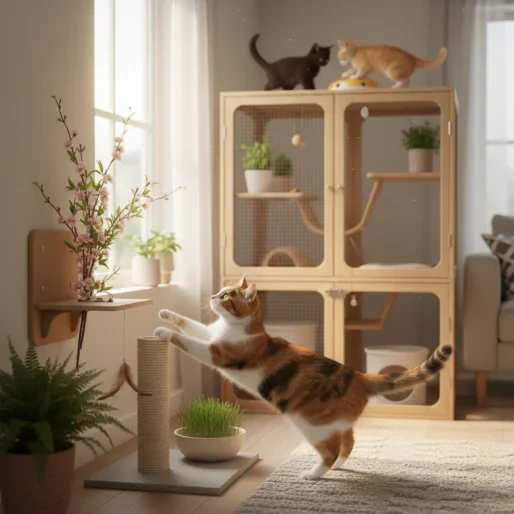
Vertical enrichment is arguably the single most impactful upgrade for Hong Kong cats. In flats where floor area is limited, going upward gives cats essential climbing territory, reduces stress in multi-cat homes, and satisfies natural climbing instincts.
- Wall-mounted shelves in a staggered pattern create a climbing path without consuming floor space. Space shelves 30 to 45 cm apart vertically.
- Ensure all shelves are anchored securely. Many Hong Kong flats have concrete walls, which require masonry anchors and a hammer drill. Hollow partition walls need heavy-duty toggle bolts rated for at least three times the cat's weight.
- Add non-slip surfaces (sisal matting, carpet remnants, or rubber shelf liners) to all platforms.
- Compact cat trees with a stable, wide base are suitable for corners. Budget around $400 to $1,500 HKD depending on height and quality.
- For senior or arthritic cats, include ramps or lower intermediate steps. Joint stiffness is common in older cats and can be worsened by Hong Kong's air-conditioned environments.
- Inspect all vertical installations monthly for loose fittings, wobbling, or fraying fabric.
Seasonal Hazard Sweep for Hong Kong Homes
Spring enrichment must be paired with a home safety audit. Common spring hazards in Hong Kong include:
- Toxic plants: Lilies (all Lilium and Hemerocallis species) are extremely toxic to cats and can cause fatal kidney failure. These are commonly sold at Hong Kong flower markets, especially around Easter. Tulips, daffodils, and orchid varieties treated with pesticides also pose risks. The SPCA (Hong Kong) provides guidance on pet-safe plants.
- Incense and joss sticks: Commonly burned in Hong Kong homes, concentrated smoke from incense can irritate feline respiratory systems. Ensure adequate ventilation and keep burning materials well away from cats.
- Open windows and balconies: As detailed above, verify all screens and grilles before the warm season.
- Cleaning products: Spring cleaning products should be stored in closed cabinets. Avoid phenol-based disinfectants (sometimes found in local floor cleaners) around cats.
- Pest control: Cockroach and rodent treatments are common in Hong Kong buildings. Use only pet-safe methods and inform any pest control service that cats are present. Building-wide pest treatments in Hong Kong housing estates can introduce toxins through shared pipes and vents; close all drains and windows during scheduled treatments.
Typhoon Season Emergency Preparedness
Typhoon season in Hong Kong can begin as early as May and extends through October. The Hong Kong Observatory issues typhoon signals (T1, T3, T8, T9, T10) that can escalate rapidly. Indoor cat households should prepare each spring:
- Maintain three to five days of cat food (dry and wet) and fresh water in sealed containers.
- Keep any prescription medications with dosage instructions in a waterproof bag.
- Store copies of vaccination records, microchip numbers, and the cat's AFCD registration details (if applicable) in a grab bag.
- Have a secure carrier for each cat, labelled with the cat's name and owner contact details. During T8 or above signals, cats should be kept in an interior room away from windows.
- Basic first aid supplies: gauze, adhesive tape, saline solution, blunt-tipped scissors.
- Save the contact details for the nearest 24-hour emergency veterinary clinic.
SPCA Hong Kong / Emergency Vet Clinics
Contact the SPCA Hong Kong or your nearest 24-hour emergency veterinary clinic.
Several private veterinary hospitals in Hong Kong offer round-the-clock emergency care.
Weekly Rotation Schedule
Cats habituate to enrichment quickly. A structured rotation maintains engagement even in the limited space of a Hong Kong flat.
- Monday: Puzzle feeder with a portion of daily kibble. Catnip scent trail along the hallway.
- Tuesday: Window perch viewing session (open curtains early). Interactive wand toy play for 10 to 15 minutes.
- Wednesday: Silver vine sachet hidden inside a cardboard box or paper bag. Treats placed on high shelves to encourage climbing.
- Thursday: Different puzzle feeder design or difficulty level. Short clicker training session (5 to 10 minutes).
- Friday: Rotate all accessible toys (swap three to four toys from storage). Valerian root scent trail.
- Saturday: Foraging session with kibble scattered in small piles around the flat. Window viewing with fresh visual stimulus.
- Sunday: Rest and observation day. Keep two favourite items available and note which the cat prefers. Use observations to adjust the next week's plan.
Rotation tips:
- Keep a storage bin of 10 to 15 toys and rotate three to five into active use at a time. In humid conditions, store fabric toys in a dry, ventilated container to prevent mildew.
- Introduce one completely new item per month.
- Track engagement with a simple phone note: date, activity, duration, and interest level.
- Kittens and young adults need more frequent rotation and higher-intensity play. Senior cats may prefer gentler scent or visual enrichment.
Life Stage Considerations
- Kittens (under 1 year): High energy, short attention span. Favour interactive play and beginner puzzle feeders. Avoid small detachable parts that pose choking risks. Kittens should be microchipped and registered with the AFCD as part of responsible ownership in Hong Kong.
- Adult cats (1 to 10 years): Benefit from the full rotation schedule. Adjust intensity based on breed and temperament. Popular breeds in Hong Kong such as British Shorthairs, Scottish Folds, and Ragdolls may have breed-specific exercise needs.
- Senior cats (10 years and older): Prioritise low-impact enrichment: scent trails, window viewing, gentle puzzle feeders. Ensure vertical elements have easy access ramps. Air conditioning, used heavily in Hong Kong, can worsen joint stiffness; provide warm resting spots away from direct airflow.
Summary Checklist
- ☐ All windows fitted with secure cat-safe mesh or grilles; balconies enclosed.
- ☐ Window perch installed at the most visually stimulating window.
- ☐ At least two puzzle feeder styles available, cleaned after each use.
- ☐ Catnip, silver vine, and valerian stored in airtight containers with silica gel packets.
- ☐ Scent sachets prepared and sealed between sessions.
- ☐ Wall shelves or cat tree installed with non-slip surfaces and secure anchoring.
- ☐ Seasonal hazard sweep completed: toxic plants removed, screens checked, cleaning products secured, pest control reviewed.
- ☐ Toy rotation bin stocked with 10 to 15 items; three to five in active use.
- ☐ Weekly enrichment schedule set as a phone reminder.
- ☐ Typhoon emergency kit assembled; medications checked for expiry.
- ☐ 24-hour emergency vet contact saved.
SPCA Hong Kong / Emergency Vet Clinics
Contact the SPCA Hong Kong or your nearest 24-hour emergency veterinary clinic.
Several private veterinary hospitals in Hong Kong offer round-the-clock emergency care.
- ☐ Engagement tracking log started.
Frequently Asked Questions
Content Disclosure
This article was created using state-of-the-art AI models with human editorial oversight. It is intended for informational and entertainment purposes only and does not constitute veterinary medical advice. Always consult a licensed veterinarian for your pet's specific health needs. Learn more about our process.