Indian summers push indoor temperatures well beyond 40°C, putting cats at serious risk of heat stroke even inside apartments. Learn how to recognise heat emergencies and act before organ damage sets in.
Key Takeaways
- A cat's normal body temperature is 37.8 to 39.2°C. A rectal temperature above 40°C is a veterinary emergency requiring immediate action.
- Open mouth breathing in a cat is almost never normal and should be treated as a red flag for heat stress or another serious condition.
- Indian summers routinely push indoor temperatures past 40°C in homes without air conditioning, especially during power cuts. Cats in upper floor flats with tin or concrete roofing are at particular risk.
- Cool (not cold) water applied to paw pads, ears, and groin is the safest immediate first aid. Ice water or cold water from the fridge can worsen the crisis.
- Heat stroke can cause organ failure within minutes. Always transport to a veterinary clinic, even if the cat appears to recover after cooling.
Why Indian Homes Are Especially Dangerous for Cats in Summer
India's tropical and subtropical climate creates uniquely harsh conditions for indoor cats. In cities across the northern plains, Rajasthan, central India, and parts of the Deccan, peak summer temperatures regularly exceed 45°C outdoors. Inside homes without air conditioning, ambient temperatures can easily climb to 38 to 42°C during afternoon hours, particularly in upper storey flats, rooms with west facing windows, and buildings with concrete or asbestos sheet roofing that absorb and radiate heat.
Cats cannot sweat through their skin. Their primary cooling methods are panting (which is inefficient and signals distress), grooming to spread saliva for evaporative cooling, and seeking cooler surfaces like bathroom tiles or mosaic floors. When indoor temperatures remain elevated for hours, these strategies fail rapidly.
A critical Indian context that many cat owners underestimate is power cuts during peak summer. Load shedding and unscheduled outages are common across many states during April through June. When the power goes out, air conditioning and fans stop, and indoor temperatures spike within 30 to 45 minutes. Cats left alone during the day in homes without inverter backup are particularly vulnerable during these periods.
According to the American Veterinary Medical Association (AVMA) and the World Small Animal Veterinary Association (WSAVA), heatstroke in companion animals develops rapidly when environmental temperatures exceed the animal's ability to dissipate heat. In Indian conditions, this threshold is crossed frequently during the summer months of March through June, and again in the pre monsoon humidity of September and October.
Cats at Highest Risk in Indian Households
- Persian and Himalayan cats: extremely popular breeds in India, their brachycephalic (flat faced) structure makes panting even less effective. These breeds are disproportionately represented in heat emergencies.
- Exotic Shorthairs: another brachycephalic breed gaining popularity in Indian cities.
- Overweight or obese cats: excess body fat acts as insulation, trapping heat internally.
- Senior cats (over 10 years): reduced cardiovascular efficiency limits heat dissipation. For broader senior cat health considerations, see our Spring Wellness Checklist for Senior Cats.
- Cats with heart disease, respiratory conditions, or hyperthyroidism: pre existing conditions compromise thermoregulation.
- Very young kittens: immature thermoregulatory systems make them vulnerable.
- Long haired or dark coated cats: dense fur and dark pigment absorb and retain heat, a significant factor in Indian homes that receive direct sunlight through windows.
Recognising Heat Stress as a Genuine Emergency
Heat related illness in cats exists on a spectrum. The critical distinction is that heat stroke constitutes a true emergency, while early heat stress, if caught quickly, can sometimes be managed at home before it escalates.
Early Warning Signs (Heat Stress)
- Restless behaviour, pacing, or seeking cool tile floors, bathroom floors, or areas near water sources
- Excessive grooming (attempting to cool through saliva evaporation)
- Reduced appetite or refusal to eat, common during Indian summers but worth monitoring closely
- Lethargy or reluctance to move
- Warm ears and paw pads to the touch
Red Flags: Heat Stroke in Progress
- Open mouth panting: unlike dogs, cats rarely pant. Open mouth breathing in a cat is almost always a sign of significant distress.
- Drooling or hypersalivation
- Rapid heart rate: a normal resting feline heart rate is roughly 120 to 160 beats per minute. Rates well above this alongside other symptoms indicate trouble.
- Bright red or muddy, pale gums: press a finger briefly against the gum. Normal capillary refill time is under 2 seconds. Prolonged refill or very red gums are danger signs.
- Vomiting or diarrhoea (sometimes bloody)
- Stumbling, disorientation, or inability to stand
- Rectal temperature above 40°C: temperatures above 41.1°C carry a high risk of organ damage.
- Collapse, seizures, or unresponsiveness: these indicate critical, potentially fatal heat stroke.
Professional consensus within emergency veterinary medicine emphasises that heat stroke can progress to disseminated intravascular coagulation (DIC), acute kidney injury, and multi organ failure. The window between "looks uncomfortable" and "life threatening" can be alarmingly short.
Immediate First Aid: What to Do in the Next 10 Minutes
If a cat is showing signs of heat stroke, begin cooling immediately while arranging emergency veterinary transport. These steps buy critical time but are not a substitute for professional care.
- Move the cat to the coolest area available. A tiled bathroom floor, a room with a working fan or cooler, or an air conditioned space. During power cuts, the bathroom or ground floor rooms tend to remain coolest.
- Apply cool (not cold, not icy) water to the cat's paw pads, ears, groin, and armpits using a damp cloth or gently running tap water. These areas allow efficient heat exchange because blood vessels sit close to the skin surface. Avoid using water straight from the fridge or adding ice.
- Place a fan or direct a cooler's airflow nearby to promote evaporative cooling over the dampened fur.
- Offer small amounts of cool water to drink if the cat is conscious and able to swallow. Do not force water into the mouth of a disoriented or semi conscious cat, as this risks aspiration pneumonia.
- If you have a rectal thermometer, monitor the cat's temperature. Stop active cooling once the temperature drops to approximately 39.4°C to avoid overcooling.
- Transport to the nearest veterinary clinic immediately, even if the cat appears to improve.
[LOCAL_VET_EMERGENCY_en-in]
Dangerous Mistakes to Avoid
- Do NOT use ice water, ice baths, or frozen gel packs directly on the skin. Extreme cold causes blood vessels to constrict, which paradoxically traps heat in the core and can cause the temperature to rise further.
- Do NOT wrap the cat in wet towels and leave them on. A wet towel left in place quickly warms up and becomes an insulating layer in Indian heat. If using damp cloths, replace them frequently.
- Do NOT force water into the mouth of a cat that is semiconscious, seizing, or unable to swallow.
- Do NOT assume the cat is fine once panting stops. Heat stroke triggers inflammatory and coagulation responses that can cause organ damage hours later.
- Do NOT administer human medications. Paracetamol (Crocin, Dolo) is fatally toxic to cats, even in small doses. Ibuprofen (Brufen) and aspirin (Disprin) are also dangerous. No over the counter human pain reliever is safe for cats without explicit veterinary direction. This point is critical as paracetamol is extremely common in Indian households.
- Do NOT delay transport hoping for improvement. Early veterinary intervention dramatically improves outcomes.
Getting to the Vet Safely in Indian Conditions
Transporting a heat stroke patient during Indian summers requires additional planning:
- Run the car's air conditioning at full. If using an auto rickshaw or cab, request AC if possible.
- Place a damp (cool, not cold) towel loosely under the cat in the carrier. Do not seal the carrier with wet towels draped over it, as this restricts airflow.
- Keep the carrier away from direct sunlight through windows. A sunshade or dupatta draped loosely over the outside of the carrier (not blocking ventilation) helps.
- If possible, have a second person monitor the cat during the journey.
- Call the clinic ahead so the team can prepare. Many urban veterinary clinics in metros like Delhi, Mumbai, Bangalore, Chennai, Hyderabad, and Pune have emergency setups that can begin IV fluid preparation before arrival.
If you use a pet sitter or caretaker while you are away, ensure they understand heat emergency protocols. Our guide on What Pet Sitting Insurance Should Cover discusses considerations relevant to medical emergencies. Additionally, indoor pet cameras can help you detect signs of distress remotely, particularly useful during summer afternoons when power outages may occur.
What Happens at the Veterinary Clinic
- Core temperature monitoring: rectal or oesophageal thermometer tracking.
- Intravenous fluid therapy: to support blood pressure, organ perfusion, and hydration.
- Active cooling: clinic grade methods including cool IV fluids and fan assisted evaporative cooling.
- Blood work: complete blood count and chemistry panel to assess kidney and liver function and check for DIC.
- Monitoring: moderate to severe heat stroke cases typically require 24 to 72 hours of hospitalised care.
Owners should be prepared for significant treatment costs. Emergency heat stroke treatment at well equipped veterinary clinics in Indian metros can range from ₹8,000 to ₹30,000 or more depending on severity, duration of hospitalisation, and diagnostic requirements. Tier 2 city costs may be lower but facilities for intensive monitoring may also be limited. Reviewing pet insurance coverage in advance is worthwhile. Our article on what pet insurance actually pays out can help you understand your coverage before a crisis arises.
Preventing Heat Stress: Practical Steps for Indian Homes
Prevention is always preferable to emergency treatment. For cats in Indian homes, the following measures are essential during the summer months (March through June) and during pre monsoon humidity:
- Invest in inverter backup or at minimum a battery operated fan to maintain airflow during power cuts. This is arguably the single most important safety measure for cats in areas with frequent load shedding.
- Ensure cross ventilation. Open windows on opposite sides of the home (secured with mesh or jali to prevent escapes) to create airflow.
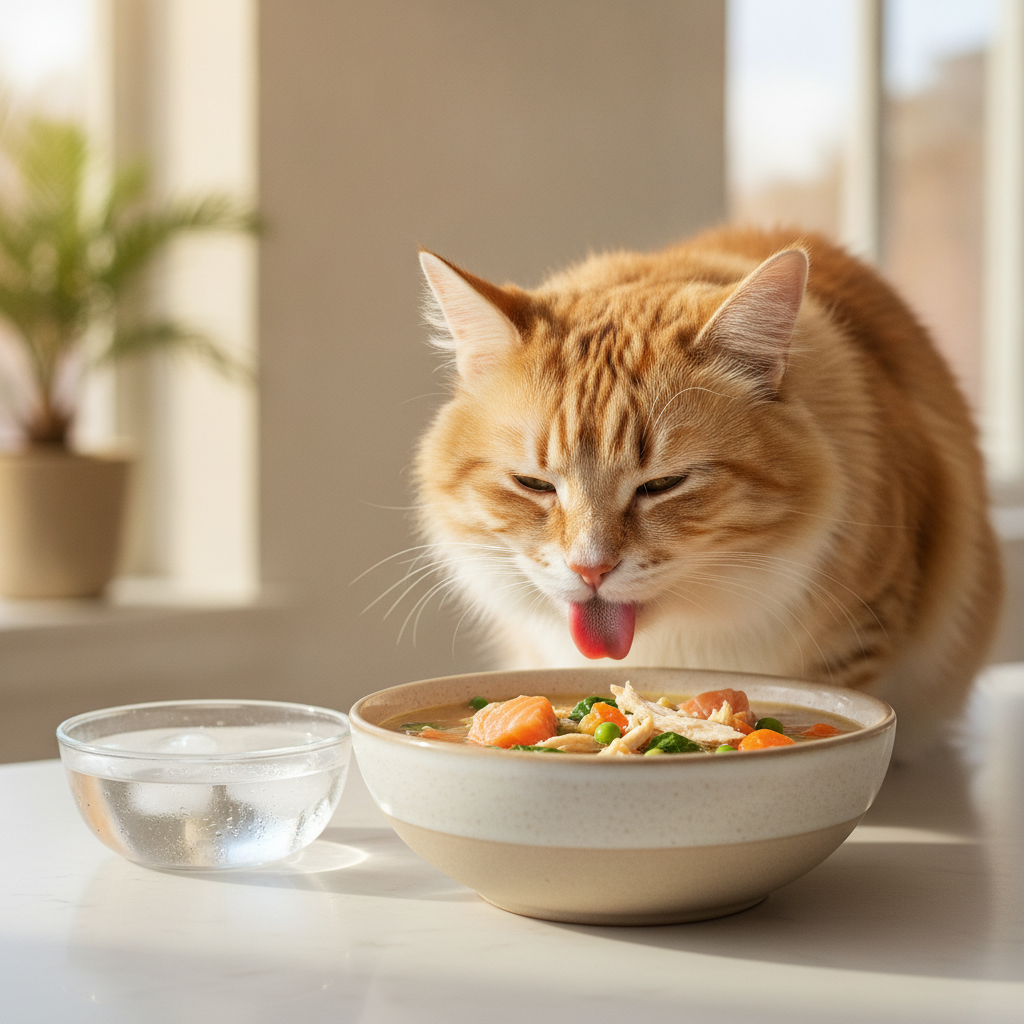
- Provide multiple fresh water sources. Cat water fountains encourage drinking. Placing a few ice cubes in water bowls helps keep water cool. Refresh water at least twice daily in summer as it warms rapidly.
- Create cool resting spots. Ceramic tiles, marble or kota stone floors, and pet cooling mats give cats temperature relief. Many Indian cats naturally gravitate to bathroom floors; ensure bathroom access remains open.
- Keep curtains and blinds closed on sun facing windows during peak hours (11 am to 4 pm). Bamboo chik blinds or reflective window film can reduce heat gain significantly.
- Never confine a cat to a small, unventilated room, a car, a carrier in sunlight, or a balcony enclosure during warm weather.
- Groom long haired cats regularly to reduce fur density. Consult a veterinarian before shaving, as fur also provides some insulation from external heat.
- Schedule play and feeding during cooler parts of the day (early morning before 8 am, evening after 6 pm).
- Monitor indoor temperature. A simple room thermometer (available for under ₹200) is invaluable. Indoor temperatures consistently above 32°C with high humidity create dangerous conditions.
Legal Context: Animal Welfare in India
Under the Prevention of Cruelty to Animals Act, 1960, enforced by the Animal Welfare Board of India (AWBI), subjecting any animal to unnecessary suffering is a punishable offence. While the Act primarily addresses deliberate cruelty, neglecting an animal's basic welfare needs, including protection from extreme heat, falls within its scope. Cat owners have a responsibility to ensure their animals have access to adequate shelter, water, and protection from environmental extremes.
When in Doubt, Act Immediately
The single most important principle in feline heat emergencies: do not wait. Open mouth breathing, collapse, disorientation, or a rectal temperature above 40°C in a cat should always prompt immediate cooling followed by emergency veterinary transport. In Indian summer conditions, where ambient temperatures remain dangerously high for extended periods, the margin for hesitation is even narrower than in milder climates. Heat stress in indoor cats is preventable, treatable, and survivable when recognised early and managed decisively.
Frequently Asked Questions
At what temperature should I worry about my indoor cat during Indian summers? ↓
Can I give my cat paracetamol (Crocin or Dolo) if it seems distressed from heat? ↓
My home has frequent power cuts in summer. How do I keep my cat safe? ↓
How much does emergency heat stroke treatment cost for a cat in India? ↓
Are Persian cats more at risk of heat stroke in India? ↓

Dr. Ana Reyes
Emergency & Critical Care Veterinarian
Emergency and critical care veterinarian — life-saving first-aid guidance and emergency recognition for pet owners.
Content Disclosure
This article was created using state-of-the-art AI models with human editorial oversight. It is intended for informational and entertainment purposes only and does not constitute veterinary medical advice. Always consult a licensed veterinarian for your pet's specific health needs. Learn more about our process.