Indian pet owners face a unique combination of extreme heat and intense firework activity during Eid al-Adha. This guide covers desensitisation training, safe room setup in hot climates, and calming strategies suited to conditions across India.
Key Takeaways
- Begin desensitisation exercises at least four to six weeks before Eid al-Adha celebrations are expected in your locality.
- In India, Eid al-Adha often falls during peak summer or early monsoon months, making heat management as critical as noise management.
- Set up a safe room that is both sound-dampened and adequately ventilated or cooled, keeping indoor temperatures below 28°C where possible.
- Calming aids such as pheromone diffusers and pressure wraps are available at major Indian pet retail chains and online marketplaces, but should complement training rather than replace it.
- Consult a veterinary behaviourist registered with the Veterinary Council of India (VCI) if your pet shows signs of severe noise phobia.
Why Fireworks Are Especially Stressful for Pets in India
Dogs can hear frequencies up to roughly 65,000 Hz, far exceeding the human range of about 20,000 Hz. Fireworks deliver sudden, unpredictable bangs alongside flashes, ground vibrations, and sharp chemical odours. In Indian cities and towns, firework use during Eid al-Adha can be prolonged and scattered across neighbourhoods, making the exposure difficult to predict or avoid.
The Animal Welfare Board of India (AWBI), a statutory body established under the Prevention of Cruelty to Animals Act, 1960, has periodically issued advisories urging restraint in firework use near animals. Despite this, enforcement varies widely. Pet owners in densely populated areas such as Delhi, Mumbai, Hyderabad, Lucknow, and Kolkata should assume that firework activity will be significant and plan accordingly.
Adding to the challenge, Eid al-Adha in India frequently coincides with extreme heat (temperatures above 40°C across much of northern and central India) or early monsoon humidity. This dual stressor, noise combined with heat, places additional physiological strain on pets. Brachycephalic breeds (such as Pugs, Shih Tzus, and Bulldogs, all popular in Indian households) and senior animals are particularly vulnerable.
Desensitisation Training: Getting Started
Timing
Professional veterinary behaviourists recommend beginning desensitisation protocols a minimum of four to six weeks before the anticipated firework period. If Eid is less than two weeks away and no training has begun, focus on management strategies (safe rooms, calming aids) and seek professional guidance.
Equipment Needed
- High value treats: Small, soft rewards your pet finds irresistible. In India, small pieces of boiled chicken, paneer cubes (for dogs that tolerate dairy), or commercially available training treats from Indian pet brands work well. Budget around ₹200 to ₹500 for a supply that lasts through the training period.
- A sound source: A smartphone or Bluetooth speaker capable of playing firework recordings at adjustable volume. Several free playlists are available on major streaming platforms.
- A quiet training space: A room where ambient noise can be controlled and the pet already feels comfortable.
- A training log: A simple notebook or phone app to record session dates, volume levels, and your pet's responses.
- Enrichment tools: Food-dispensing toys, lick mats, or sturdy chew items. These are widely available online in India, typically ranging from ₹300 to ₹1,200.
Assessing Your Pet's Baseline
Before beginning desensitisation, observe your pet's current stress signals. In dogs, early signs include lip licking, yawning out of context, showing the whites of the eyes, tucked tail, trembling, and attempts to flee. In cats, watch for flattened ears, dilated pupils, hiding, rapid breathing, and sudden grooming. Indian rescue dogs (often called Indies or desi dogs) adopted from shelters may carry prior trauma from street firework exposure, making a careful baseline assessment especially important.
Step by Step Desensitisation Protocol
Desensitisation paired with counterconditioning is the approach endorsed by the International Association of Animal Behavior Consultants (IAABC) and professional trainers worldwide. The core principle: expose the pet to the feared sound at a level so low it triggers no fear, then gradually increase intensity while pairing each exposure with something the pet values.
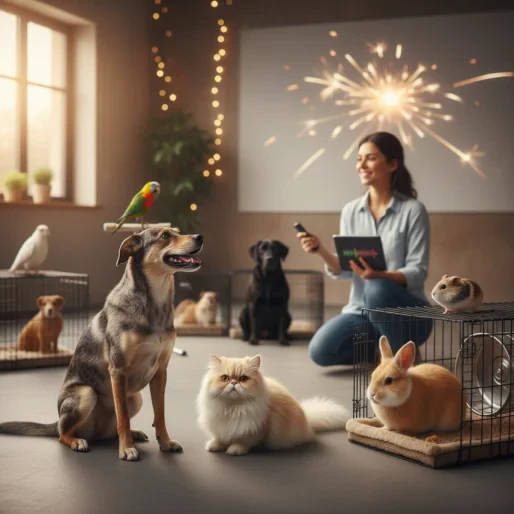
Step 1: Play recorded firework sounds at the lowest possible volume. The pet should show no visible stress. Pair this with high value treats or a favourite enrichment toy. Sessions should last three to five minutes, two to three times daily.
Step 2: Over several days, increase volume by small increments. If the pet stops eating, freezes, or tries to leave, the volume is too high. Reduce it and hold at the comfortable level for additional sessions. The LIMA (Least Intrusive, Minimally Aversive) principle dictates that the animal should never be pushed past its comfort threshold.
Step 3: Once moderate volume is tolerated, vary the timing and pattern: short bursts, rapid sequences, single pops, then silence. Continue pairing with rewards.
Step 4: Practice in different rooms. For those with balconies or enclosed outdoor spaces (common in Indian apartments), brief outdoor sessions at low volume can help generalise the positive association, provided the pet is on a secure leash and harness.
Step 5: Gradually introduce other Eid stimuli: the doorbell ringing repeatedly, unfamiliar voices, the smell of cooking meat or incense. Pair each with positive reinforcement.
Common Mistakes to Avoid
- Flooding: Playing firework sounds at full volume to "get the pet used to it" typically worsens the phobia. This approach is inconsistent with LIMA principles.
- Punishing fear responses: Scolding a pet for barking, whining, or hiding adds social stress to existing fear. Professional standards universally discourage punishment for fear-based behaviours.
- Progressing too quickly: Each pet sets its own pace. Some dogs adapt within two weeks; others need two months or longer.
- Skipping sessions: Sporadic training does not build lasting associations. Aim for daily practice.
Setting Up a Safe Room in Indian Conditions
A safe room serves as a retreat during peak firework hours. In India, the setup must account for both noise and heat.
Location and Cooling
Choose an interior room with minimal windows. In Indian flats, bathrooms or interior bedrooms often work well. Crucially, ensure adequate ventilation or air conditioning. A closed room without cooling during Indian summers can become dangerously hot within minutes, particularly for brachycephalic breeds. Target an indoor temperature below 28°C. A basic room cooler (starting from around ₹3,000) can supplement ceiling fans where AC is unavailable.
Sound Dampening
Heavy curtains, blankets on walls, or a mattress propped against a window reduce sound transmission. White noise from a fan, cooler, or a dedicated calming music playlist can mask sudden bangs.
Comfort Items
Include the pet's bed, a worn item of the owner's clothing, and favourite toys. For dogs, a stuffed food-dispensing toy provides calming focus. For cats, covered beds or cardboard boxes with entry holes serve as secure hiding spots. Always keep fresh, cool water available.
Introduce It Early
Begin using the safe room as a positive space weeks in advance. Feed meals there, offer special treats, and let the pet enter and leave freely. Never lock a panicking pet inside, as this can intensify distress and lead to injury.
Calming Aids Available in India
Calming aids support training and management but should not be relied upon alone.
Pheromone Products
Synthetic pheromone diffusers and sprays (containing dog appeasing pheromone for dogs or synthetic feline facial pheromone for cats) are available through Indian veterinary clinics and online pet stores, typically priced between ₹800 and ₹2,500. Research shows generally positive results for mild to moderate anxiety.
Pressure Wraps
Snug garments applying gentle, constant pressure to the torso are used for noise anxiety. In India's heat, choose lightweight, breathable fabric options and monitor the pet for overheating. Introduce the wrap well before the stressful event. Prices typically range from ₹1,000 to ₹3,000.
Nutritional Supplements
Veterinary-formulated supplements containing ingredients such as L-theanine or alpha-casozepine are available in India. Dosage and suitability must be confirmed with a veterinarian, particularly for pets with existing health conditions.
Prescription Medications
For pets with diagnosed noise phobia unresponsive to training and over-the-counter aids, a veterinarian may prescribe anxiolytic medications. This decision must be made in consultation with a qualified veterinarian who has examined the animal. Never administer human anti-anxiety medications to pets. Many are toxic to dogs and cats at human dosages.
Local Veterinary Hospital
Contact your nearest veterinary hospital or government veterinary dispensary for emergency care.
India does not have a national pet emergency hotline. Major cities have private 24-hour vet clinics. In rural areas, contact the district veterinary officer.
Stray and Community Dog Considerations
India has a large population of community (stray) dogs, and many neighbourhoods have informal caregivers who feed and look after local strays. During Eid al-Adha, these dogs face firework exposure with no safe room to retreat to. Caregivers can help by providing sheltered spots with water, avoiding tying community dogs (a tied, panicking dog risks serious injury), and alerting local animal welfare organisations if a dog appears severely distressed. The AWBI and organisations such as the Federation of Indian Animal Protection Organisations (FIAPO) may provide additional guidance during festival seasons.
Identification and Escape Prevention
Firework season is one of the most common periods for pets to escape. In India, where microchipping is becoming more common but is not yet mandatory in most states, ensure your pet's microchip information is current if chipped. At a minimum, attach a sturdy ID tag with your phone number to a well-fitting collar. GPS trackers, available online from around ₹2,000 to ₹8,000, provide an additional safety layer. For apartment dwellers, double-check that balcony nets and window grilles are secure, as panicking cats and small dogs have been known to attempt escape through gaps.
When to Seek Professional Help
Consult a veterinary behaviourist or a qualified canine behaviour consultant if:
- The pet shows extreme panic: destructive escape attempts, self-injury, prolonged refusal to eat, or loss of bladder and bowel control during noise events.
- Consistent desensitisation over four or more weeks shows no improvement.
- The pet has multiple anxiety triggers beyond noise.
- You are unsure whether your pet's response is within normal caution or constitutes clinical phobia.
In India, veterinary behaviourists can be found through referrals from the Veterinary Council of India or through veterinary teaching hospitals affiliated with major agricultural universities. Teleconsultation services have also expanded significantly, making specialist advice more accessible even in smaller cities.
Preparation Timeline
- Six weeks before Eid: Begin desensitisation. Set up the safe room. Book a veterinary consultation if noise phobia is suspected.
- Four weeks before: Continue daily sessions with gradual volume increases. Introduce calming aids. Book boarding or a pet sitter if travelling.
- Two weeks before: Add variability to training. Finalise travel care arrangements with written instructions.
- Day of Eid: Activate the safe room with cooling. Close windows and curtains. Turn on white noise or calming music. Provide enrichment. Administer any veterinarian-prescribed medication at the recommended time. Confirm ID tags and microchip details are current. Keep fresh water available at all times, as heat and stress both increase dehydration risk.
Frequently Asked Questions
When should I start preparing my pet for Eid al-Adha fireworks in India? ↓
How do I keep my pet safe in a closed room during Indian summers? ↓
Are pheromone diffusers and pressure wraps available in India? ↓
What should I do if my Indian rescue dog (Indie) panics during fireworks? ↓
How can I help community (stray) dogs during Eid al-Adha fireworks? ↓

Mark Sullivan
Certified Professional Dog Trainer
Certified professional dog trainer — positive-reinforcement methods for every breed and behavioural challenge.
Content Disclosure
This article was created using state-of-the-art AI models with human editorial oversight. It is intended for informational and entertainment purposes only and does not constitute veterinary medical advice. Always consult a licensed veterinarian for your pet's specific health needs. Learn more about our process.