
In this article
- Key Takeaways
- Why Spring Hits Allergic Cats Harder
- Preparation: What You Need Before You Start
- Step by Step: How to Distinguish Pollen Dermatitis From Flea Allergy
- Home Care: What You Can Do Right Now
- Which Antihistamines Are Considered Safe for Cats?
- What to Watch for During and After Home Care
- When Over-Grooming Means a Veterinary Dermatology Referral
- When to Call Your Vet Immediately
- Supporting Your Cat Through Allergy Season: A Quick Checklist
- Final Thoughts
Key Takeaways
- Pollen dermatitis and flea allergy dermatitis (FAD) are the two most common causes of itchy, inflamed skin in cats during spring, but they affect different body areas and respond to different treatments.
- A careful visual check at home can help narrow down the cause, though a definitive diagnosis requires veterinary assessment.
- Only a small number of antihistamines are considered safe for cats, and dosing must be confirmed with a veterinarian before use.
- Over-grooming that leads to bald patches, skin sores, or behaviour changes warrants a veterinary dermatology referral, not just a "wait and see" approach.
- Flea prevention must remain consistent year round, not just during warm months.
Why Spring Hits Allergic Cats Harder
As trees, grasses, and weeds begin releasing pollen in spring, cats with environmental sensitivities often experience a sharp uptick in skin symptoms. At the same time, flea populations surge as temperatures rise. Both triggers can make a cat miserable, and the signs can look surprisingly similar at first glance: scratching, hair loss, and irritated skin.
The challenge for owners is that cats are masters at hiding discomfort. Many owners only notice a problem when they find tufts of fur on the sofa or spot raw patches during a cuddle. Understanding the differences between pollen dermatitis and flea allergy dermatitis is the first step toward getting the right help quickly.
Preparation: What You Need Before You Start
Before examining a cat at home or beginning any supportive care, gather the following:
- A fine-toothed flea comb (32 teeth per inch is standard).
- White paper towels or a white cloth for checking flea dirt.
- A good light source such as a desk lamp or head torch.
- A smartphone camera for documenting skin changes over time (photos help the vet enormously).
- Treats or a calm helper to keep the cat relaxed during the check.
- A notebook or phone app to log symptoms, dates, and any products applied.
Step by Step: How to Distinguish Pollen Dermatitis From Flea Allergy
Step 1: Observe the Pattern of Itching and Hair Loss
Location matters. The distribution of skin changes is one of the most reliable home clues:
- Pollen dermatitis (atopic dermatitis) tends to affect the face, ears, chin, paws (especially between the toes), and the belly. Owners commonly report their cat rubbing its face on furniture, chewing at its paws, or shaking its head frequently.
- Flea allergy dermatitis (FAD) typically concentrates along the lower back near the tail base, the inner thighs, and the belly. Even one or two flea bites can trigger an intense reaction in a sensitised cat. The hallmark pattern is sometimes called "miliary dermatitis," referring to tiny, crusty bumps that feel like grains of sand under the fur.
Step 2: Do a Thorough Flea Comb Test
Run a fine flea comb through the fur, paying close attention to the base of the tail and the neck. Tap any debris onto a damp white paper towel. If the specks dissolve into reddish-brown streaks, that is flea dirt (digested blood), confirming flea activity. Keep in mind: cats with FAD groom so aggressively that they may remove most fleas and flea dirt, so a negative comb test does not rule out flea allergy.
Step 3: Check for Seasonal Timing
Ask these questions:
- Did the itching start or worsen as spring began?
- Does the cat have access to the outdoors, open windows, or a catio?
- Are flea preventatives up to date for all pets in the household?
Pollen dermatitis typically follows a seasonal pattern, worsening in spring and early summer, then improving in autumn and winter. FAD can occur any time fleas are present but does spike in warmer months. If symptoms persist year round with a spring peak, the cat may be dealing with both.
Step 4: Look at Skin Quality Closely
Use a good light and part the fur in affected areas:
- Pollen dermatitis may show redness, mild swelling, or a waxy buildup in the ears. Some cats develop eosinophilic granuloma complex lesions: raised, often ulcerated patches on the lip ("rodent ulcer"), tongue, or skin.
- FAD more commonly produces widespread tiny scabs (miliary dermatitis), self-inflicted scratches, and thinning or missing fur in a classic pattern over the rump and thighs.
Step 5: Document Everything
Take clear, well-lit photographs of any lesions, bald patches, or redness, and note the date. Keeping a weekly photo log is extremely useful if a referral becomes necessary. Note any changes in grooming frequency, appetite, or mood.
Home Care: What You Can Do Right Now
Flea Control Is Non-Negotiable
Regardless of the suspected cause, rigorous flea prevention must be in place. Veterinary guidelines from bodies such as the European Scientific Counsel Companion Animal Parasites (ESCCAP) recommend year-round prevention. All animals in the household need treatment, and the home environment (bedding, carpets, soft furnishings) should be washed and vacuumed thoroughly. Flea eggs and larvae can survive in the home for months.
For more on seasonal pet hazards that pet sitters and owners need to watch for, see Spring Hazard Briefing Every Pet Sitter Needs.
Reduce Pollen Exposure
If pollen dermatitis is suspected:
- Wipe the cat down with a damp microfibre cloth after outdoor access, focusing on the paws, face, and belly.
- Keep windows closed during peak pollen hours (typically early morning and late afternoon).
- Wash bedding weekly in hot water.
- Consider using a HEPA air purifier in rooms the cat frequents.
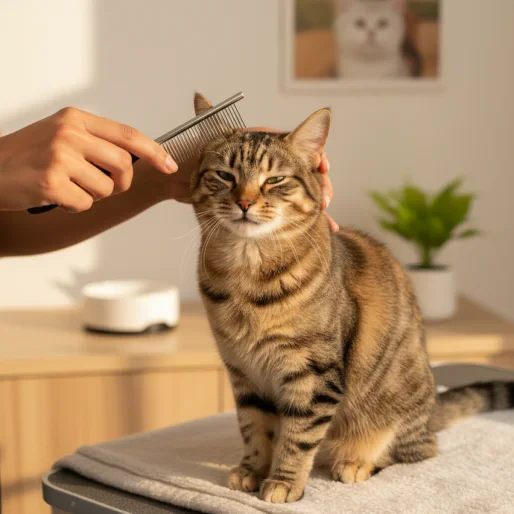
- Brush the cat regularly to remove pollen trapped in the coat. This can also help with seasonal shedding; for related grooming guidance, see Why Hairball Season Peaks in Spring and How to Help.
Soothe the Skin Gently
A lukewarm rinse (not a full bath unless the cat tolerates it) can help remove surface allergens. Avoid human shampoos and fragranced products. If bathing, use a veterinary-formulated, soap-free, oatmeal-based shampoo designed for cats. Bathing frequency should not exceed once every two weeks unless directed by a vet, as over-bathing strips natural skin oils.
Which Antihistamines Are Considered Safe for Cats?
Important: No antihistamine should be given to a cat without first confirming the dose and suitability with a veterinarian. Cats metabolise drugs differently from dogs and humans, and what is safe for one species can be toxic to another.
That said, veterinary professionals commonly reference the following antihistamines as options for feline patients:
- Chlorpheniramine (chlorphenamine): one of the most frequently cited antihistamines for cats. It is a first-generation antihistamine. The dose range typically referenced in veterinary formularies is around 1 to 2 mg per cat, given by mouth every 8 to 12 hours, but this must be confirmed by the prescribing vet.
- Cetirizine: a second-generation antihistamine with fewer sedative effects. Dosing in cats is less standardised, and veterinary guidance is essential.
- Loratadine: another second-generation option occasionally used under veterinary direction.
Antihistamines to avoid in cats:
- Any product containing pseudoephedrine or phenylephrine (common in human cold and flu combination products) as these are toxic to cats.
- Diphenhydramine is sometimes referenced for cats but has a narrow safety margin and should only be used under direct veterinary supervision.
Response rates to antihistamines in cats vary. Professional consensus suggests that antihistamines alone control signs in only a proportion of allergic cats, often cited as roughly 30 to 50 percent. Many cats require additional therapies such as essential fatty acid supplements, topical treatments, or prescription medications (corticosteroids, ciclosporin, or newer targeted therapies) under veterinary direction.
What to Watch for During and After Home Care
Monitor closely for:
- Worsening redness, swelling, or discharge from skin lesions, which may indicate secondary bacterial or yeast infection.
- Increased lethargy or reduced appetite, which could signal systemic illness or medication side effects.
- Behavioural changes such as hiding, vocalising, or aggression when touched, all of which suggest escalating discomfort.
- Spreading lesions or new areas of hair loss despite treatment.
- Excessive sedation after antihistamine administration (more common with first-generation products).
Keep logging symptoms and photographing changes. If improvement is not seen within 7 to 14 days of consistent home care and veterinary-approved antihistamine use, further investigation is warranted.
When Over-Grooming Means a Veterinary Dermatology Referral
Over-grooming (also called psychogenic alopecia when a behavioural component is suspected) is one of the most misunderstood signs in cats. Owners often assume it is "just stress," but studies and clinical experience consistently show that the majority of cats presenting with over-grooming have an underlying medical cause, most commonly allergic skin disease.
Red Flags That Call for a Specialist Referral
- Symmetrical hair loss on the belly, inner legs, or flanks that does not resolve with flea control and basic allergy management.
- Eosinophilic lesions (raised, red plaques or lip ulcers) that recur despite treatment.
- Self-trauma causing open wounds, crusting, or secondary infections.
- No response to a well-conducted flea control trial (minimum 8 weeks of rigorous, veterinary-grade flea treatment on all household pets).
- Recurrent ear infections alongside skin signs, which may suggest a broader allergic pattern.
- A need for repeated or long-term corticosteroid courses, as prolonged steroid use in cats carries risks including diabetes mellitus, urinary tract infections, and skin fragility.
What a Veterinary Dermatologist Can Offer
A board-certified veterinary dermatologist can perform intradermal allergy testing or serum allergy testing to identify specific environmental triggers. Based on results, allergen-specific immunotherapy (allergy vaccines or sublingual drops) may be recommended. This approach aims to desensitise the cat to its triggers over time and is considered the only treatment that addresses the root cause rather than just managing symptoms.
Other advanced options include cytology of skin and ear samples, fungal cultures to rule out dermatophytosis (ringworm), skin biopsies for complex cases, and tailored immunosuppressive protocols when standard treatments fall short.
When to Call Your Vet Immediately
Seek same-day veterinary attention if:
- The cat has open, weeping, or foul-smelling skin wounds.
- The face or eyes are significantly swollen (possible angioedema or anaphylaxis, which is rare but serious).
- The cat is lethargic, not eating, or seems painful.
- There are signs of difficulty breathing alongside skin symptoms.
- A medication reaction is suspected (vomiting, drooling, tremors, or collapse after giving any product).
These situations are beyond home management and require professional hands without delay.
Supporting Your Cat Through Allergy Season: A Quick Checklist
- Maintain year-round flea prevention on every pet in the home.
- Wipe your cat's coat and paws after outdoor time.
- Wash bedding weekly.
- Photograph and log all skin changes.
- Never give medication without veterinary confirmation of the dose.
- Request a dermatology referral if signs persist beyond 8 to 12 weeks of first-line treatment.
- Keep older cats comfortable during warm weather as well; Adjusting Your Senior Cat's Diet in Warm Weather offers practical seasonal support tips.
Final Thoughts
Spring allergy season in cats can be frustrating for owners and miserable for cats, but a methodical approach makes a real difference. Start with rigorous flea control, reduce pollen exposure, document what you see, and work closely with a veterinary professional to find the right combination of treatments. Most allergic cats can enjoy a good quality of life with the right management plan in place.
If you care for other animals during the spring season, you may also find these guides helpful: How to Foster Neonatal Kittens During Kitten Season and Supporting Pet Birds Through a Spring Moult.
Frequently Asked Questions
Content Disclosure
This article was created using state-of-the-art AI models with human editorial oversight. It is intended for informational and entertainment purposes only and does not constitute veterinary medical advice. Always consult a licensed veterinarian for your pet's specific health needs. Learn more about our process.