Indian summers demand special precautions when training puppies to walk on a lead. This guide covers heat safe timing, pavement checks, and positive reinforcement techniques tailored for conditions across India.
Key Takeaways
- In Indian plains where summer temperatures regularly cross 40°C, puppy training walks should happen before 6:30 a.m. or after 7:30 p.m.
- Always perform the seven second hand test on roads and footpaths before letting your puppy walk on them.
- Keep initial training sessions to five minutes or less, with water breaks every two to three minutes in peak heat.
- Use high value treats (small pieces of paneer, boiled chicken, or commercial training treats) for precise positive reinforcement.
- Stray dog encounters are common in Indian cities; systematic desensitisation is essential for safe urban walking.
- If pulling persists after six weeks of consistent training, consult a certified canine behaviour consultant listed with the Animal Welfare Board of India (AWBI) or a veterinary behaviourist.
Why Puppies Pull on the Lead
Pulling is not defiance or stubbornness. From a behavioural science perspective, lead pulling is a reinforced behaviour: the puppy moves forward, reaches interesting smells, food scraps, or other animals, and the environment rewards the pulling. This is operant conditioning at work.
Puppies also have a natural opposition reflex. When pressure is applied to the collar or harness, many dogs instinctively push into it rather than yield. Understanding this helps owners avoid the common trap of pulling back, which usually makes things worse.
In Indian heat, additional factors complicate lead walking. Puppies may rush toward shade, become overstimulated during a shortened outing, or behave erratically due to thermal discomfort. The presence of stray dogs, street food vendors, and bustling pedestrian traffic in most Indian neighbourhoods adds further complexity. Addressing environmental comfort and safety first creates the foundation for effective training.
India Specific Heat Risks: Beyond the Basics
Indian summers are among the harshest for outdoor dog training. In cities like Delhi, Nagpur, Jaipur, and Ahmedabad, air temperatures routinely exceed 45°C between April and June. At 45°C air temperature, dark asphalt surfaces can reach 65°C or higher in direct sunlight, enough to cause serious paw pad burns within seconds.
Even in coastal cities like Mumbai and Chennai, high humidity combined with temperatures of 33 to 38°C creates dangerous conditions because dogs lose their primary cooling mechanism (panting) when humidity is high.
The Pavement Temperature Test
The seven second rule is essential: place the back of your hand flat on the road, footpath, or paver surface. If you cannot hold it there comfortably for seven seconds, the surface is too hot for your puppy's paw pads. In Indian conditions, this test should be performed on every surface type your puppy will walk on, including marble, granite, tiles outside shops, and metal manhole covers, which heat up faster than asphalt.
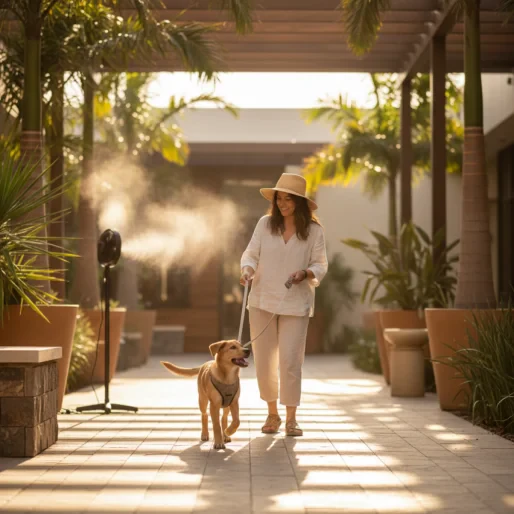
Safer alternatives include grass in parks, mud paths, and shaded areas under trees. Many Indian residential colonies have shaded walking paths that work well for early training sessions.
Timing Walks for Indian Conditions
Standard global advice suggests walking before 8 a.m. or after 7 p.m. In India, particularly in the northern plains and central regions during April through June, these windows need to be narrower:
- Early morning: Before 6:30 a.m. is ideal. By 7:30 a.m., pavement temperatures are already climbing rapidly.
- Late evening: After 7:30 p.m. in summer, but test pavement temperature regardless. Indian roads retain heat well into the night.
- Monsoon season (June to September): Cooler temperatures make training easier, but watch for waterlogged areas, open drains, and increased stray dog activity. Avoid walking during active rainfall with a puppy in training.
- Winter (November to February): The best months for outdoor training across most of India, with comfortable temperatures between 10°C and 25°C.
Puppies under six months are especially vulnerable to heat stress due to their immature thermoregulation. Indian breed puppies and crossbreeds tend to tolerate heat better than imported breeds, but all puppies need protection in extreme conditions.
Training Prerequisites
Equipment
- Front clip harness: Reduces pulling mechanics without causing tracheal pressure. Particularly important for Indian Spitz, Pugs, and brachycephalic breeds popular in Indian cities, which are already at higher heat risk. Quality front clip harnesses are available at most urban pet stores for approximately ₹500 to ₹1,500.
- Fixed length lead (1.5 to 2 metres): Retractable leads undermine loose lead training because they teach the puppy that tension equals forward movement. Nylon or cotton fixed leads are widely available for ₹200 to ₹600.
- Treat pouch: Allows quick access to rewards. Available at pet stores and online for around ₹200 to ₹500.
- High value treats: Soft, small (pea sized), and smelly. Small cubes of paneer, boiled chicken, or commercial training treats work well. In hot weather, avoid treats that melt or spoil; carry them in an insulated pouch.
- Water bottle and collapsible bowl: Non negotiable for any walk in Indian conditions. Carry at least 500 ml of water for a short training session.
Positive Reinforcement: Step by Step Technique
Foundation: Indoor and Balcony Work (Week One)
Begin all loose lead training indoors or on a secure balcony or terrace, eliminating environmental distractions. Most Indian apartments and houses provide enough space for initial training.
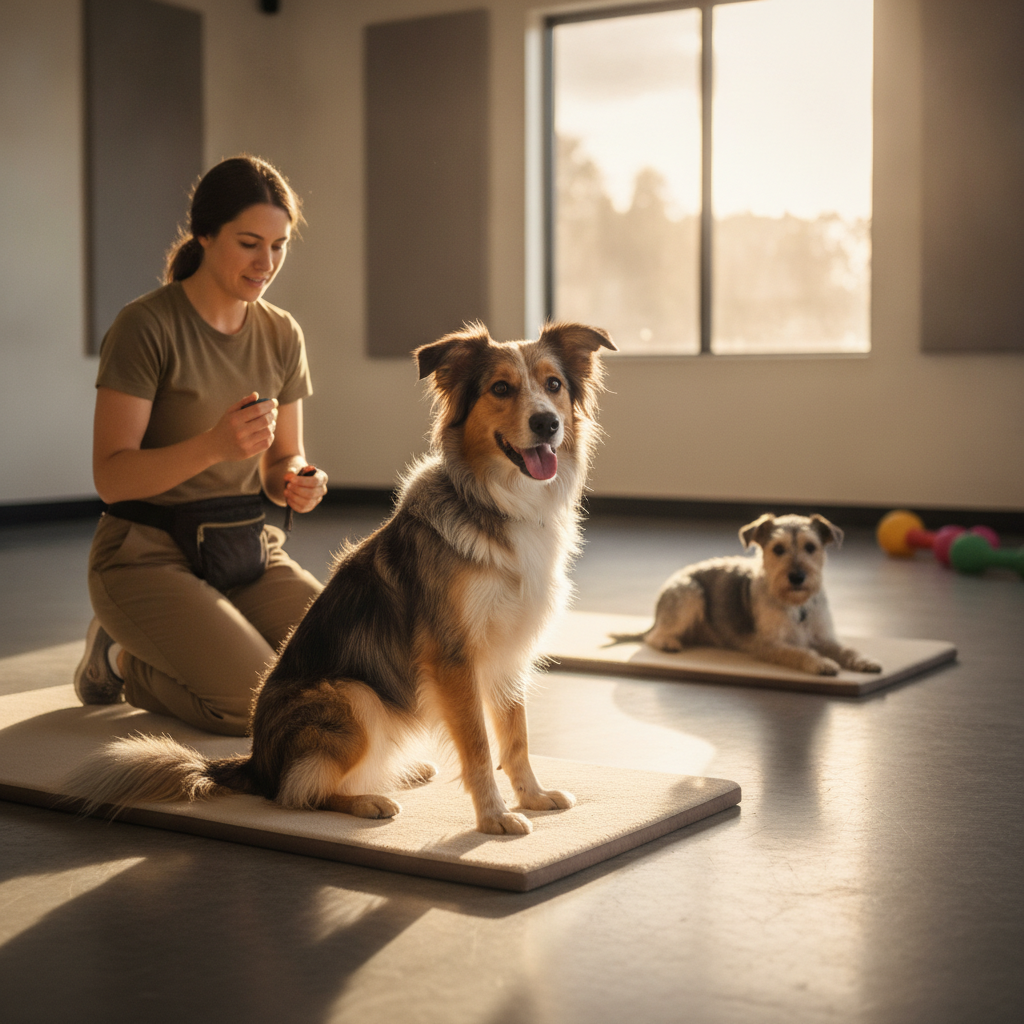
- Charge the marker: Say "yes" (or click) then deliver a treat. Repeat 15 to 20 times until the puppy visibly anticipates the treat upon hearing the marker.
- Reward position: With the puppy on your preferred side, mark and reward any moment the puppy is near your leg with a loose lead. The lead should form a visible J shape.
- First steps: Take one step. If the puppy moves with you and the lead stays loose, mark and reward. If the lead tightens, stop completely ("be a tree") and wait. The moment the puppy creates slack, mark and reward.
- Build to five steps: Gradually increase from one step to five before rewarding. This is shaping: reinforcing successive approximations of the desired behaviour.
Transitioning Outdoors (Weeks Two and Three)
Moving outdoors in India means dealing with heat, stray dogs, traffic noise, and street food smells simultaneously. Apply these adjustments:
- Choose a quiet, shaded area within your residential colony or a nearby park with grass underfoot.
- Reduce expectations: even one step of loose lead walking outdoors deserves reinforcement initially.
- Keep sessions to three to five minutes maximum, then offer water and shade rest.
- Train in two to three micro sessions per walk rather than one continuous block.
- Carry water for both yourself and the puppy.
The rule remains consistent: forward movement stops entirely when the lead is taut. The puppy learns that tension equals no progress, while a loose lead equals movement, treats, and access to the environment.
Adding Duration and Mild Distractions (Weeks Three and Four)
Gradually extend sessions to seven to ten minutes. Introduce mild distractions at a distance where the puppy notices them but can still respond to cues.
Common distractions in Indian settings to introduce first:
- A person walking at 10 to 15 metres distance
- A parked two wheeler or auto rickshaw
- Distant sounds of other dogs (strays calling from a few streets away)
- Street vendors at a safe distance
Managing Stray Dog Encounters
This is perhaps the most important India specific consideration for puppy lead training. Stray dogs are present in virtually every Indian neighbourhood. The Animal Welfare Board of India oversees the Animal Birth Control (ABC) programme, and most community strays are sterilised and vaccinated under this scheme, but encounters still require careful management.
- Maintain distance: Keep at least 10 to 15 metres from stray dog groups when training. Cross the road if necessary.
- Use the engage/disengage game: When your puppy notices a stray dog, mark and reward the moment of noticing, before any reactive behaviour. Over repetitions, the puppy learns that seeing another dog predicts treats from you.
- Emergency U turns: If a stray approaches, cheerfully turn and walk the other direction. Reward the puppy for following. This is management, not punishment.
- Rabies awareness: Rabies is endemic in India. Ensure your puppy's rabies vaccination is up to date as per your veterinarian's schedule. This is critical before any outdoor walking begins. The Prevention of Cruelty to Animals Act, 1960 and related rules govern both pet and stray animal welfare.
[LOCAL_VET_EMERGENCY_en-in]
The Six Week Programme Adapted for India
| Week | Location | Session Length | Key Focus |
|---|---|---|---|
| 1 | Indoors, balcony, or terrace | 3 to 5 minutes, 3 times daily | Marker conditioning and reward position |
| 2 | Shaded colony path or park | 3 to 5 minutes, 2 to 3 times daily | Transferring skills outdoors, "be a tree" |
| 3 | Quiet colony road or park path | 5 to 7 minutes, twice daily | Mild distractions at distance |
| 4 | Moderately busy area | 7 to 10 minutes, twice daily | Engage/disengage, stray dog awareness |
| 5 | Busier streets (avoiding peak traffic) | 10 to 12 minutes, once or twice daily | Variable reinforcement, longer stretches |
| 6 | Full neighbourhood walk | 12 to 15 minutes continuous | Generalisation across environments |
Important: These are training session durations, not total walk times. During Indian summers (March to June), consider doing all six weeks of outdoor training exclusively during the early morning window. Monsoon and winter months allow more flexibility in scheduling.
Breeds Popular in India: Special Considerations
- Indian Spitz and Indian Pariah (Indie): Generally heat tolerant, but puppies still need protection. Often quick learners with moderate pulling tendencies.
- Labrador Retriever: Extremely popular in India but bred for cold water retrieval. Labs overheat quickly and pull strongly. Extra short sessions and frequent water breaks are essential.
- Pug and French Bulldog: Brachycephalic breeds at very high risk in Indian heat. Veterinary guidelines suggest limiting outdoor time to under five minutes when temperatures exceed 30°C. Indoor training alternatives may be necessary for much of the year.
- German Shepherd: Common in India, with a heavy double coat unsuited to tropical heat. Early morning only for training during summers.
- Beagle: Nose driven breed that finds Indian street smells extraordinarily distracting. Higher value treats and more gradual distraction introduction recommended.
Common Mistakes in Indian Conditions
- Training during the afternoon: Even brief exposure to 40°C+ temperatures is dangerous. Never train between 10 a.m. and 5 p.m. during Indian summers.
- Ignoring humidity: In coastal and eastern India, humidity above 80% makes panting ineffective. Heat stroke risk is high even at 30°C in humid conditions.
- Using punishment based tools: Choke chains and prong collars are still sold in some Indian pet shops. These are not recommended by the AWBI or international bodies like the IAABC. Stick to front clip harnesses and positive reinforcement.
- Skipping rabies vaccination before outdoor walks: Given that rabies is endemic in India, no puppy should be walked outdoors without appropriate vaccination as advised by a veterinarian.
- Allowing pulling "just this once" because of heat: Every instance of pulling that results in forward movement reinforces the behaviour. If conditions are too hot for proper training, skip the training session entirely rather than abandoning technique.
When to Seek Professional Help
Consult a qualified canine behaviour professional if:
- The puppy shows no improvement after four weeks of consistent training.
- Pulling is accompanied by aggression, extreme fear, or panic, especially around stray dogs or traffic.
- The puppy appears to be in physical discomfort when walking (limping, reluctance, yelping), which requires veterinary assessment first.
- Reactivity toward stray dogs escalates despite systematic desensitisation efforts.
In India, look for professionals certified by internationally recognised bodies such as the IAABC (International Association of Animal Behavior Consultants) or those holding CPDT-KA credentials. The AWBI website can also help locate registered animal welfare organisations in your city that may offer training referrals.
Heat Safety Reminders for Indian Pet Owners
- Carry at least 500 ml of water per 10 minutes of outdoor time during summers.
- Know the signs of heat stress: excessive panting, drooling, bright red gums, unsteadiness, vomiting. If these appear, move the puppy to shade immediately, apply cool (not ice cold) water to paw pads and belly, and contact your veterinarian.
- Consider cooling mats for post walk recovery, available at Indian pet stores for approximately ₹500 to ₹2,000.
- Marble and stone floors common in Indian homes are naturally cool and excellent for post walk rest.
- Always identify a shaded rest spot before beginning any training session outdoors.
Frequently Asked Questions
What time should I walk my puppy in Indian summers? ↓
How do I handle stray dog encounters during puppy lead training? ↓
Which breeds popular in India struggle most with heat during lead training? ↓
Is it safe to train my puppy to walk on a lead during monsoon season? ↓
What treats work best for lead training in Indian heat? ↓

Mark Sullivan
Certified Professional Dog Trainer
Certified professional dog trainer — positive-reinforcement methods for every breed and behavioural challenge.
Content Disclosure
This article was created using state-of-the-art AI models with human editorial oversight. It is intended for informational and entertainment purposes only and does not constitute veterinary medical advice. Always consult a licensed veterinarian for your pet's specific health needs. Learn more about our process.