
In this article
Key Takeaways
- Moisture is the Enemy: High humidity traps moisture against the skin, creating an ideal environment for yeast and bacterial overgrowth.
- The 3-Zone Check: Daily inspections of ears, paws, and underarms are non-negotiable during humid weather.
- Drying Technique Matters: Towel drying is often insufficient for double coats; cool-air blow drying prevents trapped moisture.
- Grooming is Prevention: Matting traps heat and moisture, leading to rapid hot spot development.
In my 12 years as a veterinary nurse, I have seen a distinct pattern every time the humidity creates that heavy, sticky feeling in the air. The clinic schedule fills up not just with heatstroke cases, but with skin complaints: distinct "wet dog" odors that won't go away, obsessive paw licking, and the sudden appearance of angry, weeping sores known as hot spots.
Many owners assume these issues are allergies to pollen or grass, and while that plays a role, the environment itself is often the primary trigger. High humidity disrupts the natural evaporation process on your dog's skin. When the ambient air is saturated, moisture stays trapped in the undercoat, softening the skin (maceration) and breaking down the protective barrier. This allows the natural bacteria (Staphylococcus) and yeast (Malassezia) that live on every dog to multiply out of control.
This guide covers the practical, home-care strategies I recommend to clients to manage skin health when the air gets heavy.
The Daily Moisture Patrol: A 3-Step Routine
Preventing humidity-related skin issues is easier than treating them. During humid spells, I recommend shifting your daily routine to focus on moisture management.
1. The Towel is Not Enough
If your dog has a double coat (like a Golden Retriever, Husky, or Shepherd) or a curly coat (Poodles and Doodles), a towel often just pushes moisture deeper into the fur. After a walk in humid weather, even if it hasn't rained, the coat can be damp.
The Nurse's Protocol:
- Use a High-Velocity Dryer: If you have one, use it on a cool setting to blast air through the coat down to the skin.
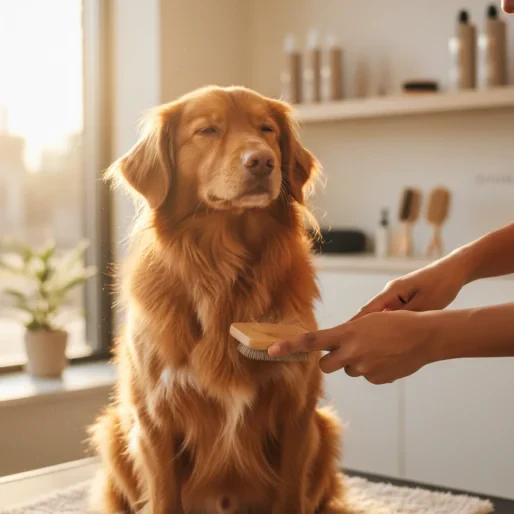
- The "Reverse Ruffle": If using a towel, rub against the grain of the hair to reach the skin, then slicker brush the hair to separate follicles and allow airflow.
- Focus on Traps: Pay special attention to the collar area. I often see hot spots form under collars because the material holds moisture against the neck. Remove the collar when indoors to let the neck breathe.
2. Paw Hygiene and the "Frito" Smell
Paws are sweat glands, and in high humidity, they stay damp. This promotes yeast overgrowth, leading to that characteristic corn chip smell and rusty-red staining on the fur between toes.
Just as we discuss in our guide to Paw Care During The Big Thaw, maintaining the barrier function of the paw pad is critical. However, in humidity, the goal is dryness rather than protection from salt.
- Trim the Tufts: Keep the fur between the pads trimmed short. Long hair here acts like a wick, holding moisture against the skin.
- Saline Rinses: If the paws are itchy, a simple rinse with saline solution (dry thoroughly afterwards) can remove allergens and neutralize the pH slightly.
- Check for Ticks: While checking paws, broaden your search. As noted in our Early Spring Tick Strategies, parasites thrive in humid warmth. A tick bite can become the focal point for a hot spot infection.
3. Ear Maintenance
Ears are essentially petri dishes in humid weather, especially for floppy-eared breeds (Cocker Spaniels, Bassets). The lack of airflow combined with ambient moisture creates a fermenting environment.
Action Plan:
- The Smell Test: Lift the ear flap daily. A sweet, musty smell indicates yeast; a foul, rotting smell indicates bacteria.
- Preventative Cleaning: Use a veterinary-approved drying ear cleaner once or twice a week during humid spells. Avoid cleaners with alcohol if the ear is already red, as this will sting aggressively.
- Clip the Leather: For heavy-coated dogs, shaving the underside of the ear flap (the leather) improves airflow into the canal.
Understanding and Managing Hot Spots
Acute Moist Dermatitis, or "hot spots," are the nightmare of humid weather. They can appear and triple in size within hours. They are intensely painful, itchy, and oozing lesions caused when a dog scratches or chews a specific area, introducing bacteria into broken skin.
Why Humidity Triggers Them
In dry weather, a small scratch might scab over. In high humidity, the wound weeps serum, which doesn't dry. This serum mats the surrounding fur, creating a warm, wet seal over the wound where bacteria explode. Ideally, we want to prevent the initial irritation that causes the scratching.
Immediate Home Triage
If you find a hot spot (it will look wet, red, and slimy, often with hair matted over it):
- Clip the Hair: You must remove the hair over and around the lesion to let air in. This is the single most important step. Use clippers, not scissors, to avoid cutting the swollen skin.
- Cleanse: Gently clean with a chlorhexidine-based wash or mild saline.
- Dry: Pat dry. Do not cover it. It needs to breathe.
- Cone of Shame: You must physically prevent the dog from licking it. One lick can undo 24 hours of healing.
When to see a vet: If the lesion is larger than a coin, if the dog is lethargic, or if it is near the eye or ear. These often require injectable antibiotics and steroids.
The Grooming Imperative
Matting is dangerous in humidity. A mat pulls the skin tight and traps moisture underneath. I have shaved down matted dogs to reveal extensive skin rot that the owner had no idea existed because the hard shell of the mat hid it.
Regular brushing isn't just about aesthetics; it's a health check. If you find a mat you cannot brush out, have it clipped out immediately. Do not bathe a matted dog, the water will tighten the mats further and trap soap against the skin, causing severe chemical burns.
Hydration and Internal Health
While we focus on the outside, remember that skin health comes from within. High humidity can be deceptive; dogs pant to cool down, losing fluids rapidly even if it doesn't feel "hot" to you.
Ensure fresh water is always available. Dehydrated skin loses elasticity and barrier function. While this is crucial in extreme heat (see our guide on Desert Walking), it is equally important in humid environments where the dog's thermoregulation is less efficient.
Summary
Managing pet skin in high humidity requires a shift from passive observation to active maintenance. By keeping the coat aerated, the paws dry, and the ears clean, you drastically reduce the risk of the microbial overgrowth that keeps veterinary dermatologists so busy in the summer. If you smell yeast or see raw skin, act fast, humidity turns minor irritations into major infections in the blink of an eye.
Frequently Asked Questions
Content Disclosure
This article was created using state-of-the-art AI models with human editorial oversight. It is intended for informational and entertainment purposes only and does not constitute veterinary medical advice. Always consult a licensed veterinarian for your pet's specific health needs. Learn more about our process.