
In this article
Key Takeaways
- Window bird feeder stations provide safe, screen-filtered access to spring wildlife stimulation.
- Puzzle feeders slow eating, reduce weight gain, and engage a cat's natural foraging instinct.
- Catnip and silver vine scent trails offer olfactory enrichment that roughly 60 to 80 percent of cats respond to.
- Vertical space additions (shelves, cat trees, wall steps) satisfy climbing instincts and reduce territorial stress.
- A weekly rotation schedule prevents habituation and keeps enrichment novel throughout the season.
Why Spring Enrichment Matters for Indoor Cats
Spring brings longer daylight hours, increased bird activity, and rising temperatures, all of which can trigger heightened alertness in cats. Indoor cats who lack outlets for this seasonal energy are more likely to develop unwanted behaviours such as excessive grooming, furniture scratching, or nocturnal vocalisation. The ASPCA notes that environmental enrichment is one of the most effective strategies for reducing stress-related behaviour in confined cats.
This guide walks through five enrichment categories, room by room, with a printable checklist and a weekly rotation plan designed by professional pet-proofing standards.
Room by Room Enrichment Checklist
Living Room and Main Windows: Bird Feeder Stations
Window bird feeder stations are one of the simplest and most effective enrichment tools for indoor cats. Suction-mounted feeders placed on the exterior of a window give cats a front-row seat to songbirds, squirrels, and spring insect activity.
Setup checklist:
- Choose a window that receives morning sunlight, as bird activity peaks in early hours.
- Install the feeder on the outside of the glass. Verify suction cups are rated for the feeder's weight plus seed load.
- Place a sturdy perch, shelf, or padded windowsill on the interior so the cat can watch comfortably for extended periods.
- Ensure window screens are secure and locked. Cats can push through loose or damaged screens, especially in spring when windows are frequently opened. The ASPCA lists open or poorly screened windows as a leading cause of cat falls (sometimes called "high-rise syndrome").
- Clean feeders every one to two weeks to prevent mould and bacterial growth, which can harm visiting birds.
- If multiple cats share a home, provide at least two viewing stations to reduce resource guarding.
For senior cats with joint stiffness, a low-profile heated window perch may be more appropriate. See also: Senior Cat Muscle and Joint Care: A Spring Guide.
Kitchen and Feeding Area: Puzzle Feeders
Puzzle feeders transform mealtime into a mental workout. Veterinary behaviourists widely recommend food puzzles as a core component of feline enrichment, and research published in the Journal of Feline Medicine and Surgery supports their use for weight management and anxiety reduction.
Setup checklist:
- Start with beginner-level puzzles (open trays with dividers) before advancing to enclosed ball or tower designs.
- Use a portion of the cat's daily kibble allowance inside the puzzle to avoid overfeeding.
- Place puzzle feeders on easy-to-clean surfaces; kitchens or tiled areas work well.
- Supervise initial sessions to confirm the cat engages rather than becoming frustrated.
- Wash puzzle feeders after every use with warm water and pet-safe soap to prevent bacterial buildup.
- For multi-cat households, provide one puzzle per cat plus one extra, placed in separate locations.
Automated smart feeders can complement puzzle feeders by dispensing controlled portions on a schedule. Learn more in How AI Smart Feeders Actually Work in 2026.
Hallways and Open Floors: Scent Trails With Catnip and Silver Vine
Cats experience the world largely through scent, and olfactory enrichment is an often overlooked form of stimulation. Catnip (Nepeta cataria) triggers a euphoric rolling and rubbing response in an estimated 60 to 70 percent of cats, while silver vine (Actinidia polygama) is reported to affect a broader percentage, potentially up to 80 percent, including some cats that do not respond to catnip.
Setup checklist:
- Create scent trails by rubbing dried catnip or silver vine along baseboards, scratching posts, and fabric toys.
- Use small fabric sachets filled with dried herbs and place them at intervals along a hallway to encourage "hunting" behaviour.
- Rotate between catnip, silver vine, valerian root, and Tatarian honeysuckle to maintain novelty.
- Limit scent sessions to 10 to 15 minutes, then remove or seal sachets. Overexposure can lead to temporary desensitisation.
- Store dried herbs in airtight containers away from heat and light to preserve potency.
- Avoid essential oil diffusers or concentrated extracts. The ASPCA warns that many essential oils are toxic to cats, including tea tree, eucalyptus, and citrus oils.
Safety note: While catnip and silver vine are considered non-toxic for cats, ingestion of large quantities may cause mild gastrointestinal upset. Supervision during scent sessions is recommended, particularly for kittens. New kitten owners may find additional safety guidance in First Time Kitten Owner Checklist for Spring 2026.
Bedrooms and Quiet Rooms: Vertical Space Additions
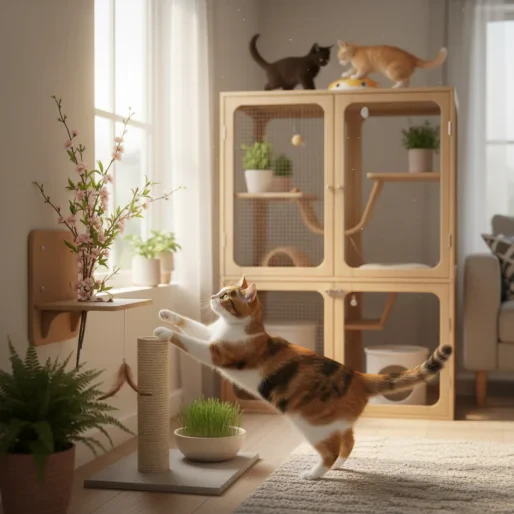
Cats are natural climbers, and vertical territory is just as important as floor space. Adding height options reduces competition in multi-cat homes and gives anxious cats a safe retreat. Professional feline behaviour consultants often cite vertical space as the single highest-impact environmental modification for indoor cats.
Setup checklist:
- Install wall-mounted shelves in a staggered pattern to create a climbing path. Space shelves 30 to 45 cm (roughly 12 to 18 inches) apart vertically.
- Ensure all shelves and platforms are anchored into wall studs or use heavy-duty drywall anchors rated for at least three times the cat's weight.
- Add non-slip surfaces (carpet remnants, sisal matting, or rubber shelf liners) to all platforms.
- Position at least one high perch near a window for combined climbing and bird-watching enrichment.
- For senior or arthritic cats, include ramps or intermediate steps to prevent joint strain.
- Cat trees should have a stable, wide base. Tall, narrow trees with small bases are a tipping hazard, especially in homes with large or multi-cat households.
- Inspect all vertical installations monthly for loose screws, fraying fabric, or wobbling joints.
Whole Home: Seasonal Hazard Sweep
Spring enrichment should always be paired with a seasonal safety audit. Common spring hazards for indoor cats include:
- Toxic spring plants: Lilies (all Lilium and Hemerocallis species) are extremely toxic to cats and can cause fatal kidney failure. Tulips, daffodils, and hyacinths also pose risks. The ASPCA Poison Control hotline (888-426-4435 in the US) maintains a searchable database of toxic and non-toxic plants.
- Open windows: As noted above, ensure all screens are secure and intact before opening windows for spring air.
- Cleaning products: Spring cleaning often introduces concentrated products. Store all cleaning agents in closed cabinets. Avoid using phenol-based disinfectants around cats.
- Pest control: Spring pest treatments (rodent bait, insecticide sprays) can be lethal to cats. Use only pet-safe pest control methods and inform any pest control service that cats are present in the home.
For owners planning spring gardens, be aware that outdoor planting areas accessible through open doors can introduce toxic soil amendments and fertilisers. See Pet Memorial Garden in Spring: A Safe Planting Guide for plant safety guidance.
Weekly Rotation Schedule to Prevent Boredom
Cats habituate to enrichment quickly. A toy or activity that captivates on Monday may be ignored by Wednesday. Professional feline enrichment guidelines recommend rotating stimuli on a structured schedule to maintain engagement.
Sample Seven Day Plan
- Monday: Puzzle feeder with kibble. Scent trail with catnip along the hallway.
- Tuesday: Window bird feeder viewing session (open curtains at dawn). Interactive wand toy play for 10 to 15 minutes.
- Wednesday: Silver vine sachet hidden inside a cardboard box or paper bag. Vertical climbing encouraged with treats placed on high shelves.
- Thursday: New puzzle feeder variation (swap design or difficulty level). Short training session using clicker and treats.
- Friday: Rotate all accessible toys (swap out three to four toys from a stored collection). Scent trail with valerian root.
- Saturday: "Foraging safari" with kibble scattered in small piles around the home. Window viewing session with bird feeder freshly filled.
- Sunday: Rest and observation day. Keep two favourite items available and note which the cat gravitates toward. Use these observations to adjust the following week.
Rotation tips:
- Keep a storage bin of 10 to 15 toys and rotate three to five into active use at a time.
- Introduce one completely new item per month to maintain true novelty.
- Track engagement in a simple notebook or phone note: date, activity, duration of engagement, and interest level (high, medium, low).
- Adjust the schedule for individual cats. Kittens and young adults typically need more frequent rotation and higher-intensity play, while senior cats may prefer gentler scent-based or visual enrichment.
Emergency Kit Essentials for Indoor Cat Households
Every indoor cat household should maintain a small emergency kit, refreshed each spring. This is especially important in areas prone to seasonal storms or power outages.
- Three to five days of cat food (dry and wet) and fresh water in sealed containers.
- Any prescription medications with dosage instructions.
- Copies of vaccination records and microchip numbers.
- A secure carrier for each cat, labelled with the cat's name and owner contact details.
- Basic first aid supplies: gauze, adhesive tape, saline solution, blunt-tipped scissors.
- ASPCA Poison Control number: 888-426-4435 (US). For UK owners, the Animal Poison Line: 01202 509000.
- Contact details for the nearest emergency veterinary clinic.
Unexpected veterinary costs can arise from household hazards. Reviewing insurance options can provide financial peace of mind: Cat Insurance in 2026: Feline Policy Cost Guide.
Life Stage Considerations
- Kittens (under 1 year): High energy, short attention span. Favour interactive play and beginner puzzle feeders. Avoid small detachable toy parts that pose choking risks.
- Adult cats (1 to 10 years): Benefit from the full rotation schedule. Adjust intensity based on breed and temperament.
- Senior cats (10 years and older): Prioritise low-impact enrichment: scent trails, window viewing, gentle puzzle feeders. Ensure all vertical elements have easy access points. Gut health may also be supported through diet; see Probiotics for Dogs and Cats: A Science Based Guide.
Printable Summary Checklist
- ☐ Window bird feeder installed on exterior glass, screens secured and locked.
- ☐ Interior perch or shelf placed at each bird-watching window.
- ☐ At least two puzzle feeder styles available, cleaned after each use.
- ☐ Catnip, silver vine, valerian root, and honeysuckle stocked in airtight containers.
- ☐ Scent sachets prepared and stored between sessions.
- ☐ Wall shelves or cat tree installed with non-slip surfaces and secure anchoring.
- ☐ Seasonal hazard sweep completed: toxic plants removed, screens checked, cleaning products secured.
- ☐ Toy rotation bin stocked with 10 to 15 items; three to five in active use.
- ☐ Weekly enrichment schedule posted (refrigerator or phone reminder).
- ☐ Emergency kit assembled and medications checked for expiry dates.
- ☐ Engagement tracking log started.
Frequently Asked Questions
Content Disclosure
This article was created using state-of-the-art AI models with human editorial oversight. It is intended for informational and entertainment purposes only and does not constitute veterinary medical advice. Always consult a licensed veterinarian for your pet's specific health needs. Learn more about our process.