
In this article
- Key Takeaways for NZ Owners
- Why Spring Grazing Matters in New Zealand
- Predator-Proofing for NZ Conditions
- Managing NZ's Intense UV
- Temperature Guidelines
- RHDV and Myxomatosis: NZ Disease Risks
- Toxic Plants Common in NZ Gardens
- Gradual Grass Introduction
- Supervision and Session Length
- Post-Session Checks
- When to Call Your Vet Immediately
- Ongoing Maintenance
- Quick Reference Checklist
Key Takeaways for NZ Owners
- New Zealand has no foxes, but stoats, ferrets, weasels, feral cats, and Australasian harriers pose serious threats to rabbits and guinea pigs in outdoor runs.
- NZ's UV index regularly exceeds 10 in spring, even in the South Island. Shade cloth rated UPF 50+ over at least half the run is strongly recommended.
- Rabbit Haemorrhagic Disease Virus (RHDV, also called calicivirus) is present throughout NZ as a biocontrol agent. Vaccination is available and should be discussed with a vet before any outdoor access.
- Introduce fresh grass gradually over 7 to 10 days to prevent gastrointestinal stasis or bloat.
- Supervise every 15 to 20 minutes; never leave small pets outdoors overnight in a temporary run.
Why Spring Grazing Matters in New Zealand
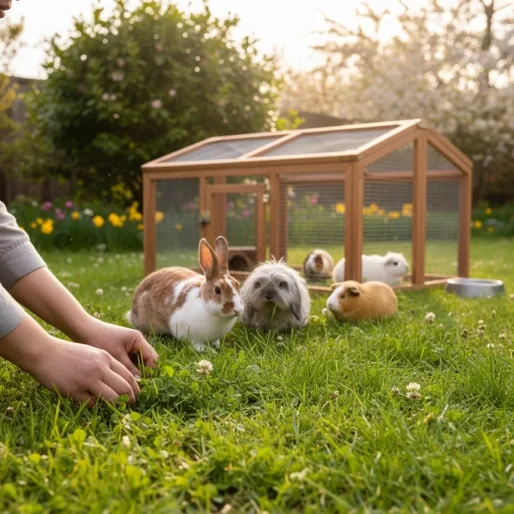
Spring in New Zealand (September to November) brings longer daylight, rapid grass growth, and conditions that suit outdoor grazing for rabbits and guinea pigs. Direct sunlight supports vitamin D synthesis, and foraging on varied pasture provides mental stimulation that indoor housing cannot replicate.
However, NZ spring conditions introduce specific risks that differ from those in the Northern Hemisphere. The country's position beneath a thinner ozone layer means UV radiation can be intense even on overcast days. Native and introduced predators are active, and the widespread presence of RHDV in the environment adds a disease dimension not faced in many other countries. Setting up a run correctly for New Zealand conditions is essential.
Predator-Proofing for NZ Conditions
New Zealand does not have foxes or raccoons, but the predator threat is no less real. The key species to guard against include:
- Mustelids (stoats, ferrets, weasels): These are small, strong, and capable of squeezing through gaps as narrow as 25 mm. They are present in rural and semi-rural areas across both islands and are most active at dawn and dusk.
- Feral and domestic cats: A significant risk for guinea pigs especially. Cats can bend chicken wire and reach through wide mesh.
- Dogs: Under the Dog Control Act 1996, dog owners are liable if their dog attacks another person's animal. However, liability does not undo the harm, so physical barriers are the priority.
- Australasian harrier hawks (kahu): These raptors are common throughout NZ and will target small animals in open-top runs.
Run Construction
Use weld mesh (welded wire mesh) with openings no wider than 13 mm x 25 mm for guinea pigs, or 25 mm x 25 mm for rabbits. This gauge prevents mustelids from reaching through. Chicken wire is not acceptable as it can be torn by dogs and bent by cats.
All joins should be secured with cage clips or screws rather than cable ties, which degrade rapidly under NZ's strong UV. The roof must be fully enclosed: mesh or a solid panel. Open-top runs leave pets exposed to harrier hawks and cats.
Secure the base with either an attached mesh floor, a mesh skirt extending 30 cm outward and weighted with paving slabs, or ground pegs driven through the frame rails. Mustelids and cats will dig if they can detect prey beneath.
Use bolt-snap locks or combination padlocks on all access points. Simple hook-and-eye latches can be manipulated by larger birds.
Minimum Sizing
Professional guidelines suggest a minimum footprint of approximately 3 m x 2 m x 1 m high for two rabbits, and around 1.5 m x 1 m for two guinea pigs. Larger is always better for welfare.
Managing NZ's Intense UV
NIWA (the National Institute of Water and Atmospheric Research) regularly records UV index values above 10 in many parts of New Zealand during spring, particularly from October onward. At these levels, sunburn risk is high even for fur-covered animals, and heat can build inside a run rapidly.
- Cover at least half the run with shade cloth rated UPF 50+ or a solid weatherproof tarpaulin. Products designed for NZ conditions are available at most hardware and rural supply stores, typically ranging from $30 to $80 NZD depending on size.
- Place the run so that natural shade from a building or tree covers part of the area during peak UV hours (roughly 10 am to 4 pm NZST).
- Position the water supply in the shaded section to keep it cool and reduce algae growth.
- Place an outdoor thermometer at pet height inside the run, not at human standing height. Ground-level temperatures can be several degrees higher than ambient readings.
Temperature Guidelines
NZ spring weather is changeable, with warm sun and cold southerlies sometimes arriving on the same day.
- Ideal range: 10°C to 20°C.
- Acceptable with shade and water: Up to approximately 25°C.
- Danger zone: Above 26°C. Rabbits lack efficient cooling mechanisms and can develop heatstroke rapidly. In many North Island locations, spring days can reach the mid-to-high 20s by November.
- Too cold for guinea pigs: Below about 10°C for extended periods. Guinea pigs are less cold-tolerant than rabbits. Southerly changes in Canterbury and Otago can drop temperatures quickly, even in October.
Signs of Heat Stress
- Rapid, open-mouth breathing or panting.
- Lethargy, reluctance to move, or lying flat with limbs extended.
- Wet nose and chin from excessive salivation.
- Red or very pale ears (in rabbits).
If these signs appear, move the animal to a cool indoor area immediately, offer water, dampen the ears gently with cool (not ice-cold) water, and contact a veterinarian. [LOCAL_VET_EMERGENCY_en-nz]
RHDV and Myxomatosis: NZ Disease Risks
Rabbit Haemorrhagic Disease Virus is actively used as a biocontrol agent in New Zealand to manage wild rabbit populations. The virus is spread by insects (particularly flies and mosquitoes) and through direct contact with infected rabbits or contaminated environments. Pet rabbits with any outdoor access are at risk.
The New Zealand Veterinary Association (NZVA) supports vaccination of pet rabbits against RHDV. Vaccines are available through veterinary clinics, and a vaccination programme should be established before beginning outdoor grazing sessions in spring. Discuss the appropriate schedule with your vet, as booster timing may vary.
Myxomatosis is not currently established in New Zealand, which is a significant advantage compared to Australia and parts of Europe. However, biosecurity awareness remains important.
Guinea pigs are not susceptible to RHDV or myxomatosis, but they can carry Bordetella bronchiseptica, which causes respiratory illness. Mixed-species housing (rabbits and guinea pigs together) is discouraged by welfare organisations including SPCA New Zealand due to this disease risk and the potential for injury from rabbit kicks.
Toxic Plants Common in NZ Gardens
New Zealand gardens often contain a mix of introduced and native species. The following plants are toxic to rabbits and guinea pigs and commonly encountered in spring:
- Ragwort (Jacobaea vulgaris): Widespread across NZ, particularly in pastoral areas. Yellow daisy-like flowers, ragged leaves. Contains pyrrolizidine alkaloids causing irreversible liver damage.
- Foxglove (Digitalis purpurea): Naturalised throughout NZ and common in home gardens. Contains cardiac glycosides; even a small amount can be fatal.
- Hemlock (Conium maculatum): Found in waste areas and roadsides across NZ. Tall white umbrella-shaped flowers, purple-blotched stems. Extremely poisonous.
- Buttercup (Ranunculus spp.): Very common in NZ lawns. Bright yellow flowers. Contains protoanemonin causing mouth irritation and gut pain.
- Tutu (Coriaria spp.): A native NZ shrub found in bush margins and disturbed areas. Highly toxic; contains tutin, which causes seizures. This is a plant not typically covered in Northern Hemisphere guides but is a serious risk in NZ.
- Ngaio (Myoporum laetum): A native coastal tree. Leaves contain ngaione, which is toxic to many animals.
- Karaka (Corynocarpus laevigatus): A native tree whose berries contain karakin, a potent toxin.
- Privet (Ligustrum spp.): Common hedging plant in NZ; leaves and berries are toxic.
- Lily of the valley (Convallaria majalis): Found in shaded NZ gardens. Cardiac glycosides throughout the plant.
Before each grazing session, walk the entire area on hands and knees. Remove all identifiable weeds, litter, sharp stones, and animal droppings. Check for ant nests and slug pellets (which are highly toxic to small animals). A plant identification app can help confirm unknown species, or cross-reference with the SPCA NZ online resources on toxic plants.
Gradual Grass Introduction
This step is critical and frequently overlooked. A rabbit or guinea pig that has been on hay and dried food through winter can develop gastrointestinal stasis or bloat if suddenly given unlimited fresh grass. Veterinary guidelines recommend:
- Start with 15 to 20 minutes of grazing on day one.
- Increase by 10 to 15 minutes each day over 7 to 10 days.
- Watch for soft droppings, a hunched posture, or refusal to eat hay afterwards, all of which signal digestive disturbance.
NZ's lush ryegrass and clover-dominant pastures are richer than the grass mixes found in many other countries, making gradual introduction especially important here.
Supervision and Session Length
Even in a well-built run, check on your pets visually every 15 to 20 minutes. Position the run within view of a window where possible.
What to Monitor
- Behaviour: Both species should be alert and moving. A hunched, motionless animal needs immediate assessment.
- Droppings: Normal droppings are round and dry (rabbits) or slightly oval (guinea pigs). Watery or mucus-coated droppings suggest digestive trouble. Absence of droppings over a couple of hours in a rabbit can indicate GI stasis, a veterinary emergency.
- Weather shifts: NZ spring weather changes rapidly. A nor'wester in Canterbury can push temperatures up sharply; a southerly can drop them just as fast.
- Predator activity: Watch for cats, dogs, and harrier hawks. A stressed guinea pig may freeze rather than flee; stillness does not mean the animal is relaxed.
- Water supply: Bottles can clog; bowls can tip. Verify water is accessible at every check.
Session Length by Temperature
- Cool days (10°C to 16°C): Up to 2 to 3 hours for rabbits; 1 to 2 hours for guinea pigs.
- Warm days (17°C to 24°C): 1 to 2 hours with mandatory shade.
- Hot days (above 25°C): Early morning or late evening only. Keep sessions under an hour or skip outdoor time altogether.
Never leave rabbits or guinea pigs outdoors overnight in a temporary run. Nighttime temperatures in NZ spring are unpredictable, dew saturates the ground, and mustelids are most active after dark.
Post-Session Checks
- Inspect the coat and skin for grass seeds (common in NZ pasture, particularly barley grass), ticks, and fly eggs (small white or yellow clusters, especially around the rear).
- Flystrike is a life-threatening emergency where blowfly larvae burrow into skin. It can develop in as few as 12 to 24 hours in warm weather. NZ's blowfly populations are active from early spring.
- Monitor appetite and droppings after returning indoors. A rabbit or guinea pig that stops eating or produces no droppings within a few hours should be assessed promptly.
When to Call Your Vet Immediately
Contact a veterinarian without delay if you observe:
- Open-mouth breathing, gasping, or blue-tinged gums.
- Complete loss of appetite lasting more than a few hours (GI stasis risk in rabbits).
- Bloated, hard abdomen.
- Visible maggots or fly eggs on fur or skin.
- Sudden collapse, seizures, or inability to stand.
- Drooling, pawing at the mouth, diarrhoea, or tremors (possible plant poisoning).
- Bite wounds, even if they appear minor. Puncture wounds harbour deep infection.
Save your vet's emergency contact number on your phone before the first outdoor session. Many NZ veterinary clinics offer after-hours services or can direct you to an emergency centre. [LOCAL_VET_EMERGENCY_en-nz]
Ongoing Maintenance
- Before each session: Walk the grazing area to check for new weed growth, wild animal droppings, and wind-blown litter.
- Weekly: Re-inspect all mesh joins, locks, and frame connections. NZ's UV degrades cable ties and untreated timber faster than many owners expect.
- Monthly: Move the run to a fresh patch of grass to reduce parasite load and allow recovery of the previous area.
- Seasonally: Reassess the setup as spring moves into summer. Shade requirements increase, flystrike risk escalates, and NZ's December to February heat can make outdoor sessions impractical during midday hours.
Quick Reference Checklist
- RHDV vaccination discussed with vet (rabbits).
- Run built with weld mesh (13 mm x 25 mm gauge for guinea pigs), secured roof, and bolt-snap locks.
- Ground edges anchored or skirted against mustelid and cat digging.
- Toxic plants removed, including NZ natives such as tutu, ngaio, and karaka.
- UPF 50+ shade cloth covering at least half the run.
- Hideaway shelter and fresh hay inside.
- Clean water accessible and positioned in shade.
- Thermometer placed at pet height.
- Grazing introduced gradually over 7 to 10 days.
- Checks every 15 to 20 minutes.
- Post-session body check completed (grass seeds, ticks, fly eggs).
- Vet emergency number saved on phone. [LOCAL_VET_EMERGENCY_en-nz]
Frequently Asked Questions
Content Disclosure
This article was created using state-of-the-art AI models with human editorial oversight. It is intended for informational and entertainment purposes only and does not constitute veterinary medical advice. Always consult a licensed veterinarian for your pet's specific health needs. Learn more about our process.