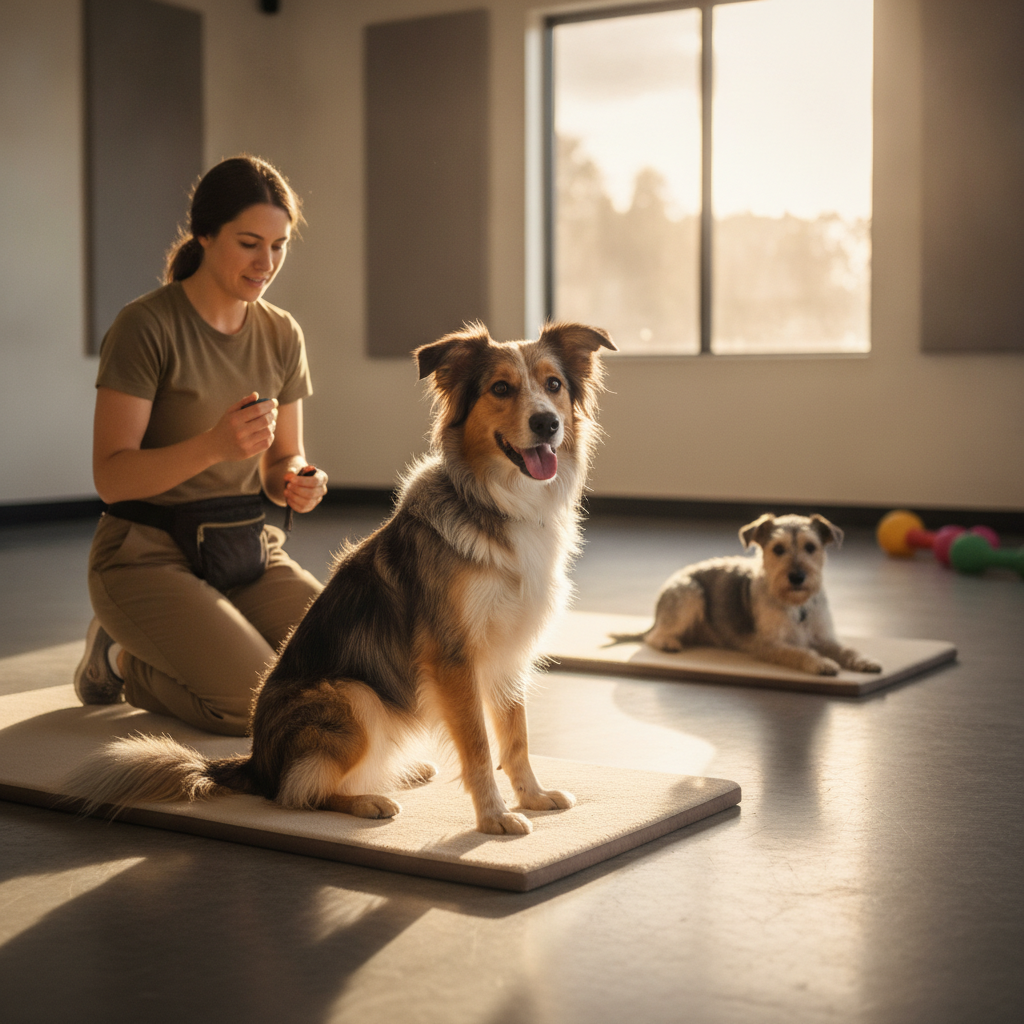
Spring in New Zealand brings native birds, nesting dotterels, and active wildlife into close contact with dogs. Learn how to build impulse control using positive reinforcement techniques suited to Aotearoa's unique conservation landscape.
Key Takeaways
- New Zealand's native wildlife, including kiwi, dotterels, pūkeko, and penguins, is uniquely vulnerable to dogs. A single dog encounter can be fatal for a kiwi.
- The Dog Control Act 1996 imposes strict liability on owners whose dogs attack protected wildlife, with penalties including destruction orders and fines up to $20,000 NZD.
- Kiwi Aversion Training (KAT) is a well-established programme in Aotearoa that complements broader impulse control work.
- Positive reinforcement techniques such as the "Look at That" game and pattern games build lasting calm without suppressing natural instincts.
- Spring (September to November) coincides with shorebird nesting, penguin breeding, and increased kiwi activity, making it the highest risk season for wildlife encounters.
Why Spring Wildlife Encounters Are a Serious Issue in Aotearoa
New Zealand's native fauna evolved without mammalian predators. This means species like kiwi, weka, kākāpō, and nesting shorebirds have limited or no defensive behaviours against dogs. Unlike squirrels or rabbits in other countries, many of Aotearoa's ground-dwelling birds cannot outrun a domestic dog. A single uncontrolled encounter can kill a kiwi, and Department of Conservation (DOC) records consistently show that dog attacks are among the leading causes of kiwi mortality in zones near human settlement.
Spring, running from September through November in the Southern Hemisphere, is when this risk peaks. New Zealand dotterels nest on open beaches, variable oystercatchers settle along riverbeds, and blue penguin (kororā) chicks are active near coastal tracks. Pūkeko chicks emerge in wetland margins, and in the upper North Island, kiwi are especially active at dawn and dusk as breeding season intensifies.
Understanding prey drive is essential context. The predatory motor sequence in dogs follows a predictable chain: orient, eye, stalk, chase, grab, and bite. Selective breeding has amplified certain links. Heading dogs and huntaways, two of New Zealand's most common working breeds, have strong eye, stalk, and chase drives. Terrier breeds common in NZ households (Jack Russells, Fox Terriers) often escalate rapidly to grab and bite. Greyhounds rehomed through adoption programmes also carry significant chase drive.
Critically, prey drive is self-reinforcing. Every successful chase triggers a dopamine release that makes the next chase harder to interrupt. In a country where the target animal may be a critically endangered bird, the margin for error is zero.
New Zealand Legal Obligations for Dog Owners
The Dog Control Act 1996 places strict liability on dog owners. Under Section 57A, if a dog attacks protected wildlife, the owner commits an offence regardless of intent or knowledge. Penalties can include fines up to $20,000 NZD and a destruction order for the dog. Territorial authorities (city and district councils) can classify a dog as menacing after a wildlife incident, imposing muzzling and leash requirements.
DOC-managed conservation land often has specific bylaws requiring dogs to be on-leash or excluding them entirely. Many beaches with nesting dotterels have seasonal dog restrictions from September through March. Kiwi zones across Northland, Coromandel, and parts of the West Coast frequently prohibit dogs altogether, even on-leash.
Council bylaws vary by region, so checking with your local territorial authority before walking in coastal, wetland, or bush areas during spring is essential. Ignorance of restrictions is not a legal defence under the Act.
Kiwi Aversion Training: A Uniquely New Zealand Tool
Kiwi Aversion Training (KAT) is a programme developed specifically for Aotearoa, designed to teach dogs to avoid kiwi by associating kiwi scent and sound with an unpleasant (but brief and carefully calibrated) stimulus. KAT sessions are conducted by accredited providers, often in partnership with DOC and kiwi conservation trusts.
KAT is widely recommended for dogs living in or near kiwi habitat, particularly in Northland, Coromandel Peninsula, Bay of Plenty, and the West Coast. Sessions typically cost between $30 and $80 NZD and are often offered at community events during spring. The New Zealand Veterinary Association (NZVA) recognises KAT as a practical conservation tool.
However, KAT is species-specific (it teaches avoidance of kiwi, not general wildlife calm) and is best used as one component of a broader impulse control programme. Dogs that complete KAT still need training around other species such as dotterels, penguins, and weka.
Equipment and Setup for NZ Conditions
- A well-fitted front-clip harness or flat collar: The NZVA and SPCA New Zealand both discourage the use of prong collars, choke chains, and e-collars. These tools can create negative associations with wildlife that escalate into fear-based reactivity.
- A 5 to 6 metre long line: Essential for beach, bush margin, and reserve training. Never use a retractable leash for impulse control work, as the inconsistent tension teaches pulling.
- High-value treats: Cheese, cooked chicken, or freeze-dried liver. The reward must be genuinely competitive with the thrill of chasing a pūkeko. Budget around $10 to $20 NZD per week on training treats.
- A clicker or verbal marker: A precise marker bridges the gap between the desired behaviour and the reward delivery.
Begin in a low-distraction environment. A quiet section of a local park, well away from known bird nesting areas, is ideal. The concept of threshold distance is critical: training must happen at a distance where the dog notices wildlife but can still respond to cues. In New Zealand's compact coastal and bush environments, this may mean starting 50 metres or more from the trigger.
Step-by-Step Positive Reinforcement Protocol
Step 1: Foundation Skills at Home
Before introducing wildlife triggers, establish three core behaviours indoors:
- Reliable eye contact cue ("watch me"): Reward the dog for voluntarily looking at the handler. Start in a quiet room with zero distractions.
- "Leave it" with escalating difficulty: Begin with a treat under the hand, progressing to uncovered treats, dropped treats, then moving objects. Never physically correct for failure; simply reset.
- A strong recall cue: This is the emergency brake. Practise indoors, then in a fenced section of the garden, then on a long line. The recall must predict the best possible outcome: a jackpot of treats, enthusiastic praise, a favourite toy.
Step 2: The "Look at That" (LAT) Game
Developed by trainer Leslie McDevitt as part of the Control Unleashed programme, LAT is one of the most effective tools for prey drive management:
- Position the dog at a distance where wildlife (or birds) is visible but the dog remains under threshold.
- The moment the dog notices the animal (orients toward it), mark with a click or "yes."
- Deliver a high-value treat.
- Repeat. Over time, the dog learns to look at wildlife and then look back at the handler in anticipation of the reward.
This works through classical counter-conditioning: wildlife becomes a cue that predicts food rather than a trigger for chase. In New Zealand environments, pūkeko at a pond margin or ducks in a park reserve make excellent early-stage LAT subjects because they are relatively predictable in their movements.
Step 3: Reducing Distance Gradually
Once the dog reliably offers a "look and dismiss" pattern, decrease the distance to the trigger by roughly 10 to 20 percent per session, only if the dog stays under threshold. Simultaneously, ask for slightly longer attention before marking.
Step 4: Introducing Movement
Movement is the most potent trigger in the predatory sequence. A stationary bird is a very different stimulus from one flushing out of grass. Practise LAT where birds are naturally active but at safe distance. Beaches outside restricted nesting zones can work well for this, as oystercatchers and gulls provide visible movement triggers.
Step 5: Generalisation Across NZ Environments
Dogs generalise poorly. A dog calm around pūkeko at the local pond may react completely differently to a weka on a bush track or a penguin on a coastal path. Practise across multiple environments: urban parks, rural tracks, beaches, and wetland margins. Consistent daily practice, even for 5 minutes, produces better results than sporadic long sessions.
Common Mistakes to Avoid
- Starting too close to the trigger: If the dog is lunging, whining, or fixating with a hard stare, no learning can occur. Increase distance immediately.
- Using low-value treats: Dry biscuits rarely compete with the dopamine rush of chasing a bird. Use real food: chicken, cheese, liver.
- Punishing the alert: Jerking the leash when the dog looks at a bird teaches the dog that birds predict unpleasant experiences, paradoxically increasing arousal.
- Allowing off-leash rehearsal: Every uncontrolled chase powerfully reinforces the behaviour. Until impulse control is reliable, dogs must remain on a long line in wildlife areas. This is responsible management, not a limitation.
- Assuming KAT covers all wildlife: Kiwi Aversion Training teaches avoidance of kiwi specifically. It does not generalise to dotterels, penguins, or weka without additional training.
When to Seek Professional Help
Certain situations require a qualified behaviour professional:
- The dog has injured or killed wildlife (native or otherwise).
- The dog redirects frustration onto the handler, other dogs, or bystanders when prevented from chasing.
- Prey drive coexists with anxiety, leash reactivity, or other behavioural concerns.
- The dog fixates on household cats, rabbits, or small pets.
- The owner feels physically unsafe managing the dog near wildlife.
When selecting a professional in New Zealand, look for membership in the Animal Behaviour and Training Council of New Zealand or practitioners with internationally recognised credentials such as CPDT-KA, IAABC certification, or veterinary behaviour specialisation. SPCA New Zealand also maintains resources for finding force-free trainers. Verify that any trainer uses evidence-based, positive reinforcement methods.
After Hours Veterinary Clinics
Contact your regular vet's after-hours service or your nearest emergency veterinary clinic.
Major centres (Auckland, Wellington, Christchurch) have dedicated 24-hour emergency vet hospitals.
Protecting Native Wildlife During Training
Responsible prey drive management in Aotearoa carries conservation significance that goes beyond individual dog behaviour:
- Observe all seasonal beach and reserve restrictions. DOC signage and council websites list current closures.
- Keep dogs on-leash or long line in areas with ground-nesting bird activity, especially beaches and riverbeds from September through March.
- Avoid walking through dune vegetation, wetland edges, and coastal scrub during nesting season.
- If a dog flushes a bird from a nest, leave the area immediately and do not return for several days.
- Report any dog-related wildlife injuries to DOC (0800 DOC HOT, which is 0800 362 468).
A Sample Two-Week Training Plan
- Days 1 to 3: Foundation work indoors. Practise "watch me," "leave it," and recall with zero distractions. Three to four short sessions daily.
- Days 4 to 5: Move foundation exercises to a fenced garden or quiet outdoor area with no wildlife present.
- Days 6 to 7: Introduce LAT at maximum comfortable distance from a known bird area (pond edge, park reserve). Keep sessions to 5 minutes. End on a success.
- Days 8 to 10: Continue LAT at the same distance. Begin adding mild movement triggers if naturally available.
- Days 11 to 14: If the dog reliably offers "look and dismiss," reduce distance by a small increment. If not, maintain distance and continue building reinforcement history.
Progress is rarely linear. Expect plateaus, minor setbacks, and variable performance depending on the species encountered, time of day, and environmental factors such as wind carrying bird scent.
Final Thoughts
In Aotearoa, training a dog to stay calm around spring wildlife is both a behavioural goal and a conservation responsibility. New Zealand's native species are irreplaceable, and many are critically endangered. Through systematic desensitisation, counter-conditioning, Kiwi Aversion Training where appropriate, and consistent management, most dogs can learn to coexist safely with the birds and wildlife that make this country unique. The investment in training protects not only native wildlife but also the dog, the owner, and the bond between them.
Frequently Asked Questions
Is Kiwi Aversion Training enough to keep my dog safe around all NZ wildlife? ↓
What are the legal penalties if my dog attacks native wildlife in New Zealand? ↓
When is the highest risk season for dog and wildlife encounters in New Zealand? ↓
What treats work best for training a dog around wildlife distractions? ↓
How do I find a qualified force-free dog trainer in New Zealand? ↓

Mark Sullivan
Certified Professional Dog Trainer
Certified professional dog trainer — positive-reinforcement methods for every breed and behavioural challenge.
Content Disclosure
This article was created using state-of-the-art AI models with human editorial oversight. It is intended for informational and entertainment purposes only and does not constitute veterinary medical advice. Always consult a licensed veterinarian for your pet's specific health needs. Learn more about our process.