Singapore's year-round tropical heat and high humidity make cats especially vulnerable to heat stroke. Learn the critical cooling steps, warning signs unique to our climate, and when to rush to an emergency vet.
Key Takeaways for Cat Owners in Singapore
- Singapore's constant heat is a constant risk. With daily temperatures routinely reaching 32°C to 35°C and humidity above 80%, feline heat stroke is not a seasonal concern here: it is a year-round threat.
- Cats hide distress until it becomes a crisis. By the time a cat openly pants or collapses, its core temperature may already exceed 40.5°C and organ damage can be underway.
- Rectal temperature is the only reliable field measurement. Ear and forehead readings are unreliable in emergencies.
- Cool slowly with tepid water, never ice. Apply room-temperature water to paw pads, ears, and groin. Stop active cooling at 39.4°C to avoid dangerous rebound hypothermia.
- Heat stroke always requires emergency veterinary care. Even a cat that appears to recover needs bloodwork to rule out kidney, liver, and clotting damage.
Why Singapore's Climate Makes Feline Heat Stroke an Everyday Risk
In temperate countries, heat stroke in cats tends to spike during summer heat waves. Singapore does not have that luxury of a cool season. Average daily temperatures of 31°C to 33°C, combined with relative humidity frequently exceeding 80%, create conditions where a cat's natural cooling mechanisms are under pressure every single day of the year.
Cats cool themselves primarily through limited paw pad sweating and behavioural strategies such as spreading saliva on their fur. High humidity drastically reduces the effectiveness of evaporative cooling. This means that even an indoor cat in a well-ventilated HDB flat can be at risk if the air conditioning is turned off during the day or during a power outage.
The National Environment Agency (NEA) has recorded increasing instances of daily highs exceeding 35°C in recent years. During these spikes, indoor temperatures in homes without active cooling can climb rapidly, particularly in west-facing units during afternoon hours. Cats left alone in such environments face cumulative heat stress that can escalate into heat stroke within hours.
High-Risk Cats in the Singapore Context
Certain cats face elevated risk, and several of these risk factors are especially common among Singapore's pet population:
- Brachycephalic (flat-faced) breeds: Persians, Exotic Shorthairs, and Himalayans are popular in Singapore. Their shortened airways significantly impair heat dissipation through panting.
- Overweight and obese cats: Excess body fat acts as insulation and increases metabolic heat production. Indoor cats with limited space for activity are prone to weight gain.
- Senior cats and those with chronic conditions: Cats with heart disease, respiratory illness, or kidney disease have compromised thermoregulatory capacity.
- Cats on certain medications: Diuretics and antihistamines can impair the body's heat response. Inform your vet about all medications during any heat-related emergency.
- Newly adopted cats still acclimatising: Cats imported from cooler climates may not yet be adapted to Singapore's tropical conditions.
Recognising Heat Stroke: The Signs Cats Try to Hide
Early Signs (Often Missed)
- Restlessness followed by sudden lethargy or hiding
- Excessive grooming (saliva spreading is a feline cooling mechanism)
- Warm or hot ear tips and paw pads
- Seeking cool tile floors, sinks, or bathtubs
- Mild, intermittent open-mouth breathing
In Singapore's heat, some owners may assume that a cat seeking tile floors is simply being a cat. While this is normal comfort-seeking, a cat that suddenly changes its resting habits, especially combined with reduced appetite or reluctance to play, warrants closer monitoring.
Moderate to Severe Signs (Act Immediately)
- Sustained open-mouth panting (this is abnormal for cats at rest)
- Brick-red or pale gums; capillary refill time greater than 2 seconds or under 1 second
- Drooling, sometimes with thick or ropy saliva
- Staggering, disorientation, or inability to stand
- Vomiting or diarrhoea (may contain blood)
- Muscle tremors or seizures
- Collapse or unresponsiveness
Critical temperature thresholds: A rectal temperature above 40°C is concerning. Above 40.5°C, heat stroke is probable. Above 41.7°C, multi-organ damage becomes likely.
Immediate First Aid: A Step-by-Step Guide
Step 1: Move to the Coolest Space Available
Bring the cat into an air-conditioned room immediately. In Singapore, most homes have at least one room with aircon. If the unit is not running, switch it on to the lowest temperature setting. If no air conditioning is available, use fans to maximise air circulation, and move the cat to the lowest floor of the home where temperatures tend to be slightly cooler.
Step 2: Take a Rectal Temperature
Digital rectal thermometers designed for pets are available at most local pet supply stores and veterinary clinics. Apply water-based lubricant to the tip, gently insert approximately 2 to 3 centimetres into the rectum, and hold the cat securely (a towel wrap and a second person help greatly). Record the temperature and the time. This information is critical for the emergency vet team.
Important: Ear thermometers and infrared forehead devices are not accurate enough in an emergency setting to guide treatment decisions.
Step 3: Begin Tepid Water Cooling
Apply room-temperature water (not cold, not ice water) to:
- Paw pads (high concentration of blood vessels)
- Inner ear flaps
- Groin and armpit areas
- Abdomen
Use soaked towels or cloths, replacing them every 2 to 3 minutes. A cloth left in place acts as insulation and becomes counterproductive. A fan directed at the dampened cat accelerates evaporative cooling. In Singapore's high humidity, evaporative cooling is less efficient, so air conditioning combined with damp cloths is the most effective approach.
Step 4: Stop Active Cooling at 39.4°C
This step is critical. Stop all active cooling when the rectal temperature reaches 39.4°C. The body continues to cool on its own after external efforts stop. Cooling past this point risks rebound hypothermia, where core temperature drops below 37.5°C, creating a new emergency including cardiac arrhythmias and clotting failure.
Step 5: Offer Water, Never Force It
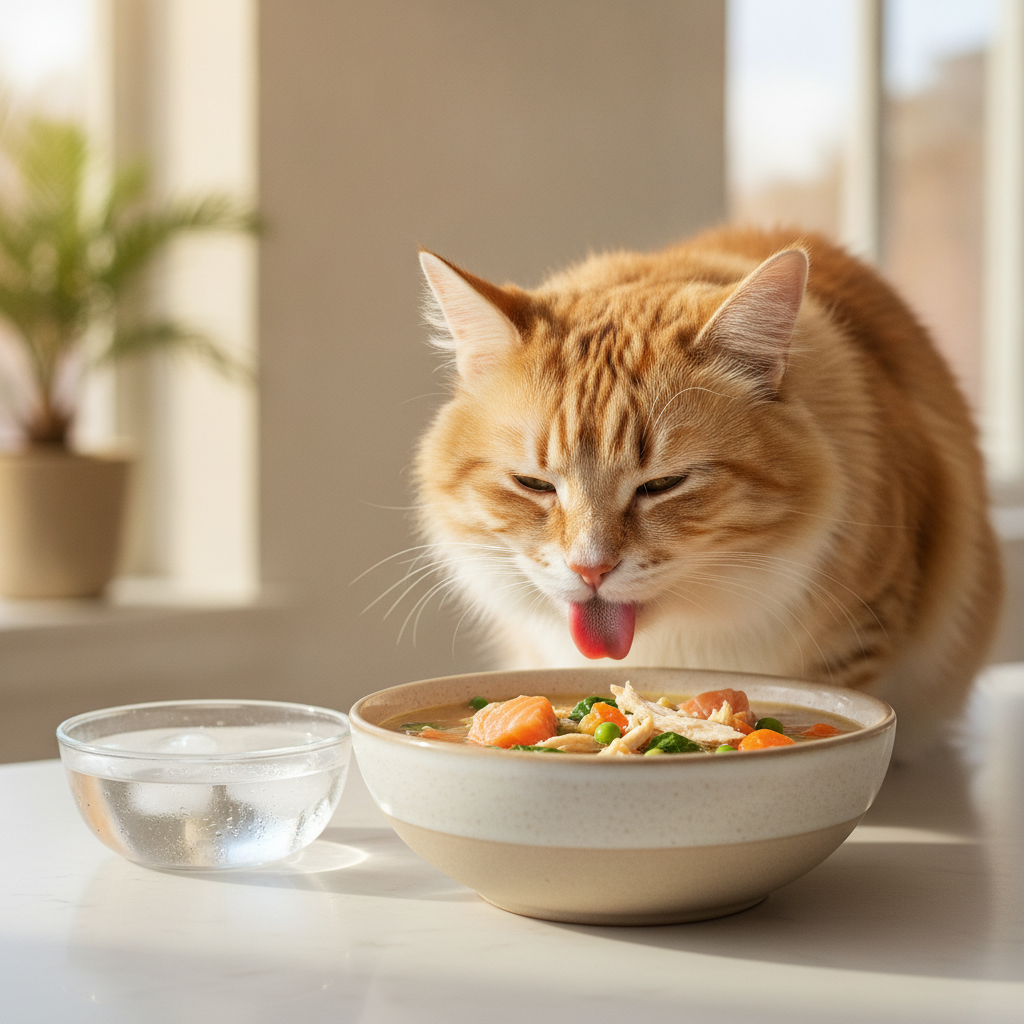
Place a small bowl of room-temperature water near the cat. Never pour water into the mouth of a disoriented or semiconscious animal due to aspiration risk. If the cat drinks voluntarily, allow small amounts.
Step 6: Transport to an Emergency Veterinary Clinic
Even if the cat appears to improve, emergency veterinary evaluation is essential. Internal organ damage, particularly to the kidneys, liver, gastrointestinal tract, and clotting system, can progress silently for 24 to 72 hours after the heat event.
Call the Animal Recovery Centre (ARC) or your nearest 24-hour veterinary clinic.
Several clinics in Singapore offer 24-hour emergency services. The AVS (Animal & Veterinary Service) website lists all licensed clinics.
Singapore has several 24-hour veterinary emergency clinics. Before an emergency occurs, identify the nearest one to your home, save the contact number in your phone, and confirm the route. During transport, keep the car air conditioning on maximum and place a damp (not soaking) towel under the cat in the carrier. Use a well-ventilated carrier rather than a sealed plastic type.
What NOT to Do
- Do not use ice, ice water, or frozen packs. Extreme cold causes peripheral vasoconstriction, trapping heat in the core. It also triggers dangerous rebound hypothermia.
- Do not submerge the cat in cold water. Rapid full-body immersion can cause shock and cardiac arrhythmias.
- Do not leave wet towels in place. Static wet towels warm up quickly in Singapore's ambient heat and become insulating layers. Replace or remove them every 2 to 3 minutes.
- Do not give paracetamol, aspirin, or any human medication. Paracetamol is lethal to cats even in small doses. Heat stroke is not a fever, and antipyretics do not address it.
- Do not assume recovery means safety. A cat that stands and walks after cooling may still have disseminated intravascular coagulation (DIC), acute kidney injury, or liver damage developing internally.
- Do not delay transport. Delayed presentation is one of the strongest negative prognostic indicators in veterinary heat stroke cases.
What to Tell the Emergency Vet
Provide the following information clearly and quickly:
- Estimated duration of heat exposure
- Highest rectal temperature recorded and the time it was taken
- All cooling measures performed and their duration
- Most recent temperature reading
- Any vomiting, diarrhoea, seizures, or loss of consciousness
- Cat's age, breed, weight, and pre-existing conditions
- Current medications and supplements
- AVS microchip number (veterinary clinics in Singapore can cross-reference this with medical records)
If you use a pet wearable with temperature monitoring, bring the device data log. Continuous temperature trends are extremely useful to the veterinary team.
Recovery at Home in Singapore's Climate
If the cat is discharged, follow these guidelines carefully:
- Keep the home environment cool at 20°C to 22°C for at least one to two weeks. In Singapore, this typically means running air conditioning continuously in the recovery room.
- Limit activity. No outdoor access, jumping to high surfaces, or vigorous play until veterinary clearance.
- Monitor appetite, water intake, litter box output, and behaviour closely. Any decline warrants an immediate recheck.
- Administer prescribed medications exactly as directed. Do not skip recheck appointments.
- A cat that has experienced one heat stroke episode may have permanently impaired thermoregulation, making future episodes more likely even at lower temperatures.
For cats recovering while owners are at work, a pet camera with environmental monitoring can provide remote temperature alerts and visual check-ins. This is particularly valuable in Singapore, where a midday power outage or aircon malfunction can cause room temperatures to climb rapidly.
Prevention: Protecting Your Cat Year-Round
Because Singapore has no cool season, prevention must be a daily practice rather than a seasonal consideration:
- Air conditioning management: If you turn off the aircon when leaving for work, ensure adequate ventilation with fans and open windows (with secure mesh screens). Consider a timer that activates the aircon during peak afternoon heat.
- Multiple water sources: Place fresh water bowls in several locations. Cat water fountains encourage higher water intake.
- Cool resting surfaces: Provide access to tile floors and consider pet cooling mats. Keep blinds or curtains closed on sun-facing windows, especially west-facing units that receive intense afternoon sun.
- Never leave a cat in a parked car or enclosed balcony. Singapore's ambient temperatures mean a parked car can reach lethal temperatures within minutes.
- Monitor during renovations: If aircon servicing, repairs, or home renovations require turning off cooling systems, move the cat to a cool environment or make alternative arrangements.
- HDB flat considerations: Under Housing and Development Board regulations, cats are not officially approved as HDB pets, though the Animal and Veterinary Service (AVS) under NParks continues to work on cat management frameworks. Regardless of housing type, responsible cat owners should ensure their indoor environment remains thermally safe.
Printable Emergency Action Card
FELINE HEAT STROKE: EMERGENCY ACTION CARD
IF YOUR CAT IS PANTING AT REST, STAGGERING, OR COLLAPSED: ACT NOW
- MOVE the cat to an air-conditioned room immediately.
- TEMPERATURE: Take rectal temperature. Above 40°C = emergency.
- COOL with tepid water on paw pads, ears, groin, and armpits. Use a fan and aircon. Replace wet cloths every 2 to 3 minutes.
- NO ICE. NO cold water. NO paracetamol. NO human medications.
- STOP cooling at 39.4°C. Temperature will keep dropping on its own.
- OFFER water but never force it into the mouth.
- CALL your emergency vet and transport immediately with car aircon on maximum.
- TELL THE VET: Highest temperature recorded, time of onset, cooling steps taken, any vomiting or seizures, cat's medical history, AVS microchip number.
Emergency Vet Clinic: ___________________
Phone: ___________________
Address: ___________________
Call the Animal Recovery Centre (ARC) or your nearest 24-hour veterinary clinic.
Several clinics in Singapore offer 24-hour emergency services. The AVS (Animal & Veterinary Service) website lists all licensed clinics.
Disclaimer: This article is produced by an AI-generated veterinary content persona modelled on professional standards. It is for educational purposes only and does not replace consultation with a licensed veterinarian. If your cat shows any signs of heat stroke, contact an emergency veterinary clinic immediately.
Frequently Asked Questions
Why are cats in Singapore at higher risk of heat stroke than in temperate countries? ↓
Can an indoor cat in Singapore get heat stroke? ↓
What is the correct way to cool a cat with suspected heat stroke? ↓
Should I still take my cat to the vet if it seems to recover after cooling? ↓
Is paracetamol safe to give a cat with heat stroke? ↓

Dr. Ana Reyes
Emergency & Critical Care Veterinarian
Emergency and critical care veterinarian — life-saving first-aid guidance and emergency recognition for pet owners.
Content Disclosure
This article was created using state-of-the-art AI models with human editorial oversight. It is intended for informational and entertainment purposes only and does not constitute veterinary medical advice. Always consult a licensed veterinarian for your pet's specific health needs. Learn more about our process.