
In this article
- Key Takeaways
- Why the May Long Weekend Needs Extra Planning
- Car Restraint Laws: What You Need to Know
- Rest Stop Frequency: How Often to Pull Over
- Booking Pet-Friendly Accommodation
- Pre-Trip Veterinary Checklist
- Printable Packing Checklist
- Emergency Contacts to Save Before You Leave
- Day-by-Day Road Trip Safety Routine
Key Takeaways
- Car restraint requirements vary by jurisdiction: some states and provinces legally mandate crates or harnesses, while others may cite distracted driving laws.
- Veterinary guidelines recommend rest stops every two to three hours, with a minimum of 15 minutes per break for water, movement, and bathroom needs.
- Pet-friendly accommodation policies differ even within the same hotel chain: always confirm fees, breed or weight limits, and supervision rules before booking.
- A well-stocked travel kit (first aid, documents, food, comfort items) reduces stress and keeps your dog safe from common road trip hazards.
Why the May Long Weekend Needs Extra Planning
The May long weekend is one of the busiest travel periods of the year. Higher traffic volumes mean longer drive times, more heat exposure while parked, and increased competition for pet-friendly accommodation. Dogs that are not properly restrained, hydrated, or rested face elevated risks of injury, heat stress, and anxiety. Planning ahead, ideally three to four weeks before departure, gives owners time to confirm bookings, visit the veterinarian, and assemble a proper travel kit.
Senior dogs and brachycephalic (flat-faced) breeds are especially vulnerable to heat buildup during late-spring travel. For guidance on why older pets are at greater risk, see Why Senior Dogs and Cats Overheat Faster.
Car Restraint Laws: What You Need to Know
United States
There is no single federal law requiring dogs to be restrained inside a vehicle. However, several states have specific statutes, and many others can enforce penalties under distracted driving laws if an unrestrained pet contributes to an incident. Key examples include:
- New Jersey: Pets in moving vehicles must ride in a carrier or wear a seat belt harness. Fines range from $250 to $1,000.
- Rhode Island: Pets must be under physical control of a passenger (not the driver) or secured in a crate, harness, or seat belt. Violations can result in fines up to $200.
- Hawaii: It is illegal to hold an animal in the driver's lap or allow an animal to interfere with the driver's control of the vehicle. Fines start at $57 for a loose pet and reach $97 for a pet on the driver's lap.
- Massachusetts: Pets must be secured in a harness, carrier, or restraint to prevent driver distraction.
- California: Dogs cannot ride unrestrained in an open truck bed on a highway unless cross-tethered or enclosed in a secured crate with adequate ventilation.
Even in states without specific pet restraint statutes, an unrestrained dog that causes an accident may lead to a distracted driving citation.
Canada
In Canada, Ontario and New Brunswick require dogs travelling inside the passenger compartment to be properly restrained using a crate or seat belt harness. Most provinces also prohibit unrestrained dogs in open truck beds. Provincial Highway Traffic Acts may impose additional penalties if an unsecured animal contributes to dangerous driving.
Choosing the Right Restraint
Regardless of local law, professional safety consensus strongly favours restraining dogs during car travel. Options include:
- Crash-tested crates: Considered the safest choice for most dogs, particularly anxious travellers. Look for crates tested to recognised automotive crash-test protocols.
- Crash-tested harnesses: A practical alternative for dogs that tolerate wearing a harness. Ensure the harness attaches to the vehicle's seat belt system rather than a headrest or door handle.
- Cargo barriers: A rear cargo barrier can prevent a dog from entering the passenger area during sudden stops, though it offers less individual protection than a crate or harness.
Avoid allowing dogs to ride with their heads out of windows. This exposes them to debris, insects, and the risk of ear or eye injury.
Rest Stop Frequency: How Often to Pull Over
The American Veterinary Medical Association (AVMA) suggests stopping every two to three hours during car travel with a dog. Each break should last at least 15 minutes, allowing time for:
- A bathroom break on a leash in a safe area away from traffic.
- Offering fresh water (carry a portable bowl or bottle with a dispenser nozzle).
- A brief walk or gentle stretch to reduce stiffness and anxiety.
Factors That Require More Frequent Stops
- Puppies and senior dogs: Smaller bladder capacity and reduced stamina mean stops every 60 to 90 minutes may be necessary.
- Dogs prone to motion sickness: Shorter intervals help reduce nausea. Feeding a light meal three to four hours before departure, rather than immediately before, also helps.
- Brachycephalic breeds: Pugs, Bulldogs, and similar breeds overheat more quickly and benefit from frequent cool-down breaks.
- Dogs with medical conditions: Diabetic dogs, dogs on diuretics, and dogs with gastrointestinal issues typically need more frequent access to water and outdoor breaks.
Spring activity can also put extra strain on dogs that have been relatively sedentary over winter. Sudden bursts of exercise at rest stops can contribute to soft-tissue injuries. For more on this risk, see Spring Activity and Cruciate Ligament Tears in Dogs.
Heat Safety at Stops
Even in late May, interior car temperatures can climb rapidly. A car parked in direct sunlight on a 24°C (75°F) day can reach dangerous interior temperatures within 10 to 15 minutes. Never leave a dog unattended in a parked vehicle.
Booking Pet-Friendly Accommodation
Securing the right lodging is often the most time-sensitive part of a dog-friendly road trip. Pet-friendly rooms tend to sell out quickly over holiday weekends, so booking three to four weeks in advance is strongly recommended.
Questions to Ask Before You Book
- Pet fees: Charges vary widely. Some properties charge a nightly pet fee, others apply a one-time cleaning surcharge, and some require a refundable damage deposit. Clarify all costs before confirming.
- Weight and breed restrictions: Many hotels set a weight limit (commonly around 18 to 25 kg, or roughly 40 to 55 lbs) and may exclude certain breeds. Always confirm your dog qualifies.
- Number of pets per room: Policies typically allow one dog per room, though some properties accommodate two.
- Unattended pet rules: Some hotels permit crate-trained dogs to be left briefly in the room, while others require a human to be present at all times. Violating this policy can result in additional fees or eviction.
- Designated relief areas: Ask whether the property has a fenced or designated pet relief area, and how close it is to your room.
- Vaccination documentation: Many properties require proof of current rabies vaccination and may ask for a recent health certificate, especially when crossing state or provincial lines.
Booking Tips
- Call the specific property directly rather than relying on chain-wide "pet-friendly" labels. Policies vary significantly between individual locations within the same brand.
- Request a ground-floor room for easier outdoor access during nighttime bathroom breaks.
- Bring a familiar blanket or bed to place over hotel bedding. This reduces shedding on hotel linens and helps your dog settle in an unfamiliar environment.
- Pack a portable crate or exercise pen for dogs that are anxious in new spaces.
If you are also arranging pet care at home for other animals while you travel, review Spring Hazard Briefing Every Pet Sitter Needs to prepare your sitter for seasonal risks.
Pre-Trip Veterinary Checklist
A veterinary visit two to three weeks before departure is considered best practice. During this visit:
- Confirm vaccinations are current, especially rabies, distemper, and leptospirosis.
- Discuss tick and flea prevention suited to your destination. Late spring is peak season for ticks in many regions.
- Ask about motion sickness remedies if your dog has a history of car-related nausea. Veterinarians may recommend specific medications or dosing schedules.
- Verify that microchip registration details (phone number, address) are up to date.
- Request a printed copy of your dog's vaccination records and any health certificates required by your destination.
Printable Packing Checklist
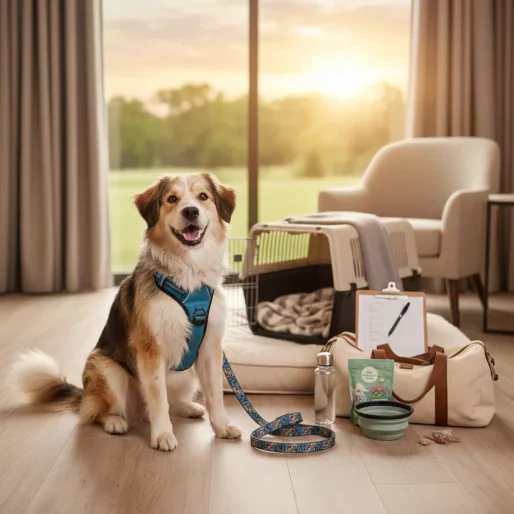
Print this list and check items off as you load the car. Items are grouped by category for easy packing.
Documents and Identification
- Current vaccination records (printed copy)
- Health certificate (if crossing state or provincial borders)
- Copy of pet insurance policy and emergency claim number
- Photo of your dog saved on your phone (for identification if lost)
- Collar with up-to-date ID tag (include your mobile number)
Restraint and Safety
- Crash-tested crate or harness
- Seat belt attachment or cargo barrier
- Sturdy leash (1.5 to 1.8 m, or 5 to 6 ft) and a spare
- Portable exercise pen (optional, useful at rest stops and accommodation)
For owners who want extra peace of mind, a GPS tracker can be invaluable in unfamiliar areas. See GPS Pet Trackers Compared: Coverage, Battery, Cost for a detailed comparison.
Food, Water, and Treats
- Enough of your dog's regular food for the trip plus one extra day
- Portable, collapsible food and water bowls
- Bottled water or a refillable jug
- High-value training treats for reinforcing calm car behaviour
- Chew toys or stuffed food puzzles for quiet in-car enrichment
Comfort and Cleanup
- Familiar blanket or bed
- A worn item of the owner's clothing (provides scent comfort)
- Waste bags (minimum 30 for a long weekend)
- Paper towels and pet-safe cleaning spray
- Old towels for muddy paws or unexpected messes
- Lint roller for car seats and hotel furniture
First Aid and Health
- Pet-specific first aid kit: gauze, adhesive bandage wrap, antiseptic wipes, blunt-tip scissors, tweezers, digital thermometer
- Any prescription medications (with dosing instructions)
- Antihistamine approved by your vet (for insect stings or mild allergic reactions)
- Tick removal tool
- Styptic powder (for minor nail injuries)
- Emergency veterinary contacts at your destination (research and save these before departure)
Seasonal Add-Ons for Late Spring
- Dog-safe sunscreen for light-skinned or thin-coated breeds
- Cooling mat or bandana for warm-weather rest stops
- Paw balm to protect against hot pavement
- Brush or grooming mitt for managing spring shedding in the car
Dogs with heavy double coats may be in the middle of a seasonal blow during May. Packing a grooming tool helps keep loose fur under control. For more detail, see Managing Spring Coat Blow in Double-Coated Dogs.
Emergency Contacts to Save Before You Leave
- ASPCA Animal Poison Control Center: (888) 426-4435 (a consultation fee applies)
- Pet Poison Helpline: (855) 764-7661 (a per-case fee applies)
- Your regular veterinarian's after-hours line
- The nearest emergency veterinary clinic at your destination (search and save the address and phone number before departure)
Day-by-Day Road Trip Safety Routine
Before Departure
- Feed a light meal three to four hours before leaving.
- Offer water up to 30 minutes before departure.
- Take a 15-minute walk to help your dog relieve themselves and burn off nervous energy.
- Secure the crate or harness and verify the latch or buckle is functioning.
On the Road
- Stop every two to three hours (more often for puppies, seniors, or brachycephalic breeds).
- Offer water at every stop.
- Keep the vehicle cool with air conditioning; avoid opening windows wide enough for a dog to fit through.
- Play calming music or maintain a quiet environment for anxious travellers.
At Accommodation
- Do a quick room check: inspect for exposed electrical cords, open bins, complimentary food items (chocolate, xylitol-sweetened snacks), and gaps behind furniture where a small dog could become stuck.
- Set up the dog's bed or blanket and water bowl before allowing free exploration.
- Locate the nearest pet relief area and emergency exit.
- If leaving the room briefly (where permitted), place the dog in a crate with a chew toy and a "Do Not Disturb" sign on the door.
Returning Home
- Do a tick check within 24 hours of returning, paying close attention to ears, armpits, groin, and between toes.
- Monitor for signs of gastrointestinal upset or fatigue for two to three days post-trip.
- Wash all travel bedding and clean the crate or harness.
For owners returning to a home where a pet sitter has been caring for other animals, a quick walk-through using the checklist in Spring Hazard Briefing Every Pet Sitter Needs helps confirm everything is in order.
Frequently Asked Questions
Content Disclosure
This article was created using state-of-the-art AI models with human editorial oversight. It is intended for informational and entertainment purposes only and does not constitute veterinary medical advice. Always consult a licensed veterinarian for your pet's specific health needs. Learn more about our process.