
In this article
Key Takeaways
- Singapore's tropical climate means enrichment planning is a year-round priority, not a seasonal task.
- HDB flats now permit up to two cats per household, with mandatory microchipping and sterilisation under AVS rules.
- High humidity (often above 80%) accelerates mould growth on feeders, toys, and fabric perches, so frequent cleaning is essential.
- Vertical space is especially valuable in compact Singapore homes, where floor area is limited.
- Puzzle feeders, scent trails, and structured rotation schedules help prevent behavioural issues common in indoor-only cats.
Why Year-Round Enrichment Matters in Singapore
Unlike temperate regions where changing seasons trigger spikes in feline energy, Singapore's consistent tropical climate (averaging 25 to 31°C with high humidity) means indoor cats experience a relatively stable environment throughout the year. While this eliminates seasonal stress triggers, it also means there is no natural shift in stimulation. Without deliberate enrichment, indoor cats in Singapore can develop chronic boredom-related behaviours such as excessive grooming, furniture scratching, and nocturnal vocalisation.
The National Parks Board's Animal and Veterinary Service (AVS) emphasises responsible pet ownership, and environmental enrichment is a core component of that responsibility. With the majority of Singapore's population living in HDB flats and condominiums, space constraints make thoughtful enrichment planning even more important.
HDB Cat Ownership: What the Rules Require
Since the updated HDB cat ownership framework, residents may keep up to two cats per flat. Key regulatory requirements include:
- Mandatory microchipping: All cats must be microchipped and registered with AVS.
- Mandatory sterilisation: Cats kept in HDB flats must be sterilised.
- Responsible ownership: Cats must not cause nuisance to neighbours, including noise, odour, or damage to common areas.
- Window and gate safety: While not a specific HDB regulation, AVS guidelines strongly encourage securing windows and installing mesh screens to prevent falls, which is particularly relevant for high-rise HDB living.
Owners should verify the latest requirements directly with AVS, as regulations are periodically updated.
Room by Room Enrichment for Compact Homes
Living Room and Windows: Bird and Wildlife Viewing
Singapore's urban greenery supports a surprising variety of bird species, including mynahs, sunbirds, and Oriental magpie-robins. Setting up a viewing station near a window that overlooks trees or corridor greenery provides excellent visual stimulation.
Setup checklist:
- Position a sturdy window perch or padded shelf at a window with a view of trees, bird activity, or corridor gardens.
- Secure all windows with heavy-duty mesh or grilles. High-rise syndrome (cats falling from height) is a serious risk in Singapore's predominantly high-rise housing. Mesh must be robust enough to withstand a cat leaning or pushing against it.
- Avoid suction-mounted external bird feeders on HDB corridor windows, as external fixtures on common corridors may breach HDB guidelines. Instead, focus on interior viewing setups.
- For condo units with balconies, ensure the balcony is fully meshed before allowing supervised access.
- Clean window perches weekly. Singapore's humidity encourages rapid bacterial and mould growth on fabric surfaces.
- In multi-cat households (up to the two-cat HDB limit), provide separate viewing spots to reduce competition.
Kitchen and Feeding Area: Puzzle Feeders
Puzzle feeders are widely recommended by veterinary behaviourists as a core enrichment tool. They slow eating, support weight management, and engage natural foraging instincts. This is especially relevant in Singapore where indoor-only cats may have limited opportunity for physical activity.
Setup checklist:
- Start with beginner-level open tray puzzles before progressing to enclosed ball or tower designs.
- Use a portion of the cat's daily food allowance inside the puzzle to avoid overfeeding. Obesity is a common concern flagged by veterinary professionals in Singapore's indoor cat population.
- Place puzzle feeders on tiled surfaces for easy cleaning, typical of most HDB kitchens.
- Wash puzzle feeders after every use with warm water and pet-safe detergent. In Singapore's heat and humidity, leftover wet food residue can develop harmful bacteria within hours.
- Supervise initial sessions to ensure the cat engages productively rather than becoming frustrated.
- For households with two cats, provide at least two puzzles placed in separate rooms.
Pet retailers in Singapore, both online and at physical stores in locations such as Serangoon and East Coast, carry a range of puzzle feeder brands. Prices typically range from $10 to $50 SGD depending on complexity.
Hallways and Open Spaces: Scent Trails
Olfactory enrichment is one of the most underused forms of stimulation for indoor cats. Catnip (Nepeta cataria) triggers a euphoric response in an estimated 60 to 70 percent of cats, while silver vine (Actinidia polygama) may affect a broader range, potentially up to 80 percent, including some cats that do not respond to catnip.
Setup checklist:
- Create scent trails by rubbing dried catnip or silver vine along baseboards, scratching posts, and fabric toys.
- Use small fabric sachets filled with dried herbs, placed at intervals along a hallway or around the flat to encourage exploratory behaviour.
- Rotate between catnip, silver vine, valerian root, and Tatarian honeysuckle to maintain novelty.
- Limit scent sessions to 10 to 15 minutes, then remove or seal sachets. Prolonged exposure can cause temporary desensitisation.
- Store dried herbs in airtight containers. Singapore's humidity degrades dried herbs rapidly if left exposed.
- Avoid essential oil diffusers near cats. Many essential oils, including tea tree, eucalyptus, and citrus oils, are toxic to cats. This is worth noting as essential oil diffusers are popular in many Singapore households.
Bedrooms and Spare Rooms: Vertical Space
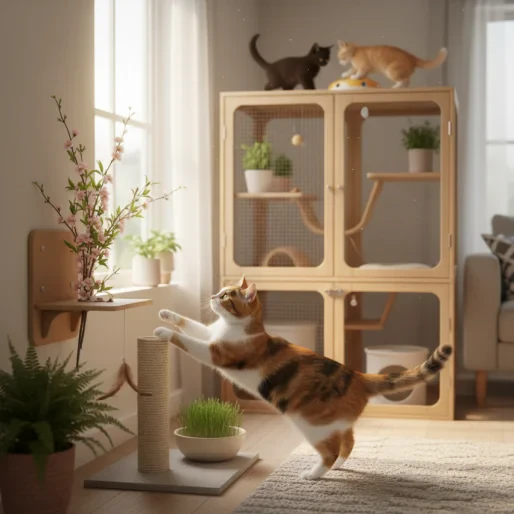
Vertical territory is arguably the single highest-impact enrichment modification for indoor cats, and it is especially valuable in space-limited Singapore homes. Adding height effectively multiplies the cat's usable living area without consuming floor space.
Setup checklist:
- Install wall-mounted shelves in a staggered climbing pattern. Space shelves 30 to 45 cm apart vertically.
- Ensure all shelves are anchored securely. Many HDB and condo walls are concrete or brick, requiring appropriate wall plugs and masonry fixings. Avoid relying on adhesive mounts, which can fail in high humidity.
- Add non-slip surfaces (sisal matting, carpet remnants, or rubber shelf liners) to all platforms.
- Position at least one high perch near a secured window for combined climbing and viewing enrichment.
- Cat trees with stable, wide bases are preferable. Tall, narrow trees are a tipping hazard, especially with active cats.
- Inspect all vertical installations monthly for loose fittings or deteriorating fabric.
Cat trees and wall-mounted shelf systems are available from Singapore pet retailers, with basic cat trees starting around $50 to $80 SGD and wall-mounted systems from approximately $100 SGD upward.
Tropical Hazard Sweep
Singapore's tropical environment introduces specific hazards that require regular attention:
- Toxic plants: Many popular ornamental plants in Singapore are toxic to cats. Lilies (all Lilium and Hemerocallis species) can cause fatal kidney failure. Other common local hazards include dieffenbachia, pothos, and sago palm. Remove all toxic plants from areas accessible to cats.
- Window and balcony safety: This cannot be overstated in Singapore's high-rise context. All windows, balconies, and service yard openings must be secured with sturdy mesh or grilles.
- Humidity and mould: Fabric cat beds, perches, and toys can develop mould in Singapore's humidity. Wash fabric items weekly and replace any items showing mould or persistent odour.
- Pest control: Tropical pest management is common in Singapore, including treatments for cockroaches, ants, and mosquitoes. Inform pest control services that cats are present. Use only pet-safe treatments and keep cats confined to a separate room during and after application as directed.
- Cleaning products: Avoid phenol-based disinfectants, which are toxic to cats. Many common floor cleaners in Singapore contain pine-based or phenolic compounds, so check labels carefully.
Call the Animal Recovery Centre (ARC) or your nearest 24-hour veterinary clinic.
Several clinics in Singapore offer 24-hour emergency services. The AVS (Animal & Veterinary Service) website lists all licensed clinics.
Weekly Rotation Schedule
Cats habituate to enrichment quickly. A structured rotation maintains engagement and prevents boredom.
Sample seven-day plan:
- Monday: Puzzle feeder with kibble. Catnip scent trail along the hallway.
- Tuesday: Window viewing session (open curtains early for bird activity). Interactive wand toy play for 10 to 15 minutes.
- Wednesday: Silver vine sachet hidden in a cardboard box or paper bag. Treats placed on high shelves to encourage climbing.
- Thursday: New puzzle feeder variation (swap design or difficulty). Short clicker training session.
- Friday: Rotate accessible toys (swap three to four from a stored collection). Valerian root scent trail.
- Saturday: Foraging session with kibble scattered in small piles around the flat. Refresh window viewing spot.
- Sunday: Observation day. Keep two favourite items out and note which the cat prefers. Use observations to adjust the following week.
Rotation tips:
- Maintain a storage bin of 10 to 15 toys and rotate three to five into active use at a time.
- Introduce one completely new item per month.
- Track engagement in a simple log: date, activity, duration, and interest level.
- Younger cats typically need more frequent rotation and higher-intensity play, while senior cats may prefer gentler scent or visual enrichment.
Emergency Preparedness for Indoor Cat Households
Every cat household in Singapore should maintain a basic emergency kit:
- Three to five days of cat food (dry and wet) and fresh water in sealed containers.
- Any prescription medications with dosage instructions.
- Copies of AVS registration details, microchip numbers, and vaccination records.
- A secure carrier for each cat, labelled with the cat's name and owner contact information.
- Basic first aid supplies: gauze, adhesive tape, saline solution, blunt-tipped scissors.
- Contact details for the nearest 24-hour emergency veterinary clinic.
Life Stage Considerations
- Kittens (under 1 year): High energy and short attention spans. Favour interactive play and beginner puzzle feeders. Avoid small detachable parts that pose choking risks. Ensure all enrichment items are stable, as kittens are particularly prone to knocking over unsecured items.
- Adult cats (1 to 10 years): Benefit from the full rotation schedule. Adjust intensity based on breed and temperament.
- Senior cats (10 years and older): Prioritise low-impact enrichment such as scent trails, window viewing, and gentle puzzle feeders. Ensure all vertical elements have accessible ramps or intermediate steps to reduce joint strain.
Printable Summary Checklist
- ☐ Window mesh or grilles installed and inspected on all openings (critical for high-rise living).
- ☐ Interior viewing perch or shelf placed at a window with greenery or bird activity.
- ☐ At least two puzzle feeder styles available, cleaned after every use.
- ☐ Catnip, silver vine, valerian root, and honeysuckle stored in airtight containers.
- ☐ Scent sachets prepared and sealed between sessions.
- ☐ Wall shelves or cat tree installed with secure anchoring and non-slip surfaces.
- ☐ Tropical hazard sweep completed: toxic plants removed, windows meshed, cleaning products checked.
- ☐ Toy rotation bin stocked with 10 to 15 items; three to five in active use.
- ☐ Weekly enrichment schedule set (phone reminder or posted in the home).
- ☐ Emergency kit assembled with AVS registration details and medication expiry dates checked.
- ☐ Engagement tracking log started.
Frequently Asked Questions
Content Disclosure
This article was created using state-of-the-art AI models with human editorial oversight. It is intended for informational and entertainment purposes only and does not constitute veterinary medical advice. Always consult a licensed veterinarian for your pet's specific health needs. Learn more about our process.