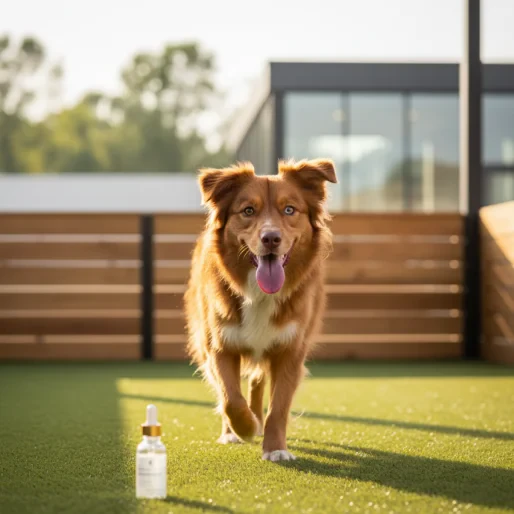
Singapore's year-round tropical heat and extreme humidity make every dog a heatstroke candidate, not just in summer. Learn the cooling protocols, breed risks, and emergency steps specific to living on the equator.
Key Takeaways for Singapore Dog Owners
- A core body temperature above 40.5 °C is a veterinary emergency. Organ damage can begin within minutes, and Singapore's humidity accelerates the process.
- Brachycephalic breeds popular in HDB flats (Pugs, Shih Tzus, French Bulldogs) sit in the highest risk tier.
- Cool the dog with room temperature or slightly cool water, never ice water, which causes peripheral vasoconstriction and traps heat in the core.
- Stop active cooling once the rectal temperature reaches 39.4 °C to prevent rebound hypothermia.
- Always transport to an emergency veterinary clinic, even if the dog appears to recover. Delayed organ failure can occur 24 to 72 hours later.
Why Singapore's Climate Makes Heatstroke a Year-Round Threat
In temperate countries, heatstroke peaks during late spring and summer. In Singapore, there is no off-season. Average daily temperatures hover between 25 °C and 33 °C throughout the year, but it is the relative humidity, frequently above 80%, that makes Singapore especially dangerous for dogs. Panting, a dog's primary cooling mechanism, relies on evaporating moisture from the tongue and respiratory tract. When the surrounding air is already saturated with moisture, evaporative cooling becomes drastically less efficient.
The result: a dog walking on a pavement in Bishan at 2 pm on an ordinary Tuesday in February faces genuine heatstroke risk, not just during a heatwave or an unusually warm spell. The National Environment Agency (NEA) regularly records wet-bulb globe temperatures (WBGT) that would prompt heat advisories for humans, and dogs are far less efficient at thermoregulation than people are.
Pavement and asphalt temperatures in direct Singapore sun can exceed 60 °C, hot enough to cause thermal burns on paw pads within seconds. If the surface is too hot for a human palm held flat for five seconds, it is too hot for a dog to walk on.
Recognising Heatstroke: The Signs That Matter
Early Warning Signs (Act Immediately)
- Excessive, heavy panting that does not slow when the dog rests
- Thick, ropy saliva or drooling far beyond normal
- Bright red gums and tongue (sometimes progressing to muddy, grey, or blue)
- Restlessness, pacing, or seeking cool surfaces such as tiled HDB floors
- Capillary refill time (CRT) under one second: press the gum, release, and count how fast colour returns
Critical Emergency Signs (Life Threatening)
- Stumbling, disorientation, or inability to stand
- Vomiting or diarrhoea (especially if bloody)
- Collapse or loss of consciousness
- Seizures or muscle tremors
- Laboured breathing: irregular, gasping respirations
- Petechiae (tiny red or purple spots on the gums or belly skin), suggesting disseminated intravascular coagulation (DIC)
Critical threshold: A rectal temperature above 40.5 °C constitutes heatstroke. Temperatures above 41.7 °C carry a significantly elevated risk of multi-organ failure. If a rectal thermometer is not available, the presence of two or more critical signs listed above warrants treating the situation as heatstroke until proven otherwise.
Owners sometimes delay action because the dog "still seems okay." Pale or muddy gums, glassy eyes, or a CRT above three seconds are always an emergency, regardless of how the dog is behaving otherwise.
Breed Risk Tiers in the Singapore Context
Singapore's Animal and Veterinary Service (AVS) maintains a list of HDB-approved dog breeds. Many of the most popular breeds on that list carry elevated heatstroke risk due to their anatomy.
Tier 1: Highest Risk
- Brachycephalic breeds: Pugs, Shih Tzus, and similar flat-faced breeds are among the most commonly kept dogs in HDB estates. Their shortened airways make panting dramatically less efficient, a critical disadvantage in Singapore's humidity.
- French Bulldogs and English Bulldogs: French Bulldogs have surged in popularity locally. Their extreme brachycephalic anatomy, combined with Singapore's climate, places them at very high risk.
- Arctic and thick double-coated breeds: Huskies, Chow Chows, Samoyeds, and similar breeds are sometimes kept in Singapore. Coats designed for sub-zero insulation become a serious liability in equatorial heat.
Tier 2: Elevated Risk
- Obese dogs of any breed: Excess body fat acts as insulation and increases metabolic heat output.
- Senior dogs (typically over 7 to 8 years) and very young puppies, whose thermoregulation is less efficient.
- Dogs with laryngeal paralysis, collapsing trachea, or cardiac disease.
- Dark-coated dogs, which absorb more radiant heat during outdoor exposure.
Tier 3: Moderate Risk
- Healthy, lean, medium-sized Singapore Specials (local mixed-breed dogs) and athletic breeds with adequate hydration. Even these dogs are vulnerable during midday exertion or when left in poorly ventilated spaces.
Singapore Specials, the island's beloved mixed-breed dogs, are generally better adapted to the local climate than imported purebreds. However, "better adapted" does not mean immune. A Singapore Special exercising vigorously at noon along the Southern Ridges trail is still at meaningful risk.
Immediate First Aid: The Next 10 Minutes
These steps should begin the moment heatstroke is suspected. Do not wait for a confirmed rectal temperature reading if critical signs are present.
Step 1: Remove From Heat (Seconds 0 to 60)
Move the dog to an air-conditioned space immediately. In Singapore, this might mean entering a nearby shopping mall, an MRT station concourse, a community centre, or returning to your air-conditioned flat. If no enclosed space is available, find shade under a void deck or covered walkway and position the dog where any breeze can reach it. Stop all exercise.
Step 2: Begin Active Cooling (Minutes 1 to 5)
- Apply cool (not cold, not ice) water to the dog's body. Tap water at roughly 15 to 20 °C is ideal, though Singapore's tap water runs warmer (typically around 25 to 28 °C). This is still effective; do not add ice.
- Focus on high blood flow areas: the neck, armpits, inner thighs, and paw pads.
- Use a hose on a gentle setting, pour water from bottles, or drape cool wet towels that are replaced every 60 to 90 seconds. In Singapore's humidity, towels saturate and become insulating very quickly.
- If a fan or air-conditioning vent is available, direct airflow over the wet dog. Evaporative cooling is effective, though less so in high humidity, making air-conditioned environments even more important.
Step 3: Offer Water, Do Not Force It (Minutes 3 to 5)
Place a small bowl of cool water near the dog's mouth. Allow the dog to drink voluntarily. Never pour water into the mouth of a dog that is semiconscious or seizing; aspiration pneumonia is a serious risk.
Step 4: Monitor Temperature (Minutes 5 to 10)
If a digital rectal thermometer is available, check temperature every two to three minutes. Stop active cooling when the temperature reaches 39.4 °C. Continued cooling below this point risks rebound hypothermia.
Step 5: Transport to an Emergency Veterinary Clinic
Even if the dog appears to improve, transport to an emergency veterinary clinic is non-negotiable. Organ damage from heatstroke, particularly to the kidneys, liver, gastrointestinal tract, and clotting system, can manifest hours to days later.
Call the Animal Recovery Centre (ARC) or your nearest 24-hour veterinary clinic.
Several clinics in Singapore offer 24-hour emergency services. The AVS (Animal & Veterinary Service) website lists all licensed clinics.
Run the car's air conditioning on maximum before placing the dog inside. Continue evaporative cooling during transport with a damp towel draped loosely over the dog (replaced frequently). Call the emergency clinic while en route so they can prepare for your arrival.
Why Ice Water Makes It Worse
This is one of the most dangerous and persistent myths in canine first aid. Ice water, ice baths, and ice packs placed directly on the body cause peripheral vasoconstriction: the blood vessels near the skin surface clamp down. While this might feel intuitive, it actually traps superheated blood in the core, slows overall cooling, can trigger shivering (which generates additional metabolic heat), and risks thermal injury to the skin. Veterinary thermoregulation research consistently supports cool (not cold) water for external cooling.
Common Dangerous Mistakes
- Do not use ice, ice baths, or frozen towels. This worsens outcomes.
- Do not leave wet towels in place without refreshing them. In Singapore's humidity, a towel becomes an insulating layer within 60 seconds.
- Do not give aspirin, paracetamol (Panadol), ibuprofen, or any human medication. These are toxic to dogs and do nothing for environmental hyperthermia.
- Do not assume the dog is "fine" once it stands up. Delayed organ failure is the hidden danger of heatstroke.
- Do not wait to see if it "gets better on its own." Heatstroke is progressive. Minutes count.
What Happens at the Emergency Clinic
Understanding what the emergency team will do can reduce owner anxiety:
- Continued active cooling using cool intravenous fluids and external methods until the core temperature normalises.
- Intravenous fluid therapy to support blood pressure, kidney perfusion, and hydration.
- Blood work to assess organ function: kidney values, liver enzymes, blood glucose, electrolytes, and clotting parameters.
- Monitoring for DIC (disseminated intravascular coagulation), a potentially fatal clotting disorder triggered by severe heatstroke.
- Hospitalisation for 24 to 72 hours in moderate to severe cases.
Owners should be prepared for the financial reality of emergency heatstroke treatment. Emergency hospitalisation in Singapore can range from approximately $1,500 to $5,000 SGD or more depending on severity and duration of stay. Pet insurance plans available locally can help offset these costs if taken out before the incident.
Recovery and Follow-Up
- Restrict exercise for 7 to 14 days or as directed by the treating veterinarian. This means very short, slow leash walks for toileting only, ideally in air-conditioned corridors or during the coolest part of the evening.
- Monitor appetite, water intake, urination, and stool quality. Changes may indicate delayed organ compromise.
- Attend all recommended recheck appointments.
- Keep the dog in an air-conditioned environment during recovery. Avoid any outdoor exposure between 10:00 and 17:00 for several weeks.
- Understand that dogs who have experienced heatstroke may be permanently more susceptible to future episodes.
Prevention: Daily Habits for Tropical Living
- Walk early or late: Restrict outdoor walks to before 7:30 am or after 6:30 pm. Even then, check pavement temperature with the five-second palm test.
- Never leave a dog in a parked car. In Singapore's climate, car interior temperatures can exceed 50 °C within 10 minutes, even with windows slightly open. This also constitutes an offence under the Animals and Birds Act.
- Ensure constant access to fresh water. Dogs in Singapore may need to drink 50 to 100% more water than breed guides based on temperate climates suggest.
- Use cooling mats and fans at home. Gel-based cooling mats available at local pet retailers can provide a cool resting surface.
- Manage thick coats professionally. Do not shave double-coated breeds, as the coat also provides insulation from radiant heat. Professional groomers can thin and maintain these coats appropriately for the tropics.
- Be cautious at outdoor dog runs. Popular off-leash areas can be dangerously hot during the day, and dogs at play may not self-regulate their exertion.
- Ensure your dog is microchipped and licensed with AVS, as required under Singapore law. Up-to-date records ensure faster identification and treatment in an emergency.
When in Doubt, Treat It as an Emergency
The single most important takeaway: heatstroke kills dogs, and it does so quickly. A dog can go from panting heavily to multi-organ failure in under 30 minutes. In Singapore's relentless tropical heat and humidity, the margin for error is smaller than in temperate climates. If there is any question about whether a dog is overheating, begin cooling and head for the emergency clinic immediately. It is always better to arrive at the veterinarian with a dog that turned out to be fine than to lose critical minutes waiting at home.
Frequently Asked Questions
Is heatstroke in dogs seasonal in Singapore? ↓
Are HDB-approved breeds at higher risk of heatstroke? ↓
What time of day is safest to walk dogs in Singapore? ↓
Should I use ice water to cool a dog with heatstroke? ↓
How much does emergency heatstroke treatment cost in Singapore? ↓
Can Singapore Specials get heatstroke? ↓

Dr. Ana Reyes
Emergency & Critical Care Veterinarian
Emergency and critical care veterinarian — life-saving first-aid guidance and emergency recognition for pet owners.
Content Disclosure
This article was created using state-of-the-art AI models with human editorial oversight. It is intended for informational and entertainment purposes only and does not constitute veterinary medical advice. Always consult a licensed veterinarian for your pet's specific health needs. Learn more about our process.