
In this article
- Key Takeaways
- Why Play Group Management Matters
- Understanding the Behaviour: How Dogs Interact in Groups
- Training Prerequisites: What a Good Daycare Sets Up Before Play Begins
- Staff-to-Dog Ratios: The Numbers That Keep Dogs Safe
- Breed Grouping and Play Style Matching
- Behavioural Screening: The Intake Process That Protects Every Dog
- Common Mistakes Owners Make When Evaluating a Daycare
- Troubleshooting Slow Progress: When Your Dog Struggles to Settle In
- Positive Reinforcement in Daily Daycare Operations
- When to Bring in a Professional Trainer or Behaviourist
- A Checklist for Evaluating Any Dog Daycare
Key Takeaways
- Professional guidelines suggest staff-to-dog ratios of roughly 1:6 to 1:10 depending on group composition and dog size.
- Effective daycares group dogs by size, play style, and temperament, not by breed alone.
- Behavioural screening before admission is a hallmark of a well-run facility and should include structured assessments over multiple sessions.
- Staff should demonstrate fluency in canine body language and use only positive reinforcement or negative punishment (removal of a desired outcome) to manage behaviour.
- Red flags include overcrowded yards, no temperament testing, and staff who rely on aversive corrections such as spray bottles, leash pops, or alpha rolls.
Why Play Group Management Matters
Dog daycare fills a critical need: it provides social enrichment, physical exercise, and mental stimulation for dogs whose owners work long hours or travel. However, the quality of a daycare's play group management directly affects canine welfare. Poorly supervised or randomly assembled groups can lead to stress, fear conditioning, resource guarding incidents, and even bite injuries. According to the International Association of Animal Behavior Consultants (IAABC), structured group management is one of the most important variables in preventing behavioural fallout from daycare environments.
Understanding what to look for empowers owners to choose facilities that align with the Least Intrusive, Minimally Aversive (LIMA) hierarchy endorsed by both the IAABC and the Certification Council for Professional Dog Trainers (CCPDT). This guide breaks down the three pillars of sound play group management: staffing ratios, grouping strategies, and pre-admission behavioural screening.
Understanding the Behaviour: How Dogs Interact in Groups
Dogs are social animals, but "social" does not mean every dog thrives in a large, free-for-all play group. Canine social behaviour is shaped by early socialisation history, breed-typical behavioural tendencies, individual temperament, and prior learning. A dog who was well-socialised between 3 and 14 weeks may still find a chaotic daycare stressful if the environment exceeds its arousal threshold.
Arousal and Overstimulation
In group play, arousal (the physiological state of excitement or alertness) can escalate quickly. Healthy play involves frequent role reversals, self-handicapping, and play signals such as the play bow. When arousal tips into overstimulation, dogs may begin body-slamming, pinning, mounting, or engaging in relentless chasing without pauses. Professional trainers recognise this shift as the point where intervention is needed to prevent conflict.
Stress Signals Staff Should Recognise
Well-trained daycare staff should be able to identify stress signals including lip licking, yawning out of context, whale eye (showing the whites of the eyes), tucked tails, displacement sniffing, and attempts to hide or climb onto furniture. These subtle signals often precede more overt warnings such as growling, snapping, or freezing. Facilities that wait for overt aggression before intervening are reacting too late.
For more on breed-specific behavioural tendencies that affect group dynamics, see What to Tell Your Dog Sitter About Your Dog's Breed Traits.
Training Prerequisites: What a Good Daycare Sets Up Before Play Begins
Facility Layout and Environment
The physical environment is the first training tool. A well-designed daycare includes separate indoor and outdoor play areas, visual barriers or partitions to reduce line-of-sight tension between groups, rest areas or crates for decompression breaks, and water stations placed to prevent resource guarding bottlenecks. Noise levels matter too. Facilities with hard floors and no sound dampening create echo-chamber environments that can elevate cortisol levels in noise-sensitive dogs.
Equipment Red Flags
Owners should ask what tools staff use to manage dogs. Acceptable management tools include drag lines (lightweight leads attached to harnesses for easy redirection), baby gates, and x-pens for time-outs. Red flags include prong collars, choke chains, shock collars, citronella spray devices, or shake cans. These aversive tools conflict with LIMA principles and can create negative associations with other dogs, worsening the very behaviours they aim to suppress.
Staff-to-Dog Ratios: The Numbers That Keep Dogs Safe
Staffing ratios are arguably the single most important safety variable in a daycare setting. Professional recommendations typically suggest a ratio of 1 staff member to every 6 to 10 dogs, though this range depends on several factors.
Factors That Should Lower the Ratio
- Group includes puppies under 6 months: Young dogs require more redirection and supervision. A ratio closer to 1:4 or 1:5 is advisable.
- Mixed size groups: When small and medium dogs share space, closer supervision is essential to prevent predatory drift, a phenomenon where play behaviour can shift toward predatory motor patterns in larger dogs.
- New or recently admitted dogs: Dogs in their first week at a facility are still adjusting and may display atypical behaviour under social pressure.
- Dogs with known reactivity or anxiety: These dogs need a handler who can monitor subtle stress signals without being pulled away to manage another situation.
What to Ask the Facility
Owners should directly ask: "What is your staff-to-dog ratio during peak hours?" A facility that cannot answer this question clearly, or that gives a vague response like "we always have enough people," may not have a formal policy. Follow up by asking whether ratios change when staff take breaks, during feeding times, or during transitions between indoor and outdoor areas. Gaps in supervision during transitions are a common and underappreciated risk.
Breed Grouping and Play Style Matching
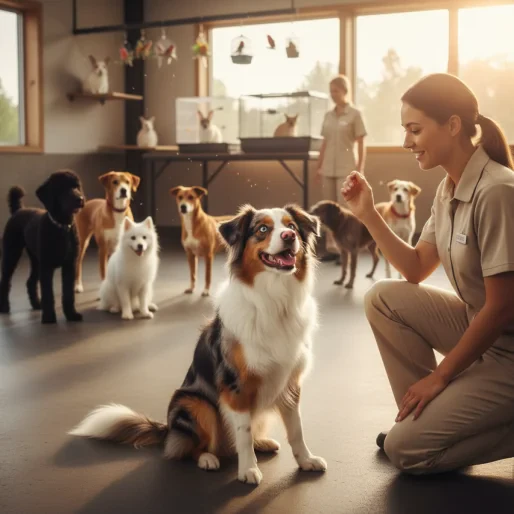
Grouping dogs purely by breed is overly simplistic and can lead to mismatches. A calm, elderly Labrador Retriever has little in common behaviourally with a high-drive, adolescent Labrador from working lines. Effective daycares group by a combination of size, energy level, play style, and social confidence.
Play Style Categories
Professional trainers generally recognise several broad play styles:
- Body slammers and wrestlers: Dogs who prefer full-contact play with lots of physical engagement. Boxers, Bulldogs, and many bully breeds often fall into this category.
- Chasers and runners: Dogs who prefer pursuit games. Herding breeds and sighthounds often gravitate toward this style, though herding breeds may also nip during chasing play, which can upset other dogs.
- Gentle or parallel players: Dogs who prefer to be near other dogs without intense interaction. Many toy breeds, senior dogs, and dogs with lower social confidence do well in this group.
- Rough-and-tumble generalists: Highly social dogs comfortable with a range of play styles. Many sporting breeds and well-socialised mixed breeds fit here.
Size Separation
Most professional guidelines recommend separating dogs into at least two size categories, typically under and over approximately 13 to 15 kilograms (roughly 30 to 35 pounds). This reduces the risk of accidental injury and predatory drift. Some facilities use three tiers: small, medium, and large. The key question to ask is: "Do you ever mix size groups, and under what circumstances?"
Understanding how breed traits influence social behaviour is critical when choosing a daycare. For a deeper look at how working dogs, velcro breeds, and independent sighthounds differ, read What to Tell Your Dog Sitter About Your Dog's Breed Traits.
Behavioural Screening: The Intake Process That Protects Every Dog
A thorough behavioural screening before a dog joins a play group is one of the strongest indicators of a quality facility. This screening serves two purposes: it identifies dogs who may not be suited for group play, and it gathers information that helps staff assign dogs to the right group.
What a Good Screening Looks Like
Professional-standard screening typically unfolds over one to three sessions and includes:
- Owner questionnaire: Covering the dog's socialisation history, known triggers, bite history, resource guarding tendencies, and veterinary behavioural diagnoses.
- Individual assessment: Staff observe the dog alone in the facility to gauge how it handles the new environment, novel sounds, and unfamiliar people.
- Graduated introduction: The dog is introduced to one or two calm, socially skilled "ambassador" dogs before being placed in a larger group. This step is a form of desensitisation, gradually increasing the social stimulus while monitoring stress signals.
- Ongoing evaluation: Screening does not end after admission. Reputable facilities reassess dogs periodically, especially after absences, veterinary procedures, or reported changes in behaviour at home.
Red Flags in the Screening Process
Be cautious if a facility:
- Accepts dogs with no screening at all, or with only a brief "meet and greet" of a few minutes.
- Does not ask about bite history or resource guarding.
- Does not require proof of vaccination, including core vaccines and often Bordetella (kennel cough).
- Tells you every dog is welcome regardless of temperament. Some dogs genuinely do not enjoy group play, and a responsible facility will say so.
The Role of Positive Reinforcement in Screening
During the screening process, staff should be using positive reinforcement (rewarding desired behaviour to increase its frequency) rather than corrections. For example, if a new dog offers a polite greeting, calm body language, or a play bow, staff should mark and reinforce that behaviour with treats or calm verbal praise. This approach is consistent with operant conditioning principles endorsed by the CCPDT and shapes the dog's association with the daycare as a positive experience from the very first visit.
Common Mistakes Owners Make When Evaluating a Daycare
- Prioritising aesthetics over management: A facility with stylish decor but poor supervision is far less safe than a plain but well-staffed one.
- Assuming all play is good play: Watching a group of 20 dogs running together may look fun, but unstructured free-for-alls with no staff intervention are a risk factor for injuries and behavioural damage.
- Not visiting during operating hours: Tours conducted when no dogs are present tell you nothing about group management. Ask to observe a play session in progress.
- Ignoring their own dog's signals: Some dogs simply do not enjoy daycare. A dog who comes home exhausted, hypervigilant, or with increased reactivity on walks may be stressed, not "tired from playing." Monitoring behaviour after daycare sessions is essential.
- Failing to ask about rest periods: Dogs need structured rest during a full day of care. Facilities that offer nonstop play for 8 to 10 hours risk chronic overstimulation and elevated cortisol.
If you use a pet camera at home to observe your dog's behaviour after daycare, it can reveal whether your dog is decompressing normally or showing signs of prolonged stress. Learn more at How Indoor Pet Cameras Help You Monitor Behaviour While Away.
Troubleshooting Slow Progress: When Your Dog Struggles to Settle In
Not every dog adjusts to daycare immediately. A fearful rescue dog in its first session often displays avoidance behaviours: staying near the gate, refusing treats, shadowing staff rather than engaging with other dogs. This is a normal response to an unfamiliar environment and should not be rushed.
What a Good Facility Does
- Shortens initial sessions to 2 to 3 hours and gradually extends them.
- Pairs the new dog with calm, low-arousal companions rather than placing them in the most active group.
- Provides a "safe space" such as an open crate or raised bed where the dog can retreat without being followed.
- Communicates daily progress to the owner with specific behavioural observations, not just "they did great!"
What Owners Can Do at Home
Owners can support the transition by maintaining consistent routines on daycare days, avoiding high-stimulation activities immediately before drop-off, and ensuring the dog has had a calm morning walk and an opportunity to eliminate before arriving. Enrichment feeding at home on non-daycare days can help balance mental stimulation. For ideas, see Using Food Puzzles and Scatter Feeding to Slow Down Fast Eaters.
Positive Reinforcement in Daily Daycare Operations
The best daycares integrate positive reinforcement throughout the day, not just during screening. Here is what that looks like in practice:
Step-by-Step: How Staff Should Manage a Play Group Using Positive Reinforcement
- Scan and observe: Staff continuously monitor the group, watching for both prosocial behaviour (play bows, soft body language, voluntary check-ins) and early stress signals.
- Reinforce calm behaviour: Dogs who disengage from play voluntarily, lie down near staff, or drink water calmly receive quiet praise or a treat. This reinforces self-regulation.
- Interrupt rising arousal early: When two dogs begin to escalate (faster movement, stiffer body posture, higher-pitched vocalisation), staff redirect using a cheerful interrupter cue or by calling one dog away, then rewarding the recall.
- Use time-outs constructively: If a dog needs a break, it should be calmly guided to a rest area with a treat or chew. This is negative punishment (removing the reinforcer, which is play with other dogs) combined with positive reinforcement for settling. It is not punitive isolation.
- Rotate groups: Throughout the day, dogs are rotated between active play, structured rest, and solo enrichment (such as stuffed food toys). This prevents chronic overstimulation and ensures every dog gets downtime.
When to Bring in a Professional Trainer or Behaviourist
Some situations require expertise beyond what daycare staff, however skilled, can provide. Owners should consult a CPDT-KA certified trainer or an IAABC-certified behaviour consultant if:
- Their dog has been asked to leave one or more daycares due to aggression, excessive fear, or inability to settle.
- The dog shows increased reactivity on leash after starting daycare, which may indicate that group play is reinforcing over-arousal rather than building social skills.
- Resource guarding behaviour has developed or worsened since starting daycare.
- The dog displays compulsive behaviours such as repetitive circling, tail chasing, or excessive licking after daycare sessions.
Professional assessment can determine whether daycare is appropriate for that individual dog, or whether alternative enrichment such as private walks, small-group sessions, or in-home care would be a better fit. For emergency behavioural concerns in young dogs, including sudden fear periods or unexpected aggression, consult Recognising When Symptoms Require Immediate Vet Attention.
A Checklist for Evaluating Any Dog Daycare
Use this summary checklist during facility visits:
- Staff-to-dog ratio is clearly stated and maintained at 1:6 to 1:10 (lower for puppies or mixed-size groups).
- Dogs are grouped by size, energy level, and play style, not randomly or solely by breed.
- A structured behavioural screening process exists, spanning at least one to two sessions before full group admission.
- Staff can describe canine stress signals when asked.
- Only positive reinforcement and force-free management tools are used.
- Structured rest periods are built into the daily schedule.
- The facility requires proof of vaccination and asks about bite history.
- Owners are welcome to observe a live play session before enrolling.
- Daily reports include specific behavioural observations.
- The facility has a clear protocol for incidents, including how and when owners are notified.
Choosing the right daycare is one of the most consequential decisions an owner can make for a social dog's wellbeing. By understanding what professional-standard play group management looks like, owners can confidently select a facility that keeps their dog safe, happy, and behaviourally healthy.
If your dog will also be staying overnight or travelling with you, understanding how dogs respond to unfamiliar environments can further inform your care decisions. See How Dogs Behave in Hotel Rooms and Holiday Rentals for guidance on managing territorial and anxiety-related behaviours away from home.
Frequently Asked Questions
Content Disclosure
This article was created using state-of-the-art AI models with human editorial oversight. It is intended for informational and entertainment purposes only and does not constitute veterinary medical advice. Always consult a licensed veterinarian for your pet's specific health needs. Learn more about our process.